‘Almost 10 hours of waiting’: Tiny songbird makes first appearance in Singapore“等待近10个小时”:小型鸣禽首次亮相新加坡
Discover the rare first sighting of the yellow-bellied warbler in Singapore, its unusual origin, and impact on local birdlife at Dairy Farm Nature Park. Read more at straitstimes.com.
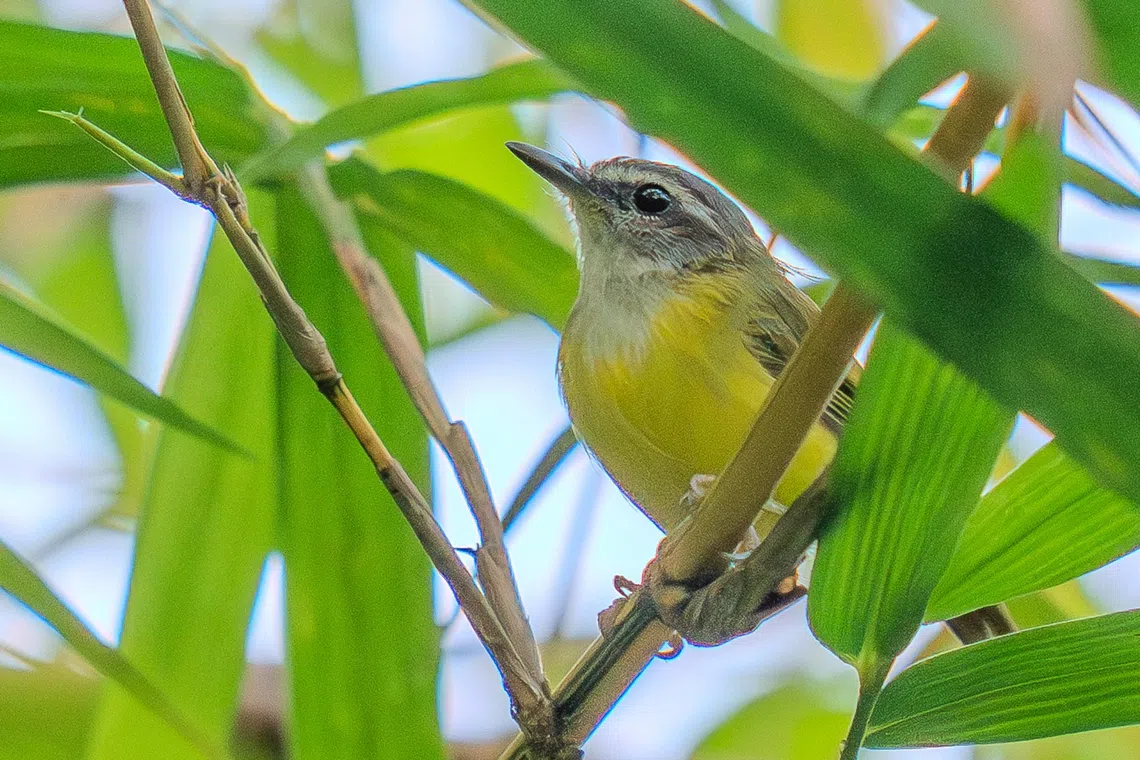
The yellow-bellied warbler at Dairy Farm Nature Park on Sept 24.
Published Sep 28, 2026, 07:55 PM
Updated Sep 28, 2026, 07:55 PM
A yellow-bellied warbler was sighted for the first time in the wild in Singapore at Dairy Farm Nature Park, attracting over 30 photographers including Dylan Lee who waited nearly 10 hours.
Experts suggest the bird likely originated from the pet trade, as it is not migratory and is rarely found near Singapore; its presence in the park is unusual but possible due to suitable bamboo habitat.
Conservationists warn that if released in large numbers, such non-native birds could threaten local ecosystems by competing with native species and disrupting ecological balance.
SINGAPORE – To the untrained eye, a songbird with a buttery yellow belly, not the fanciest of birds, could easily have gone unnoticed when it showed up at Dairy Farm Nature Park recently .
But no rare visitor goes undocumented for Singapore’s bird photography community.
So when the yellow-bellied warbler was first spotted by a novice birder on Sept 23 and posted on social media, more than 30 photographers showed up at the park the next day to verify the finding – the bird was the first of its kind to be recorded in the wild in Singapore.
Among the enthusiasts was Dylan Lee, who said he waited for almost 10 hours in total for the appearance of the doe-eyed bird, which is slightly bigger than a tennis ball.
His trip in the morning was fruitless. His second attempt in the afternoon extended until the evening , and proved to be the charm.
At 6.46pm, someone alerted the flock of photographers to movement in a tree, recalled Lee, who works in the construction industry. This set off the entire group clicking their shutters despite the poor lighting.
Said Lee: “It is very rare for it to be sighted in Singapore. Naturally, all bird enthusiasts would love to have a shot of this mega lifer.”
In the lingo of nature enthusiasts, a lifer refers to a species that a person has seen for the first time.
Bird scientists confirmed the sighting as a first for the species in Singapore.
The bird’s presence here is highly unusual given its typical habitats, they added.
Bird Society of Singapore president Movin Nyanasengeran noted that there are no records of the species near Singapore in the public database eBird, nor have there been observations of it in the Riau Archipelago south of the Republic.
“It could have arrived in Singapore either as a wild bird that dispersed here or as an escapee from the cage-bird trade,” said Movin.
He added that he has never seen the bird anywhere below the lower slopes of mountains, except in Java. However, the specimen spotted at Dairy Farm Nature Park is not the Javan subspecies, based on its features.
Conservation biologist Yong Ding Li pointed out that the closest parts of the species’ natural distribution to Singapore are the lower foothills of Peninsular Malaysia, from Negeri Sembilan northwards, and the hills of western Sumatra.
He believes the bird spotted in Singapore has a captive origin, given its regular appearance in the Indonesian wild bird trade.
The species is known for its lovely song, he added.
The keeping of caged songbirds is thought to have started here in the 1950s, and it is common in South-east Asia for them to be featured in bird singing competitions.
Yong noted that the bird is not known to migrate, making its occurrence in Singapore “quite bizarre”.
Both Yong and Movin believe the insect-eating bird could survive at the park, as the clusters of bamboo at Dairy Farm resemble its preferred habitat.
Said Movin: “Although there’s a chance that it could get eaten too, if it’s not used to the park.”
He noted that if the species is released in larger numbers, it could establish a permanent presence, as many birds from the pet trade have already done.
One example is the black-crested bulbul, a species typically associated with hills that was once found in Dairy Farm Nature Park and Bukit Timah Nature Reserve.
However, this uncommon resident has not been seen at these sites in recent years.
When present in large numbers, the introduction of foreign species can threaten the survival of native wildlife by competing for resources and upsetting the balance of local ecosystems.
Parks/Nature reserves
9月24日,在奶牛场自然公园拍摄到的黄腹莺。
发布于 2026 年 9 月 28 日晚上 7:55
更新于2026年9月28日晚上7:55
在新加坡牛奶场自然公园,人们首次在野外发现了黄腹莺,吸引了包括 Dylan Lee 在内的 30 多名摄影师前来拍摄,Dylan Lee 等候了近 10 个小时。
专家认为,这种鸟很可能来自宠物贸易,因为它不是候鸟,而且在新加坡附近很少见到;它出现在公园里很不寻常,但由于有合适的竹林栖息地,所以也不是不可能。
环保人士警告说,如果大量放生这些非本土鸟类,它们可能会与本土物种竞争,破坏生态平衡,从而威胁当地的生态系统。
新加坡——对于不熟悉情况的人来说,一只腹部呈奶油黄色的鸣禽,虽然算不上最漂亮的鸟类,但最近出现在牛奶场自然公园时,很容易被人忽略。
但对于新加坡的鸟类摄影爱好者来说,任何罕见的访客都不会被忽略。
因此,当一位新手观鸟者于 9 月 23 日首次发现黄腹莺并将其发布到社交媒体上时,第二天就有 30 多名摄影师来到公园验证这一发现——这是新加坡野外首次记录到这种鸟类。
爱好者中包括迪伦·李,他说他总共等了将近 10 个小时才看到这只大眼睛的鸟,它比网球略大一些。
他上午的行程毫无收获。下午的第二次尝试一直持续到晚上,终于取得了成功。
据在建筑行业工作的李回忆,下午6点46分,有人提醒一群摄影师,树上有东西在动。尽管光线昏暗,但摄影师们还是纷纷按下快门。
李先生说:“这种鸟在新加坡非常罕见。当然,所有爱鸟人士都渴望能拍到这种难得一见的珍稀鸟类。”
在自然爱好者的行话中,“lifer”指的是一个人第一次见到的物种。
鸟类科学家证实,这是该物种在新加坡的首次发现。
他们补充说,考虑到这种鸟的典型栖息地,它出现在这里非常不寻常。
新加坡鸟类协会主席莫文·尼亚纳森格伦指出,公共数据库eBird中没有该物种在新加坡附近的记录,也没有在新加坡共和国南部廖内群岛的观测记录。
“它可能是作为一只散养到新加坡的野生鸟类来到这里的,也可能是从笼鸟贸易中逃出来的,”莫文说。
他还补充说,除了爪哇岛以外,他从未在山坡以下的任何地方见过这种鸟。然而,根据其特征判断,在奶牛场自然公园发现的这只鸟并非爪哇亚种。
保护生物学家李永鼎指出,该物种自然分布范围距离新加坡最近的地区是马来西亚半岛的低山麓,从森美兰州向北延伸,以及苏门答腊西部的山区。
他认为在新加坡发现的这只鸟是人工饲养的,因为它经常出现在印度尼西亚的野生鸟类贸易中。
他还补充说,这种鸟类以其动听的鸣叫声而闻名。
饲养笼养鸣禽的做法据信始于 20 世纪 50 年代,在东南亚,笼养鸣禽经常出现在鸟类歌唱比赛中。
Yong指出,这种鸟并不以迁徙而闻名,因此它在新加坡的出现“相当奇怪”。
Yong 和 Movin 都认为这种食虫鸟可以在公园里生存,因为奶牛场的竹林很像它喜欢的栖息地。
莫文说:“虽然如果它不习惯待在公园里,也有可能被吃掉。”
他指出,如果大量放生该物种,它可能会像许多来自宠物贸易的鸟类一样,在那里建立起永久的生存环境。
例如,黑冠鹎是一种通常栖息在山丘上的鸟类,曾经在牛奶场自然公园和武吉知马自然保护区被发现。
然而,近年来这些地方都没有出现过这种不常见的居民。
大量引入外来物种会与本土物种争夺资源,破坏当地生态系统的平衡,从而威胁本土野生动物的生存。
公园/自然保护区