Shipbuilder Behind Failed Constellation Class Wants Back Into The U.S. Navy Frigate Game打造失败的星座级护卫舰的造船商想要重返美国海军护卫舰市场
Fincantieri says it could leverage its U.S. infrastructure for a new frigate, but it is not clear the Navy will be interested.
新闻视频
By Joseph Trevithick
Published Sep 28, 2026 2:59 PM EDT
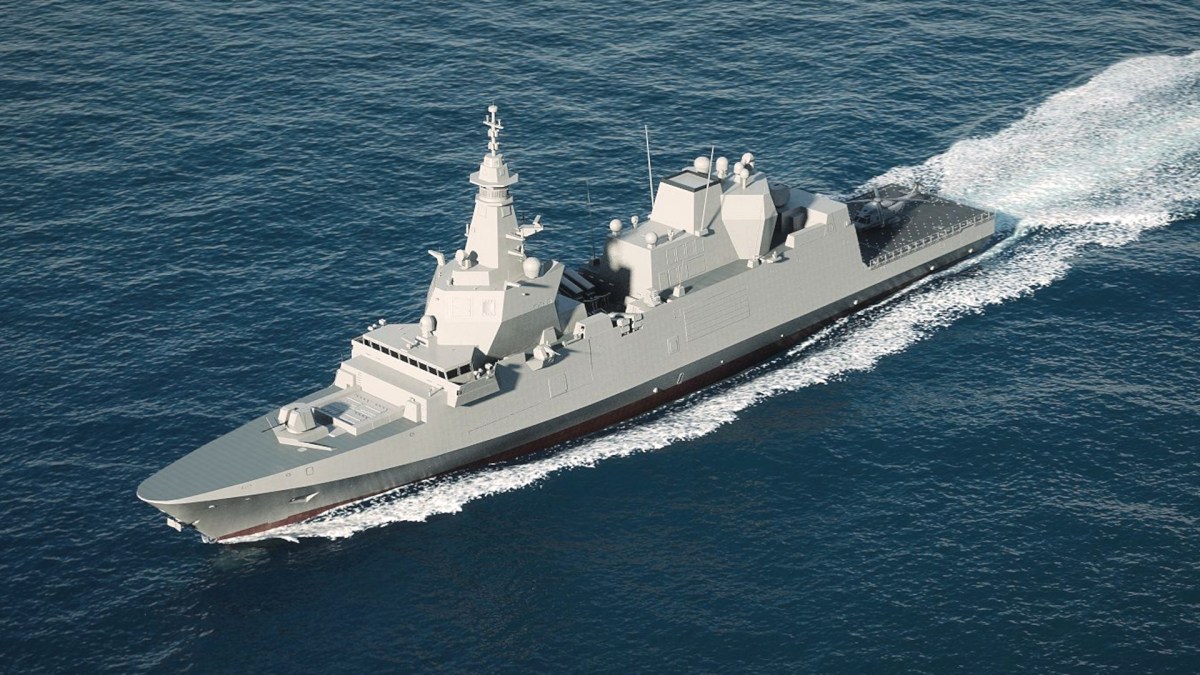
A rendering of Fincantieri's FREMM-EVO frigate. Italian Organization for Joint Armament Co-operation
Fincantieri Marine Group, which developed the cancelled Constellation class frigate for the U.S. Navy, says it sees a possible new opportunity in the service’s latest small surface combatant plans. At least three foreign frigate designs are already under review for possible Navy service , as is the prospect of having them built overseas, as part of a study expected to wrap up next month. Fincantieri wants to once again add the FREMM design, which the Constellation was based on, to the Navy’s options. The shipyard, which is a subsidiary of its Italian namesake, made significant investments in shipyard infrastructure in the United States and supply chains as part of the Constellation debacle, but it is not clear if that will be enough to make a new pitch attractive.
USNI News first reported on the possibility of a new Fincantieri frigate pitch to the Navy yesterday. The outlet had spoken to Fincantieri Marine Group CEO George Moutafis at the American Society of Naval Engineers Fleet Maintenance and Modernization Symposium last week. TWZ spoke at length with Moutafis about the failure of the Constellation class program earlier this year, and we have reached back out to the company for more information about new prospects now.
“Right now the Navy and the [Trump] administration could find the right type of dialog with us to set [development] up in a way that enables quick setup and swift construction without letting design spirals get in the way,” Moutafis told USNI News . “Accept the design that is and works well, and start work on it to get units out there for the fleet.”
In addition, “Moutafis said the supply chain the shipyard built during the Constellation could be applied to Fincantieri’s FREMM EVO design with few modifications to avoid the design churn that led to the cancellation of the Constellation ,” according to USNI News .
The Constellation class was derived from the Franco-Italian FREMM , a multi-purpose frigate designed to offer a mix of anti-air, anti-submarine, and anti-surface warfare capabilities. The explicit intent of the program had been to acquire a frigate based on an established, in-production ‘parent’ design, to which only relatively minor changes would have to be made, helping to reduce cost and risk. In the end, Constellation only had 15 percent design commonality with FREMM, causing delays and other issues that directly contributed to its cancellation. However, the Navy’s demand for smaller surface combatants has not gone away. We will come back to this all in a moment.
A rendering of a Constellation class frigate. USN
Fincantieri unveiled FREMM EVO (for “evolution”), along with an order for two of them for the Italian Navy, in 2024. In July of this year, Portugal announced it would also be buying three FREMM EVOs.
As designed, the FREMM EVO is close to 472.5 feet (144 meters) long, is some 64.6 feet (19.7 meters) at its widest, and displaces 6,500 tons with a full combat load, according to Fincantieri’s website. Its hull dimensions and displacement are essentially unchanged from the Italian subvariant of the baseline FREMM . The EVO will have a new superstructure configuration and a host of new capabilities.
Renderings of the FREMM-EVO. Fincantieri
An Italian Navy FREMM frigate, or Bergamini class, in front, sails together with a US Navy Arleigh Burke class destroyer. USN
The most notable new feature on the EVO version is set to be a new Leonardo Kronos Dual-Band Radar (DBR). The Kronos DBR combines the C-band Kronos Quad and the X-band Kronos StarFire into a single system with four paired sets of active electronically scanned arrays (AESA) positioned around the superstructure. In general, combining radars in this way can offer advantages for performing a variety of different tasks and doing so simultaneously. The ability to fuse data from both arrays together can help produce high-fidelity target tracks and other benefits. At the same time, DBRs have historically presented complexities that can cause serious difficulties with both integration and operation .
Among other things, the DBR is set to give the FREMM EVO expanded capability to knock down incoming ballistic missiles in the terminal phase of flight using Aster 30 surface-to-air missiles . Anti-ship ballistic missiles have become a threat that navies globally could realistically encounter in future conflicts, even against smaller nation states or non-state actors. There is a trend emerging worldwide now in the development of new anti-ballistic missile defenses to protect individual warships, as well as help defend other naval assets and interests ashore. Baseline FREMM frigates can already fire Aster 30 missiles, as well as Aster 16s , from any of their 16 Sylver vertical launch system cells at the bow end of the ship. EVO has space allotted for the integration of additional VLS cells, but it is unclear whether any current customers are pursuing that option.
In terms of armament, like the baseline FREMM, the EVO configuration will also have deck-mounted launchers for eight anti-ship cruise missiles, two triple torpedo tubes, two turreted 76mm guns , and various smaller automatic cannons and machine guns.
FREMM EVO is to feature improvements to other parts of its sensor package, as well as electronic warfare and communications suites, compared to the baseline design. This will all be tied into a SADOC 4 combat management system (CMS) from Leonardo.
On top of all this, this new FREMM configuration will have a new dedicated suite of counter-drone capabilities, another threat category that is very real now, and that only continues to expand in scale and scope.
“FREMM EVO represents a milestone both in confirming the ability to combine maturity and innovation in its EW systems that will be on board, and for the first naval supply of an advanced anti-drone counter capability,” ELT Group, which is supplying components for the counter-drone suite, said in a statement back in 2024, according to Naval News . “The latter will allow both the detection, recognition and identification of drones and their soft-kill counter. The project of a naval CUAS arises from the expertise acquired by Elettronica in this capacity for several years now, which have led to the development of sophisticated Artificial Intelligence algorithms developed specifically for countering the threat posed by drones.”
When it comes to a new pitch to the U.S. Navy, FREMM EVO does have the benefit of being an in-production design. As mentioned, Fincantieri had also been working to expand its facilities at the Marinette Marine shipyard in Wisconsin to build similarly-sized Constellation class frigates before that program was cancelled. The shipbuilder has relevant established supply chains to feed into that yard, as well, as Moutafis highlighted to USNI News .
A Naval Sea Systems Command (NAVSEA) briefing slide from 2022 detailing work Fincantieri had been doing to expand its physical infrastructure to support the production of the Constellation class. USN
In speaking to us earlier this year, Moutafis also talked about important lessons learned from the Constellation program, which he felt were already having a positive impact the U.S. Navy way of doing business.
“Some of those lessons learned out of Constellation are being manifested in the things that the Navy has been rolling out the past few months – a new approach that empowers PAEs [Navy Portfolio Acquisition Executives] to make decisions, to minimize change, to embrace innovation and new technologies,” he said. “All these elements that we see now being rolled out, I think to a certain degree, connect back to lessons that have been learned out of the Constellation class journey.”
“Figure out what you want to prioritize, to what extent you want to prioritize schedule, and what’s the best way to say this,” he added when asked for specific examples of what he was talking about. “When you know when you need something delivered and at what pace, then enable the right level of decision-making. Because otherwise – I don’t want to sound this the wrong way – but perfection sometimes is the enemy of more than good enough.”
“Going beyond the Constellation class, now the needs are for vessels to be out there for the warfighter as soon as possible. For sure, we will see many cases where it will be considered that a vessel with these capabilities – even though potentially, in some areas, it may not have enough tons of steel on its sides, or whatever – it will be good enough to assist the warfighter as they head into harm’s way,” he also added at that time. “Those trade-offs are now being placed at the PAE level, allowing Navy leaders at that level to make the right decisions – figuring out whether to continue going down a design spiral versus just moving out with production and enabling us to have the right capabilities on time for the warfighter.”
When Moutafis spoke with us, the Navy had already unveiled a new FF(X) frigate program and announced plans to buy examples of a design derived from the Huntington Ingalls Industries’ (HII) Legend class National Security Cutter for the U.S. Coast Guard. Those frigates will notably lack a VLS array, at least initially , along with other features that were seen as critical to Constellation class. The Navy has outlined plans to offset the more limited baked-in capabilities of the FF(X)s with add-on containerized weapon systems and companion fleets of uncrewed surface vessels. All of this has already prompted significant debate about the operational utility of these small surface combatants, as TWZ has previously explored in detail .
A rendering of the FF(X) frigate. USN
In August, President Trump put out a memo that, in part, directed then-Acting Secretary of the Navy Hung Cao to “submit a plan … that includes timelines and resourcing requirements, for a new competitive acquisition approach for surface combatants with sufficient inherent capabilities to perform anti‑submarine warfare, surface warfare, and convoy escort duties.” The memo also outlined an acquisition strategy referred to as the “Finland Model,” in which foreign shipbuilders would have to make major investments in U.S. enterprises and hire American workers as part of any future contract, even if an initial tranche of vessels is built overseas. This, in turn, has led to the aforementioned foreign warship study ongoing now, which is reportedly exploring the merits of Japan’s Mogami class , the South Korean Chungnam class , and the Istanbul class from Turkey, in-depth profiles of which you can find here .
Examples of the Japanese Mogami class (at bottom), the South Korean Chungnam class (at top left), and the Turkish Istanbul class (at top right). Yuichi Yamazaki-Pool/Getty Images/HD Hyundai Heavy Industries/Anadolu Shipyard
Whether or not the U.S. Navy will pursue the acquisition of any of the ships it is studying now, or whether it might be willing to consider additional pitches from Fincantieri or other shipbuilders, remains to be seen. If it is to be successful, any new attempt to leverage an in-production foreign frigate design will have to take concrete steps to avoid falling into the same design change pitfalls as the Constellation class. The Navy’s struggles with solidifying designs early and keeping changes to a minimum during development and initial production have impacted several domestic naval shipbuilding efforts , too.
For Fincantieri, while the Navy played a central role in the failure of the Constellation program, there is the additional matter of whether the service is interested in any way in the optics of not only going back to the same shipbuilder, but the same underlying parent design (FREMM).
Some members of Congress have been very vocally pushing back on any plan that involves production in foreign shipyards . This is despite long-standing concerns about the capacity of U.S. shipyards and persistent hurdles to growing that industrial base . In this context, a new offer to build frigates domestically at Marinette Marine could find welcoming ears, but Fincantieri is also already on contract to build new Medium Landing Ships (LSM) for the Navy at this same yard. LSM is another program the service has also been trying to accelerate after years of delays .
A rendering of Dutch shipbuilder Damen’s LST-100 landing ship, the basis for the Navy’s new LSMs. Damen
It’s also unclear what any additional frigate procurement program might mean for the existing FF(X) frigate program, and what level of additional competition there might be for shipbuilding resources, as a result.
“In terms of which path we go – I’m not going to get ahead of that process – but [studying all options is] essentially what we’re doing,” Navy Rear Adm. Casey Moton, head of the Portfolio Acquisition Executive Maritime (PAE-M) office, also said at the symposium last week, according to USNI News . “I am not going to get ahead of what we are doing in response to the presidential memo.”
“We just went through CDR [the critical design review] on the Flight I [of FF(X)], and so we’re doing some pre-production activities with HII to help prepare for that material,” Moton also noted. The Navy has said in the past that it is aiming to have the first FF(X) frigate in the water by 2028.
The Navy’s fleet of Arleigh Burke class destroyers “gets used with a very high demand signal combatant commanders. The Navy can’t operate with only one size of ship,” Rear Adm. Brian Metcalf, Deputy PAE-M, also said in an official video in June, further underscoring the general demand for these new smaller surface combatants. “The [FF(X)] frigate will fill that gap. They can be used in less contentious waters. They can be used as high-value escorts. There are all kinds of things the frigate can fill the gap for and allow destroyers to execute the high-end mission set.”
Signs that a new foreign-designed frigate could be in the Navy’s future have already been growing. The service may have a clearer vision for how to proceed, and whether there might be room for additional pitches from Fincanterai and others, after the review it is working through now is complete.
Contact the author: joe@twz.com
Comments couldn’t be loaded. Please refresh the page.
作者:约瑟夫·特雷维西克
发布于美国东部时间2026年9月28日下午2:59
芬坎蒂尼集团FREMM-EVO型护卫舰效果图。意大利联合军备合作组织
曾为美国海军开发被取消的“星座”级护卫舰的芬坎蒂尼海事集团表示,他们看到了海军最新小型水面作战舰艇计划中可能出现的新机遇。目前,至少有三种外国护卫舰设计方案正在接受海军审查,以评估其是否适合海军服役,同时海军也在考虑在海外建造这些护卫舰的可能性。这项研究预计将于下个月完成。芬坎蒂尼希望再次将“星座”级护卫舰的设计方案——FREMM护卫舰——纳入海军的备选方案。这家造船厂是其意大利同名集团的子公司,在“星座”级项目失败后,芬坎蒂尼在美国的造船厂基础设施和供应链方面进行了大量投资,但目前尚不清楚这些投资是否足以使新的方案更具吸引力。
美国海军学会新闻网(USNI News)昨日率先报道了芬坎蒂尼集团可能向海军提交新的护卫舰方案。该媒体上周在美国海军工程师协会舰队维护与现代化研讨会上采访了芬坎蒂尼海事集团首席执行官乔治·穆塔菲斯。今年早些时候,TWZ曾就“星座”级护卫舰项目失败一事与穆塔菲斯进行了深入交流,目前我们已再次联系该公司,以了解更多关于新项目前景的信息。
“现在,海军和(特朗普)政府可以与我们进行合适的对话,以一种能够快速部署和迅速建造的方式来安排(研发)工作,避免设计上的反复无常阻碍进展,”穆塔菲斯告诉美国海军学会新闻网。“接受现有且行之有效的设计,并开始着手研发,以便尽快为舰队交付装备。”
此外,据美国海军学会新闻报道,“穆塔菲斯表示,该造船厂在星座计划期间建立的供应链可以应用于芬坎蒂尼集团的FREMM EVO设计,只需进行少量修改,即可避免导致星座计划取消的设计变更。”
星座级护卫舰源自法意联合研制的FREMM护卫舰,后者是一款多用途护卫舰,旨在提供防空、反潜和反水面作战能力。该项目的明确目标是基于一款成熟的、正在生产的“母舰”设计,仅需进行相对较小的改动,从而降低成本和风险。然而,最终星座级与FREMM的设计通用性仅为15%,导致延误和其他问题,并直接促成了该项目的取消。尽管如此,海军对小型水面作战舰艇的需求并未消失。我们稍后会详细讨论这一点。
星座级护卫舰效果图。美国海军
芬坎蒂尼集团于 2024 年推出了 FREMM EVO(意为“进化”),并向意大利海军订购了两艘。今年 7 月,葡萄牙宣布也将购买三艘 FREMM EVO。
根据芬坎蒂尼造船厂网站的信息,FREMM EVO 的设计长度接近 472.5 英尺(144 米),最宽处约为 64.6 英尺(19.7 米),满载作战排水量为 6,500 吨。其船体尺寸和排水量与意大利版 FREMM 基本相同。EVO 将采用全新的上层建筑结构和一系列新功能。
FREMM-EVO 的效果图。芬坎蒂尼
一艘意大利海军的FREMM护卫舰(或称贝加米尼级)在前,与一艘美国海军的阿利·伯克级驱逐舰并肩航行。
EVO版本最显著的新特性是全新的莱昂纳多Kronos双波段雷达(DBR)。Kronos DBR将C波段Kronos Quad和X波段Kronos StarFire雷达集成到一个系统中,该系统由四组成对的有源相控阵雷达(AESA)组成,环绕上层建筑布置。通常,这种雷达组合方式能够同时执行多种不同的任务,具有诸多优势。融合两个阵列的数据有助于生成高保真目标跟踪,并带来其他益处。然而,DBR雷达历来都存在一些复杂性,可能导致集成和操作方面的严重困难。
除其他功能外,DBR系统将赋予FREMM EVO级护卫舰更强的能力,使其能够使用Aster 30舰空导弹在末段拦截来袭弹道导弹。反舰弹道导弹已成为全球海军在未来冲突中可能面临的现实威胁,即使是面对较小的国家或非国家行为体也不例外。目前,全球范围内正在兴起一股研发新型反弹道导弹防御系统的趋势,旨在保护单艘军舰,并帮助防御其他海军资产和岸上利益。基础型FREMM护卫舰已可从舰艏的16个Sylver垂直发射系统单元中发射Aster 30和Aster 16导弹。EVO级护卫舰预留了集成更多垂直发射单元的空间,但目前尚不清楚是否有现有客户选择该方案。
在武器装备方面,与基本型 FREMM 一样,EVO 配置也将配备甲板安装的 8 枚反舰巡航导弹发射器、2 座三联装鱼雷发射管、2 门炮塔式 76 毫米舰炮以及各种较小的自动炮和机枪。
与基础设计相比,FREMM EVO将对其传感器组件的其他部分以及电子战和通信套件进行改进。所有这些都将与莱昂纳多公司的SADOC 4作战管理系统(CMS)集成。
除此之外,这种新的 FREMM 配置还将配备一套新的专用反无人机能力,反无人机是目前非常现实的另一个威胁类别,而且其规模和范围还在不断扩大。
据《海军新闻》报道,ELT集团在2024年的一份声明中表示:“FREMM EVO的问世具有里程碑意义,它不仅验证了舰载电子战系统兼具成熟性和创新性的能力,而且标志着海军首次获得先进的反无人机作战能力。该反无人机系统将能够探测、识别和辨认无人机,并对其进行软杀伤反制。海军反无人机作战系统项目源于Elettronica公司多年来在该领域积累的专业知识,这些知识促成了专门用于应对无人机威胁的复杂人工智能算法的开发。”
在向美国海军推介新方案时,FREMM EVO 的优势在于它是一款正在量产的设计。正如前文所述,芬坎蒂尼造船厂此前也曾计划扩建其位于威斯康星州马里内特海事造船厂的设施,以建造类似尺寸的星座级护卫舰,但该项目最终被取消。正如穆塔菲斯向美国海军学会新闻网(USNI News)强调的那样,这家造船厂还拥有相关的成熟供应链,可以为该船厂提供所需部件。
一份2022年美国海军海上系统司令部(NAVSEA)的简报幻灯片,详细介绍了芬坎蒂尼公司为支持星座级巡洋舰的生产而扩展其基础设施所做的工作。
今年早些时候,穆塔菲斯在与我们交谈时还谈到了从星座计划中汲取的重要经验教训,他认为这些经验教训已经对美国海军的运作方式产生了积极的影响。
他说:“从‘星座’级航母项目中汲取的一些经验教训,正体现在海军过去几个月推出的各项举措中——一种赋予海军项目采购主管(PAE)更多决策权、最大限度减少变更、拥抱创新和新技术的新方法。我认为,我们现在看到的所有这些举措,在某种程度上,都与从‘星座’级航母项目中汲取的经验教训息息相关。”
当被问及具体例子时,他补充道:“弄清楚你想优先考虑什么,你想在多大程度上优先考虑进度,以及如何最好地表达这一点。当你清楚何时需要交付以及交付速度如何时,就能做出恰当的决策。否则——我不想说得不妥——但完美主义有时反而会阻碍我们做得更好。”
“超越星座级之后,现在最需要的是尽快为作战人员提供舰艇。当然,我们会看到很多情况下,即使某些舰艇在某些方面可能缺乏足够的钢材或其他优势,但具备这些能力的舰艇仍然足以在作战人员冲锋陷阵时提供支援,”他当时补充道。“这些权衡取舍现在都由项目评估部门(PAE)负责,以便海军领导层能够做出正确的决策——决定是继续在设计上精益求精,还是直接投入生产,确保我们能够及时为作战人员提供所需的能力。”
穆塔菲斯接受我们采访时,海军已经公布了新的FF(X)护卫舰项目,并宣布计划为美国海岸警卫队采购一批基于亨廷顿·英格尔斯工业公司(HII)“传奇”级国家安全舰设计的舰艇。值得注意的是,这些护卫舰至少在初期阶段将缺少垂直发射系统(VLS)阵列,以及其他一些被认为是“星座”级护卫舰关键特性的功能。海军已制定计划,通过加装集装箱式武器系统和配套的无人水面舰艇来弥补FF(X)护卫舰固有能力的不足。所有这些都引发了关于这些小型水面作战舰艇作战效用的激烈讨论,TWZ此前已对此进行了详细探讨。
FF(X)型护卫舰的效果图。美国海军
8月,特朗普总统发布了一份备忘录,其中部分内容指示时任海军代理部长洪曹“提交一份计划……包括时间表和资源需求,以建立一种新的竞争性采购方式,采购具备足够能力执行反潜作战、水面作战和护航任务的水面作战舰艇”。该备忘录还概述了一种被称为“芬兰模式”的采购战略,根据该模式,外国造船商必须对美国企业进行重大投资,并雇用美国工人,作为未来任何合同的一部分,即使首批舰艇是在海外建造的。这反过来又促成了目前正在进行的上述外国军舰研究,据报道,该研究正在探讨日本最上级、韩国忠南级和土耳其伊斯坦布尔级的优势,您可以在这里找到这些舰艇的详细介绍。
图为日本最上级战列舰(底部)、韩国忠南级战列舰(左上)和土耳其伊斯坦布尔级战列舰(右上)的示例。图片来源:Yuichi Yamazaki-Pool/Getty Images/HD Hyundai Heavy Industries/Anadolu Shipyard
美国海军是否会继续推进目前正在研究的舰艇采购项目,或者是否愿意考虑芬坎蒂尼集团或其他造船厂的方案,目前尚不得而知。任何试图利用在产外国护卫舰设计的新尝试,如果想要成功,都必须采取切实措施,避免重蹈“星座”级护卫舰设计变更的覆辙。海军在早期确定设计方案以及在研发和初期生产阶段尽量减少变更方面遇到的困难,也影响了国内多项海军造船项目。
对于芬坎蒂尼集团来说,虽然海军在星座计划的失败中扮演了核心角色,但还有一个额外的问题是,海军是否对回到同一家造船厂,而且回到同一个底层母体设计(FREMM)所带来的观感感兴趣。
一些国会议员一直强烈反对任何涉及在外国船厂生产的计划。尽管长期以来人们一直担忧美国船厂的产能,以及发展美国工业基础面临诸多阻碍,他们依然如此。在此背景下,一项在马里内特海事公司(Marinette Marine)建造护卫舰的新提议或许会受到欢迎,但芬坎蒂尼集团(Fincantieri)也已与该船厂签订合同,为海军建造新型中型登陆舰(LSM)。LSM项目也是海军在经历了多年的延误后,一直试图加快推进的项目。
这是荷兰造船厂达门公司设计的LST-100登陆舰的效果图,该舰是美国海军新型LSM登陆艇的基础。
目前还不清楚任何额外的护卫舰采购计划会对现有的 FF(X) 护卫舰计划产生什么影响,以及由此可能会对造船资源造成多大的额外竞争。
据美国海军学会新闻报道,海军少将凯西·莫顿(Casey Moton)上周在研讨会上表示:“至于我们将采取哪条道路——我不会提前透露——但(研究所有选项)基本上就是我们正在做的事情。”莫顿少将同时也是海上采购执行办公室(PAE-M)的负责人。“我不会提前透露我们针对总统备忘录所采取的行动。”
莫顿还指出:“我们刚刚完成了FF(X)型护卫舰首舰的关键设计评审(CDR),目前正在与HII公司开展一些预生产活动,为后续材料的交付做好准备。”海军此前曾表示,目标是在2028年前让首艘FF(X)型护卫舰下水。
海军的阿利·伯克级驱逐舰舰队“需要为作战指挥官提供非常高要求的信号。海军不能只依靠一种尺寸的舰艇作战,”海军少将布莱恩·梅特卡夫(Brian Metcalf)在6月份的一段官方视频中也表示,这进一步强调了对这些新型小型水面作战舰艇的普遍需求。“[FF(X)]护卫舰将填补这一空白。它们可以在冲突较少的水域使用,也可以作为高价值护航舰艇。护卫舰可以填补各种空白,使驱逐舰能够执行高端任务。”
种种迹象表明,海军未来可能会建造一艘外国设计的新型护卫舰。目前正在进行的审查结束后,海军或许会对未来的发展方向以及是否还有空间接受芬坎特莱公司和其他公司的方案有更清晰的规划。
联系作者:joe@twz.com
评论加载失败,请刷新页面。