Singapore supports 243 human rights recommendations, including stronger migrant worker protections新加坡支持243项人权建议,包括加强对移工的保护。
The country supported about 71 per cent of the recommendations it received, but did not back changes to domestic worker laws, the death penalty or free speech legislation.
The country supported about 71 per cent of the recommendations it received, but did not back changes to domestic worker laws, the death penalty or free speech legislation.
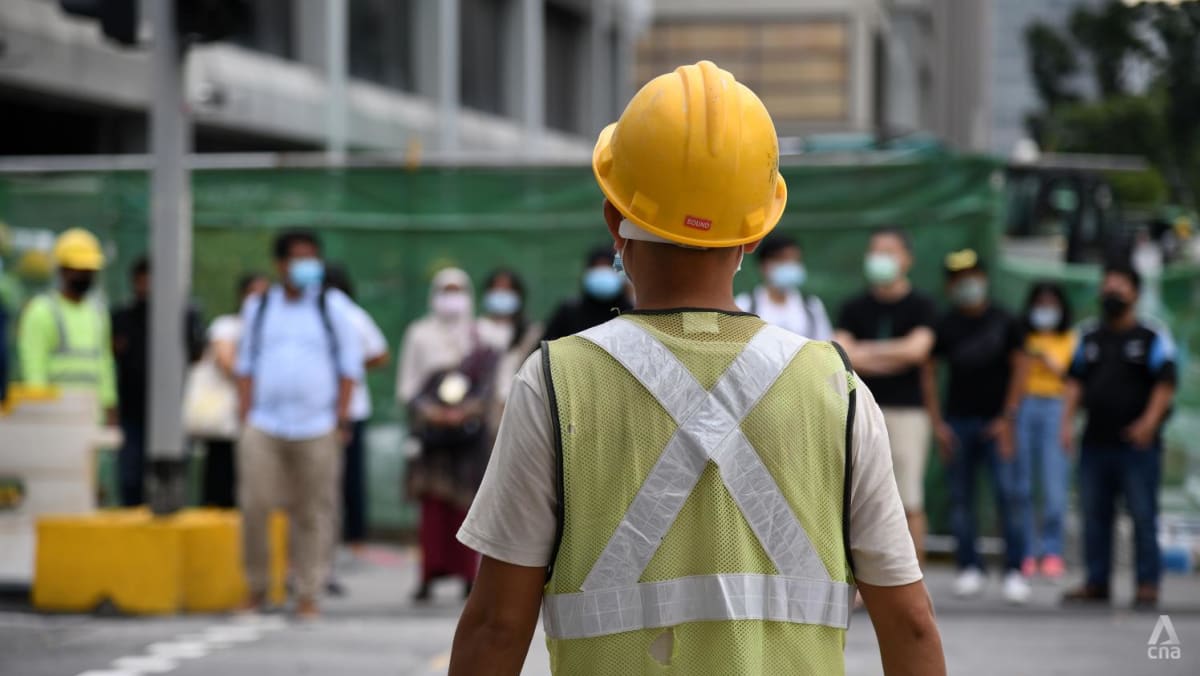
A migrant worker in Singapore. (File photo: CNA/Calvin Oh)
This audio is generated by an AI tool.
SINGAPORE: Singapore supported recommendations from other United Nations member states on Monday (Sep 28) to strengthen migrant worker protections and improve mental health support for children, as part of its latest review of the country's human rights record.
It also supported calls to consider ratifying international conventions covering migrant and domestic workers, ensure new technologies comply with human rights standards, and include vulnerable groups in climate change policies.
The commitments are among 243 recommendations Singapore supported following its fourth Universal Periodic Review, a UN mechanism that reviews each member state's human rights record every four-and-a-half years.
They account for about 71 per cent of the 342 recommendations Singapore received, up from 65 per cent during its previous review in 2021.
CNA Games Guess Word Crack the word, one row at a time Buzzword Create words using the given letters Mini Sudoku Tiny puzzle, mighty brain teaser Mini Crossword Small grid, big challenge Word Search Spot as many words as you can Show More Show Less Singapore's permanent representative to the United Nations in Geneva, Mr Jaya Ratnam, said the country viewed the process as a platform for frank dialogue and approached it with an open mind. "Our approach to human rights rests on a simple premise: progress should always be measured by tangible outcomes for our people," he said at the adoption of Singapore's Universal Periodic Review report in Geneva. Singapore supported recommendations that complemented its efforts to build a more inclusive, cohesive and resilient society, Mr Ratnam added, citing education, public healthcare, support for lower-income groups, migrant worker welfare, labour rights and digital inclusion. He said the country's approach rested on two pillars – pragmatism and the rule of law – and that countries would take different paths to advancing human rights based on their circumstances. "What matters is whether these approaches deliver meaningful progress for their people," he said. DOMESTIC WORKERS Among the more specific recommendations supported by Singapore was one from the United Kingdom to mandate rest periods and create digital recruitment and wage-payment processes for foreign domestic workers. Singapore also supported recommendations to strengthen migrant workers' protections in areas such as working conditions, healthcare, social protection, access to justice and safeguards against exploitation. These included improving migrant domestic workers' legal protections, access to healthcare and mental health support. However, it did not support some recommendations seeking specific changes to legal protections. These included recommendations from Canada and Norway to extend protections under the Employment Act and Work Injury Compensation Act to domestic workers, and a recommendation to establish a government-run recruitment system to prevent deceptive hiring and contract substitution. Singapore also did not support a recommendation to give foreign domestic workers public holidays, regulated working hours and paid leave, and to end mandatory pregnancy and HIV testing. In its response, Singapore said migrant domestic workers required "additional protection" and that their particular working environments were addressed through customised legislation under the Employment of Foreign Manpower Act. MENTAL HEALTH, WOMEN’S EMPOWERMENT Singapore supported several recommendations on mental health, including calls to strengthen school-based support services for young people, increase awareness and develop community services. It also backed a recommendation to protect children and older people from cyber harms while maintaining non-digital access to essential services. Singapore also supported a broad range of recommendations on advancing women's empowerment, including increasing women’s representation in public and political life, narrowing gender inequalities at work and strengthening support for women in leadership roles. Other supported recommendations focused on balancing work and caregiving with stronger workplace protections relating to maternity, caregiving responsibilities and flexible work arrangements to raise women’s workforce participation. In its national report for the review, Singapore pointed to measures such as the Workplace Fairness Act and expanded parental leave . Government-paid paternity leave doubled from two to four weeks last year, while shared parental leave rose to 10 weeks from April.
Singapore's permanent representative to the United Nations in Geneva, Mr Jaya Ratnam, said the country viewed the process as a platform for frank dialogue and approached it with an open mind.
"Our approach to human rights rests on a simple premise: progress should always be measured by tangible outcomes for our people," he said at the adoption of Singapore's Universal Periodic Review report in Geneva.
Singapore supported recommendations that complemented its efforts to build a more inclusive, cohesive and resilient society, Mr Ratnam added, citing education, public healthcare, support for lower-income groups, migrant worker welfare, labour rights and digital inclusion.
He said the country's approach rested on two pillars – pragmatism and the rule of law – and that countries would take different paths to advancing human rights based on their circumstances.
"What matters is whether these approaches deliver meaningful progress for their people," he said.
Among the more specific recommendations supported by Singapore was one from the United Kingdom to mandate rest periods and create digital recruitment and wage-payment processes for foreign domestic workers.
Singapore also supported recommendations to strengthen migrant workers' protections in areas such as working conditions, healthcare, social protection, access to justice and safeguards against exploitation. These included improving migrant domestic workers' legal protections, access to healthcare and mental health support.
However, it did not support some recommendations seeking specific changes to legal protections.
These included recommendations from Canada and Norway to extend protections under the Employment Act and Work Injury Compensation Act to domestic workers, and a recommendation to establish a government-run recruitment system to prevent deceptive hiring and contract substitution.
Singapore also did not support a recommendation to give foreign domestic workers public holidays, regulated working hours and paid leave, and to end mandatory pregnancy and HIV testing.
In its response, Singapore said migrant domestic workers required "additional protection" and that their particular working environments were addressed through customised legislation under the Employment of Foreign Manpower Act.
MENTAL HEALTH, WOMEN’S EMPOWERMENT
Singapore supported several recommendations on mental health, including calls to strengthen school-based support services for young people, increase awareness and develop community services.
It also backed a recommendation to protect children and older people from cyber harms while maintaining non-digital access to essential services.
Singapore also supported a broad range of recommendations on advancing women's empowerment, including increasing women’s representation in public and political life, narrowing gender inequalities at work and strengthening support for women in leadership roles.
Other supported recommendations focused on balancing work and caregiving with stronger workplace protections relating to maternity, caregiving responsibilities and flexible work arrangements to raise women’s workforce participation.
In its national report for the review, Singapore pointed to measures such as the Workplace Fairness Act and expanded parental leave . Government-paid paternity leave doubled from two to four weeks last year, while shared parental leave rose to 10 weeks from April.
DEATH PENALTY, LGBT PROPOSALS NOT ACCEPTED
Most of the recommendations Singapore did not support fell into three broad areas: ratification of additional human rights treaties, abolition or restriction of the death penalty, and freedom of expression and assembly.
About a third of the recommendations it noted related to treaty ratification, Mr Ratnam said.
Singapore does not regard treaty obligations as "an aspirational exercise", he said, adding that the country would accede to treaties only when it was sure it could fully implement every aspect.
For many of the other recommendations, Singapore already had legislation and policies addressing their underlying objectives in ways suited to its social and cultural context, he added.
Singapore noted recommendations calling for a moratorium on or abolition of the death penalty. It said capital punishment was reserved for the most serious crimes, including murder and trafficking significant quantities of drugs, and was applied with due process and judicial safeguards.
It also did not support recommendations to legalise same-sex marriage, ban conversion practices or add sexual orientation and gender identity as protected characteristics under the Workplace Fairness Act.
In its formal response, Singapore said: “All Singapore citizens, regardless of their sexual orientation or gender identity, are protected under our laws from discrimination and harassment. We will continue to address the concerns of the LGBT community in a sensitive and pragmatic way, protect the vulnerable, uphold the family and preserve the common space for the diverse communities in Singapore.”
On freedom of expression and assembly, Singapore supported recommendations to protect these rights and ensure relevant laws and policies comply with international human rights standards.
However, it did not support several recommendations calling for specific changes to laws such as the Protection from Online Falsehoods and Manipulation Act and the Public Order Act.
The government said the rights to speech, expression and assembly were constitutionally guaranteed but not "unfettered", and had to be exercised responsibly, particularly given Singapore's multi-racial and multi-religious context.
Singapore said it was committed to implementing the 243 recommendations it supported.
Get our pick of top stories and thought-provoking articles in your inbox
Stay updated with notifications for breaking news and our best stories
Join our channel for the top reads for the day on your preferred chat app
该国支持了收到的约 71% 的建议,但没有支持修改家政工人法、死刑或言论自由立法。
一名在新加坡工作的外籍劳工。(资料照片:CNA/Calvin Oh)
这段音频是由人工智能工具生成的。
新加坡:新加坡周一(9月28日)支持其他联合国成员国提出的加强对移工的保护和改善儿童心理健康支持的建议,这是新加坡最新一次对该国人权记录进行审查的一部分。
它还支持考虑批准涵盖移民工人和家庭工人的国际公约、确保新技术符合人权标准以及将弱势群体纳入气候变化政策的呼吁。
这些承诺是新加坡在第四次普遍定期审议后支持的 243 项建议之一。普遍定期审议是联合国每四年半对每个成员国的人权记录进行审查的机制。
这些建议约占新加坡收到的 342 项建议的 71%,高于 2021 年上次审查时的 65%。
CNA游戏 猜词游戏 逐行破解单词 流行词游戏 用给定的字母组成单词 迷你数独 小谜题,脑力挑战 迷你填字游戏 小方格,大挑战 单词搜索 尽可能多地找出单词 显示更多 显示更少 新加坡常驻日内瓦联合国代表贾亚·拉特南先生表示,新加坡将这一进程视为坦诚对话的平台,并以开放的心态参与其中。他在日内瓦新加坡普遍定期审议报告通过仪式上表示:“我们对待人权的态度基于一个简单的前提:衡量进步的标准始终应该是为人民带来的切实成果。” 拉特南先生补充说,新加坡支持那些有助于其建设一个更具包容性、凝聚力和韧性的社会的建议,例如教育、公共医疗保健、对低收入群体的支持、移工福利、劳工权利和数字包容。他表示,新加坡的人权方针基于两大支柱——务实主义和法治——各国会根据自身情况采取不同的道路来推进人权。 “重要的是这些方法能否为当地人民带来切实的进步,”他说道。家政工人 新加坡支持的更具体的建议之一是英国提出的强制规定外籍家政工人享有休息时间,并建立数字化招聘和工资支付流程。新加坡还支持加强对移徙工人保护的建议,这些建议涵盖工作条件、医疗保健、社会保障、司法救济和防止剥削等领域。其中包括改善移徙家政工人的法律保护、获得医疗保健和心理健康支持的机会。然而,新加坡不支持一些旨在对法律保护进行具体修改的建议。这些建议包括加拿大和挪威提出的将《雇佣法》和《工伤赔偿法》的保护范围扩大到家政工人的建议,以及建立政府运营的招聘系统以防止欺骗性招聘和合同替换的建议。新加坡也不支持给予外籍家政工人公共假期、规范工作时间和带薪休假,以及取消强制性孕检和艾滋病毒检测的建议。新加坡在回应中表示,移徙家政工人需要“额外保护”,其特殊的工作环境已通过《外籍人力雇佣法》下的定制立法得到解决。新加坡支持多项关于心理健康的建议,包括加强学校对青少年的支持服务、提高公众意识以及发展社区服务。新加坡还支持一项建议,即在保障儿童和老年人免受网络伤害的同时,确保他们能够通过非数字方式获得基本服务。此外,新加坡还支持一系列关于促进女性赋权的建议,包括提高女性在公共和政治生活中的代表性、缩小职场性别不平等以及加强对女性担任领导职务的支持。其他获得支持的建议侧重于平衡工作与照护,通过加强与产假、照护责任和灵活工作安排相关的职场保护,提高女性的劳动参与率。在提交给审查机构的国家报告中,新加坡列举了《职场公平法》和延长育儿假等措施。政府支付的陪产假去年从两周增加到四周,而共享育儿假从今年4月起延长至十周。
新加坡常驻日内瓦联合国代表贾亚·拉特南先生表示,新加坡将这一进程视为坦诚对话的平台,并以开放的心态对待这一进程。
“我们对待人权的态度基于一个简单的前提:进步应该始终以人民的实际成果来衡量,”他在日内瓦通过新加坡普遍定期审议报告时说。
拉特南先生补充说,新加坡支持各项建议,这些建议与其为建设一个更具包容性、凝聚力和韧性的社会所做的努力相辅相成,这些建议包括教育、公共医疗保健、对低收入群体的支持、外籍劳工福利、劳工权利和数字包容。
他表示,该国的方针基于两大支柱——务实主义和法治——各国将根据自身情况采取不同的道路来推进人权。
他说:“重要的是这些方法能否为当地人民带来有意义的进步。”
新加坡支持的更具体的建议之一是英国提出的,即强制规定外籍家庭佣工的休息时间,并建立数字化招聘和工资支付流程。
新加坡也支持加强对移工保护的建议,这些建议涵盖工作条件、医疗保健、社会保障、司法救济和防止剥削等领域。其中包括改善移工的法律保护、获得医疗保健和心理健康支持的途径。
然而,它不支持一些旨在对法律保护进行具体修改的建议。
其中包括加拿大和挪威提出的建议,即根据《就业法》和《工伤赔偿法》将保护范围扩大到家庭工人;以及一项建议,即建立政府运营的招聘系统,以防止欺骗性招聘和合同替换。
新加坡也不支持给予外籍家庭佣工公共假期、规范工作时间和带薪休假,以及取消强制性怀孕和艾滋病毒检测的建议。
新加坡在回应中表示,外籍家庭佣工需要“额外保护”,其特殊的工作环境已通过《雇佣外籍人力法》下的定制立法予以解决。
心理健康,女性赋权
新加坡支持多项关于心理健康的建议,包括呼吁加强学校对年轻人的支持服务、提高公众意识和发展社区服务。
它还支持一项建议,即在保持非数字化途径获取基本服务的同时,保护儿童和老年人免受网络伤害。
新加坡还支持一系列旨在促进妇女赋权的建议,包括提高妇女在公共和政治生活中的代表性、缩小工作中的性别不平等以及加强对妇女担任领导职务的支持。
其他获得支持的建议侧重于平衡工作和照顾家庭,加强与产假、照顾家庭责任和灵活工作安排相关的职场保护,以提高女性的劳动力参与率。
新加坡在提交给审查机构的全国报告中,重点提及了《工作场所公平法》和延长育儿假等措施。去年,政府支付的陪产假从两周增加到四周,而共享育儿假从今年4月起延长至十周。
死刑,LGBT提案不被接受
新加坡不支持的大部分建议都集中在三个方面:批准更多的人权条约、废除或限制死刑以及言论和集会自由。
拉特南先生说,报告中提出的建议中约有三分之一与条约批准有关。
他表示,新加坡不把条约义务视为“一种愿景”,并补充说,只有当新加坡确信自己能够全面履行条约的每一个方面时,才会加入条约。
他还补充说,对于其他许多建议,新加坡已经制定了相应的法律和政策,以符合其社会和文化背景的方式来实现其根本目标。
新加坡注意到一些呼吁暂停或废除死刑的建议。新加坡表示,死刑仅适用于最严重的罪行,包括谋杀和贩运大量毒品,并且执行死刑必须遵循正当程序和司法保障。
它还不支持将同性婚姻合法化、禁止性倾向扭转疗法或将性取向和性别认同作为《工作场所公平法》下的受保护特征的建议。
新加坡在正式回应中表示:“所有新加坡公民,无论其性取向或性别认同如何,都受到我国法律的保护,免受歧视和骚扰。我们将继续以敏感而务实的方式处理LGBT群体的关切,保护弱势群体,维护家庭,并为新加坡多元化社区维护共同空间。”
在言论和集会自由方面,新加坡支持保护这些权利并确保相关法律和政策符合国际人权标准的建议。
然而,它不支持几项要求对《防止网络虚假信息和操纵法》和《公共秩序法》等法律进行具体修改的建议。
政府表示,言论、表达和集会权利受宪法保障,但并非“不受限制”,必须负责任地行使,尤其是在新加坡多种族和多宗教的背景下。
新加坡表示将致力于落实其支持的243项建议。
订阅我们的邮件,即可获取精选热点新闻和引人深思的文章。
订阅通知,第一时间获取突发新闻和精彩报道。
加入我们的频道,即可在您常用的聊天应用上获取当日热门文章。