What we know about the wildfires choking Indonesia, fuelling regional haze across Malaysia and Singapore我们对肆虐印尼的野火的了解,以及这些野火如何加剧马来西亚和新加坡的区域性雾霾。
Jakarta, Sept 29 — For weeks, Indonesia has been battling fires that have burned vast swathes of forest and peat ecosystems, causing toxic haze to blanket parts of the country,...
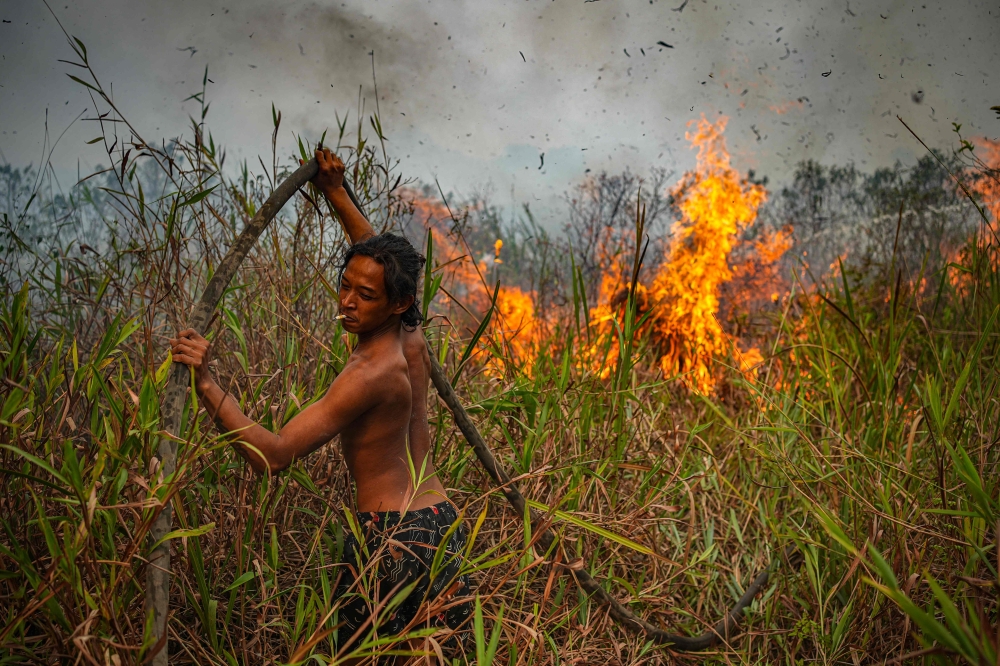
Indonesia has faced extensive forest and peat fires, harming humans and wildlife, leading to criminal charges and a new agency focused on fire management.
The fires, exacerbated by slash-and-burn practices and a strong El Nino, have affected over 896,000 hectares, mainly in South Papua.
The haze from the fires has caused respiratory issues in Indonesia and spread to Malaysia, Singapore, and beyond, closing schools and worsening air quality.
Jakarta, Sept 29 — For weeks, Indonesia has been battling fires that have burned vast swathes of forest and peat ecosystems, causing toxic haze to blanket parts of the country, Malaysia and Singapore.
The fires have harmed humans and animals alike, and prompted criminal charges, license suspensions and a presidentially mandated new agency to tackle fires in peat ecosystems.
Here’s what to know:
What is the latest situation?
Between January and July alone, more than 202,000 hectares were razed by fire, according to government figures. That is an area roughly three times the size of the capital Jakarta, and represents a 69-per cent increase in burned areas in the same period last year.
But the figures have not been updated since, and the burning has only worsened.
The Nusantara Atlas project, which uses satellite monitoring, estimates nearly 896,000 hectares — over five times the size of Greater London — had burned by the end of August.
South Papua province on the country’s easternmost island was the most-affected region, with over 168,000 hectares burned as of August, according to Nusantara Atlas.
NGO Yayasan Pusaka Bentala Rakyat said fires have been detected inside a large-scale government food estate project in South Papua, local media reported.
What is causing the fires?
The El Nino weather phenomenon typically brings dry conditions to Indonesia, and this cycle is predicted to be among the strongest in decades and last until early 2027.
But experts said human factors are also key, including slash-and-burn land-clearing and decades of forest degradation that have changed the naturally fire-resistant landscape.
“El Nino isn’t actually the cause, but it’s a trigger. There still needs to be an ignitor,” IPB University forestry lecturer Ati Dwi Nurhayati told AFP.
“We know that in peatlands, almost 100 per cent (of the fires) was caused by human activity.”
Peat ecosystems are dense layers of partially decomposed organic materials that are normally waterlogged. But in much of Indonesia they have been dried out so the land can be planted. This created highly flammable regions.
Once peat catches fire, it can smoulder and reignite for days, making firefighting efforts complex.
In the first eight months of this year, over 212,000 hotspots have been detected inside peat ecosystems across the country, according to NGO Pantau Gambut.
The figure was more than double that recorded during 2015’s strong El Nino.
What is the government’s response?
Indonesia has deployed firefighters assisted by volunteers across affected areas, and used cloud-seeding and water-bombing, with limited success. Malaysia and Japan have also offered assistance.
Authorities revoked the permits of five companies accused of contributed to the fires, with dozens more frozen.
President Prabowo Subianto last week ordered the creation of a new government agency to manage tropical peat and mangrove ecosystems and carry out fire prevention.
Indonesia set up a similar agency after the 2015 fires, initially tasked with peat and expanded to mangroves in 2020. But its mandate was not renewed when it expired in 2024.
In 2015, fires burned more than two million hectares in Indonesia, costing an estimated US$16.1 billion in damages, according to the World Bank.
But the agency’s establishment has been met with some scepticism.
“The important thing is to ensure that this agency’s mandate can answer the issue of peat management, not just introduce a new structure,” Pantau Gambut senior campaigner Putra Saptian said in a statement.
What are the impacts?
Indonesia’s health ministry said last week that cases of respiratory illness have climbed past 170,000 in haze-hit provinces across Sumatra and Borneo.
The blazes have also had a devastating impact on wildlife.
Indonesian authorities have rescued 100 animals, including 53 orangutans, that were threatened by the blazes, a forestry ministry official said last week.
In Borneo, fires have been detected within habitats containing 52 per cent of the island’s orangutan population, the International Union for Conservation of Nature said.
The haze has spread beyond Indonesia’s border, drifting particularly into Malaysian Borneo’s Sarawak state where schools have periodically closed because of the smog.
It has also reached Singapore and even caused declining air quality in the Philippines and southern Thailand. — AFP
Trump to meet AI chiefs at White House as pressure grows for tighter oversight
Argentina’s Milei threatens UK with arbitration over Falklands oil project
Kyiv hit by explosions as missile alert sounds
Avoid the F1 rush: AirAsia advises extra KLIA travel time Oct 2-4
Malaysia targets 60pc of EPF members reaching RM390,000 savings by 2030
Fahmi Fadzil plays down Pakatan-Bersatu Melaka dinner
印度尼西亚曾遭受大规模森林和泥炭火灾,对人类和野生动物造成伤害,导致刑事指控和一个新的专注于火灾管理的机构成立。
刀耕火种的做法和强烈的厄尔尼诺现象加剧了火灾,过火面积超过 896,000 公顷,主要集中在南巴布亚。
山火产生的烟雾在印度尼西亚引发了呼吸系统疾病,并蔓延至马来西亚、新加坡等地,导致学校停课,空气质量恶化。
雅加达,9 月 29 日——数周以来,印度尼西亚一直在与大火作斗争,大火烧毁了大片森林和泥炭生态系统,导致有毒烟雾笼罩该国部分地区、马来西亚和新加坡。
火灾对人类和动物都造成了伤害,并引发了刑事指控、吊销执照以及总统授权成立的新机构来应对泥炭生态系统中的火灾。
以下是您需要了解的内容:
最新情况如何?
据政府数据显示,仅今年1月至7月,就有超过20.2万公顷的土地被大火烧毁。这一面积大约是首都雅加达的三倍,比去年同期增加了69%。
但此后相关数据一直没有更新,而火灾情况却愈演愈烈。
利用卫星监测的努桑塔拉地图集项目估计,截至 8 月底,已有近 896,000 公顷(相当于大伦敦面积的五倍多)的土地被烧毁。
据努桑塔拉地图集报道,该国最东端岛屿上的南巴布亚省是受灾最严重的地区,截至 8 月,已有超过 168,000 公顷的土地被烧毁。
据当地媒体报道,非政府组织 Yayasan Pusaka Bentala Rakyat 表示,南巴布亚一个大型政府粮食种植园项目内发现火灾。
是什么原因导致了这些火灾?
厄尔尼诺现象通常会给印度尼西亚带来干旱天气,预计本轮厄尔尼诺现象将是几十年来最强烈的,并将持续到 2027 年初。
但专家表示,人为因素也是关键因素,包括刀耕火种的土地清理和数十年来森林的退化,这些都改变了原本具有天然抗火能力的景观。
“厄尔尼诺现象实际上并不是原因,而是一个触发因素。还需要一个引燃源,”IPB大学林业讲师阿蒂·德维·努尔哈亚蒂告诉法新社。
“我们知道,在泥炭地,几乎 100% 的火灾都是人类活动造成的。”
泥炭生态系统是由致密的、部分分解的有机物层构成,通常处于水饱和状态。但在印度尼西亚的大部分地区,为了进行耕种,泥炭地已被排干,从而形成了高度易燃的区域。
泥炭一旦着火,就会阴燃并复燃数日,使灭火工作变得复杂。
据非政府组织 Pantau Gambut 称,今年前八个月,全国泥炭生态系统中已检测到超过 212,000 个热点。
这个数字是 2015 年强厄尔尼诺现象期间记录数字的两倍多。
政府对此有何回应?
印尼已在受灾地区部署消防员和志愿者,并采取了人工降雨和水弹轰炸等措施,但收效甚微。马来西亚和日本也提供了援助。
当局吊销了五家被指控与火灾有关的公司的许可证,另有数十家公司被冻结。
上周,普拉博沃·苏比安托总统下令成立一个新的政府机构,负责管理热带泥炭和红树林生态系统并开展防火工作。
印尼在 2015 年火灾后成立了一个类似的机构,最初负责泥炭地,2020 年扩展到红树林。但其授权在 2024 年到期时没有续签。
据世界银行统计,2015 年印度尼西亚发生火灾,过火面积超过 200 万公顷,造成的损失估计达 161 亿美元。
但该机构的成立遭到了一些质疑。
“重要的是要确保该机构的职权范围能够解决泥炭管理问题,而不仅仅是引入一个新的组织结构,” Pantau Gambut 高级活动家 Putra Saptian 在一份声明中表示。
会产生哪些影响?
印尼卫生部上周表示,苏门答腊岛和婆罗洲受雾霾影响的各省呼吸道疾病病例已超过 17 万例。
火灾也对野生动物造成了毁灭性的影响。
印尼林业部一名官员上周表示,印尼当局已救出 100 只受火灾威胁的动物,其中包括 53 只猩猩。
国际自然保护联盟表示,在婆罗洲,岛上 52% 的猩猩栖息地内发现了火灾。
雾霾已经蔓延到印度尼西亚境外,尤其飘到了马来西亚婆罗洲的沙捞越州,当地学校因雾霾而时常停课。
它还已抵达新加坡,甚至导致菲律宾和泰国南部空气质量下降。——法新社
随着各方要求加强监管的压力日益增大,特朗普将在白宫会见人工智能领域负责人。
阿根廷总理米莱威胁英国就福克兰群岛石油项目提起仲裁
导弹警报响起,基辅发生爆炸。
避开F1赛事高峰:亚航建议10月2日至4日期间预留更多吉隆坡国际机场(KLIA)出行时间
马来西亚的目标是到2030年,60%的公积金会员储蓄额达到39万令吉。
法赫米·法兹尔淡化了民联与土团党马六甲的晚宴