Stamford Land wins $1.9m claim against UOB over rights issue after bank found grossly negligent斯坦福地产公司就配股事宜起诉大华银行,获赔190万美元,此前该银行被认定存在严重疏忽。
Stamford Land wins $1.9m claim as UOB found grossly negligent over non-compliant advice on excess shares allocation in 2021 rights issue. Read more at straitstimes.com.
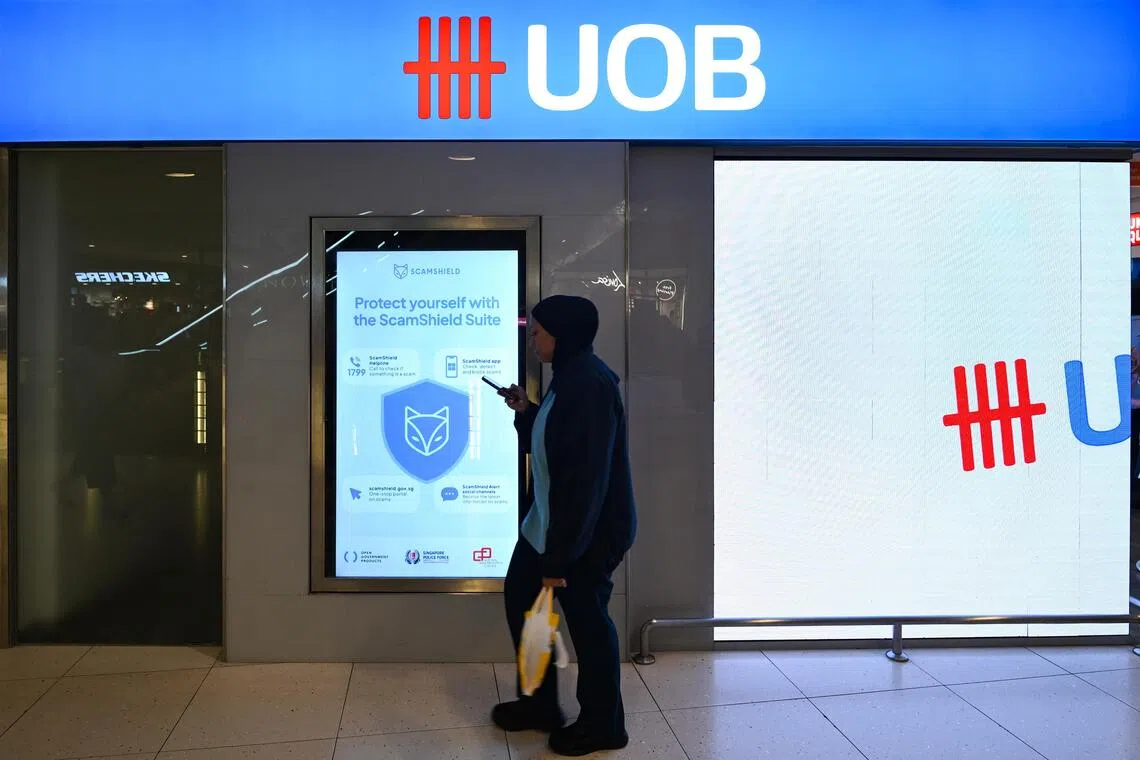
Justice Dedar Singh Gill said UOB, which was appointed manager of Stamford Land’s rights issue, should have ensured the allocation complied with Singapore Exchange rules.
ST PHOTO: LIM YAOHUI
Published Sep 29, 2026, 04:35 PM
Updated Sep 29, 2026, 04:35 PM
Stamford Land won a $1.9 million claim against UOB after the High Court ruled the bank was grossly negligent in advising on the allocation of excess shares in a 2021 rights issue.
UOB allocated shares to controlling shareholders before fully satisfying non-restricted shareholders, violating SGX Rule 877(10) which prioritises non-restricted shareholders in excess share allotment.
The judge criticised UOB for ignoring internal precedents and failing to ensure compliance, leading to legal costs and damages payable to Stamford Land, with UOB also ordered to pay court costs.
SINGAPORE – Mainboard-listed Stamford Land Corporation has won a $1.9 million claim against UOB after the High Court found that the bank had been grossly negligent when it gave the company non-compliant advice on how to allocate excess shares in a 2021 rights issue.
In a judgment released on Sept 29, Justice Dedar Singh Gill said UOB, the appointed manager of the rights issue, should have ensured that the allocation complied with Singapore Exchange (SGX) rules.
Excess shares are those left over when some shareholders do not take up all the shares they were entitled to buy.
UOB came up with a method that allocated some shares to the property developer’s directors and substantial shareholders before all applications from minority shareholders had been satisfied, even though the latter received a higher allocation rate.
The judge said this contravened Rule 877(10) of the SGX Mainboard Rules, which says that directors and substantial shareholders with control or influence over a listed company, or its rights issue, will “rank last in priority” for the allocation of excess rights shares.
In December 2021, Stamford Land, which owns and operates luxury hotels in Australia, offered about 703.7 million new shares at 34 cents each, on the basis of nine new shares for every 10 existing shares.
The issue was oversubscribed, with applications for about 1.01 billion shares. After valid applications for the rights shares were taken into account, 106.1 million shares remained for allocation as excess rights shares.
This excess pool was itself heavily oversubscribed.
Non-restricted shareholders – broadly, shareholders without the control or influence covered by the rule – applied for about 91.4 million of the excess shares.
Restricted shareholders, including Stamford Land’s controlling shareholders, applied for about 321.7 million.
A preliminary proposal from Stamford Land’s other adviser would have fully satisfied the applications from non-restricted shareholders first. It would then have left about 14.7 million excess shares for restricted shareholders.
But UOB proposed a different approach – what it called the “success rate” methodology. The idea was to give non-restricted shareholders a significantly higher percentage of their applications than restricted shareholders.
Several versions of the method were considered.
Under UOB’s final proposal, 46,022,551 excess shares were allotted to non-restricted shareholders, while 60,043,712 went to restricted shareholders.
UOB ‘creative but legally unsound’
But Gill said UOB’s approach did not satisfy the SGX rule, describing UOB’s interpretation as “creative but legally unsound”.
He noted that where there were enough excess shares to satisfy all the non-restricted applications, those applications had to be dealt with first.
“The necessary implication is thus that any application by the non-restricted individuals must be satisfied before the restricted individuals are allotted excess rights shares,” he said.
The bank had also argued that the rule was open to interpretation at the time, and that SGX’s interpretation was not publicly available during the rights issue.
The judge rejected this.
He noted that UOB had itself previously handled rights issues where restricted shareholders had applied for excess shares but received none because the non-restricted shareholders’ applications were satisfied first.
In one such internal precedent, two restricted individuals had applied for excess rights shares but received nothing. Justice Gill said this was “a real-life example” of how the SGX rule operated.
Yet, UOB’s employees had not checked those internal precedents before advising Stamford Land.
The judge found that neither senior director David Tham Fook Thai nor vice-president Kelvin Kwek Rui Sen properly checked UOB’s previous cases.
Although Kwek said he “probably” would have checked, there was no documentary evidence showing that he had done so.
Gill said this was particularly serious because UOB regarded the situation as “unprecedented”.
The bank had limited recent experience with rights issues and had not encountered a situation where the non-restricted shareholders had not fully taken up the excess shares, but the issue was oversubscribed because of applications by restricted shareholders.
“If, indeed, the situation was truly ‘unprecedented’, a reasonable adviser would have done more, not fewer, checks to ensure compliance,” the judge said.
UOB could have checked its own precedents, looked at market precedents, or asked SGX for guidance, he added.
Instead, UOB persisted with its interpretation.
Shareholder complaint
SGX began looking into the allocation in April 2022 following a shareholder complaint.
In August 2022, it told Stamford Land that it might have breached Rule 877(10). The company engaged lawyers Drew & Napier and Eng & Co to deal with the investigation.
UOB initially continued to tell Stamford Land that its method was compliant.
In September 2023, UOB’s Tham told Stamford Land that the bank would “continue to stand by” it and provide further assistance.
But he did not respond when Stamford Land executive chairman Ow Chio Kiat later asked him to provide a written statement to support the company’s defence.
Stamford Land was left to defend the SGX proceedings or, in Ow’s words, face the “firing squad” on its own.
It later emerged at trial that UOB’s legal team had instructed Tham not to respond.
During its disciplinary proceedings against Stamford Land, SGX said the “clear and obvious” interpretation of Rule 877(10) was that non-restricted shareholders’ valid applications had to be fully satisfied before restricted shareholders could receive any excess shares.
These proceedings were eventually settled in December 2023 without an admission of liability.
As part of the settlement, Stamford Land’s controlling shareholders donated $2 million to the SGX Investor Education Fund.
Stamford Land then sued UOB to recover $1,887,946.31 in legal costs it had incurred in dealing with the SGX investigation and disciplinary proceedings.
UOB argued that its advice was reasonable and that the contractual terms between the parties protected it from liability except where there was a final court judgment showing “wilful default or gross negligence”.
The judge found that exclusion clause reasonable because it had been negotiated between the parties.
But this did not save UOB.
Gill found that the bank had breached both its contractual duty to advise Stamford Land and its contractual duty to exercise reasonable skill and care.
More importantly, he found that UOB’s conduct crossed the higher threshold of gross negligence.
“UOB had limited relevant experience in rights issues,” he said.
The bank’s team had been told the normal method of allotment. “They chose not to follow it.”
“They considered the position to be unprecedented. Yet they did not look for precedents within UOB, or beyond it.”
Justice Gill said UOB had rendered its advice with “serious disregard to the obvious risk of non-compliance” with the SGX rule.
More importantly, he found that UOB’s conduct crossed the higher threshold of gross negligence and awarded Stamford Land the full $1,887,946.31 claimed.
UOB was also ordered to pay costs of the court action.
德达·辛格·吉尔法官表示,大华银行作为斯坦福地产配股的管理人,本应确保配股符合新加坡交易所的规定。
ST 照片:林耀辉
发布于 2026 年 9 月 29 日下午 4:35
更新于2026年9月29日下午4:35
斯坦福置地公司 (Stamford Land) 向大华银行 (UOB) 索赔 190 万美元,高等法院裁定该银行在 2021 年配股中就超额股份的分配提供建议时存在严重疏忽。
大华银行在完全满足非限制性股东的需求之前,就向控股股东分配了股份,违反了新加坡交易所第 877(10) 条规则,该规则规定在超额股份分配中优先考虑非限制性股东。
法官批评大华银行无视内部先例,未能确保合规,导致斯坦福地产需支付诉讼费用和赔偿金,大华银行还被责令支付诉讼费用。
新加坡——新加坡主板上市的斯坦福置地公司(Stamford Land Corporation)赢得了针对大华银行(UOB)的190万美元索赔。此前,高等法院裁定,大华银行在2021年配股中就如何分配超额股份向该公司提供了不合规的建议,存在严重疏忽。
9 月 29 日发布的判决书中,法官 Dedar Singh Gill 表示,作为配股的指定管理人,大华银行本应确保配股符合新加坡交易所 (SGX) 的规定。
超额股份是指部分股东未认购其有权购买的全部股份而剩余的股份。
大华银行想出了一个办法,在满足所有少数股东的申请之前,就将一些股份分配给了房地产开发商的董事和主要股东,尽管少数股东获得了更高的分配率。
法官表示,这违反了新加坡交易所主板规则第 877(10) 条,该条规定,对上市公司或其配股有控制权或影响力的董事和主要股东,在分配超额配股时将“排在最后”。
2021 年 12 月,在澳大利亚拥有和经营豪华酒店的斯坦福地产公司以每股 34 分的价格发行了约 7.037 亿股新股,配股比例为每 10 股现有股份配 9 股新股。
此次发行获得超额认购,共收到约10.1亿股的认购申请。在计入有效的配股申请后,剩余1.061亿股作为超额配股进行分配。
这个超额池本身就严重超额认购。
非限制性股东(广义上讲,指不受该规则约束的控制或影响的股东)申请认购了约 9140 万股超额股份。
包括斯坦福置地控股股东在内的受限股东申请了约 3.217 亿。
斯坦福地产另一位顾问提出的初步方案将首先完全满足非限制性股东的申请。该方案随后将为限制性股东保留约1470万股超额股份。
但大华银行提出了一种不同的方法——所谓的“成功率”方法。其理念是给予非限制性股东比限制性股东更高的申请成功率。
我们考虑了该方法的几种不同版本。
根据大华银行的最终方案,46,022,551股超额股份分配给了非限制性股东,而60,043,712股分配给了限制性股东。
大华银行“创意十足但法律上站不住脚”
但吉尔表示,大华银行的做法不符合新加坡交易所的规定,并称大华银行的解释“富有创意,但在法律上站不住脚”。
他指出,如果剩余股份足以满足所有非限制性申请,则必须首先处理这些申请。
“因此,必然的结论是,非受限个人的任何申请都必须得到满足,受限个人才能获得超额配股,”他说。
该银行还辩称,当时的规则尚有多种解释,而且在配股期间,新加坡交易所的解释并未公开。
法官驳回了这一请求。
他指出,大华银行此前也曾处理过配股问题,当时受限股东申请了超额股份,但由于非受限股东的申请首先得到了满足,所以他们没有获得任何股份。
在其中一个内部案例中,两名受限人士申请了超额配股,但最终一无所获。吉尔法官表示,这是新加坡交易所规则运作的“一个真实案例”。
然而,大华银行的员工在向斯坦福置地提供建议之前,并没有查阅这些内部先例。
法官发现,高级董事 David Tham Fook Thai 和副总裁 Kelvin Kwek Rui Sen 都没有认真审查大华银行之前的案例。
虽然郭先生表示他“可能”会去核查,但没有任何书面证据表明他已经核查过。
吉尔表示,此事尤其严重,因为大华银行认为这种情况是“史无前例的”。
该银行近期在配股方面经验有限,从未遇到过非限制性股东未完全认购超额股份的情况,但由于限制性股东的申请,此次配股超额认购。
法官说:“如果情况确实‘史无前例’,那么一位理智的顾问应该进行更多(而不是更少)的检查以确保合规。”
他补充说,大华银行本可以查阅自己的先例,参考市场先例,或者向新加坡交易所寻求指导。
然而,大华银行坚持自己的解释。
股东投诉
新加坡交易所于 2022 年 4 月开始调查此次配售事宜,起因是股东投诉。
2022年8月,该公司告知斯坦福地产,其可能违反了第877(10)条规则。该公司聘请了德鲁·纳皮尔律师事务所和恩格律师事务所处理调查事宜。
大华银行最初一直告诉斯坦福置地,其方法符合规定。
2023 年 9 月,大华银行的谭先生告诉斯坦福置地,该银行将“继续支持”该公司,并提供进一步的援助。
但当斯坦福置地执行主席欧秋杰后来要求他提供书面声明以支持公司的辩护时,他没有回应。
斯坦福地产只能独自应对新加坡交易所的诉讼,或者用欧阳的话来说,独自面对“枪决”。
后来在庭审中发现,大华银行的法律团队曾指示谭某不要回应。
在对斯坦福置地进行纪律处分程序期间,新加坡交易所表示,第 877(10) 条规则的“明确和显而易见的”解释是,非限制性股东的有效申请必须得到完全满足,限制性股东才能获得任何超额股份。
这些诉讼最终于 2023 年 12 月达成和解,双方均未承认责任。
作为和解协议的一部分,斯坦福地产的控股股东向新加坡交易所投资者教育基金捐赠了 200 万美元。
斯坦福置地随后起诉大华银行,要求其赔偿因处理新加坡交易所的调查和纪律处分程序而产生的 1,887,946.31 美元法律费用。
大华银行辩称,其建议是合理的,并且双方之间的合同条款保护其免于承担责任,除非有最终法院判决表明存在“故意违约或重大过失”。
法官认为该免责条款合理,因为它是双方协商的结果。
但这并没有挽救大华银行。
吉尔发现,该银行既违反了其向斯坦福土地公司提供建议的合同义务,也违反了其履行合理技能和谨慎义务的合同义务。
更重要的是,他发现大华银行的行为已经达到了严重疏忽的更高标准。
他说:“大华银行在配股方面相关经验有限。”
银行团队已被告知正常的分配方法。“但他们选择不按常规方法执行。”
“他们认为这种立场史无前例。然而,他们既没有在大华银行内部寻找先例,也没有在大华银行外部寻找先例。”
吉尔法官表示,大华银行在提供建议时“严重漠视了违反新加坡交易所规定的明显风险”。
更重要的是,他发现大华银行的行为已经超过了严重疏忽的更高标准,并判给斯坦福地产公司全额赔偿 1,887,946.31 美元。
大华银行还被责令支付诉讼费用。