Mixed messages from Thai government on a US Thai trade deal despite Commerce Minister’s optimism尽管泰国商务部长持乐观态度,但泰国政府对美泰贸易协议的态度却模棱两可。
Thailand’s US trade deal hits a hiatus as Suphajee says an agreement is close at hand but Sihasak flags market access. AI rules, US investment… Read More ›
新闻视频
September 29, 2026 at 11:10 pm
in Economy , Living , Media , Politics , Thailand
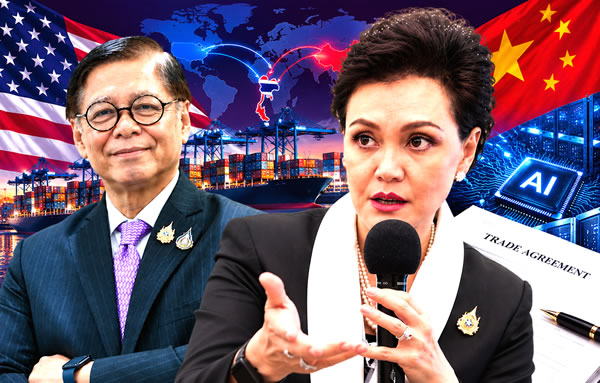
Thailand’s long-awaited US trade deal has hit a serious hiatus as conflicting accounts emerge from Bangkok’s top negotiators. Commerce Minister Suphajee Suthumpun says an agreement has been reached in principle. Yet Foreign Minister Sihasak Phuangketkeow says market access remains the key issue. Meanwhile, a planned Anutin-Trump call has vanished and no signing date exists. Behind the deadlock are major US demands covering tariffs, investment, AI, digital trade, export controls and investment security. Crucially, Washington is targeting duty evasion and transshipment as Thailand’s manufacturing economy remains deeply entwined with China. Beijing has previously warned countries against US trade arrangements damaging Chinese interests, although no evidence links China directly to this delay. With a separate Section 301 investigation looming, September ends without the deal Bangkok repeatedly suggested was almost done.
Deputy Prime Minister and Minister of Commerce Suphajee Suthumpun says a US deal is agreed in principle, while Deputy Prime Minister and Minister of Foreign Affairs Sihasak Phuangketkeow flags market access. ( Source: Ministry of Commerce )
A widening hiatus has developed in Thailand’s crucial trade negotiations with the United States. Conflicting accounts from two senior ministers have also clouded the timetable. Commerce Minister Suphajee Suthumpun says an agreement has now been reached in principle. Yet Foreign Minister Sihasak Phuangketkeow described substantive differences only four days earlier.
Mr Sihasak said Thailand and the United States remained engaged in “serious discussions”. More importantly, he identified market access as the central unresolved issue. “The key issues are basically market access,” he told Bloomberg Television.
His comments came during the United Nations General Assembly in New York. Notably, Bangkok had previously suggested the substantive negotiations were essentially finished.
US-Thai trade deal remains unsigned as Washington seeks wider market access and security commitments
The contrast is significant. Thailand had expected the final wording to be completed weeks earlier. Meanwhile, a planned conversation between Prime Minister Anutin Charnvirakul and US President Donald Trump never happened. That call was expected around September 17-18. No replacement date has since been announced.
Likewise, there is no announced date for signing the Agreement on Reciprocal Trade, known as the ART. Neither government has published the final negotiated text. Instead, Bangkok has returned to describing the remaining work as technical. Mr Sihasak’s September 24 comments presented a different picture.
The negotiations also extend considerably beyond reciprocal tariffs. Washington wants greater access for American goods, services and investors. In parallel, the framework covers digital trade, telecommunications, export controls and investment security. It also seeks action against duty evasion and unfair third-country trade practices.
Those provisions carry particular importance for Thailand. The country is deeply integrated with Chinese manufacturing, investment and industrial supply chains. At the same time, Washington is tightening scrutiny of goods routed through third markets. Thailand has already faced US concerns over possible transshipment involving Chinese-origin products.
Transshipment exposure puts Thailand’s Chinese supply chains under closer American trade scrutiny
Indeed, Bank of Thailand analysis identified 547 exporters potentially fitting a broad transshipment-risk profile. Those exporters represented at least 26.7% of Thai exports to America under its methodology. The classification does not establish wrongdoing by those companies. Nevertheless, it demonstrates Thailand’s considerable exposure to tighter American origin controls.
China, meanwhile, remains one of Thailand’s most important economic partners. Chinese investment has become increasingly significant across Thai manufacturing. Chinese components also feed extensive regional supply chains operating through the kingdom. Consequently, Washington’s demands reach directly into a sensitive part of Thailand’s economic relationship with Beijing.
Mr Sihasak’s Bloomberg comments were particularly striking in that context. Immediately beforehand, he discussed the wider relationship between the United States and China. He described that relationship as consequential for the entire region. He then addressed Thailand’s bargaining position with Washington.
“We are not a superpower, and we negotiate,” Mr Sihasak said. “We try to strike the best deal, we try to accommodate where we can,” he added. However, he also indicated Thailand had positions on which it must stand firm.
Sihasak says market access remains the key issue after warning Thailand is not a global superpower
Bloomberg then asked what was preventing completion of the US agreement. Mr Sihasak gave a direct answer. “The key issues are basically market access,” he said. That description went considerably further than references to final technical drafting.
Market access itself covers a wide negotiating field. It includes American goods entering Thailand and conditions facing US companies operating here. Pork has emerged as one potentially difficult agricultural issue. However, Washington’s demands extend far beyond meat imports.
Under the framework, the United States wants Thailand to eliminate tariffs on approximately 99% of American goods. That includes industrial products and agricultural exports. In addition, Washington wants greater access for American farm products. Existing standards and non-tariff barriers are also part of the negotiations.
Digital trade provides another major front. Washington wants trusted cross-border data transfers and non-discriminatory treatment for American digital services. Separately, the framework addresses restrictions affecting US investment in Thailand’s telecommunications industry. Intellectual property enforcement also forms part of the package.
Economic security adds another layer. Washington wants stronger cooperation over supply-chain resilience and investment security. As part of this, the framework seeks cooperation against unfair trade practices involving third countries. It also covers export controls and duty evasion.
US trade demands extend beyond tariffs into digital trade, investment security and export controls
Those provisions make the ART substantially broader than a conventional tariff agreement. They also place product origin and investment relationships directly inside the negotiations. For Thailand, that intersects with substantial Chinese commercial interests. However, no evidence establishes direct Chinese intervention in the current talks.
Nor is there evidence that Beijing caused the present delay. Still, China has previously warned countries against arrangements with Washington that damage Chinese interests. China’s Commerce Ministry issued that warning during regional tariff negotiations in April 2025. Southeast Asian governments were then seeking relief from American reciprocal tariffs.
Against that background, Mr Sihasak’s “not a superpower” comment carries added context. However, the supplied material does not establish precisely what he meant. His subsequent comments are clearer. Market access remained unresolved on September 24.
That admission came after weeks of considerably more optimistic statements from Bangkok. On September 1, Ms Suphajee met US Trade Representative Jamieson Greer in Washington. She also met Deputy USTR Rick Switzer. Afterwards, Thailand said the substance of the ART had been agreed.
Technical teams were then expected to complete the remaining provisions. One week later, Ms Suphajee provided an even tighter timetable. On September 8, she said final wording should require approximately another week. She also expected negotiations to conclude during September.
China backdrop grows as Bangkok shifts from claims of settled substance to unresolved market access
Attention subsequently shifted to the proposed Anutin-Trump telephone conversation. The call was expected around September 17-18. It was presented as an important step towards completing negotiations. Furthermore, final tariff treatment was expected to feature in those discussions.
The conversation never happened. No public explanation established why. Moreover, no replacement date subsequently appeared. Then, on September 24, Mr Sihasak disclosed continuing negotiations over market access.
His account changed the picture. These were not merely lawyers settling punctuation and technical language. Instead, Thailand’s foreign minister identified substantive questions involving market access. He also referred to conditions affecting American investors.
Four days later, the official position changed once more. On September 28, Ms Suphajee announced an agreement in principle. She said remaining work concerned technical provisions and precise wording. Something therefore appears to have moved during those four days.
However, neither side has published details showing exactly what moved. Washington has not released a final ART confirming every substantive issue has been resolved. The agreement also remains unsigned. No signing timetable has been announced.
Anutin-Trump call disappears as Sihasak reveals substantive US market access issues remain unresolved
The sequence is consequently important. First, Bangkok said the substance was agreed. Next, final drafting was expected within roughly one week. Then an Anutin-Trump conversation was expected to help close the process.
That conversation disappeared from the timetable. Subsequently, Mr Sihasak revealed continuing serious discussions over market access. Four days later, Ms Suphajee again described the outstanding work as technical. Both accounts can be accurate if significant progress occurred between September 24 and September 28.
Still, the final text remains unavailable. It will determine what Thailand actually conceded. It will also reveal how far Washington secured its wider economic-security objectives.
One particularly sensitive area concerns transshipment. Washington has long scrutinised goods potentially routed through third countries to avoid American tariffs. Thailand’s manufacturing base makes that issue especially important. Large volumes of imported components pass through Thai factories before finished goods reach overseas markets.
The Bank of Thailand figures illustrate the potential exposure. Its analysis identified 547 exporters under a broad transshipment-risk methodology. Together, they represented at least 26.7% of Thai exports to the United States. Again, the classification itself does not establish tariff evasion.
Bangkok’s shifting timetable leaves final concessions unclear as transshipment scrutiny intensifies
Even so, Washington’s proposed agreement specifically addresses duty evasion. It also seeks cooperation concerning third-country unfair trade practices. On another front, export-control cooperation forms part of the package. Investment security is included as well.
These demands have obvious relevance to Thailand’s Chinese-linked supply chains. Chinese companies have expanded their manufacturing footprint in Thailand. Thai factories also rely extensively on Chinese components and machinery. Therefore, tougher origin controls could affect more than customs paperwork.
The investment provisions could carry equally broad consequences. Washington wants cooperation concerning investment security. Yet Thailand continues attracting major Chinese industrial investment. The final wording will therefore matter for future screening and regulatory decisions.
Bangkok has simultaneously continued strengthening its political and economic relationship with Beijing. Mr Anutin made an official visit to China in July. There, he met President Xi Jinping and Premier Li Qiang. The resulting statement described a Thailand-China “community with a shared prosperous future”.
Thailand is therefore maintaining extensive economic relationships with both major powers. That is an established commercial reality. Washington, however, is asking Bangkok for commitments touching third-country supply chains and economic security.
US demands on duty evasion and investment security reach deep into Thailand’s Chinese supply chains
This pressure is not entirely new. During 2025, Washington was already pressing Thailand over trade barriers and product origin. US concerns included Chinese goods potentially being relabelled or transshipped through Thailand. The previous Thai government responded with proposals designed to address American concerns.
Then-Prime Minister Paetongtarn Shinawatra offered increased purchases of American goods. These included energy, aviation products and agricultural products. Her government also proposed reducing import barriers. Furthermore, Bangkok offered stronger measures against false declarations of origin.
Despite those proposals, negotiations scheduled for April 23, 2025 were abruptly postponed. Ms Paetongtarn later acknowledged Washington wanted important elements reconsidered. She did not publicly identify every disputed provision.
The present negotiations therefore follow an established pattern of difficult bargaining over broader US demands. Washington is again seeking extensive market access. Additionally, it wants stronger safeguards concerning product origin and tariff circumvention.
This time, however, those objectives sit inside a broader economic-security framework. Export controls have joined the negotiating agenda. Investment security is also explicitly included. Third-country trade practices provide another component.
Thailand faces familiar US pressure on market access, product origin and Chinese-linked transshipment
There is another complication. The ART is not Thailand’s only active trade issue with Washington. Separately, the United States has opened a Section 301 investigation concerning structural excess capacity and production. Thailand is among the economies covered.
Bangkok has responded with fresh manufacturing data. Thailand says capacity utilisation reaches approximately 75-90% across important sectors. That contrasts with figures below 60%, which had apparently concerned Washington. Thai officials argue those higher rates undermine concerns about structural excess capacity.
Even completion of the ART would not automatically end that process. Section 301 operates under its own legal basis. For that reason, Ms Suphajee has stressed the urgency of completing the ART. Bangkok wants the bilateral agreement settled before the Section 301 process advances further.
Tariff differences add to that urgency. Thailand is seeking treatment comparable to Malaysia and Indonesia. Those economies face a 10% US levy under the arrangement described in the supplied material. Thailand and Vietnam face 12.5%.
For exporters, that difference can affect competitiveness across large volumes of trade. The United States remains Thailand’s largest export market. Consequently, access to American consumers remains commercially critical for Thai manufacturers.
Section 301 investigation adds pressure as Thailand seeks lower US tariffs and completion of trade deal
Yet tariff percentages represent only part of the negotiations. American demands concerning investment could reshape conditions for US companies operating in Thailand. Telecommunications provides one example. Washington wants changes affecting foreign ownership restrictions for American investors.
Technology provides another pressure point. Thailand is developing tighter rules covering artificial intelligence and digital activity. Proposed provisions include liability requirements, local processing and rules affecting overseas providers. American technology interests have already challenged provisions they consider restrictive.
At the same time, Bangkok is courting major American investment in artificial intelligence, cloud computing and data centres. That creates another important intersection with the trade talks. Washington wants trusted cross-border data flows. It also wants non-discriminatory treatment for American digital services.
American companies therefore have substantial interests in the final ART. Their concerns extend beyond customs duties. They include data movement, regulatory treatment, ownership restrictions and investment conditions.
US demands extend into AI, data flows and telecom ownership as Thailand courts American investment
In this area, the final agreement could reveal substantial Thai commitments. Digital provisions will show how far Bangkok moved towards Washington’s position. Telecommunications language could reveal changes affecting American ownership. Investment clauses may show how broadly Thailand accepted US economic-security requirements.
Agriculture remains another sensitive area. Pork access has been identified as one difficult issue. Washington also wants wider agricultural access. Yet these questions sit inside a package covering approximately 99% of American goods.
The scale explains why Mr Sihasak’s market-access comments matter. Market access is not one isolated disagreement. It potentially covers industrial goods, agriculture, investment, telecommunications and digital services.
His remarks also came after Bangkok had repeatedly suggested those substantive questions were settled. That creates a clear tension within the public timeline. Ms Suphajee’s latest statement may mean that gap has now closed.
However, the final agreement is still unavailable. Washington has not publicly released a completed ART text. Neither has a signing date emerged. The Anutin-Trump conversation also remains absent from the public timetable.
Final US trade deal could expose Thai concessions on digital trade, agriculture and market access
Meanwhile, the Section 301 process continues. Thailand therefore faces two separate US trade tracks. One concerns the negotiated ART. The other concerns Washington’s investigation into structural excess capacity.
The outcome of both processes matters for Thai exporters. However, the ART also carries wider strategic economic consequences. Its provisions reach deeply into Thailand’s treatment of foreign investors and supply chains.
Most significantly, the agreement covers issues linked to third-country trade. Duty evasion is explicitly addressed. Export controls are included. Investment security is also part of Washington’s demands.
These provisions make Chinese-linked supply chains impossible to ignore when assessing the agreement’s commercial impact. Yet the evidence stops short of establishing Chinese intervention. There is no proof Beijing instructed Bangkok to reject any American demand.
Similarly, there is no evidence China caused the missed Anutin-Trump call. No supplied material establishes Beijing caused the negotiating hiatus. What can be established is the economic pressure surrounding the talks.
Thailand faces two US trade tracks as economic-security demands put Chinese supply chains in focus
Thailand relies heavily on the American export market. Simultaneously, its manufacturing sector is deeply connected with China. Washington now wants economic-security commitments affecting precisely those supply chains.
China, for its part, publicly warned countries in 2025 against agreements damaging Chinese interests. That warning forms part of the documented regional background. It does not prove intervention in Thailand’s current negotiations.
Mr Sihasak’s remarks nevertheless exposed the difficulty of the bargaining. “We are not a superpower, and we negotiate,” he said. “We try to strike the best deal, we try to accommodate where we can.”
He then identified market access as the central unresolved issue. Those comments came on September 24. By September 28, Ms Suphajee said agreement had been reached in principle.
The four-day gap may ultimately prove decisive. Substantive concessions could have been agreed during that period. Alternatively, final negotiations may still contain unresolved technical provisions with significant commercial effects.
For now, the published record cannot determine which. The final ART will provide the clearest evidence. Until then, Bangkok’s latest claim remains an agreement in principle rather than a signed agreement.
Thailand balances vital US export market against deep Chinese links as final trade terms remain unseen
The timetable has already slipped repeatedly. September 1 brought claims that substantive negotiations were settled. After that, September 8 brought expectations of final wording within approximately one week. Then, September 17-18 was supposed to bring the Anutin-Trump conversation.
That conversation did not happen. September 24 then brought Mr Sihasak’s disclosure of continuing market-access negotiations. September 28 brought another declaration that only technical work remained.
The negotiations have therefore reached another apparent closing stage. Yet the final tariff treatment remains critical. So do the agreement’s less visible provisions.
Those provisions could govern American investment, digital trade and telecommunications. They could also affect agriculture, supply chains and customs enforcement. In addition, they could determine Thailand’s commitments on export controls and investment security.
For Bangkok, the stakes are substantial. The United States remains its largest export market. China remains deeply embedded in its industrial economy. Meanwhile, Washington is demanding closer economic-security alignment within the trade agreement.
Repeated delays leave US-Thai trade deal unsigned as economic-security commitments remain unclear
No evidence shows China caused the current delay. However, the US demands clearly touch economic relationships involving Chinese trade and investment. That distinction remains important.
What is beyond dispute is the hiatus itself. Thailand expected the agreement to be completed earlier this month. It remains unsigned as September ends.
The conflicting ministerial accounts have also exposed uncertainty over what actually held it up. Ms Suphajee says the remaining work is now technical. Mr Sihasak said days earlier that market access remained the key issue.
Meanwhile, the expected Anutin-Trump call has disappeared from the timetable. No final agreement has been published. No signing date has been announced.
Thailand says it has finally secured an agreement in principle. The final text will show what that agreement requires.
Thailand moves carefully with AI regulation as US tech warns over key provisions hindering investment
TH AI plan runs into problems and bottlenecks. New AIS deal offering cheap 29 baht per month internet
Paying AI users in Thailand had a nightmare week online just as the government waded into the market
People’s Party firebrand attacks flagship TH AI project launched this week with corruption agency filing of claims
Thais take to government TH AI project on the first day with ChatGPT reporting outages later on Monday
TH AI Passport artificial intelligence to go live on August 28th with strong public demand says Minister
Democrat Party deputy leader renews attacks on the TH-AI passport project as the minister pushes ahead
Thai workers are now World leaders for AI use. More than double the global average. Firms must wise up
Democrat Party Deputy Leader reveals flaws in the TH-AI Passport plan and calls on Minister to abort it
Abhisit Vejjajiva calls for scrutiny of flagship AI project being pursued by Digital Economy ministry
Opposition and Prime Minister highlight corruption which is damaging the kingdom’s credibility abroad
Transport Minister orders report on bribery allegations in the US relating to junkets and Massage Parlours
Joseph Anthony is an expat from Ireland who has lived in Thailand for the last decade. He has worked extensively in the media including editorial positions in Ireland and Thailand. He is focused on economic and business stories in Thailand as well as the expat lifestyle.
All posts by Joseph O' Connor
Figures for opening 8 months of 2026 show a gaping trade deficit as Thailand imports more from China September 27, 2026 Prime Minister Anutin Charnvirakul visited London
PM directs flash flooding crisis which has hit Bangkok making all 50 districts disaster zones from London September 26, 2026 Bangkok battles severe flooding after almost 300mm of
Prime Minister Anutin’s US visit this week yielded a closer ties pact between Bangkok and Wall Street September 26, 2026 Wall Street opens its doors to closer Thai links as
Horror in Phuket as policeman’s Glock gun misfires in slider action fatally wounding his 49 year old mother September 25, 2026 Phuket policeman faces a fatal shooting probe after
Bombshell Supreme Court ruling links Bhumjaithai Party figure with orchestrated Senate poll collusion September 25, 2026 Supreme Court exposes corrupt conduct in the 2024
Prime Minister and his team grilled by Wall Street on Thailand’s geopolitical stance and growth plans September 25, 2026 Hard-boiled Wall Street investors put PM Anutin and
Four sentenced to life for deadly 2022 insurgency bombing in Pattani. Death sentences commuted to life September 24, 2026 Death sentences for four men are reduced to life
Bhumjaithai political overlord in Prachin Buri to spend life in prison after death sentence is commuted by court September 24, 2026 Ex-minister Sunthorn Wilawan, 87, gets life after his
Prime Minister Anutin readies defences as Thamanat Prompow’s Kla Tham Party positions for government September 24, 2026 Capt Thamanat Prompow’s 58-MP Kla Tham moves towards
Canadian arrested for rape of a UK tourist in Chiang Mai just hours before he was due to leave Thailand September 24, 2026 Police swoop on Canadian Aldo Ochoa Saenz, 38, at his
Oil fund bleeds nearly 5 billion baht a week as the government struggles to cope with Middle East crisis September 23, 2026 Thailand’s Oil Fuel Fund bleeds ฿700 million daily
Interior Ministry probes Israeli network of Chabad in Thailand with reports of southern land purchases September 23, 2026 Polpeera widens Thailand’s Israeli-linked land probe
Concerns for the plight of the King’s third son whose health is reported to have declined in Malaysia September 22, 2026 Dr Chakriwat, King Maha Vajiralongkorn’s third son,
Local government examination scandal moves closer to a crunch. Rangsiman Rome calls on PM for answers September 22, 2026 Pressure mounts on Anutin over the ฿4.5bn local exam
Light at end of the tunnel for Thai flight attendant Meena arrested in Melbourne for drug trafficking offences September 22, 2026 Meena Kondo’s Australian drug case takes a hopeful
Anutin heads to New York but no sign yet of news on the US Thai trade deal as problems simmer at home September 21, 2026 Washington adds a fresh condition to Thailand’s US
Vietnam is taking Thailand’s quality tourists in huge numbers while Bangkok flails about with crackdowns September 21, 2026 Vietnam’s tourism boom is closing the gap on
American arrested in Pattaya after a joint agency raid found an illicit narcotics factory in his suburban home September 26, 2026
Warning in Thailand over fake cough syrup bottles. Police smash counterfeit medicine empire in 4 raids September 26, 2026
Spanish chef (32) who murdered and dismembered a Colombian surgeon on Koh Phangan loses appeal September 26, 2026
Dizziness, headaches in a Pattaya locale after a cannabis farm fire at a residence on Friday morning guts the property September 25, 2026
33 year old sets fire to Honda Scooby in Udon Thani after mother refused to buy him a more powerful ride September 25, 2026
Ministers accused of neglecting Thai farmers. Crucial aid support has not yet reached the cabinet table September 25, 2026
Prime Minister Anutin Charnvirakul formally summoned by parliament over local government exam scandal September 24, 2026
Former Justice Minister hails major bankruptcy bill which could help reduce the household debt burden September 24, 2026
Nene Royal wins big for Thailand with blistering ‘Seven Nation Army’ final act. Nets $1 million prize September 24, 2026
Chinese men arrested on rape and extortion charges after Pattaya raid. Woman locked up and chained September 23, 2026
Digital Minister (36) and heir to powerful Chidchob dynasty has a fortune of hundreds of millions September 23, 2026
Latest cannabis bill agreed by cabinet on Tuesday to rein in the out of control weed industry in Thailand September 23, 2026
Legal heavyweights plan seminar to review Election Commission’s move to let top politicians off the hook September 22, 2026
Culture Minister’s press briefing rebuffs use of 120 year old photo of Thai women by Cambodian Ms Universe pageant September 22, 2026
Family of murdered 35 year old Thai woman in Taiwan seek return of her ashes and financial compensation September 22, 2026
Thai women ‘Freya Ice Queen’ sex trafficking ring smashed by London’s Metropolitan police after tip off September 21, 2026
Spider Man ‘peace’ protest and arrest the latest news from the ongoing Koh Samui animal park controversy September 21, 2026
Assistant Headman dies in Yala attack on night of mayhem in the southern province into Sunday September 20, 2026
Phuket drug checkpoint scandal. Defence Corps unit set up to target the menace is accused of extortion September 20, 2026
Thaksin era minister reflects on Thailand’s 2006 coup d’état. Calls for a democracy dedicated to people September 20, 2026
45 year old Australian Simon Peter Carman is refused bail as he pleaded not guilty to murder in Pattaya September 19, 2026
Time for government to tighten its belt as debt ceiling looms and public debt surges from the pre Covid era September 18, 2026
© 2026 Thai Examiner. All rights reserved.
2026年9月29日晚上11点10分
经济、生活、媒体、政治、泰国
泰国期待已久的美泰贸易协议陷入严重僵局,曼谷方面最高谈判代表的说法莫衷一是。商务部长素帕吉·素通蓬表示,双方已原则上达成协议。然而,外交部长西哈萨·普昂克乔则表示,市场准入仍然是关键问题。与此同时,原定的阿努廷与特朗普的通话取消,签署日期也未确定。僵局背后是美国提出的多项重大要求,涵盖关税、投资、人工智能、数字贸易、出口管制和投资安全等领域。至关重要的是,华盛顿正着力打击逃税和转运行为,因为泰国的制造业经济与中国有着千丝万缕的联系。北京此前曾警告各国,美国的贸易安排可能会损害中国利益,尽管目前尚无证据表明中国与此次谈判延迟直接相关。此外,一项针对泰国的301条款调查也即将展开,9月即将结束,但曼谷此前多次声称已接近达成的协议仍未取得任何进展。
副总理兼商务部长素帕吉·素图蓬表示,已与美国原则上达成协议;副总理兼外交部长西哈萨克·普昂克乔则强调了市场准入问题。(来源:商务部)
泰国与美国的关键贸易谈判陷入了越来越大的僵局。两位高级部长的说法相互矛盾,也使谈判时间表更加扑朔迷离。商务部长素帕吉·素通蓬表示,双方已原则上达成协议。然而,就在四天前,外交部长西哈萨·普昂克乔还表示双方存在实质性分歧。
西哈萨克先生表示,泰国和美国仍在进行“严肃磋商”。更重要的是,他指出市场准入是尚未解决的核心问题。“关键问题基本上是市场准入,”他告诉彭博电视台。
他的评论是在纽约联合国大会期间发表的。值得注意的是,曼谷此前曾暗示实质性谈判实际上已经结束。
美泰贸易协议仍未签署,华盛顿方面寻求扩大市场准入和安全承诺。
对比十分鲜明。泰国原本预计最终文本会在几周前就定稿。与此同时,原定于9月17日至18日举行的泰国总理阿努廷·查恩维拉库尔与美国总统唐纳德·特朗普的通话却未能成行。目前尚未公布新的通话日期。
同样,互惠贸易协定(简称ART)的签署日期也尚未公布。两国政府均未公布最终谈判文本。曼谷方面反而再次将剩余工作描述为技术性工作。但西哈萨克先生9月24日的评论则呈现出不同的情况。
谈判范围远不止于互惠关税。华盛顿希望美国商品、服务和投资者获得更大的市场准入。与此同时,该框架还涵盖数字贸易、电信、出口管制和投资安全。此外,它还寻求打击逃税和不公平的第三国贸易行为。
这些规定对泰国尤为重要。泰国与中国的制造业、投资和产业供应链深度融合。与此同时,华盛顿正在加强对经由第三国市场转运的商品的审查。此前,美国已就泰国可能涉及中国原产产品的转运问题表达了担忧。
转运风险使泰国的中国供应链受到美国更严格的贸易审查。
事实上,泰国银行的分析识别出547家可能符合广泛转运风险特征的出口商。根据该分析方法,这些出口商至少占泰国对美出口总额的26.7%。这一分类并不构成这些公司存在不当行为的证明。然而,它表明泰国面临着美国更严格的原产地管制措施的显著影响。
与此同时,中国仍然是泰国最重要的经济伙伴之一。中国投资在泰国制造业中的重要性日益凸显。中国零部件也为遍布泰国的区域供应链提供原材料。因此,华盛顿的要求直接触及了泰国与北京经济关系中一个敏感的方面。
在此背景下,西哈萨克先生在彭博社的言论尤为引人注目。此前,他谈到了美中关系,并指出这种关系对整个地区都至关重要。随后,他又谈到了泰国在与华盛顿谈判中的立场。
“我们不是超级大国,我们通过谈判解决问题,”西哈萨克先生说。“我们努力达成最佳协议,尽力做出妥协,”他补充道。但他同时也表示,泰国在某些立场上必须坚持到底。
西哈萨克表示,市场准入仍然是关键问题,并警告称泰国并非全球超级大国。
彭博社随后询问是什么阻碍了美方协议的最终达成。西哈萨克先生直截了当地回答说:“关键问题基本上是市场准入。”他的这番话远不止提及最终的技术草案。
市场准入本身涵盖了广泛的谈判领域,包括美国商品进入泰国以及在泰经营的美国公司所面临的各种条件。猪肉已成为一个潜在的棘手农业问题。然而,华盛顿的要求远不止于肉类进口。
根据该框架,美国希望泰国取消对约99%美国商品征收的关税,其中包括工业产品和农产品出口。此外,华盛顿还希望美国农产品能够获得更大的市场准入。现有标准和非关税壁垒也是谈判的一部分。
数字贸易是另一个重要方面。华盛顿希望实现可信赖的跨境数据传输,并确保美国数字服务获得非歧视性待遇。此外,该框架还涉及影响美国在泰国电信行业投资的限制。知识产权执法也是该方案的一部分。
经济安全又增添了一层保障。华盛顿希望在供应链韧性和投资安全方面加强合作。作为其中的一部分,该框架寻求在打击涉及第三国的不公平贸易行为方面开展合作,并涵盖出口管制和逃税问题。
美国对贸易的要求不仅限于关税,还包括数字贸易、投资安全和出口管制等领域。
这些条款使得《泰国贸易协定》的范围远超传统的关税协定。它们还将产品原产地和投资关系直接纳入谈判范畴。对泰国而言,这与中国巨大的商业利益息息相关。然而,目前尚无证据表明中国直接干预了当前的谈判。
也没有证据表明北京造成了目前的延误。不过,中国此前曾警告各国不要与华盛顿达成损害中国利益的协议。中国商务部在2025年4月的区域关税谈判期间发出了这一警告。当时,东南亚各国政府正在寻求美国对等关税的豁免。
在此背景下,西哈萨克先生关于“并非超级大国”的评论有了更深层次的含义。然而,所提供的材料并未明确阐明他的具体意思。他随后的评论则更为清晰。截至9月24日,市场准入问题仍未得到解决。
在曼谷方面发表了数周更为乐观的声明之后,泰国方面做出了上述承认。9月1日,苏帕吉女士在华盛顿会见了美国贸易代表杰米森·格里尔,以及美国副贸易代表里克·斯威策。之后,泰国方面表示,双方已就《贸易协定》的实质内容达成一致。
技术团队随后需要完成剩余条款的制定。一周后,苏帕吉女士给出了更为紧迫的时间表。9月8日,她表示最终措辞的敲定大约还需要一周时间。她还预计谈判将在9月结束。
随着曼谷方面从主张已解决的实质性问题转向尚未解决的市场准入问题,中国背景日益凸显。
随后,各方关注的焦点转向了阿努廷与特朗普的电话会谈。此次通话预计在9月17日至18日左右举行,被视为完成谈判的重要一步。此外,最终关税待遇预计也将是会谈的重点议题。
这次对话从未发生。没有公开解释原因。此外,之后也没有公布新的谈判日期。9月24日,西哈萨克先生透露,关于市场准入的谈判仍在继续。
他的叙述改变了人们的印象。这并非仅仅是律师们在争论标点符号和技术术语。相反,泰国外交部长指出了涉及市场准入的实质性问题。他还提到了影响美国投资者的条件。
四天后,官方立场再次发生变化。9月28日,苏帕吉女士宣布双方原则上达成协议。她表示,剩余工作主要涉及技术条款和措辞细节。由此可见,这四天里事情似乎有所进展。
然而,双方均未公布具体细节,说明究竟发生了什么。华盛顿方面尚未发布最终的协议修订报告,确认所有实质性问题均已解决。该协议也尚未签署,目前也未公布签署时间表。
阿努廷与特朗普的通话消失,西哈萨克透露美国市场准入的实质性问题仍未解决
因此,这一过程至关重要。首先,曼谷方面表示已就实质性内容达成一致。其次,预计在一周左右完成最终草案。然后,预计阿努廷和特朗普将举行会谈,以促成协议的最终签署。
那次谈话从日程安排中消失了。随后,西哈萨克先生透露,关于市场准入的讨论仍在继续。四天后,苏帕吉女士再次将未完成的工作描述为技术性工作。如果9月24日至28日期间取得了实质性进展,那么这两种说法都可能属实。
然而,最终文本仍未公布。它将决定泰国究竟做出了哪些让步,也将揭示华盛顿在多大程度上实现了其更广泛的经济安全目标。
转运问题尤其敏感。长期以来,华盛顿一直密切关注可能经由第三国转运以规避美国关税的货物。泰国的制造业基础使得这个问题尤为重要。大量进口零部件在成品运往海外市场之前,都要先经过泰国工厂进行加工。
泰国银行的数据说明了潜在的风险敞口。该行采用广泛的转运风险评估方法,识别出547家出口商。这些出口商合计至少占泰国对美出口总额的26.7%。需要再次强调的是,这种分类本身并不构成逃税行为。
曼谷不断变化的行程安排使得最终让步仍不明朗,转运审查力度也随之加大。
即便如此,华盛顿提出的协议方案仍专门针对逃税问题。该方案还寻求在应对第三国不公平贸易行为方面开展合作。此外,出口管制合作也是该方案的一部分。投资安全也包含在内。
这些要求显然与泰国的中国供应链息息相关。中国企业已扩大了在泰国的生产规模。泰国工厂也大量依赖中国零部件和机械设备。因此,更严格的原产地管制措施可能影响的远不止海关文件。
投资条款可能产生同样广泛的影响。华盛顿希望在投资安全方面开展合作。然而,泰国仍在持续吸引着中国的大量工业投资。因此,最终的措辞将对未来的审查和监管决策至关重要。
与此同时,曼谷继续加强与北京的政治和经济关系。阿努廷先生于7月对中国进行了正式访问。访问期间,他会见了习近平主席和李强总理。随后发表的声明将泰中关系描述为“构建繁荣命运共同体”。
因此,泰国与这两个大国都保持着广泛的经济关系。这已是既定的商业现实。然而,华盛顿方面要求曼谷就第三国供应链和经济安全问题做出承诺。
美国对逃避关税和投资安全的要求深入到泰国的中国供应链中。
这种压力并非全新。早在2025年,华盛顿就已就贸易壁垒和产品原产地问题向泰国施压。美国担忧的问题包括中国商品可能被重新贴标或经泰国转运。泰国前政府曾提出一些旨在消除美国疑虑的方案作为回应。
时任泰国总理佩通坦·西那瓦提议增加美国商品的采购量,包括能源、航空产品和农产品。她的政府还提议降低进口壁垒。此外,曼谷方面还提出了更严厉的打击虚假原产地申报的措施。
尽管提出了这些提议,原定于2025年4月23日举行的谈判还是被突然推迟了。佩通坦女士后来承认,华盛顿方面希望重新考虑一些重要内容。她没有公开指出所有存在争议的条款。
因此,目前的谈判遵循着美国就其更广泛的诉求进行艰难谈判的既定模式。华盛顿再次寻求广泛的市场准入。此外,它还希望加强对产品原产地和规避关税的保障措施。
然而,这一次,这些目标被纳入了更广泛的经济安全框架之中。出口管制已被纳入谈判议程。投资安全也被明确列入其中。第三国的贸易惯例则是另一个重要组成部分。
泰国再次面临美国在市场准入、产品原产地和与中国相关的转运问题上施加的压力。
还有另一个复杂因素。ART并非泰国与华盛顿之间唯一的贸易争端。此外,美国已启动一项针对泰国结构性产能过剩和生产的301条款调查。泰国也在调查范围之内。
曼谷方面公布了最新的制造业数据。泰国方面表示,重要行业的产能利用率已达到约75%至90%。这与此前低于60%的数据形成鲜明对比,后者显然令华盛顿方面感到担忧。泰国官员认为,更高的产能利用率削弱了人们对结构性产能过剩的担忧。
即使完成ART协议,该程序也不会自动结束。第301条款有其自身的法律依据。因此,苏帕吉女士强调了完成ART协议的紧迫性。曼谷方面希望在第301条款程序进一步推进之前,先达成双边协议。
关税差异加剧了这种紧迫性。泰国寻求与马来西亚和印度尼西亚同等的待遇。根据所提供材料中所述的安排,马来西亚和印度尼西亚面临10%的美国关税。而泰国和越南则面临12.5%的关税。
对于出口商而言,这种差异会影响其在大宗贸易中的竞争力。美国仍然是泰国最大的出口市场。因此,对于泰国制造商来说,进入美国市场仍然至关重要。
美国第301条款调查给泰国寻求降低关税和完成贸易协议的压力加大。
然而,关税百分比只是谈判的一部分。美国对投资的要求可能会重塑美国公司在泰国的经营环境。电信业就是一个例子。华盛顿希望改变影响美国投资者外资持股比例限制的政策。
技术是另一个压力点。泰国正在制定更严格的人工智能和数字活动监管法规。拟议条款包括责任要求、本地处理以及影响海外服务提供商的规则。美国科技利益集团已经对他们认为具有限制性的条款提出质疑。
与此同时,曼谷正积极争取美国在人工智能、云计算和数据中心领域的大规模投资。这与贸易谈判又产生了一个重要的交集。华盛顿希望跨境数据流动可信,也希望美国数字服务获得非歧视性待遇。
因此,美国公司对最终版《替代技术条例》(ART)有着重大的利益。他们的关注点不仅限于关税,还包括数据流动、监管待遇、所有权限制和投资条件。
随着泰国积极争取美国投资,美国的要求也扩展到了人工智能、数据流动和电信所有权等领域。
在这一领域,最终协议可能揭示泰国的实质性承诺。数字条款将表明曼谷在多大程度上向华盛顿的立场靠拢。电信条款可能揭示影响美国所有权的变更。投资条款可能表明泰国在多大程度上接受了美国的经济安全要求。
农业仍然是另一个敏感领域。猪肉准入被认为是一个棘手的问题。华盛顿也希望扩大农产品准入。然而,这些问题都包含在一个涵盖美国约99%商品的方案之中。
这一规模解释了西哈萨克先生关于市场准入的评论为何如此重要。市场准入并非孤立的分歧,它可能涵盖工业品、农业、投资、电信和数字服务等诸多领域。
此前曼谷方面曾多次暗示这些实质性问题已经解决,而苏帕吉女士的这番言论无疑加剧了公众对时间线的疑虑。苏帕吉女士的最新声明或许意味着这一时间差已经弥合。
然而,最终协议仍未出炉。华盛顿方面尚未公开完整的《抗击美国革命》文本,签署日期也未确定。阿努廷与特朗普的会谈也依然没有出现在公开的时间表中。
最终的美泰贸易协议可能会暴露泰国在数字贸易、农业和市场准入方面的让步。
与此同时,301条款程序仍在继续。因此,泰国面临着两条不同的美国贸易途径。一条途径涉及已谈判达成的《泰国贸易协定》(ART),另一条途径则涉及华盛顿对泰国结构性产能过剩的调查。
这两个流程的结果对泰国出口商都至关重要。然而,《泰国对外贸易关系条例》(ART)还具有更广泛的战略经济影响。其条款深刻影响着泰国对待外国投资者和供应链的方式。
最重要的是,该协议涵盖了与第三国贸易相关的问题。协议明确规定了逃避关税问题,并纳入了出口管制措施。投资安全也是华盛顿提出的要求之一。
这些条款使得在评估该协议的商业影响时,与中国相关的供应链不容忽视。然而,现有证据不足以证明中国进行了干预。没有证据表明北京指示曼谷拒绝任何美国的要求。
同样,也没有证据表明中国导致了阿努京与特朗普通话的中断。也没有提供任何证据表明北京造成了谈判的停滞。可以确定的是,谈判受到了经济压力的影响。
由于经济安全需求使中国供应链成为关注焦点,泰国面临着两条美国贸易路径。
泰国严重依赖美国出口市场。与此同时,其制造业又与中国紧密相连。华盛顿现在希望获得一些经济安全承诺,而这些承诺恰恰会影响到这些供应链。
中国方面则在2025年公开警告各国,不要签署损害中国利益的协议。这一警告是既定的区域背景的一部分,并不构成干预泰国当前谈判的证据。
然而,西哈萨克先生的言论也暴露了谈判的艰难。“我们不是超级大国,我们得谈判,”他说。“我们努力达成最佳协议,尽力做出妥协。”
随后,他指出市场准入是尚未解决的核心问题。这些评论发表于9月24日。9月28日,苏帕吉女士表示,双方已原则上达成协议。
这四天的空档期最终可能起到决定性作用。在此期间,双方本可以达成实质性的让步。或者,最终谈判中可能仍会包含一些尚未解决的技术条款,而这些条款会对商业产生重大影响。
目前,已公布的记录尚无法确定具体是哪一方。最终的《仲裁与和解协议》(ART)将提供最明确的证据。在此之前,曼谷方面的最新主张仍属原则性协议,而非正式签署的协议。
泰国在重要的美国出口市场和与中国的深厚联系之间寻求平衡,最终贸易条款仍未可知。
时间表已经多次推迟。9月1日曾有消息称实质性谈判已经达成一致。之后,9月8日又传出消息称将在大约一周内敲定最终文本。随后,原定于9月17日至18日举行阿努京与特朗普的会谈。
那次对话并未发生。9月24日,西哈萨克先生透露市场准入谈判仍在继续。9月28日,他又宣布剩余工作仅剩技术层面。
因此,谈判似乎又进入了尾声阶段。然而,最终的关税待遇仍然至关重要。协议中一些不太引人注目的条款也同样重要。
这些条款可能涉及美国的投资、数字贸易和电信领域,也可能影响农业、供应链和海关执法。此外,它们还可能决定泰国在出口管制和投资安全方面的承诺。
对曼谷而言,利害攸关。美国仍然是其最大的出口市场。中国在其工业经济中仍然占据着举足轻重的地位。与此同时,华盛顿方面要求在贸易协定中加强经济安全方面的合作。
由于经济安全承诺仍不明确,美泰贸易协议一再拖延,至今仍未签署。
没有证据表明中国造成了目前的延误。然而,美国的要求显然涉及与中国的贸易和投资相关的经济关系。这一点仍然至关重要。
无可争议的是,双方的谈判陷入了僵局。泰国方面原本预计该协议会在本月初完成签署,但截至9月底,协议仍未签署。
部长们前后矛盾的说法也暴露出,究竟是什么原因导致项目停滞不前,目前尚不清楚。苏帕吉女士表示,剩余的工作现在都属于技术层面。而西哈萨克先生几天前则表示,市场准入仍然是关键问题。
与此同时,原定的阿努廷与特朗普的通话已从日程中消失。最终协议尚未公布,签署日期也未宣布。
泰国方面表示,已最终达成原则性协议。最终文本将列明该协议的具体内容。
泰国谨慎推进人工智能监管,此前美国科技公司警告称,关键条款可能阻碍投资。
TH AI计划遇到问题和瓶颈。新的AIS优惠提供每月29泰铢的低价互联网服务。
就在泰国政府介入人工智能市场之际,该国的付费人工智能用户经历了噩梦般的一周。
人民党激进派人士抨击本周启动的旗舰人工智能项目TH AI,并向反腐机构提出指控。
泰国民众在首日积极参与政府的TH AI项目,但ChatGPT在周一晚些时候报告出现故障。
泰国人工智能护照将于8月28日正式上线,部长表示,此举是应公众强烈要求。
民主党副党魁再次抨击泰国-人工智能护照项目,与此同时,部长正力推该项目。
泰国工人如今在人工智能应用方面处于世界领先地位,是全球平均水平的两倍多。企业必须提高警惕。
民主党副党魁揭露泰国-印度护照计划的缺陷,并呼吁部长终止该计划。
阿披实·维乍集瓦呼吁对数字经济部正在推进的旗舰人工智能项目进行审查
反对党和首相都强调了腐败问题,认为这正在损害王国在海外的信誉。
交通部长下令就美国有关旅游公款旅行和按摩院的贿赂指控提交报告
约瑟夫·安东尼是一位来自爱尔兰的侨民,过去十年一直居住在泰国。他曾在爱尔兰和泰国的媒体行业担任过编辑职务,拥有丰富的媒体从业经验。他主要关注泰国的经济和商业新闻,以及侨民的生活方式。
约瑟夫·奥康纳的所有帖子
2026年前8个月的数据显示,由于泰国从中国的进口增加,贸易逆差巨大。2026年9月27日,泰国总理阿努廷·查恩维拉库尔访问伦敦。
总理指示应对袭击曼谷的突发性洪水危机,曼谷所有50个区均被列为灾区(2026年9月26日,伦敦报道)。曼谷在近300毫米降雨后正与严重洪灾作斗争。
阿努廷总理本周访美,促成了曼谷与华尔街之间更紧密联系的协议。2026年9月26日,华尔街向泰国敞开大门,寻求更紧密的联系。
2026年9月25日,普吉岛发生一起骇人听闻的事件:一名警察的格洛克手枪在滑套动作中走火,导致其49岁的母亲不幸身亡。事发后,这名普吉岛警察将面临致命枪击案的调查。
最高法院重磅裁决将泰自豪党成员与精心策划的参议院选举舞弊案联系起来 2026年9月25日 最高法院揭露2024年选举中的腐败行为
2026年9月25日,华尔街就泰国的地缘政治立场和增长计划对总理及其团队进行了质询。强硬的华尔街投资者对阿努廷总理及其团队提出了质疑。
四人因2022年北大年府致命叛乱爆炸案被判处终身监禁。2026年9月24日,四人的死刑被改判为终身监禁。
2026年9月24日,巴真府泰自豪党政治领袖桑通·维拉旺(Sunthorn Wilawan)的死刑被法院改判为终身监禁。这位87岁的前部长此前被判处死刑。
2026年9月24日,塔玛纳·普罗姆波领导的克拉塔姆党准备组建政府,总理阿努廷严阵以待。塔玛纳·普罗姆波领导的拥有58名议员的克拉塔姆党正朝着这一目标迈进。
2026年9月24日,一名加拿大男子在清迈被捕,他涉嫌强奸一名英国游客,当时距离他离开泰国仅几个小时。警方突袭了38岁的加拿大男子阿尔多·奥乔亚·萨恩斯(Aldo Ochoa Saenz)的住所。
泰国石油基金每周亏损近50亿泰铢,政府疲于应对中东危机 2026年9月23日 泰国石油基金每日亏损7亿泰铢
泰国内政部对以色列在泰国的哈巴德运动网络展开调查,此前有报道称该网络在泰国南部购买土地(2026年9月23日)。泰国内政部扩大了对与以色列有关联的土地的调查范围。
2026年9月22日,马来西亚国王玛哈·哇集拉隆功的第三子查克里瓦特博士健康状况恶化,引发各方关注。
地方政府考试丑闻逼近关键时刻。Rangsiman Rome呼吁首相给出解释(2026年9月22日)。Anutin因45亿泰铢的地方考试丑闻面临越来越大的压力。
泰国空姐米娜因涉嫌贩毒在墨尔本被捕,隧道尽头出现曙光 2026年9月22日 米娜·近藤的澳大利亚毒品案出现希望
阿努廷前往纽约,但美泰贸易协议仍未传出任何消息,国内问题持续发酵。2026年9月21日,华盛顿为泰国的贸易协议附加了新的条件。
越南正大量吸引泰国的优质游客,而曼谷却在打击非法游客方面举步维艰 2026年9月21日 越南旅游业的蓬勃发展正在缩小与泰国的差距
2026年9月26日,一名美国公民在芭堤雅被捕,此前联合执法机构突袭了他的郊区住宅,在其住所内发现了一个非法制毒窝点。
泰国警方发出警告,警惕假冒止咳糖浆。2026年9月26日,警方在四次突击行动中捣毁了一个假药帝国。
2026年9月26日,在帕岸岛谋杀并肢解哥伦比亚外科医生的32岁西班牙厨师上诉被驳回。
2026年9月25日星期五上午,芭堤雅一处民宅发生大麻种植场火灾,房屋被烧毁,当地居民出现头晕、头痛等症状。
2026年9月25日,一名33岁男子因母亲拒绝给他买一辆动力更强的车,在乌隆他尼纵火焚烧了自己的本田史酷比汽车。
部长们被指责忽视泰国农民。关键援助资金尚未提交内阁审议(2026年9月25日)
2026年9月24日,总理阿努廷·查恩维拉库尔因地方政府考试丑闻被议会正式传唤。
前司法部长称赞一项重大破产法案,该法案有望减轻家庭债务负担 2026年9月24日
妮妮·罗亚尔凭借精彩绝伦的《七国军队》压轴表演为泰国赢得大奖,斩获100万美元奖金(2026年9月24日)。
芭堤雅突袭行动后,几名中国男子因涉嫌强奸和敲诈勒索被捕。一名女子于2026年9月23日被关押并戴上镣铐。
数字部长(36岁)兼强大的奇德乔布王朝继承人拥有数亿美元的财富 2026年9月23日
泰国内阁周二通过最新大麻法案,旨在遏制该国失控的大麻产业(2026年9月23日)
法律界重量级人物计划举办研讨会,审查选举委员会让高层政客免于追究责任的举措(2026年9月22日)
文化部长在新闻发布会上驳斥柬埔寨环球小姐选美大赛使用120年前泰国女性照片的做法 2026年9月22日
2026年9月22日,一名35岁泰国女子在台湾遇害,其家人要求归还骨灰并索要经济赔偿。
2026年9月21日,伦敦警察厅根据线报捣毁了以泰国女子“冰雪女王弗蕾雅”为名的性交易团伙。
蜘蛛侠“和平”抗议及逮捕事件:苏梅岛动物园争议最新进展(2026年9月21日)
2026年9月20日星期日,南部省份亚拉发生骚乱,一名助理村长在当晚的袭击中丧生。
普吉岛毒品检查站丑闻。为打击毒品犯罪而设立的国防军小组被指控敲诈勒索。2026年9月20日
他信时代部长回顾泰国2006年政变,呼吁建立以人民为中心的民主制度。2026年9月20日
2026年9月19日,45岁的澳大利亚男子西蒙·彼得·卡曼在芭堤雅被控谋杀,但他拒不不认罪,保释申请被拒绝。
随着债务上限临近,公共债务较新冠疫情前水平大幅飙升,政府是时候勒紧裤腰带了。(2026年9月18日)
© 2026 Thai Examiner。版权所有。