Sarawak hydrogen market viability still unproven, says analyst分析师称,砂拉越氢能市场的可行性仍有待验证。
PETALING JAYA, Sept 30 — Putrajaya should think twice about extending incentives to Sarawak’s hydrogen sector when it has yet to prove that there are enough buyers willing to...
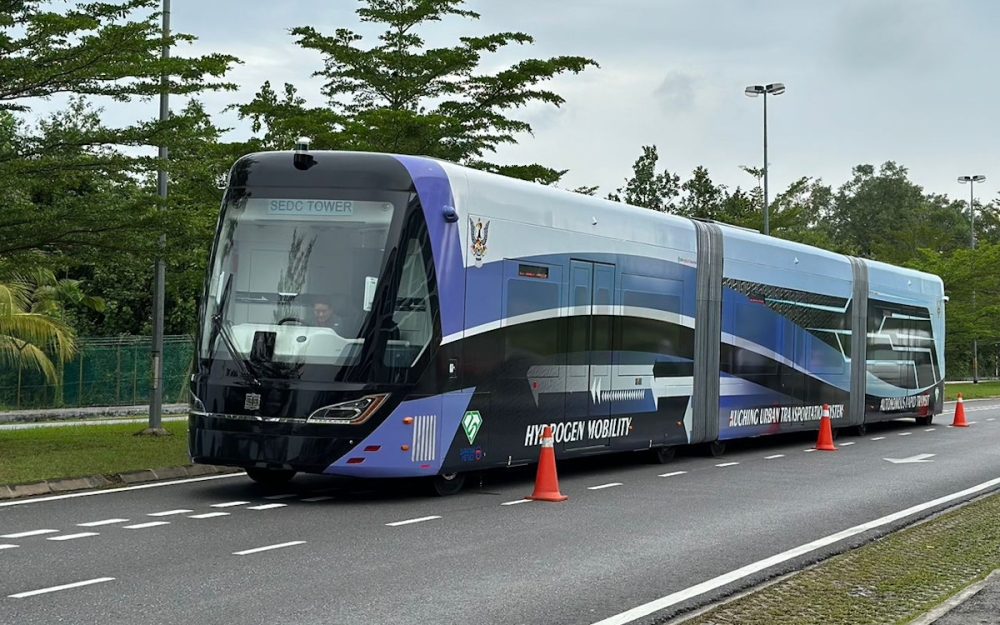
Putrajaya is urged to reconsider extending incentives to Sarawak's hydrogen sector due to insufficient demand and commercial viability concerns, according to analyst Samirul Ariff Othman.
Despite Sarawak's efforts to boost domestic demand, such as the Kuching Urban Transportation System, the state's hydrogen projects have faced challenges including financial constraints and lack of confirmed buyers.
Samirul suggests that government incentives should only support investments with proven demand and economic sustainability.
He emphasizes the need for strategic investment decisions that demonstrate clear returns compared to alternative projects.
PETALING JAYA, Sept 30 — Putrajaya should think twice about extending incentives to Sarawak’s hydrogen sector when it has yet to prove that there are enough buyers willing to pay commercially viable prices, according to an analyst.
Samirul Ariff Othman from Global Asia Consulting said the concern was particularly relevant after Sarawak sought more Budget 2027 support for clean energy and other high-value industries, in a meeting this week between deputy premier Awang Tengah Ali Hasan and investment, trade and industry minister Johari Ghani.
He said the basic problem with hydrogen was not Sarawak’s ability to produce it, but whether anyone wanted to buy enough of it at a price that made the business sustainable.
“You can build the plant and produce the hydrogen. But if you do not have customers willing to pay the price, you do not yet have a business. A production advantage matters only if enough of it survives delivery.”
The Energy Industries Council previously reported that Sarawak’s flagship export-oriented H2biscus and H2ornbill projects were scaled down following weak demand signals and uncertainty over securing buyers, while the state later acknowledged that the projects were also facing financial constraints.
The problem was particularly clear in the proposed Japanese market.
SEDC Energy chairman Abdul Aziz Husain said hydrogen could be produced in Sarawak for below RM20 per kg, but compression, cooling and transport pushed the delivered cost in Japan to around RM50 per kg. He said the original proposal to export all the hydrogen to Japan was therefore not viable unless support such as subsidies was provided in the buyer country.
Samirul said incentives made more sense where they helped an otherwise viable investment get across the line.
“If there is already a customer, an investor and a project that makes commercial sense, an incentive can help Malaysia win that investment. But if the market itself is not there yet, the government has to be much more careful because taxpayers are effectively taking the demand risk.”
As for domestic demand, Samirul noted that in August 2025, the Darul Hana hydrogen facility had a stated capacity of 150 kilogrammes a day and supplied ten fuel-cell vehicles. SEDC Energy’s chief executive acknowledged it was “uneconomical” to leave an operational plant underused.
According to Samirul, Sarawak is trying to boost domestic demand through publicly backed entities, specifically the Kuching Urban Transportation System. KUTS is expected to have around 38 hydrogen-powered ART vehicles and 55 hydrogen feeder buses.
“KUTS gives the hydrogen plant a buyer, but essentially the state is buying from itself,” he said.
“The state backs the producer, the state backs the transport operator and public money pays for the infrastructure. That may be useful to get the technology going, but it does not tell you whether other customers would choose hydrogen at that price.”
He added that this model also does not establish value for money.
“If a publicly backed producer sells hydrogen to a publicly backed transport operator, the financial assessment must cover both organisations. Revenue received by one may be expenditure supported by the state in another.”
Samirul said this did not mean Putrajaya should reject Sarawak’s request for clean-energy incentives altogether, such as in renewables.
“Some of these technologies and projects already have customers and proven economics. But for others, it would be better to see real buyers, binding offtake agreements and a clear idea of when the industry stops depending on the government to create demand before more support goes in.”
He added that even hydrogen, ammonia and methanol involve different processing requirements and markets. Each requires its own business case.
Returns on investment
Samirul said the wider question is how Sarawak converts resource wealth into lasting productive capacity. The 2026 state budget, for instance, allocated RM1 billion for ART infrastructure and systems.
“Sarawak receives substantial revenue from oil and gas, and that has given the state much more money to invest. So once you start putting that money into a new industry, the obvious question is: what are Sarawakians getting back?”
Samirul said emerging industries did not necessarily have to make an immediate profit, but governments should still be able to show why the investment was better than alternative uses of the same money.
“There has to be a credible path to a return. If the same ringgit could go into power, infrastructure or another industry where there are already customers waiting, then hydrogen has to show why it deserves that ringgit instead,” he added.
“Capital has alternative uses. So does electricity. Hydropower allocated to hydrogen could potentially serve other industries, households or electricity sales.”
He added that the evidence available supports disciplined experimentation and fuller disclosure.
“It does not establish that Sarawak’s hydrogen strategy has failed. Equally, strategic promise cannot substitute indefinitely for demonstrable results.”
Flying this weekend? Malaysia Airlines urges KLIA passengers to arrive early amid Sepang F1 traffic
Immigration Dept denies social media claim that Myanmar teen was repatriated, says she remains in detention
Myanmar man gets 16 years’ prison for killing 80-year-old fruit seller in Taman OUG
分析师 Samirul Ariff Othman 敦促布城重新考虑向砂拉越氢能行业提供激励措施,因为需求不足且存在商业可行性方面的担忧。
尽管砂拉越为提振国内需求做出了努力,例如古晋城市交通系统,但该州的氢能项目仍面临资金限制和缺乏确定买家等挑战。
Samirul认为,政府激励措施应该只支持那些需求已得到证实且具有经济可持续性的投资。
他强调,需要做出具有明显投资回报的战略性投资决策,与替代项目相比,这些决策必须能够带来显著的回报。
八打灵再也,9月30日讯——一位分析师表示,在尚未证明有足够的买家愿意支付商业上可行的价格之前,布城应该三思而后行,不要向砂拉越的氢能行业提供激励措施。
来自 Global Asia Consulting 的 Samirul Ariff Othman 表示,在砂拉越本周与副首相阿旺登加阿里哈桑和投资、贸易及工业部长佐哈里·加尼会面后,砂拉越寻求在 2027 年财政预算案中为清洁能源和其他高价值产业提供更多支持,因此这一担忧尤为重要。
他表示,氢气的根本问题不在于砂拉越是否有能力生产氢气,而在于是否有人愿意以能够使该业务可持续发展的价格购买足够的氢气。
“你可以建厂生产氢气,但如果没有客户愿意支付相应的价格,你的生意就还没开始。只有当足够的氢气能够安全交付时,生产优势才有意义。”
能源产业理事会此前报告称,由于需求信号疲软以及能否找到买家存在不确定性,砂拉越的旗舰出口导向型 H2biscus 和 H2ornbill 项目规模有所缩减;而该州后来承认,这些项目也面临着资金限制。
在拟议的日本市场,这个问题尤为明显。
砂拉越能源公司(SEDC Energy)主席阿卜杜勒·阿齐兹·侯赛因表示,氢气在砂拉越的生产成本可以低于每公斤20令吉,但压缩、冷却和运输等环节会使氢气运往日本的成本高达每公斤50令吉左右。他指出,除非买方国家提供补贴等支持,否则最初将所有氢气出口到日本的提议是不可行的。
Samirul表示,激励措施只有在能够帮助原本可行的投资项目最终完成时才更有意义。
“如果已经有了客户、投资者和具有商业意义的项目,那么激励措施可以帮助马来西亚赢得投资。但如果市场本身尚未成熟,政府就必须更加谨慎,因为实际上是由纳税人承担需求风险。”
关于国内需求,萨米鲁指出,截至2025年8月,达鲁哈纳氢气工厂的日产能为150公斤,可供应10辆燃料电池汽车。SEDC能源公司首席执行官承认,让一座运营中的工厂闲置“不经济”。
据萨米鲁称,砂拉越正试图通过公共机构,特别是古晋城市交通系统(KUTS),来提振国内需求。KUTS预计将拥有约38辆氢动力ART车辆和55辆氢动力接驳巴士。
他说:“KUTS 为氢气工厂找到了买家,但实际上,该州是在向自己购买氢气。”
“国家支持生产商,国家支持运输运营商,公共资金用于基础设施建设。这或许有助于推动这项技术的发展,但这并不能说明其他客户是否会以这样的价格选择氢能。”
他还补充说,这种模式也无法体现性价比。
“如果一家国有企业向一家国有运输运营商出售氢气,财务评估必须涵盖这两个机构。一方获得的收入可能成为另一方由国家资助的支出。”
萨米鲁表示,这并不意味着布城应该完全拒绝砂拉越提出的清洁能源激励措施(例如可再生能源)请求。
“其中一些技术和项目已经有了客户,并且经济效益也得到了验证。但对于另一些技术和项目来说,最好能看到真正的买家、具有约束力的承购协议,以及在进一步扶持之前,明确行业何时才能不再依赖政府创造需求。”
他还补充说,即使是氢气、氨和甲醇,其加工要求和市场需求也各不相同,每一种都需要单独的商业案例。
投资回报率
萨米鲁表示,更广泛的问题在于砂拉越如何将资源财富转化为持久的生产能力。例如,2026年州预算拨款10亿令吉用于辅助生殖技术(ART)的基础设施和系统建设。
“砂拉越从石油和天然气行业获得了大量收入,这使得该州有更多的资金用于投资。因此,一旦你开始将这些资金投入到新兴产业中,显而易见的问题是:砂拉越人民能从中获得什么回报?”
萨米鲁尔表示,新兴产业不一定要立即盈利,但政府仍然应该能够证明,为什么这项投资比将同样的资金用于其他用途更好。
“必须要有一条可信的回报路径。如果同样的令吉可以投入电力、基础设施或其他已经有客户等待的行业,那么氢能就必须证明它为什么值得获得这笔钱,”他补充道。
“资本有其他用途。电力也是如此。分配给制氢的水力发电有可能服务于其他行业、家庭或用于电力销售。”
他还补充说,现有证据支持进行严谨的实验和更充分的信息披露。
“这并不意味着砂拉越的氢能战略失败了。同样,战略承诺也不能无限期地取代可证明的成果。”
本周末要乘飞机出行吗?马来西亚航空提醒吉隆坡国际机场 (KLIA) 的乘客,由于雪邦F1赛事交通拥堵,请尽早抵达机场。
移民局否认社交媒体上关于缅甸少女已被遣返的说法,称她仍被拘留。
缅甸男子因在塔曼OUG杀害一名80岁水果摊贩而被判处16年监禁