Committee formed to strengthen safeguards for children in religious settings, report due end-2026成立委员会加强对宗教场所儿童的保护,报告将于2026年底提交。
Read more at straitstimes.com.
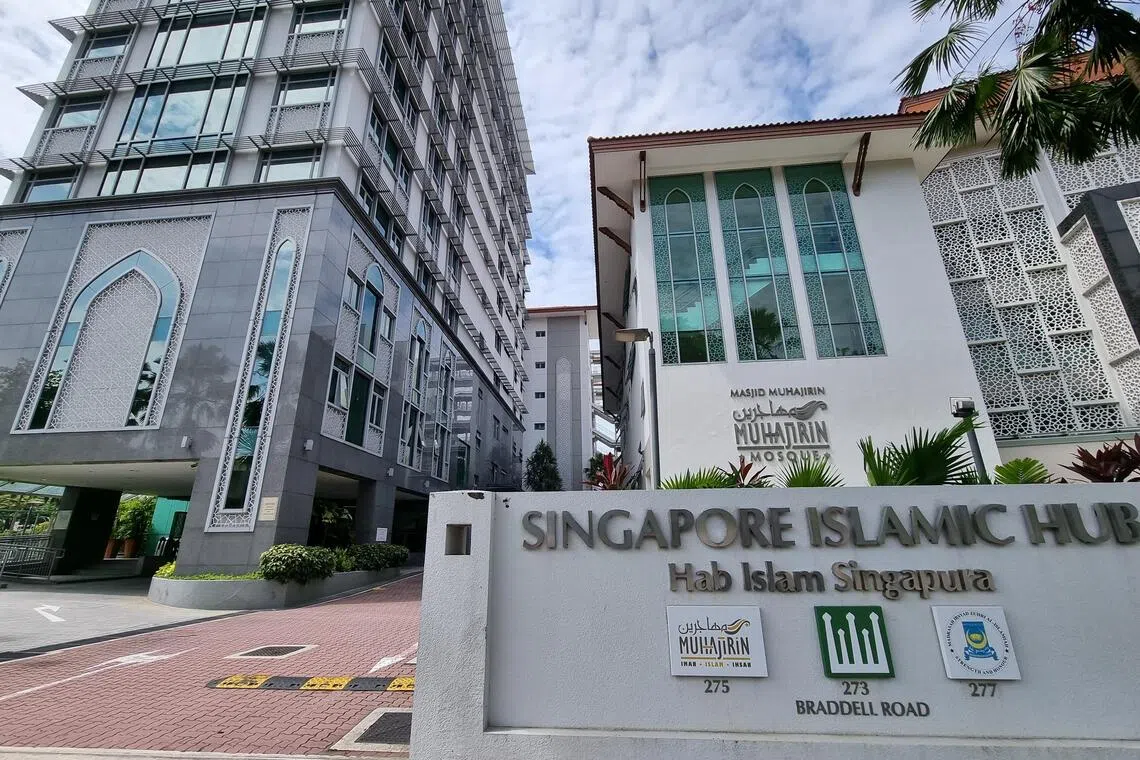
Madrasah Irsyad Zuhri Al-Islamiah, housed within the Singapore Islamic Hub, together with Masjid Muhajirin and Majlis Ugama Islam Singapura (MUIS).
ST PHOTO: ONG WEE JIN
Published Sep 30, 2026, 06:40 PM
Updated Sep 30, 2026, 08:39 PM
A committee has been formed to strengthen safeguards for minors in religious settings, focusing on governance, screening, and reporting to improve child safety in mosques, madrasahs, and Islamic education centres.
The committee will review current measures, gather community feedback, and consider preventive approaches, and aim to submit its recommendations to the Government by end-2026.
This follows a sexual abuse case involving two brothers and a religious influencer, prompting enhanced guidelines and the creation of a common safeguarding framework across mosques in Singapore.
SINGAPORE – A committee has been formed to look at ways to further strengthen safeguards for minors at religious settings like mosques, while preserving the open and welcoming nature of such institutions.
The committee, which was announced in Parliament on Sept 8, will also review how children and young people can safely access religious guidance in formal, informal and online settings, and comes after a sexual abuse case involving two young brothers and a self-styled religious influencer.
The Committee to Strengthen Safeguards in Religious Settings will report to Acting Minister-in-charge of Muslim Affairs Zaqy Mohamad, and is expected to submit its recommendations to the Government around end-2026, the Ministry of Culture, Community and Youth (MCCY) and Islamic Religious Council of Singapore (Muis) said on Sept 30.
Its work will focus on the governance and safeguarding frameworks at mosques, madrasahs and Islamic Education Centres and Providers (IECPs), including the screening and oversight of people who work or volunteer with children, rules governing interactions with minors, and how concerns are reported and escalated.
The committee is co-chaired by Associate Professor Razwana Begum, who heads the Global Security and Strategy Programme at the Singapore University of Social Sciences, and Ustaz Fathurrahman Dawoed, executive director of the education division at Andalus Corporation, an Islamic education centre.
MCCY and Muis said they will also consider applying relevant lessons and good practices from the review across other religious settings.
Speaking to media at the Singapore Islamic Hub on Sept 30, Zaqy said that over the next few months the committee will gather feedback and speak to mosque boards, community members, organisations and institutions to better understand challenges on the ground, look at gaps and how processes can be improved.
The review would ultimately inform the authorities on what needs to be enhanced, he said, adding that he did not want to speculate on the outcome as the committee has just been formed.
“Certainly, we hope that we can make a meaningful contribution to improving the safety of our children and young persons, whether in our religious spaces or how or when they are getting religious guidance from asatizah,” he said.
The committee’s terms of reference includes taking a preventive approach, which means looking at systems, culture and practices that surface concerns early, alongside measures to respond when a child may already be at risk.
Razwana said the committee is not starting from scratch, and will take into account existing national safeguarding work and measures already put in place by Muis.
Neither is the committee coming in “looking at investigating something”, but to understand the current measures and how they can be strengthened.
One area the committee will look at is how public education is delivered, and whether that can be enhanced.
“What we need to do more is really educate the parents as well,” she said, adding that building resilience and awareness among the young of dangerous content online is a whole-of-society effort.
The committee’s formation had earlier been announced on Sept 8 when Zaqy answered questions from MPs following a case in which a 37-year-old man sexually abused two young brothers he had met at a mosque.
The offender was not a mosque employee or volunteer, but a regular congregant who interacted informally with young people at the mosque.
He had raped the younger boy several times, including at the mosque where the brothers attend religious classes. In August, he was sentenced to 27 years and 10 months’ jail, and 24 strokes of the cane.
Zaqy said in Parliament that Muis had enhanced its guidelines to protect youth at mosques three times since it became aware of the case, and this included ensuring adequate closed-circuit television coverage and training staff to identify suspicious behaviour.
The latest enhancement was on August 29, when MUIS said it will develop a common framework across mosques here that sets out safeguarding principles, responsibilities of mosque personnel, and clear reporting and escalation protocols when concerns arise. Informal gatherings involving minors will also be more closely monitored.
But the Government intends to go further in learning from the case and strengthening governance safeguards, and that is where the review committee will come in, the acting minister added.
Besides the two co-chairs, the committee includes seven other members with backgrounds in child protection, policing, psychology, schools, governance and risk, Islamic education and religious guidance.
Zaqy said on Sept 30 that the members come from different backgrounds and each bring professional experience and skills, as well as community perspectives.
The committee will be given space and latitude to conduct their review with independence, such as on how religious classes and guidance here is delivered, both in the physical and online space, he added.
The other members are: MUIS Fatwa committee member Rohana Ithnin; Asatizah Youth Network member Ridhwan Mohd Basor; Rohan Mah & Partners audit and tax principal Suree Rohan; commander of the police’s Public Transport Security Command Masagoes Idris Hussain; Ravina Said Abdul Rahman, senior deputy director of operations at the Ministry of Social and Family Development’s Protective Service; Quah Saw Han, principal clinical psychologist at the Community Psychology Hub; and Krishnan Aravinthan, Ministry of Education Zonal Director (Schools) East.
Members of the public are invited to share their views with the committee, and can do so through an online feedback form at https://go.gov.sg/religioussettingsafeguards .
After the committee’s findings and recommendations are submitted to the Government, they will also be shared with the community.
Crimes against children/minors
Ministry of Culture, Community and Youth
Madrasah Irsyad Zuhri Al-Islamiah,位于新加坡伊斯兰中心,与 Muhajirin 清真寺和新加坡伊斯兰教议会 (MUIS) 一起。
《海峡时报》摄影:王伟进
发布于2026年9月30日下午6:40
更新于2026年9月30日晚上8:39
已成立一个委员会,旨在加强对宗教场所中未成年人的保护,重点关注治理、筛查和报告,以提高清真寺、伊斯兰学校和伊斯兰教育中心的儿童安全。
委员会将审查现有措施,收集社区反馈意见,并考虑预防措施,目标是在 2026 年底前向政府提交建议。
此前,新加坡发生了一起涉及两兄弟和一名宗教人士的性虐待案件,促使当局加强了相关指导方针,并在新加坡的清真寺中建立了一个共同的保护框架。
新加坡——一个委员会已经成立,旨在研究如何进一步加强对清真寺等宗教场所未成年人的安全保障,同时保持这些机构开放和欢迎的性质。
该委员会于 9 月 8 日在议会宣布成立,还将审查儿童和青少年如何在正规、非正规和在线环境中安全地获得宗教指导。此前发生了一起涉及两名年轻兄弟和一名自称宗教影响者的性虐待案件。
文化、社区及青年部 (MCCY) 和新加坡伊斯兰宗教理事会 (MUIS) 于 9 月 30 日表示,加强宗教场所安全保障委员会将向负责穆斯林事务的代理部长扎基·穆罕默德汇报工作,预计将于 2026 年底左右向政府提交建议。
其工作重点将放在清真寺、伊斯兰学校和伊斯兰教育中心及提供者(IECP)的治理和保障框架上,包括对与儿童一起工作或做志愿者的人员进行筛选和监督,管理与未成年人互动的规则,以及如何报告和升级问题。
该委员会由新加坡社会科学大学全球安全与战略项目负责人拉兹瓦娜·贝古姆副教授和安达卢斯公司(一家伊斯兰教育中心)教育部门执行董事法图拉赫曼·达沃德乌斯塔兹共同担任主席。
文化、社区及青年部和慕道班表示,他们还会考虑将此次审查中的相关经验和良好做法应用到其他宗教场所。
扎基在9月30日于新加坡伊斯兰中心接受媒体采访时表示,在接下来的几个月里,委员会将收集反馈意见,并与清真寺理事会、社区成员、组织和机构进行交流,以更好地了解实际情况面临的挑战,找出差距以及如何改进流程。
他表示,审查结果最终将告知有关部门哪些方面需要改进,并补充说,由于委员会刚刚成立,他不想对结果进行猜测。
“当然,我们希望能够为改善儿童和青少年的安全做出有意义的贡献,无论是在我们的宗教场所,还是在他们从宗教导师那里获得宗教指导的方式和时间,”他说。
委员会的职权范围包括采取预防性措施,这意味着要关注那些及早发现问题的制度、文化和做法,以及在儿童可能已经处于危险之中时采取应对措施。
拉兹瓦纳表示,委员会并非从零开始,而是会考虑现有的国家保障工作和穆斯林社团已经采取的措施。
委员会此行的目的并非“调查某些事情”,而是为了了解当前的措施以及如何加强这些措施。
委员会将研究的一个领域是公共教育的实施方式,以及是否可以对其进行改进。
“我们更需要做的,是真正地教育家长,”她说道,并补充说,培养年轻人对网络危险内容的抵御能力和意识,是一项全社会的努力。
该委员会的成立此前于 9 月 8 日宣布,当时扎基在回答议员们的提问时表示,此前一名 37 岁男子在清真寺性侵了两名年轻兄弟。
肇事者并非清真寺的雇员或志愿者,而是一名经常在清真寺与年轻人进行非正式互动的普通信徒。
他曾多次强奸这名小男孩,包括在兄弟俩上宗教课的清真寺里。8月,他被判处27年10个月监禁,并处以24下鞭刑。
扎基在国会表示,自得知此案以来,伊斯兰宗教理事会已三次加强其保护清真寺青年的指导方针,其中包括确保足够的闭路电视覆盖范围和培训工作人员识别可疑行为。
最新一轮的改进措施是在8月29日,当时新加坡伊斯兰宗教理事会(MUIS)表示,将制定一套适用于所有清真寺的通用框架,明确保障原则、清真寺工作人员的职责,以及在出现问题时清晰的报告和升级流程。此外,涉及未成年人的非正式聚会也将受到更严格的监控。
但代理部长补充说,政府打算从这个案例中吸取更多教训,加强治理保障,而审查委员会将在这方面发挥作用。
除了两位联合主席外,该委员会还包括其他七名成员,他们的背景涵盖儿童保护、警务、心理学、学校、治理和风险、伊斯兰教育和宗教指导等领域。
Zaqy 于 9 月 30 日表示,成员们来自不同的背景,每个人都带来了专业经验和技能,以及社区视角。
他补充说,委员会将获得空间和自主权,以独立的方式进行审查,例如审查这里如何在实体和网络空间提供宗教课程和指导。
其他成员包括:MUIS教令委员会成员罗哈娜·伊特宁;Asatizah青年网络成员里德万·莫哈末·巴索尔;Rohan Mah & Partners审计和税务负责人苏里·罗汉;警察公共交通安全指挥部指挥官马萨戈斯·伊德里斯·侯赛因;社会及家庭发展部保护服务处高级副行动主任拉维娜·赛义德·阿卜杜勒·拉赫曼;社区心理中心首席临床心理学家夸绍汉;以及教育部东部地区(学校)主任克里希南·阿拉文坦。
欢迎公众向委员会表达意见,可通过以下网址的在线反馈表进行反馈:https://go.gov.sg/religioussettingsafeguards 。
委员会的调查结果和建议提交给政府后,也会与社区分享。
侵害儿童/未成年人的犯罪
文化、社区和青年部