SNB's Tschudin voices concern about stablecoin impact on central banks瑞士国家银行行长楚金对稳定币对中央银行的影响表示担忧
ZURICH, Sept 30 (Reuters) - The Swiss National Bank is cautious about the use of digital stable coins, because the technology could make the transmission of monetary policy more difficult, governing board member Petra Tschudin said on Wednesday.
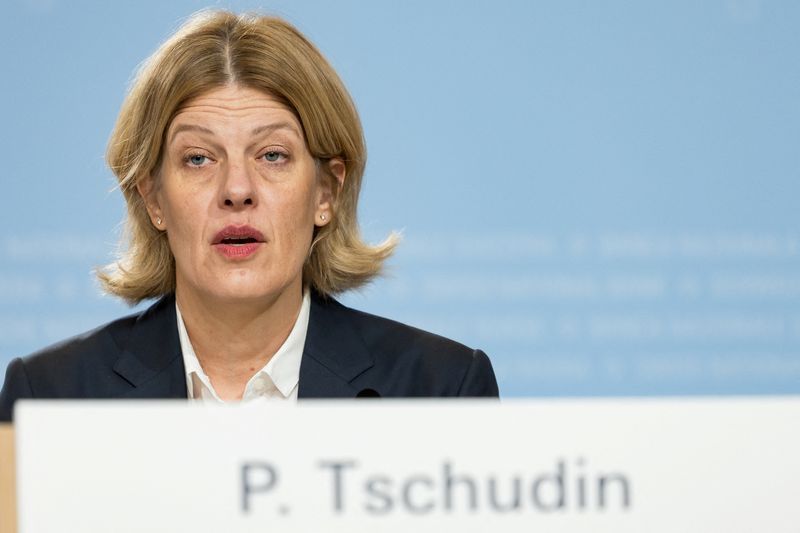
Swiss National Bank (SNB) governing board member Petra Tschudin speaks to journalists during a year-end press conference, in Bern, Switzerland, December 11, 2025. REUTERS/Pierre Albouy
ZURICH, Sept 30 (Reuters) - The Swiss National Bank is cautious about the use of digital stable coins, because the technology could make the transmission of monetary policy more difficult, governing board member Petra Tschudin said on Wednesday.
"When we introduce innovations, we really need to ask what consequences they have, and how they should be regulated," Tschudin told an event in Zurich.
"If we end up with big stablecoins that are really far removed from the existing two-tier financial system, then that's a situation which increases the burden on central banks in fulfilling their mandate."
A stablecoin is a type of cryptocurrency designed to hold a steady value by being pegged to a stable asset, like the dollar or gold.
Tschudin said the SNB welcomed innovation, but was concerned about the impact stable coin technology could have on central bank money, the risk-free cash used to settle transactions between commercial banks.
Because stablecoins operate outside the central bank system, a "stablecoin franc" was not automatically guaranteed to be worth the same as a real franc, undermining the principle that money should be uniform everywhere, she said.
There was also a risk if households and businesses shift money they previously held at commercial banks into stablecoins - reducing the amount of money they could lend and affecting interest rates.
This would mean a central bank's policy rate changes have less direct influence by weakening its ability to steer borrowing costs.
"We have an effect on how much credit, or how expensively credit is made available in the economy, and that naturally has knock-on effects for monetary policy," said Tschudin.
"So if we see this effect, we get a certain disruption to the transmission mechanism," she said.
(Reporting by John RevillEditing by Dave Graham)
Thank you for your report!
Agency steps up public outreach programme on nuclear technology
US jury says Apple owes record $5.7 billion in haptic technology patent case
Persada strengthens digital connectivity and technology for the public
2025年12月11日,瑞士国家银行(SNB)理事会成员佩特拉·楚丁在瑞士伯尔尼举行的年终新闻发布会上向记者发表讲话。路透社/皮埃尔·阿尔布伊
苏黎世,9 月 30 日(路透社)——瑞士国家银行管理委员会成员佩特拉·楚丁周三表示,该行对使用数字稳定币持谨慎态度,因为这项技术可能会使货币政策的传导更加困难。
“当我们引入创新时,我们真的需要问问它们会带来什么后果,以及应该如何监管它们,”楚金在苏黎世的一次活动上说道。
“如果我们最终得到的稳定币与现有的双层金融体系相去甚远,那么这将增加中央银行履行其职责的负担。”
稳定币是一种加密货币,其价值通过与美元或黄金等稳定资产挂钩来保持稳定。
楚金表示,瑞士国家银行欢迎创新,但担心稳定币技术可能会对中央银行货币(用于结算商业银行之间交易的无风险现金)产生影响。
她表示,由于稳定币在中央银行体系之外运作,“稳定币法郎”并不能自动保证与真正的法郎价值相同,这破坏了货币在各地应该统一的原则。
如果家庭和企业将之前存放在商业银行的资金转移到稳定币,也会存在风险——这会减少他们可以放贷的资金量,并影响利率。
这意味着中央银行的政策利率变动对其引导借贷成本的能力将减弱,从而降低其直接影响。
“我们对经济中信贷的供给量或信贷成本有影响,这自然会对货币政策产生连锁反应,”楚金说。
“所以如果我们看到这种效应,就会对传播机制造成一定的干扰,”她说。
(约翰·雷维尔报道,戴夫·格雷厄姆编辑)
感谢您的报告!
该机构加强了核技术方面的公众宣传计划
美国陪审团裁定苹果公司在触觉技术专利案中需支付创纪录的57亿美元赔偿金
Persada致力于加强公共领域的数字连接和技术。