Vision For New Autonomous Warfare Command Laid Out By Pentagon五角大楼阐述新型自主作战司令部的愿景
The new command, slated to stand up late next year, will focus on advancing operational autonomous and robotic capabilities across the services.
By Joseph Trevithick
Published Sep 30, 2026 7:39 PM EDT
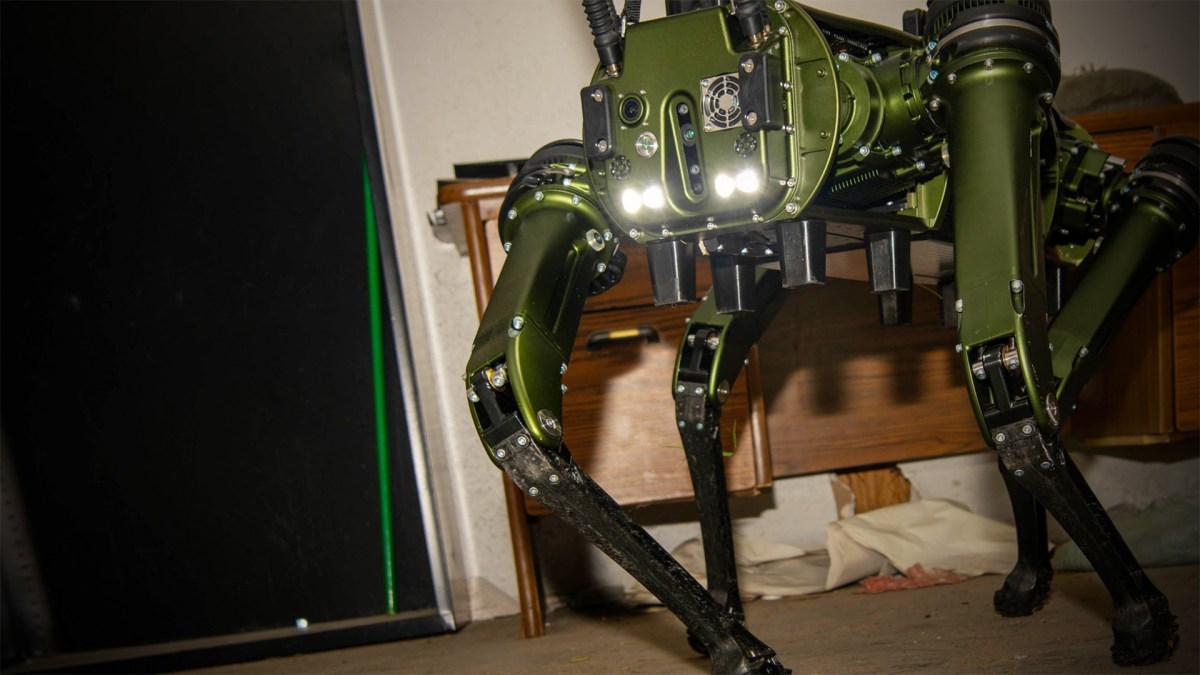
Members of the USAF's 5th Civil Engineer Squadron Chemical, Biological, Radiological and Nuclear team (CBRN) train on the new Vision 60 "Robot Dog" on Minot Air Force Base, North Dakota, June 8, 2022. USAF/Senior Airman Alex Nottingham
The Pentagon has announced plans for a new functional combatant command, very broadly akin to U.S. Special Operations Command (SOCOM) or U.S. Space Command (SPACECOM), but for operational activities involving autonomous and robotic capabilities. Secretary Pete Hegseth has also announced new initiatives to help further accelerate the fielding of uncrewed systems in the air, at sea, and on land, as well as explore future warfighting challenges. All of this builds on previous and long-overdue efforts to prioritize the fielding of various tiers of drones, as well as artificial intelligence (AI) and other emerging technologies, across domains, but there are questions about how these new efforts will translate into tangible developments.
Secretary Hegseth unveiled plans for what is tentatively dubbed Autonomous Warfare Command (AUTOWARCOM), as well as the aforementioned initiatives, called Project Agincourt and Project Meridian, during a speech to service members today at the U.S. Marine Corps’ base in Quantico, Virginia. Hegseth called this a State of the Force address , and said he planned to make it an annual event.
. @SECWAR “Today, at my direction—we are announcing the creation of Autonomous Warfare Command, or AutoWarCom: A new 4-star combatant command—with service-like authorities—built to scale autonomous and robotic capabilities across the Joint Force in the fastest peacetime shift in… pic.twitter.com/kYWBxy6Dij — DOW Rapid Response (@DOWResponse) September 30, 2026
. @SECWAR “Today, at my direction—we are announcing the creation of Autonomous Warfare Command, or AutoWarCom: A new 4-star combatant command—with service-like authorities—built to scale autonomous and robotic capabilities across the Joint Force in the fastest peacetime shift in… pic.twitter.com/kYWBxy6Dij
“At my direction, we are announcing the creation of Autonomous Warfare Command, or AUTOWARCOM, a new four-star combatant command with service-like authorities built to scale autonomous and robotic capabilities across the joint force in the fastest peacetime shift in modern military history,” Hegseth declared. “Drone warfare supercharged by SI-enabled targeting is the biggest battlefield revolution in generations. You already know that. Yet when I was sworn in to the Department of Defense, there was scant urgency in this domain.”
“SI” here stands for “super intelligence,” a term the Trump administration is now using in place of AI.
Hegseth called attention to the Drone Dominance initiative he unveiled last year, as well as the establishment of Joint Interagency Task Force 401 (JIATF-401), as examples of steps the Department has already taken in this regard. JIATF-401 is notably focused on counter-drone capabilities, as you read more about here .
“It’s a good start, but it’s certainly not enough. The pace of war is changing faster than the process to support it. Cheap compute, super intelligence, and advanced commercial manufacturing have enabled the proliferation of low-cost, high-precision strikes,” Hegseth continued. “For 40 years, the United States relied … primarily on expensive weapons that placed quality over quantity. Now, that approach gave us a lot of enormous advantages, and we need to preserve those capabilities. But today we need both quality and quantity. The term you know is high-low mix. An analogy is a thunderstorm. We need bolts of lightning high, our existing high-end kill chains capable of striking unexpectedly and decisively. We also need steady wind and rain, mass drones and other autonomous attritable systems that flip the cost exchange and impose unrelenting pressure on an adversary on the battlefield.”
Hegseth highlighted lessons learned from the ongoing conflict in Ukraine as underscoring these points.
. @SECWAR "Ukraine’s lesson is not that one type of drone wins wars but rather the need for a purpose-built system that maximizes the ability to adapt. We will fuse procurement with operations at scale – and allow our warfighters, engineers, and entrepreneurs to learn, adapt, and… pic.twitter.com/x7iNMAbU0t — DOW Rapid Response (@DOWResponse) September 30, 2026
. @SECWAR "Ukraine’s lesson is not that one type of drone wins wars but rather the need for a purpose-built system that maximizes the ability to adapt. We will fuse procurement with operations at scale – and allow our warfighters, engineers, and entrepreneurs to learn, adapt, and… pic.twitter.com/x7iNMAbU0t
“So today, with Autonomous War Command, AUTOWARCOM, we institutionalize and we supercharge the era of SI, robotics, and autonomous systems, all in order to win,” he added.
A memo the Pentagon has now released makes clear that the establishment of this command is contingent on Congressional approval, and the current goal is for it to be established by October 1, 2027.
“Autonomous Warfare Command will define joint needs and integrate Service-provided forces in support of geographic combatant commanders,” the memo also notes. “It will test equipment and force designs with realistic opposition in demanding exercises and rugged environments, modify rapidly, and field what works. We must build a wartime arsenal whose main product is adaptation at the edge.”
Many questions remain to be answered about how these activities with work being done now within the individual services, and how all of that will translate into operational activities. Part of Project Agincourt’s role will be working to help answer the questions above. The name here is a reference to the battle in 1415 in which British forces prevailed over their French opponents, famously in part through the application of a particular military technology, the longbow .
The two main tasks outlined in a memo today on Project Agincourt, one of which is laying the groundwork for AUTOWARCOM. US Military
The office of the Direct Reporting Portfolio Manager for Unmanned Systems (DRPM-UxS) will lead this initiative. Owen West, head of the Pentagon’s Defense Innovation Unit (DIU), and U.S. Navy SEAL Senior Chief Max Strasiser are set to serve as the Chief Executive Officer and Chief Operating Officer of the DRPM-UxS, respectively.
Project Agincourt will also “prototype a new construct called warfighting acquisition, not just acquisition that happens at the Pentagon,” according to Hegseth. “This model fuses operators with entrepreneurs in rapid adaptation cycles while distributing decisions and dollars closer to frontline units, to combatant commands. Realistic training exercises, and when possible, the crucible of combat, will be used to compress innovation timelines and scale what works.”
“Also today, we are phasing in new MOS [Military Occupational Specialty] frameworks within each military department to support our shift to autonomy,” the Secretary also noted during his speech in the context of Project Agincourt and the plan for AUTOWARCOM. “We need institutional knowledge and career paths for a new generation of autonomous warfighters.”
Project Meridian sits adjacent to these efforts and has a broader mandate to explore ways to ensure the U.S. military maintains its technological edge on future battlefields.
“Project Meridian, the future of warfare, is not about developing new strategies or new policies. We already do that. Rather, its purpose is to creatively look to the future, and identify the domains that we must conquer, and capabilities we must master,” Hegseth said. “We need to be looking forward into the future to achieve technological and military dominance on the battlefield for decades to come. It is futuristic on purpose. Their work will be focused on discovering, developing, and fielding the weapons and systems that our children and our grandchildren will need in their lifetimes, without any creative limitations or restrictions, on any future battlefield, from under the Earth to beyond the Moon.”
. @SECWAR “Today, at my direction—I am announcing Project Meridian, an effort led by America’s best minds to study the future of warfare. Under the leadership of @USWREMichael , Project Meridian will be co-led by three of our nation’s best minds: @elonmusk , @PalmerLuckey , and… pic.twitter.com/4DyurVpkUZ — DOW Rapid Response (@DOWResponse) September 30, 2026
. @SECWAR “Today, at my direction—I am announcing Project Meridian, an effort led by America’s best minds to study the future of warfare. Under the leadership of @USWREMichael , Project Meridian will be co-led by three of our nation’s best minds: @elonmusk , @PalmerLuckey , and… pic.twitter.com/4DyurVpkUZ
“Project Meridian will study the battlefields of the future, identify which weapons and technologies warfighters will need to harness to dominate in these environments, and propose actionable solutions to start developing, testing and fielding these capabilities such that America will have overmatch for the 21st century and beyond,” according to a separate memo the Pentagon put out today. “The Joint Staff and all services should be prepared to connect their future warfare efforts and research to Project Meridian.”
The full text of the Project Meridian memo put out today. US Military
Furthermore, “Project Meridian will leverage critical perspectives from outside the Pentagon, drawing upon a group of top technologists, innovators, business leaders, policy makers, and national security experts,” according to the memo. “Project Meridian’s primary function will be to map the trajectory of future warfare, identify critical capability gaps, and propose actionable solutions in furtherance of the identified goals in the 2026 National Security Science and Technology Strategy .”
This is also very much a near-term initiative, with Hegseth demanding a final report no later 120 days from now, or January 28, 2027. The Pentagon’s Chief Technology Officer, Emil Michael, has been directed to set up this project. Today, Hegseth also named Elon Musk, Palmer Luckey, and Newt Gingrich as key members.
Elon Musk, founder of SpaceX , which dominates the commercial space launch and services market globally, as well as the host of other companies, has had an on-again-off-again relationship with the Trump Administration . Palmer Luckey is another entrepreneur now best known for founding Anduril , which has increasingly a major player in the U.S. defense industry. Newt Gingrich, a highly influential member of Trump’s Republican Party and former Speaker of the U.S. House of Representatives, has more recently become an outspoken advocate of advancing AI technology in the United States.
A screen capture from today’s livestream of Secretary Hegseth’s speech. From left to right, Palmer Luckey, Newt Gingrich, and Elon Musk. US Military capture
The inclusion of Musk and Luckey does raise ethical questions, as they both lead companies with major U.S. government contracts already, and which could be in line to see more opportunities based on Project Meridian’s findings. What guardrails might be put in place to prevent conflicts of interest is unclear.
To reiterate, it remains to be seen how all of these efforts will progress and how, or if, they will ultimately translate to more tangible developments. The U.S. military has a long history now of launching high-profile initiatives that still struggle to demonstrate real progress , despite widespread support for accelerating the fielding of uncrewed systems, AI, and other advanced technologies. The Pentagon has certainly produced tangible results through other organizational shifts in recent years, including the aforementioned Drone Dominance initiative and JIATF-401, as well as the Replicator initiative under President Joe Biden.
At the same time, there are real potential hurdles to these new plans. The Pentagon has itself already acknowledged that support from Congress will be key to the AUTOWARCOM vision. Annual budgeting, and the uncertainty that often surroudns that will also be a factor. There is also the matter of efforts to expand the U.S. defense industrial base. The limitations of existing U.S. industrial capacity and supply chains have already become a matter of national debate in light of concerns about dwindling stockpiles of critical munitions as a result of the ongoing conflict with Iran , as well as a succession of other global crises in recent years .
During his speech, Hegseth called attention to efforts to broaden the defense industrial base with new, smaller firms, as well as agreements with large established contractors to expand on their existing capacity. He also highlighted the Trump administration’s $1.5 trillion defense spending plan for Fiscal Year 2027 and issued a new call on Congress to pass an additional $350 billion reconciliation package .
With today’s announcements, the Pentagon has certainly reinforced its commitment to expanding the fielding of uncrewed and other high-tech capabilities across all branches of the U.S. military, but there is clearly work still to be done to turn those visions into realities.
Contact the author: joe@twz.com
Comments couldn’t be loaded. Please refresh the page.
作者:约瑟夫·特雷维西克
发布于美国东部时间2026年9月30日晚上7:39
2022年6月8日,美国空军第五土木工程中队化学、生物、放射性及核(CBRN)小组的成员在北达科他州迈诺特空军基地使用新型Vision 60“机器狗”进行训练。美国空军高级空军兵亚历克斯·诺丁汉摄
五角大楼宣布计划成立一个新的职能作战司令部,其大致类似于美国特种作战司令部(SOCOM)或美国太空司令部(SPACECOM),但主要负责涉及自主和机器人能力的作战活动。国防部长皮特·赫格塞斯还宣布了一系列新举措,旨在进一步加快在空中、海上和陆地部署无人系统,并探索未来作战挑战。所有这些都建立在此前早已应该开展的各项工作之上,这些工作旨在优先部署不同级别的无人机,以及人工智能(AI)和其他新兴技术,并应用于各个领域。然而,这些新举措将如何转化为切实成果,仍存在疑问。
赫格塞斯部长今天在弗吉尼亚州匡蒂科美国海军陆战队基地向官兵发表讲话时,公布了暂定名为“自主作战司令部”(AUTOWARCOM)的计划,以及此前提到的“阿金库尔计划”和“子午线计划”。赫格塞斯称此次讲话为“部队状况报告”,并表示计划将其作为年度例行活动。
@SECWAR “今天,在我的指示下,我们宣布成立自主作战司令部(AutoWarCom):这是一个全新的四星级作战司令部,拥有类似军种的权限,旨在以和平时期最快的速度在联合部队中扩展自主和机器人能力…… pic.twitter.com/kYWBxy6Dij — DOW Rapid Response (@DOWResponse) September 30, 2026
@SECWAR “今天,在我的指示下,我们宣布成立自主作战司令部(AutoWarCom):这是一个全新的四星级作战司令部,拥有类似军种的权限,旨在以和平时期最快的速度在联合部队中扩展自主和机器人能力…… pic.twitter.com/kYWBxy6Dij
“在我的指示下,我们宣布成立自主作战司令部(AUTOWARCOM),这是一个全新的四星级作战司令部,拥有类似军种的权限,旨在以现代军事史上最快的和平时期转型速度,在联合部队中推广自主和机器人作战能力,”赫格塞斯宣布。“无人机作战借助智能信息技术(SI)实现的目标定位,是几代人以来战场上最重大的革命。你们对此早已心知肚明。然而,当我宣誓就任国防部长时,这一领域却鲜有人重视。”
这里的“SI”代表“超级智能”,特朗普政府现在用这个术语来代替人工智能。
赫格塞斯特别提到了他去年提出的“无人机主导权”倡议,以及成立的联合跨部门特遣部队401(JIATF-401),以此为例说明国防部已在这方面采取的措施。JIATF-401尤其侧重于反无人机能力,您可以在这里了解更多信息。
“这是一个良好的开端,但显然远远不够。战争的节奏变化远超支撑战争的进程。廉价的计算能力、超智能技术和先进的商业制造技术使得低成本、高精度打击得以迅速普及,”赫格塞斯继续说道。“40年来,美国主要依赖……昂贵的武器,注重质量而非数量。这种做法确实给我们带来了巨大的优势,我们需要保持这些能力。但如今,我们需要兼顾质量和数量。你们都知道,这就是所谓的‘高低混合’。我们可以用雷暴来打个比方。我们需要高空闪电,也就是我们现有的高端杀伤链,能够出其不意地进行决定性打击。同时,我们也需要持续不断的打击,大量的无人机和其他自主消耗型系统,以扭转成本格局,并在战场上对对手施加持续不断的压力。”
赫格塞斯强调,从乌克兰持续不断的冲突中吸取的教训凸显了这些观点。
@SECWAR “乌克兰的教训并非在于某种类型的无人机就能赢得战争,而在于需要一种能够最大限度提高适应能力的专用系统。我们将把采购与大规模作战行动融合起来,让我们的作战人员、工程师和企业家能够学习、适应并……” pic.twitter.com/x7iNMAbU0t — 陶氏化学快速反应 (@DOWResponse) 2026年9月30日
@SECWAR “乌克兰的经验教训并非在于某种特定类型的无人机就能赢得战争,而在于需要一套能够最大限度提高适应能力的专用系统。我们将把采购与大规模作战行动融合起来,并让我们的作战人员、工程师和企业家能够学习、适应并……” pic.twitter.com/x7iNMAbU0t
“因此,今天,通过自主战争指挥部(AUTOWARCOM),我们将系统集成、机器人技术和自主系统时代制度化并大力推进,这一切都是为了赢得胜利,”他补充道。
五角大楼最新发布的一份备忘录明确指出,该司令部的成立取决于国会的批准,目前的目标是在 2027 年 10 月 1 日之前成立。
备忘录还指出,“自主作战司令部将明确联合需求,整合各军种提供的部队,以支援各战区司令部。它将在严苛的演习和恶劣的环境中,以真实的对抗能力测试装备和部队设计,快速改进并部署有效的方案。我们必须打造一支以适应边缘环境为核心的战时武器库。”
关于这些活动如何与各军种目前正在开展的工作相结合,以及所有这些工作将如何转化为实际作战行动,仍有许多问题亟待解答。“阿金库尔计划”的部分任务就是帮助解答上述问题。该计划的名称源于1415年的阿金库尔战役,在那场战役中,英军战胜了法军,而英军取得胜利的关键因素之一便是运用了一种特殊的军事技术——长弓。
今天一份关于阿金库尔行动的备忘录概述了两项主要任务,其中一项是为自动战司令部(AUTOWARCOM)奠定基础。美国军方
无人系统直接报告项目组合经理办公室(DRPM-UxS)将领导这项计划。五角大楼国防创新部门(DIU)负责人欧文·韦斯特和美国海军海豹突击队高级士官长马克斯·斯特拉西泽将分别担任DRPM-UxS的首席执行官和首席运营官。
据赫格塞斯称,“阿金库尔计划”还将“试行一种名为‘作战采购’的新模式,而不仅仅是五角大楼内部的采购”。“这种模式将作战人员与企业家融合在一起,进行快速适应性迭代,同时将决策权和资金下放到更靠近前线部队和作战司令部的部门。我们将利用逼真的训练演习,并在可能的情况下进行实战演练,以缩短创新周期,并推广行之有效的方案。”
“今天,我们还在各军种内部逐步推行新的军事职业专长(MOS)框架,以支持我们向自主作战转型,”部长在谈到阿金库尔项目和自动作战司令部计划时还指出。“我们需要为新一代自主作战人员建立制度知识和职业发展路径。”
“子午线计划”与这些努力密切相关,其更广泛的任务是探索如何确保美国军队在未来的战场上保持技术优势。
“‘子午线计划’,即未来战争计划,并非旨在制定新的战略或政策。我们已经在做这些了。该计划的目的是以创新的眼光展望未来,明确我们必须征服的领域和必须掌握的能力,”赫格塞斯说道。“我们需要着眼未来,才能在未来几十年里在战场上取得技术和军事优势。该计划刻意追求未来性。他们的工作重点是发现、开发和部署我们的子孙后代在未来任何战场上都需要的武器和系统,不受任何创造性的限制,从地底到月球之外。”
@SECWAR “今天,在我的指示下,我宣布启动‘子午线计划’,这是一项由美国顶尖专家领导的、旨在研究未来战争的计划。在@USWREMichael 的领导下,‘子午线计划’将由我们国家三位最杰出的专家共同领导:@elonmusk、@PalmerLuckey 和…… pic.twitter.com/4DyurVpkUZ — 陶氏化学快速反应 (@DOWResponse) 2026年9月30日
@SECWAR “今天,在我的指示下,我宣布启动‘子午线计划’,这是一项由美国最杰出的专家领导的、旨在研究未来战争的计划。在@USWREMichael 的领导下,‘子午线计划’将由我们国家三位最杰出的专家共同领导:@elonmusk、@PalmerLuckey 和…… pic.twitter.com/4DyurVpkUZ
根据五角大楼今天发布的另一份备忘录,“子午线计划将研究未来战场,确定作战人员需要掌握哪些武器和技术才能在这些环境中取得优势,并提出切实可行的解决方案,以启动这些能力的研发、测试和部署,从而使美国在21世纪及以后拥有绝对优势。”备忘录还指出,“联合参谋部和所有军种都应做好准备,将他们未来的作战工作和研究与子午线计划对接起来。”
今天公布的“子午线计划”备忘录全文。美国军方
此外,备忘录指出,“子午线项目将充分利用五角大楼以外的关键视角,汇集顶尖技术专家、创新者、商业领袖、政策制定者和国家安全专家。” “子午线项目的主要职能是描绘未来战争的发展轨迹,识别关键能力差距,并提出切实可行的解决方案,以推进2026年国家安全科技战略中确定的目标。”
这也是一项近期内必须完成的计划,赫格塞斯要求最迟在120天内,即2027年1月28日之前提交最终报告。五角大楼首席技术官埃米尔·迈克尔已被指示负责启动该项目。今天,赫格塞斯还任命埃隆·马斯克、帕尔默·勒基和纽特·金里奇为关键成员。
埃隆·马斯克是SpaceX的创始人,该公司在全球商业航天发射和服务市场占据主导地位,他还拥有众多其他企业。他与特朗普政府的关系时好时坏。帕尔默·勒基是另一位企业家,他最广为人知的成就是创立了Anduril公司,该公司在美国国防工业中的地位日益重要。纽特·金里奇是特朗普所在的共和党内极具影响力的人物,也是美国前众议院议长,他最近成为美国人工智能技术发展的积极倡导者。
这是今天赫格塞斯部长演讲直播的屏幕截图。从左至右依次是:帕尔默·勒基、纽特·金里奇和埃隆·马斯克。美国军方截图
马斯克和拉基的加入确实引发了一些伦理问题,因为他们各自领导的公司都已与美国政府签订了重大合同,而且根据“子午线项目”的调查结果,他们的公司可能会获得更多机会。目前尚不清楚将采取哪些保障措施来防止利益冲突。
重申一下,所有这些努力将如何进展,以及它们最终能否转化为更切实的成果,仍有待观察。美国军方长期以来推出过许多备受瞩目的项目,但这些项目至今仍难以展现出真正的进展,尽管各方普遍支持加快部署无人系统、人工智能和其他先进技术。近年来,五角大楼通过其他组织架构调整确实取得了一些切实成果,包括前文提到的“无人机优势”计划和联合跨部门特遣部队401(JIATF-401),以及拜登总统领导下的“复制者”计划。
与此同时,这些新计划也面临着一些潜在的障碍。五角大楼已经承认,国会的支持对于“自动战司令部”(AUTOWARCOM)的构想至关重要。年度预算及其通常伴随的不确定性也将是一个影响因素。此外,扩大美国国防工业基础也是一个问题。鉴于持续不断的伊朗冲突以及近年来一系列其他全球危机导致关键弹药库存日益减少,美国现有工业产能和供应链的局限性已成为全国性辩论的焦点。
在演讲中,赫格塞斯强调了通过扶持小型新兴企业来扩大国防工业基础的举措,以及与大型老牌承包商达成协议以扩大其现有产能的努力。他还重点介绍了特朗普政府提出的2027财年1.5万亿美元国防开支计划,并再次呼吁国会通过一项追加3500亿美元的预算协调方案。
通过今天的声明,五角大楼无疑重申了其致力于在美国各军种中扩大无人驾驶和其他高科技能力部署的承诺,但显然,要将这些愿景变为现实,还有很多工作要做。
联系作者:joe@twz.com
评论加载失败,请刷新页面。