Users report smooth recycling process as beverage container return scheme fully kicks in on Oct 1用户反映,饮料容器回收计划于10月1日全面启动后,回收过程十分顺畅。
Singapore's mandatory beverage container return scheme began on Oct 1, requiring labelled bottles and cans with a 10-cent deposit for recycling. Read more at straitstimes.com.
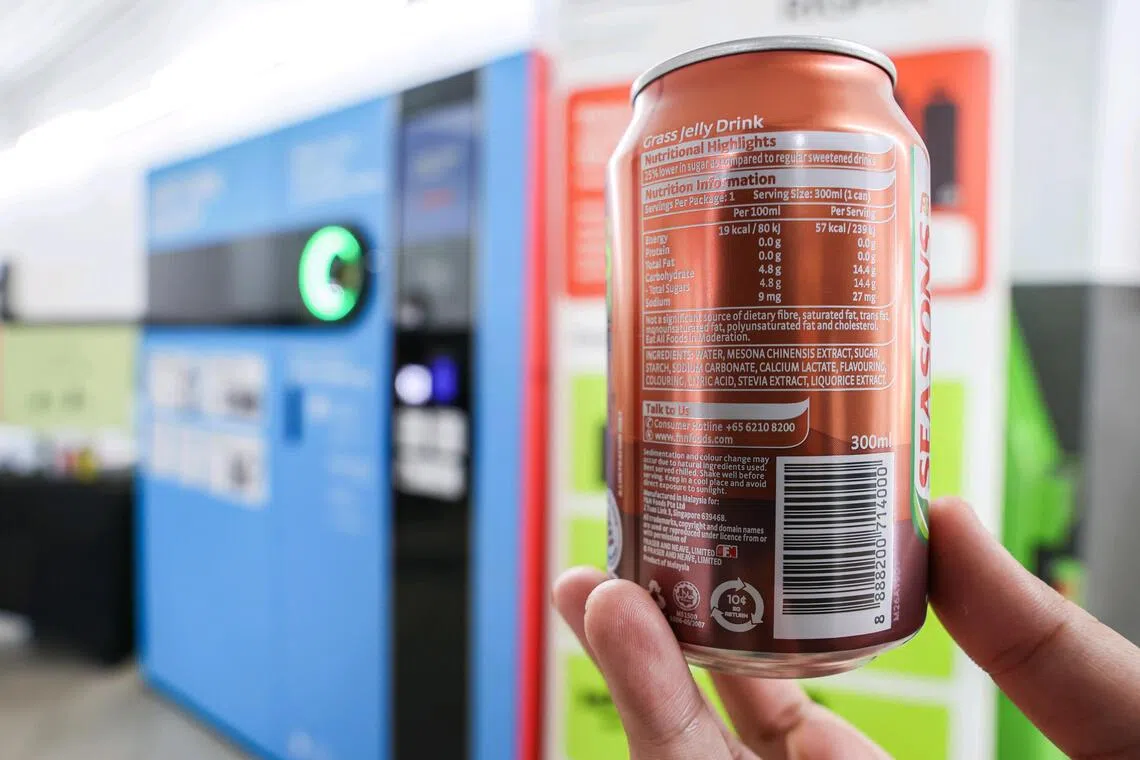
Under the scheme, all plastic bottles and cans from 150ml to 3 litres must be labelled with the 10-cent deposit mark and barcode.
Published Oct 01, 2026, 03:30 PM
Updated Oct 01, 2026, 03:30 PM
Singapore's beverage container return scheme (BCRS) launched smoothly on Oct 1, with most drinks labelled and consumers using reverse vending machines to reclaim 10-cent deposits.
Some consumers find the machines hard to locate and labels too small, while others face issues like full bins or rejected containers.
Small retailers received a one-month extension to clear unlabelled stock, with many scrambling to comply before the Oct 31 deadline.
SINGAPORE - With most drinks on shelves here now carrying the Return Right logo and barcode, the full implementation of Singapore’s beverage container return scheme (BCRS) on Oct 1 was off to a smoother start after many delays.
The Straits Times checks at about 15 reverse vending machines across the island on Sept 30 and Oct 1 showed people depositing armloads of empty beverage containers to retrieve their deposits.
Housewife Avis Chong, 32, was seen using a machine at the MacPherson food centre on Oct 1.
She told The Straits Times that her young children enjoy drinking canned beverages and sodas, and that she collates the containers for recycling once a week. She said she has not experienced any issues with the refund process.
Cedric Kuo, who works in finance, said the initiative has helped him be more diligent at recycling. He was seen returning a plastic shopping bag full of cans at a reverse vending machine at Holland Village on Sept 30.
Added Kuo, 29: “I initially thought that keeping the bottles and cans will be troublesome, but after trying it out, I realised that it’s actually quite convenient and I can make a few dollars from it, especially because I always buy cartons of drinks.”
Customers pay an extra 10 cents for each drink purchased under the scheme, but get the money back when they drop the used containers into a reverse vending machine, also called a Return Right machine.
From Oct 1, it will be an offence for anyone, including supermarket operators, to supply any regulated beverage if the container is not affixed with the scheme’s deposit mark and a barcode. Under the Resource Sustainability Act, those found guilty can face fines of up to $10,000 and/or up to three months’ jail.
More than 1,000 machines became operational on April 1 , but the National Environment Agency (NEA), which is administering the scheme, gave producers and retailers an extra six months to clear old stock.
More drinks carrying the requisite logos and barcodes only started appearing on shelves here toward the later end of the six-month period.
The transition period ended on Sept 30, although some small retailers have been given another month to clear stocks of non-compliant drinks.
Users interviewed suggested ways of improving the scheme.
These ranged from placing the machines in more prominent locations, to ensuring machines are emptied regularly and increasing the size of the logos.
Thomas Ng, 60, who was seen returning containers at the reverse vending machine in Our Tampines Hub, told The Straits Times: “The first time I came here to deposit my drinks, it was so hard to find the machine as it was hidden inside the supermarket. Even now, I would forget where it is sometimes and have to find it again which is very troublesome.”
The retiree added : “Supermarkets hide the machine at random places in the store… It would be good if they can put the machines at the entrance where everyone can see.”
Lab researcher Ong Pei Xuan, 28, who returned her containers at a machine outside the Sheng Siong outlet in Bedok, noted that there is a lack of machines in the area. She had encountered situations where the bin she was at was full, and other machines were too far away.
A line of people using the Return Right machine at Toa Payoh Central. ST PHOTO: GAVIN FOO
A line of people using the Return Right machine at Toa Payoh Central.
Administrator Megan Lim, 47, said she found the Return Right logo too small, unlike other labels like the Healthier Choice one .
Air-con engineer Foo Kai Teck, 58, who was observed using a machine in Bishan, said his experience has been generally smooth, but wishes the machines would accept slightly dented cans.
In an update on Oct 1, the NEA said the scheme had collected over 48 million beverage containers as of Sept 27. This means that over 823 tonnes of material was saved from incineration .
Small retailers apply for 1-month extension
About two weeks before the full implementation of the scheme, The Straits Times reported on Sept 15 that retailers were slashing prices – offering half-priced beers and discounted teas – to clear non-compliant stock.
The National Environment Agency (NEA) subsequently announced on Sept 18 that small retailers could apply for a one-month extension until Oct 31 to clear unlabelled beverages.
NEA said it has received approximately 2,700 applications as at Sept 30, 12pm. These were mainly from small retailers such as provision shops, neighbourhood convenience stores and standalone food shops. Around 90 per cent of the 2,300 processed applications have been approved.
In response to ST queries, an NEA spokesperson said that in assessing the applications, it takes into consideration factors such as the nature of the business, the number of outlets owned by the company, the applicants’ existing stocks of non-compliant beverages and their efforts and plans to deplete the existing stocks.
The NEA spokesperson added that a pplicants that were not granted the grace period have been informed not to supply non-compliant beverages. She added: “They are advised to consider options such as affixing BCRS stickers or donating to non-profit organisations.”
Bottled and canned drinks with the BCRS Deposit Mark seen on shelves at a supermarket in Lorong 4 Toa Payoh on Oct 1, the day the Beverage Container Return Scheme takes effect. ST PHOTO: GAVIN FOO
Bottled and canned drinks with the BCRS Deposit Mark seen on shelves at a supermarket in Lorong 4 Toa Payoh on Oct 1, the day the Beverage Container Return Scheme takes effect.
Several small retailers interviewed said they have applied for and successfully received the month-long extension to continue selling non-compliant drinks.
But if these items still remain unsold by the end of October, they generally plan to keep the beverages for their personal consumption.
At Hwa Lee Provision Store in Shunfu, owner Kelvin Lim said he applied for the one-month extension on Sept 28 and received approval for it. While over 90 per cent of his stock carries the Return Right logo, slower-moving items like energy drinks remain unlabelled.
“If the non-BCRS beverages are not sold by the grace period, I will bring them home and consume them myself,” Lim said. He added that retailers are also facing extra wholesale costs per carton, which he chooses to absorb.
At Ah Seng Durian eatery in Alexandra, manager Cedrik Shui noted that 70 per cent of his stock now have the required logos. His application for the one-month extension was successful.
“We are not a big enterprise with fast-moving sales in huge amounts. I believe that even this one month will not be enough for us,” he said. “We will just consume it because it will be the festive season soon… We can just use it as our Chinese New Year drinks.”
Vaigai minimart’s director Aakash, who said he goes by one name, said his shop now has about half its shelves filled, as many suppliers do not have enough stock of drinks with the Return Right logo. “They give priority to big shops who order in bulk,” he said. “When smaller shops like us order, they say they have no stock.”
Shabana Begum is a correspondent, with a focus on environment and science, at The Straits Times.
Environmental issues
National Environment Agency
根据该计划,所有容量从 150 毫升到 3 升的塑料瓶和罐都必须贴上 10 分押金标记和条形码。
发布于2026年10月1日下午3:30
更新于2026年10月1日下午3:30
新加坡饮料容器回收计划(BCRS)于10月1日顺利启动,大多数饮料都贴有标签,消费者可以使用自动回收机取回10分钱的押金。
一些消费者发现机器很难找到,标签太小,而另一些消费者则面临垃圾桶已满或容器被拒收等问题。
小型零售商获得了一个月的延期来清理未贴标签的库存,许多零售商都在争分夺秒地赶在 10 月 31 日的最后期限前完成清理工作。
新加坡——由于市面上大多数饮料现在都印有“Return Right”标志和条形码,新加坡饮料容器回收计划(BCRS)在经历了多次延误后,于10月1日全面实施,开局较为顺利。
《海峡时报》于 9 月 30 日和 10 月 1 日走访了全岛约 15 台自动售货机,发现有人抱着一大堆空饮料容器投入机器,以取回押金。
10月1日,32岁的家庭主妇Avis Chong被目击在麦波申美食中心使用机器。
她告诉《海峡时报》,她的孩子很喜欢喝罐装饮料和汽水,她每周都会把这些容器收集起来进行回收。她说,退款过程她没有遇到任何问题。
在金融行业工作的郭先生表示,这项举措帮助他更加认真地进行回收利用。9月30日,有人看到他在荷兰村的自动回收机上归还了一个装满易拉罐的塑料购物袋。
29岁的郭补充道:“我一开始觉得收集瓶瓶罐罐会很麻烦,但试过之后,我发现其实挺方便的,而且还能赚点钱,尤其是我经常买整箱的饮料。”
根据该计划,顾客每购买一杯饮料需额外支付 10 美分,但当他们将用过的容器投入反向自动售货机(也称为退货机)时,即可取回这笔钱。
自10月1日起,任何人,包括超市经营者,如果供应的受管制饮料容器未贴有该计划的押金标记和条形码,均属违法行为。根据《资源可持续发展法》,违者最高可处以10,000澳元罚款和/或三个月监禁。
4 月 1 日,超过 1000 台机器投入使用,但负责管理该计划的国家环境局 (NEA) 给予生产商和零售商额外 6 个月的时间来清理旧库存。
带有必要标志和条形码的饮料才开始更多地出现在这里的货架上,时间大约在六个月的后期。
过渡期于 9 月 30 日结束,不过一些小型零售商被给予额外一个月的时间来清理不合规饮料的库存。
受访用户提出了改进方案的建议。
这些措施包括将机器放置在更显眼的位置,确保定期清空机器,以及增大标志的尺寸。
60岁的Thomas Ng在淡滨尼天地(Our Tampines Hub)的自动回收机前退还饮料容器时告诉《海峡时报》:“我第一次来这里退还饮料时,很难找到这台机器,因为它藏在超市里面。即使是现在,我有时也会忘记它在哪里,不得不重新找,这很麻烦。”
这位退休人士补充道:“超市把自助点餐机随意藏在店内的各个角落……如果他们能把机器放在入口处,让每个人都能看到就好了。”
28岁的实验室研究员王佩璇(Ong Pei Xuan)在勿洛昇菘超市外的自动回收机上归还了她的容器。她注意到该地区的回收机数量不足。她曾遇到过回收箱已满,而其他回收机又太远的情况。
在Toa Payoh Central,人们排着队使用Return Right自助缴费机。(海峡时报照片:Gavin Foo)
在Toa Payoh Central购物中心,人们正在排队使用退货机。
47 岁的管理员 Megan Lim 表示,她发现 Return Right 的标志太小,不像其他标签(如 Healthier Choice)那样大。
58岁的空调工程师傅凯德(音译)在碧山使用一台机器时表示,他的使用体验总体上很顺利,但他希望机器能够接受略有凹陷的易拉罐。
10月1日,国家环境局发布最新消息称,截至9月27日,该计划已收集超过4800万个饮料容器。这意味着超过823吨的材料免于焚烧。
小型零售商申请延期1个月
在该计划全面实施前大约两周,《海峡时报》9 月 15 日报道称,零售商正在大幅降价——提供半价啤酒和折扣茶——以清理不合规的库存。
国家环境局 (NEA) 随后于 9 月 18 日宣布,小型零售商可以申请将未贴标签的饮料的清理期限延长一个月至 10 月 31 日。
国家环境局表示,截至9月30日中午12点,已收到约2700份申请。这些申请主要来自小型零售商,例如杂货店、社区便利店和独立食品店。在已处理的2300份申请中,约90%已获批准。
针对《海峡时报》的询问,国家环境局发言人表示,在评估申请时,会考虑诸如业务性质、公司拥有的门店数量、申请人现有的不合规饮料库存以及他们为清空现有库存所做的努力和计划等因素。
国家环境局发言人补充说,未获宽限期的申请者已被告知不得供应不合规饮料。她还表示:“建议他们考虑其他方案,例如张贴BCRS标签或向非营利组织捐款。”
10月1日,饮料容器回收计划正式生效当天,在位于大巴窑4巷的一家超市货架上,可以看到带有BCRS押金标志的瓶装和罐装饮料。(海峡时报照片:Gavin Foo)
10 月 1 日,饮料容器回收计划生效当天,在大巴窑 4 巷的一家超市货架上可以看到带有 BCRS 押金标志的瓶装和罐装饮料。
接受采访的几家小型零售商表示,他们已申请并成功获得了为期一个月的延期,可以继续销售不合规的饮料。
但如果这些商品到十月底仍然没有售出,他们通常打算把这些饮料留作自己享用。
顺福华利杂货店的店主林先生表示,他于9月28日申请了为期一个月的延期,并已获得批准。虽然他店里超过90%的商品都贴有“退货正确”的标识,但像能量饮料这类周转较慢的商品仍然没有贴标签。
林先生表示:“如果非BCRS饮料在宽限期内没有售出,我会把它们带回家自己喝掉。”他还补充说,零售商每箱饮料也面临着额外的批发成本,他选择自行承担这部分成本。
位于亚历山大区的阿成榴莲店经理Cedrik Shui表示,他店里70%的榴莲都已贴上了所需的标识。他申请的一个月延期申请已获批准。
“我们不是一家销量巨大的大型企业,我相信即使一个月的时间也不够我们用,”他说。“我们会把它喝掉,因为节日快到了……我们可以把它当做春节饮料。”
Vaigai便利店的店长Aakash(他自称只有一个名字)表示,由于许多供应商没有足够的带有“退货保障”(Return Right)标志的饮料库存,他的店里现在大约只有一半的货架摆满了商品。“他们优先满足大商店的批量订购需求,”他说,“像我们这样的小商店订购时,他们就说没货。”
沙巴娜·贝古姆是《海峡时报》的记者,主要关注环境和科学领域。
环境问题
国家环境局