Why so many people in sunny Singapore have Vitamin D deficiency – and what you should know为什么阳光明媚的新加坡有这么多人缺乏维生素D——以及你应该知道些什么
Interpreting your blood test isn’t as straightforward as it seems – and getting more sun isn’t necessarily the solution.
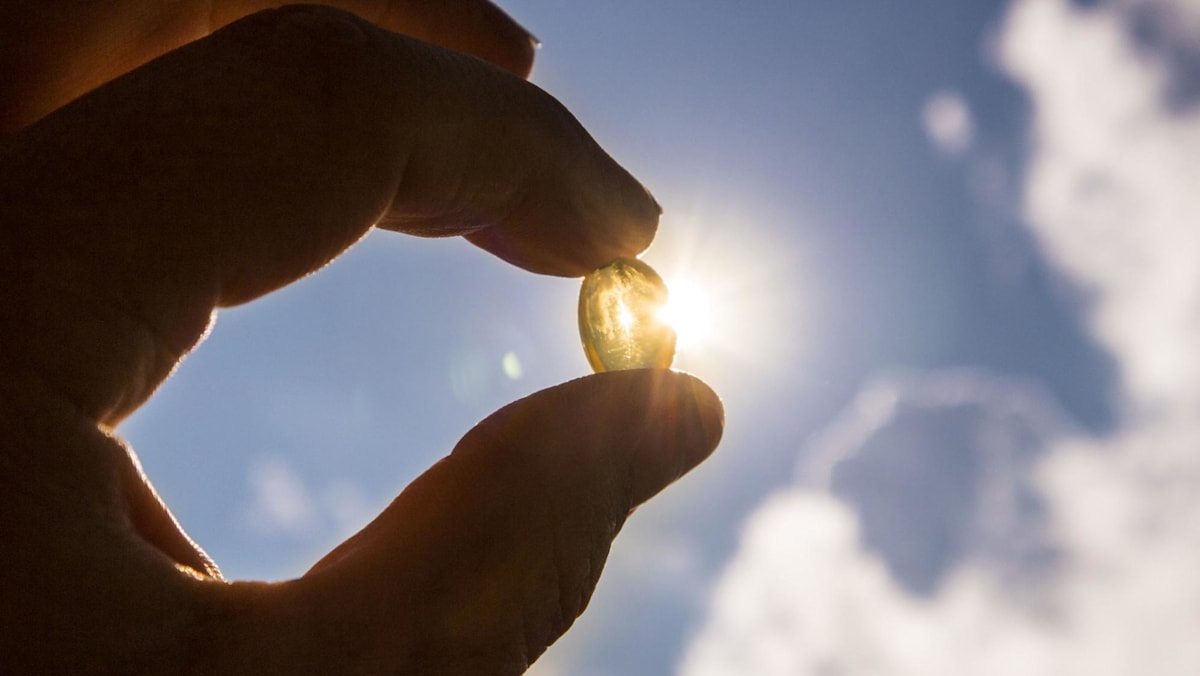
Interpreting your blood test isn’t as straightforward as it seems – and getting more sun isn’t necessarily the solution.
About 40 per cent of Singaporeans are deficient in Vitamin D. (Photo: iStock/Helin Loik-Tomson)
This audio is generated by an AI tool.
Here’s one of life’s biggest ironies: Despite living in the tropics and being blasted by the sun’s rays all year round, about 40 per cent of Singaporeans are deficient in Vitamin D and 8 per cent are very deficient, according to the 2010 National Health Survey by the Ministry of Health.
If you’ve been living under a rock and are wondering what’s the connection (and are probably deficient in Vitamin D, too), sunlight – more specifically, UVB – triggers a chemical reaction in your skin to naturally produce Vitamin D.
“UVB” is short for ultraviolet B and is the part of the sun’s rays that causes sunburn and skin cancer. UVB rays are also the only rays that trigger the chemical reaction in your skin that creates Vitamin D.
Think of your skin as a Vitamin D factory. When sunlight hits bare skin, UVB starts a chemical reaction that results in pre-Vitamin D. But it is not used immediately; instead, it circulates for weeks in the body via your blood. When your body needs to tap on the pre-Vitamin D (it can also be derived from food and supplements), your liver and kidneys process it into 25 hydroxyvitamin D or 25(OH)D, a form that your body can use.
Everyone blames sunblock but it could be more about the urban planning. (Photo: iStock/tkpond)
You can think of 25(OH)D as your body's Vitamin D “storage tank”, which is what blood tests measure when assessing your Vitamin D level. It is usually measured in micrograms per litre ( µg/l), nanograms per millilitre (ng/ml) or nanomoles per litre ( nmol/l).
WHAT’S CAUSING THE DEFICIENCY?
“Everyone blames sunblock,” said Dr Stephen Chu, the founder and medical director of Aquila Medical Center. “It plays a part but I don't think it's the main culprit in Singapore. The bigger issue is urban planning and how we live in it.”
He explained that “you can go from your flat to the car park to the office to the mall and home again without ever being properly in the sun”. “Sheltered walkways, underground walkways, air-conditioning everywhere, and office hours happen to cover exactly the part of the day when the UVB is useful,” said Dr Chu.
Your skin gets even less sunlight if you work in an office. In a 2019 study involving 213 participants who were indoor workers , Vitamin D deficiency was found in nearly 33 per cent of the participants. Office workers, workshop workers and night-shift workers were also found to be at a greater risk of this condition, despite a similar intake of Vitamin-D-rich foods across the job types.
Sitting next to a sunny window doesn’t quite cut it either, said Dr Sueziani Binte Zainudin, a senior consultant endocrinologist from Ascensus Health. “Ordinary glass blocks most of the UVB needed to make vitamin D. Being in the shade also reduces UV exposure, although some scattered UV may still reach the skin.”
Skin tone certainly plays a big part. Having a darker complexion and hence, more skin pigmentation or melanin , means that your skin absorbs the UVB radiation before it can trigger the chemical reaction needed to synthesise Vitamin D. This was shown in a 2013 study on 197 women in Singapore , which found that the deficiency was more prevalent in Malay women (89 per cent) and Indian women (82 per cent) compared to Chinese women (56 per cent).
About 54 per cent of females are Vitamin D deficient compared to roughly 30 per cent of males in Singapore. (Photo: iStock/tobiasjo)
And if you’re wondering, yes, more women than men in Singapore are affected. In fact, local studies reported that about 54 per cent of females are Vitamin D deficient , compared to roughly 30 per cent of males. Women tend to cover up more or stay out of the sun more than men, owing to cultural practices (dressing for modesty) and social preferences (avoiding tanning because being fair is considered beautiful).
You may be surprised to know that your weight matters as well. Obesity has even been suggested as a risk factor for Vitamin D deficiency because the fat-soluble vitamin is readily stored in body tissue, preventing the body from using it. In a study that looked at Vitamin D deficiency, obese subjects had 57 per cent lower Vitamin D levels than leaner subjects.
The elderly is another group that is often lacking in Vitamin D. In a local study that looked at 134 subjects aged above 65 in a Singapore rehabilitation centre, 44 per cent were found to be deficient , while nearly 86 per cent had low levels of the vitamin. Malay and Indian patients fared significantly worse than Chinese, which again, fits with the skin pigmentation reasoning.
WHY IS VITAMIN D IMPORTANT?
The problem with starting out low on Vitamin D is that it becomes even more worrisome when you’re growing a baby; Vitamin D supports calcium and phosphate metabolism needed for the foetus’ skeletal development . As the pregnancy progresses, the calcium transfer from mother to foetus increases substantially.
It could explain the statistics among pregnant women in a small 2024 study; it found that out of the 93 participants in their first trimester, only 2.2 per cent of mums-to-be have sufficient Vitamin D . Among the Malay and Indian pregnant women who participated in the study, all of them were deficient.
Vitamin D prevents osteoporosis by helping the body absorb calcium to build bone and support muscle strength. (Photo: iStock/Warawan Tongsri)
Vitamin D matters to non-pregnant individuals, too. Its deficiency has been associated with a range of conditions, the most known of all is osteoporosis . The vitamin prevents it by helping the body absorb calcium to build bone and support muscle strength – two functions that make the vitamin highly beneficial for menopausal women and seniors who have sarcopenia or age-related muscle loss.
The sunshine vitamin is also linked to lower cancer incidence (most notably, colorectal cancer, breast cancer and prostate cancer) and a reduced risk of developing Type 2 diabetes, along with lowering blood pressure, which reduces the risk of heart attacks and strokes.
A dose of Vitamin UVB has also been shown to fend off sleepiness. The next time you have difficulty dragging yourself out of bed, try drawing the curtains and letting the sun in for a while. Morning sunlight contains blue light wavelengths that increase cortisol and suppress the sleepy hormone melatonin .
WHAT LEVELS ARE CONSIDERED TO BE DEFICIENT?
Interestingly, experts can’t agree on what qualifies as Vitamin D deficient and how high levels need to be . The guidelines of the global medical community, Endocrine Society, noted that people with 25(OH)D below 20ng/ml should be considered deficient, and suggested 30ng/ml or above as a desirable level in various at-risk groups.
However, the US Institute Of Medicine (IOM) argued that the evidence doesn't support setting the bar that high for everybody. Their review, published in 2012 , suggested that around 20ng/ml is enough to meet the needs of almost everyone in the general population. In fact, they noted that around 16ng/ml would already suffice for roughly half the general population.
And while IOM acknowledged that preventing nutrient deficiencies during pregnancy is important, there wasn't sufficient evidence to conclude that pregnant women should routinely aim for 30ng/ml or more, or that higher Vitamin D levels would prevent outcomes such as pre-eclampsia.
Globally, experts can’t agree on what qualifies as Vitamin D deficient and how high levels need to be. (Photo: iStock/Fat Camera)
So, what's the accepted number then? Many doctors would recommend maintaining your s erum 25(OH)D concentration at 20ng/ml or higher; 30ng/ml or higher for elderly persons at risk of falls or people diagnosed with osteoporosis. “Vitamin D supplementation is recommended in people who have a confirmed deficiency, that is, less than 30ng/ml,” said Dr Crystal Phuan, an associate consultant dermatologist from National Skin Centre.
However, “experts' consensus is that there is no single 'perfect’ Vitamin D level that applies to everyone”, said Dr Sueziani. The recommendation of 20ng/ml is still the most widely used cut-off and it's what the Singapore studies apply, said Dr Chu. “But it was only ever meant as a population figure for bone health, not for personal optimum.”
Moreover, continued Dr Chu, the test itself isn't consistent. “One study compared labs and found results differing by around 12nmol/l (about 5ng/ml). They included labs using mass spectrometry, which is supposed to be the gold standard.”
Dr Chu’s advice to patients is that “a borderline result needs interpreting and looking at the entire picture of the patient’s situation – not panicking or acting on immediately”. “And if you're going to repeat the test, use the same lab. One number on one day isn't a diagnosis,” he said.
The recommendations for Vitamin D are around 600IU a day, increasing to about 800IU a day after age 70. (Photo: iStock/megaflopp)
WHY IS WALKING UNDER THE SUN TO GET LUNCH NOT ENOUGH?
Should you be heading outside without sunscreen once in a while? “It is prudent to limit the time in the sun without sun protection due to the increased risk of skin cancer,” said Dr Phuan. And for good reason. “As few as six sunburns in a lifetime have been shown to increase an individual’s risk for non-melanoma and melanoma skin cancer,” she said.
While it has been proposed that sun exposure may maintain your Vitamin D level or bring it up to the desired level, Dr Phuan said that doing so can be akin to recommending a carcinogen in moderation when there is an equally effective non-carcinogenic alternative. Furthermore, deliberately exposing unprotected skin to UV rays may not be efficient in those with deficiency, such as elderly and dark-skinned persons, she added.
Instead, the protected exposure of the face and backs of the hands to “0.25 per cent minimum erythema dose (MED) of UVB radiation” three times weekly generates enough Vitamin D, said Dr Phuan. To break it down, think of MED as your personal "sunburn threshold”; it refers to the amount of UV your skin can take before it reddens. So, 0.25 per cent of your MED is a tiny fraction of that sunburn threshold.
Do not go out under the sun without sunblock, even if your goal is to increase your Vitamin D levels. (Photo: iStock/Luca Boveri)
What does that look like in real life? Instead of providing a “prescription” of UV exposure, simply be less avoidant of the sun, said Dr Chu. “I'd say go out in the mid-morning or late afternoon, make it short and regular, with a decent bit of skin uncovered.”
And you’ll need direct sun; being in the shade cuts down UVB a lot, he said. This isn’t an excuse to forgo sunblock. You should still use sunscreen properly and top up if you sweat a lot – rather than hoping incidental exposure covers you, said Dr Chu.
But scratch all that if you’re fair-skinned, or have a personal or family history of skin cancer; you’re better off taking supplements, said Dr Chu. “You can replenish Vitamin D with a tablet safely and cheaply. You cannot undo photodamage.”
WHAT ABOUT FOOD SOURCES OF VITAMIN D?
Yes, your diet can also contribute to your Vitamin D need, said Dr Phuan. If you’re sun shy, you may be better off supplementing your diet with Vitamin D-fortified foods, such as drinking two eight-ounce glasses (about 240ml per glass) of fortified milk or orange juice each day.
“Foods high in Vitamin D include fatty fish, such as salmon or trout. Foods fortified with added Vitamin D are another source,” said Dr Phuan. “These include milk, yoghurt, some plant milks such as soy, almond and oat milk, and some cereals. Some mushrooms are treated with ultraviolet light, which gives them more Vitamin D (look for the 'Vitamin D' label).”
If you’re thinking of taking supplements, Dr Suezaini said that most healthy adults need about 600IU a day, while those above 70 may need about 800IU daily. “Those clearly deficient may need higher doses for a period of time, but this should be guided by a doctor,” she said.
Over-dosing with over-the-counter Vitamin D is no light matter. Excess Vitamin D can lead to hypercalcaemia, which means the calcium levels in your blood are higher than normal. Severe cases, though rare, can cause issues such as kidney failure, abnormal heart rhythm (arrhythmia), unsteady gait and/or confusion.
A single handpicked story that we think you shouldn't miss. Just one a day.
解读血液检测结果并不像看起来那么简单——多晒太阳也不一定能解决问题。
约40%的新加坡人缺乏维生素D。(图片:iStock/Helin Loik-Tomson)
这段音频是由人工智能工具生成的。
人生最大的讽刺之一在于:尽管新加坡地处热带,全年阳光普照,但根据卫生部 2010 年全国健康调查,约 40% 的新加坡人缺乏维生素 D,8% 的人严重缺乏维生素 D。
如果你一直与世隔绝,想知道这两者之间有什么联系(而且可能也缺乏维生素 D),那么阳光——更具体地说是 UVB——会引发皮肤中的化学反应,从而自然产生维生素 D。
UVB是紫外线B的简称,它是太阳光线中导致晒伤和皮肤癌的部分。UVB射线也是唯一能触发皮肤产生维生素D的化学反应的射线。
把你的皮肤想象成一个维生素D工厂。当阳光照射到裸露的皮肤上时,UVB会引发化学反应,生成维生素D前体。但它不会立即被利用;相反,它会在血液中循环数周。当你的身体需要利用维生素D前体时(它也可以从食物和补充剂中获取),你的肝脏和肾脏会将其加工成25-羟基维生素D或25(OH)D,也就是身体可以利用的形式。
人们都把矛头指向防晒霜,但或许城市规划才是罪魁祸首。(图片:iStock/tkpond)
你可以把25(OH)D想象成你体内维生素D的“储存罐”,血液检测就是用来评估你维生素D水平的。它通常以微克/升(µg/l)、纳克/毫升(ng/ml)或纳摩尔/升(nmol/l)来测量。
造成这种不足的原因是什么?
“大家都把矛头指向防晒霜,”阿奎拉医疗中心创始人兼医疗主任朱医生说。“防晒霜的确有一定作用,但我认为它并非新加坡的主要罪魁祸首。更大的问题在于城市规划以及我们的生活方式。”
他解释说:“你可以从公寓走到停车场,再到办公室,再到商场,最后回家,全程都没有真正晒到太阳。”朱博士说:“有遮蔽的走廊、地下通道、到处都有空调,而且办公时间恰好覆盖了紫外线B最有效的时段。”
如果你在办公室工作,皮肤接触到的阳光就更少了。2019 年一项针对 213 名室内工作者的研究发现,近 33% 的参与者存在维生素 D 缺乏症。研究还发现,尽管不同职业人群摄入富含维生素 D 的食物量相似,但办公室工作人员、车间工人和夜班工人患维生素 D 缺乏症的风险更高。
Ascensus Health的高级内分泌顾问苏兹亚尼·宾特·扎伊努丁博士表示,坐在阳光充足的窗边也远远不够。“普通玻璃会阻挡大部分合成维生素D所需的UVB射线。待在阴凉处也能减少紫外线照射,尽管仍有一些散射的紫外线可能到达皮肤。”
肤色确实起着重要作用。肤色较深,意味着皮肤色素或黑色素含量较高,这意味着皮肤会吸收更多的 UVB 辐射,从而无法触发合成维生素 D 所需的化学反应。2013 年一项针对新加坡 197 名女性的研究证实了这一点,该研究发现,与华裔女性(56%)相比,马来族女性(89%)和印度裔女性(82%)的维生素 D 缺乏症更为普遍。
新加坡约有54%的女性缺乏维生素D,而男性这一比例约为30%。(图片:iStock/tobiasjo)
如果你好奇的话,答案是肯定的,新加坡受影响的女性比男性更多。事实上,本地研究报告显示,约有54%的女性缺乏维生素D,而男性这一比例约为30%。由于文化习俗(穿着保守)和社会偏好(避免晒黑,因为白皙被认为是美丽的),女性往往比男性更注重遮盖身体或避免日晒。
你或许会惊讶地发现,体重也很重要。肥胖甚至被认为是维生素D缺乏的风险因素之一,因为这种脂溶性维生素很容易储存在身体组织中,从而阻碍身体利用。一项针对维生素D缺乏的研究发现,肥胖受试者的维生素D水平比体型偏瘦的受试者低57%。
老年人是另一个经常缺乏维生素D的群体。新加坡一项针对康复中心134名65岁以上老年人的研究发现,44%的人维生素D缺乏,近86%的人维生素D水平偏低。马来人和印度人的情况明显比华人更糟,这再次印证了肤色差异的解释。
为什么维生素D很重要?
孕期维生素D水平低的问题在于,孕期维生素D缺乏会更加令人担忧;维生素D支持钙和磷的代谢,而钙和磷是胎儿骨骼发育所必需的。随着孕期的进展,母体向胎儿的钙转移量会显著增加。
这或许可以解释2024年一项小型研究中孕妇的统计数据;该研究发现,在93名处于孕早期(妊娠前三个月)的参与者中,只有2.2%的准妈妈体内维生素D充足。参与该研究的马来族和印度族孕妇全部都缺乏维生素D。
维生素D有助于身体吸收钙质,从而促进骨骼生长并增强肌肉力量,进而预防骨质疏松症。(图片:iStock/Warawan Tongsri)
维生素D对非孕妇也很重要。维生素D缺乏与多种疾病相关,其中最广为人知的是骨质疏松症。维生素D有助于身体吸收钙质,从而促进骨骼生长和肌肉力量,预防骨质疏松症——这两项功能使维生素D对更年期女性和患有肌肉减少症或与年龄相关的肌肉流失的老年人尤为有益。
阳光维生素还与降低癌症发病率(尤其是结直肠癌、乳腺癌和前列腺癌)以及降低患 2 型糖尿病的风险有关,同时还能降低血压,从而降低心脏病发作和中风的风险。
研究表明,适量的维生素 UVB 也能有效抑制睡意。下次当你难以起床时,不妨拉上窗帘,让阳光照进来一会儿。晨光中含有蓝光波长,可以提高皮质醇水平,抑制褪黑激素的分泌,从而帮助睡眠。
哪些水平被认为是不足的?
有趣的是,专家们对于维生素D缺乏的定义以及所需的维生素D水平究竟要达到多少才能算缺乏,仍然存在分歧。全球医学界的权威机构——内分泌学会发布的指南指出,25(OH)D水平低于20ng/ml的人应被视为维生素D缺乏,并建议在各类高危人群中,25(OH)D水平应达到30ng/ml或以上。
然而,美国医学研究所(IOM)认为,现有证据并不支持将标准设定得如此之高。他们在2012年发表的综述指出,20ng/ml左右的血红蛋白水平足以满足绝大多数普通人群的需求。事实上,他们指出,16ng/ml左右的血红蛋白水平就足以满足大约一半普通人群的需求。
虽然美国医学研究所承认预防孕期营养缺乏症很重要,但没有足够的证据表明孕妇应该常规地将维生素 D 水平提高到 30ng/ml 或更高,或者更高的维生素 D 水平可以预防先兆子痫等不良后果。
全球专家对于维生素D缺乏的定义以及维生素D水平需要达到多高才能算作维生素D缺乏症,尚未达成共识。(图片:iStock/Fat Camera)
那么,公认的理想数值是多少呢?许多医生建议将血清25(OH)D浓度维持在20ng/ml或以上;对于有跌倒风险的老年人或被诊断患有骨质疏松症的人,则建议维持在30ng/ml或以上。“对于确诊维生素D缺乏的人,即血清25(OH)D浓度低于30ng/ml的人,建议补充维生素D,”国家皮肤中心副顾问皮肤科医生Crystal Phuan博士说道。
然而,苏兹亚尼博士表示,“专家们的共识是,并不存在一个适用于所有人的‘完美’维生素D水平。”朱博士指出,20ng/ml的推荐值仍然是最广泛使用的临界值,新加坡的研究也采用了这一标准。“但这仅仅是针对人群骨骼健康的参考值,而非个人最佳水平。”
此外,朱博士继续说道,检测本身也不稳定。“一项研究对比了不同实验室的结果,发现结果相差约12 nmol/l(约5ng/ml)。该研究纳入了使用质谱法的实验室,而质谱法被认为是黄金标准。”
朱医生给患者的建议是:“临界结果需要综合考虑患者的整体情况进行解读,不要惊慌失措或立即采取行动。” 他还说:“如果需要重复检测,请务必选择同一家实验室。单凭一天的检测结果并不能确诊。”
维生素D的推荐摄入量约为每日600国际单位,70岁以后增加到每日约800国际单位。(图片:iStock/megaflopp)
为什么顶着烈日步行去吃午饭还不够?
偶尔不涂防晒霜出门可以吗?“由于皮肤癌风险增加,谨慎的做法是限制不涂防晒霜的日晒时间,”潘医生说。这不无道理。“研究表明,一生中即使只有六次晒伤,也会增加患非黑色素瘤和黑色素瘤皮肤癌的风险,”她说。
虽然有人提出晒太阳可以维持维生素D水平或使其达到理想水平,但潘医生表示,这样做就好比推荐适量摄入致癌物,而实际上却存在同样有效的非致癌替代品。此外,她还补充说,对于维生素D缺乏的人群,例如老年人和肤色较深的人,故意让未加防护的皮肤暴露在紫外线下可能效果不佳。
潘医生表示,其实每周三次,在保护下让脸部和手背接受“0.25%最小红斑剂量(MED)的UVB辐射”,就能产生足够的维生素D。简单来说,你可以把MED理解为你的个人“晒伤阈值”;它指的是你的皮肤在发红之前能够承受的紫外线剂量。所以,0.25%的MED只是你晒伤阈值的一小部分。
即使你的目的是提高维生素D水平,也不要不涂防晒霜就外出晒太阳。(图片:iStock/Luca Boveri)
那在现实生活中该怎么做呢?朱医生说,与其“开处方”要求人们多晒太阳,不如减少对阳光的躲避。“我建议在上午十点或下午晚些时候出门,每次时间短一些,但要规律,并且要露出足够多的皮肤。”
你需要阳光直射;待在阴凉处会大大减少 UVB 辐射,他说。但这并不是放弃防晒霜的理由。朱医生说,你仍然应该正确使用防晒霜,如果大量出汗就应该补涂——而不是指望偶尔的日晒就能起到保护作用。
但如果你皮肤白皙,或者有皮肤癌个人史或家族史,那就另当别论了;朱医生说,你最好服用补充剂。“你可以安全又便宜地服用维生素D片来补充维生素D。但光损伤是无法逆转的。”
那么,食物中维生素D的来源有哪些呢?
潘医生说,饮食也能帮助你补充维生素D。如果你怕晒太阳,最好通过食用富含维生素D的食物来补充营养,例如每天喝两杯(每杯约240毫升)强化牛奶或橙汁。
“富含维生素D的食物包括脂肪含量高的鱼类,例如鲑鱼或鳟鱼。添加维生素D的强化食品也是维生素D的来源之一,”潘医生说。“这些食品包括牛奶、酸奶、一些植物奶,例如豆奶、杏仁奶和燕麦奶,以及一些谷物食品。有些蘑菇经过紫外线处理,因此含有更多的维生素D(请留意“维生素D”标签)。”
如果您正考虑服用维生素补充剂,苏扎尼医生表示,大多数健康成年人每天需要约600国际单位(IU),而70岁以上的人可能需要约800国际单位(IU)。她说道:“那些明显缺乏维生素的人可能需要在一段时间内服用更高剂量,但这应该在医生的指导下进行。”
过量服用非处方维生素D绝非小事。过量的维生素D会导致高钙血症,也就是血液中钙含量高于正常水平。虽然罕见,但严重病例可能引发肾衰竭、心律失常、步态不稳和/或意识混乱等问题。
每天一篇,我们精心挑选一篇您不容错过的精彩故事。