Crystal Jade’s receivership: What happens next and what it means for staff翡翠大厦破产管理:接下来会发生什么?这对员工意味着什么?
Crystal Jade’s holding companies are under receivership, allowing continued operations while secured creditors manage assets to recover debts. Read more at straitstimes.com.
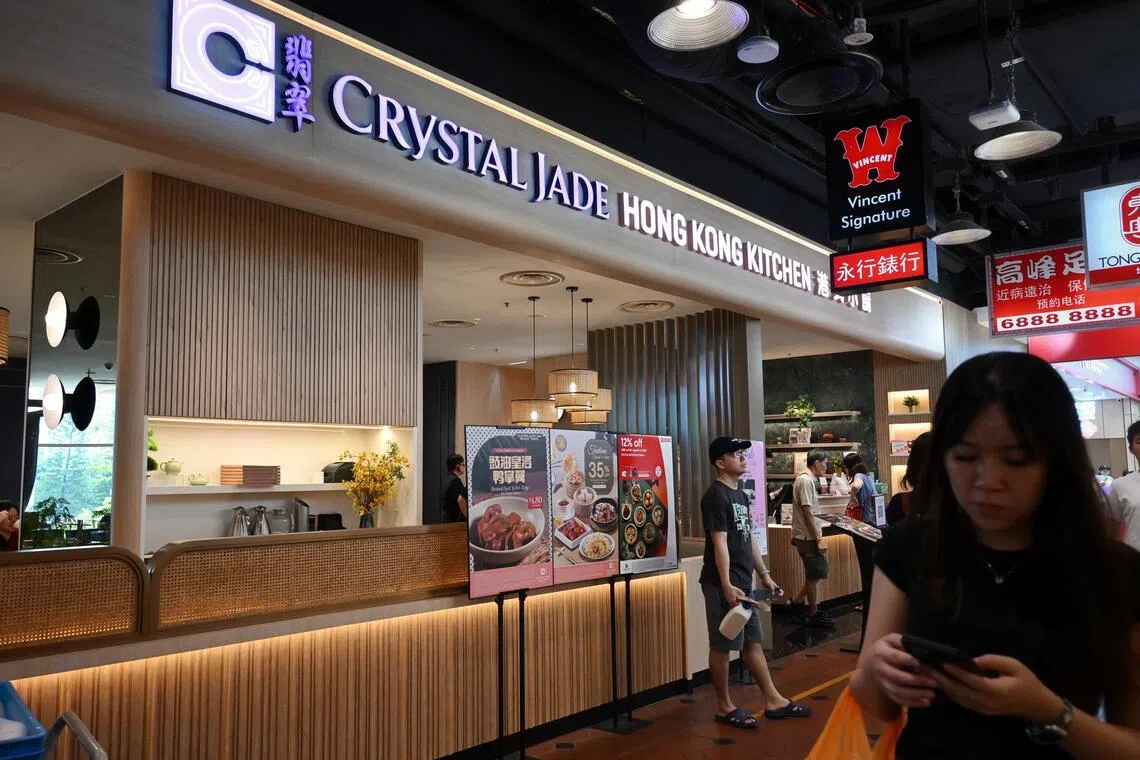
Companies under receivership, such as Crystal Jade’s holding company, still exist and can continue to operate.
ST PHOTO: KUA CHEE SIONG
Published Oct 02, 2026, 07:00 AM
Updated Oct 02, 2026, 09:22 AM
Crystal Jade’s holding companies are under receivership, meaning a secured creditor manages assets but the company still operates, aiming to repay debts without immediate closure.
Liquidation involves selling a company’s assets to pay debts, ending the company and causing job losses, with employees having limited priority if assets run out.
Judicial management allows temporary protection from creditors to restructure and save the company, while employees may continue working; employees are advised to seek timely payment and legal help if unpaid.
SINGAPORE – Crystal Jade’s holding companies in Singapore and Hong Kong have been placed under receivership – but what does that mean?
There has been a slew of recent news about distressed companies, ranging from those under receiverships to those that face liquidation.
The different circumstances a distressed company finds itself in also affect employees differently. For workers, the key question is whether they will continue to be employed and paid. This, in turn, depends on whether the company continues to operate.
What happens when a company is liquidated?
“Winding up” and “liquidation” are used interchangeably to refer to the process in which a company’s assets are sold off and the proceeds are used to pay off its debts.
Once the liquidation is completed, the company no longer exists. Workers will lose their jobs.
There are different ways to wind up a company depending on whether the company can pay off its debts.
In the case of members’ voluntary winding-up, a company’s members or shareholders may decide to pass a resolution to wind it up and appoint a liquidator.
But the company is still able to pay its debts in full within 12 months after starting the winding-up process.
On the other hand, there are other cases where the company cannot pay its financial obligations or debts when they are due. A company is considered as being “unable to pay its debts” if a creditor is owed more than $15,000, has served a demand to the company, and has still not been paid for three weeks or more.
The company can have a creditors’ voluntary winding-up, where it can convene a meeting with its creditors to consider its proposal to wind up the company. If the resolution is passed, the company appoints a liquidator.
However, in the case of compulsory winding-up, the company itself, creditors, or other parties present a winding-up application to the High Court. The court then appoints a liquidator for the company.
The role of the liquidator is to investigate the affairs and assets of the company, the conduct of its officers, and the claims of creditors and third parties.
The liquidator also has to recover the company’s assets and realise their value in the most advantageous manner to the company.
The liquidator will also have to hear the claims of all the creditors and ensure that the company’s assets are equitably distributed.
This can mean distributing payments to secured creditors like banks, others like employees who might not have been paid, as well as shareholders.
For example, in September, it was announced that Baker’s Brew, or BB Atelier, was going into liquidation . The company decided at a meeting with creditors on Aug 31 to enter creditors’ voluntary liquidation.
In September, fitness chains True Fitness and True Yoga in Singapore also shuttered , with their Hong Kong parent company declaring that it was winding up the businesses due to market competition and cost pressures.
The directors of True Yoga and True Fitness passed resolutions saying they were unable to continue their businesses owing to their liabilities.
Singapore’s consumer rights watchdog said True Fitness and True Yoga members have reported losses of more than $609,000.
What happens when a company is under receivership?
Unlike liquidation, a company under receivership still exists and can continue to operate.
In the case of Crystal Jade, it closed five outlets in 2026, but outlets like the one at Takashimaya Shopping Centre remain open.
“Receivership occurs when a secured creditor appoints a receiver or manager to collect and sell assets which the creditor holds a security interest over,” said Leon Yee, chairman of law firm Duane Morris & Selvam.
“Receivership does not necessarily lead to winding up. The company may resume normal operations once the secured debt is satisfied.”
Advisory firm Kroll, which is reviewing Crystal Jade’s financial and operational affairs, told The Straits Times that this receivership does not mean a closure of the business, and that “Crystal Jade is not exiting the food and beverage market”.
A Crystal Jade spokesperson also said that “customers can continue to enjoy the same quality, service and dining experience at Crystal Jade restaurants”.
Robson Lee, a senior corporate and capital markets lawyer, said that the receivership allows the company to still collect earnings.
“If you kill the company now, creditors like banks and other parties like suppliers will be worse off,” he said.
What happens when a company undergoes judicial management?
Judicial management is the process whereby a company that cannot pay its debts seeks temporary respite from creditors and its liabilities, said Khelvin Xu, director of law firm Covenant Chambers.
A judicial manager is then appointed and a moratorium put in place, which means that the company is protected from legal proceedings such as those from creditors.
The judicial manager then tries to turn the company around or realise the company’s assets at a high value compared with fire-sale prices.
If the judicial manager successfully turns things around, the company may continue to operate. If it cannot, the company may be wound up.
An example of this is beleaguered water treatment firm Hyflux, which was put under judicial management in 2020. This meant that founder Olivia Lum and the rest of the board were no longer in control of the company.
However, this failed, and in 2021, the judicial managers filed an application to wind up the company, after unsuccessful negotiations with an investor and a failed restructuring attempt.
But others have found success under the judicial management route.
Singapore-based sofa maker HTL, which owed various banks US$46 million (S$65 million) in 2020, sought judicial management, citing a cash-flow crunch due to the pandemic.
The sofa-maker was given a lifeline when co-founder Phua Yong Tat signed an agreement to buy back the company under his entity Golden Hill Capital. This ensured its survival, while protecting the jobs of thousands of employees.
How about bankruptcy?
Bankruptcy applies to individuals and sole proprietorships, not companies, Xu said.
An individual who cannot pay their debts may be declared bankrupt, and if so, their property will be vested in a court-appointed trustee, who will manage the bankrupt person’s financial affairs.
“Unlike companies being wound up, individuals who have been made bankrupt certainly do not cease to exist,” he said.
An individual being made bankrupt may not affect the employees of a company they own.
For instance, it was reported in August that a bankruptcy order was made against Singapore permanent resident Ramu Palani Velu, who is the director of seven companies that provide air-conditioning, plumbing and building services.
A total of 407 workers from these companies lodged claims for unpaid wages, with some having not been paid for more than two months.
However, Xu said that it is not a straightforward case because it is the company, not the individual, that employed the workers. Hence, it is the company that is obliged to pay salaries, not the director personally, and the director’s bankruptcy does not change whether he is personally liable to the workers.
What happens when a company restructures?
Cases of layoffs have made the news recently, with companies often saying they are undergoing restructuring and hence had to retrench some workers.
Xu said that “restructuring” is a very broad term that refers to the reorganisation of the company’s internal structures. It does not necessarily lead to the company ceasing to exist.
Lee added that a restructuring can be initiated internally without receivers, judicial managers or liquidators. Typically, it aims to help a company to wind down non-core businesses, realise non-performing assets and deploy manpower to other divisions of the business.
It can also mean a company sells off certain parts of its business and keeps the core business that can help the company get back on its feet.
There are usually structural changes to the business and manpower allocations in a restructuring.
What happens to employees in these scenarios?
In the case of a company being wound up, the employees have priority but there is no guarantee that they will be paid if the assets of the company are insufficient, Yee said.
Employees’ claims rank higher in priority than other ordinary unsecured creditors, but lower than secured creditors like banks.
Xu said: “However, the unfortunate reality is that in many instances, there may be little or no assets left by the time it is employees’ turn to be paid. If there are no more assets left, then employees may not be able to recover unpaid salary or CPF contributions.”
But if a company is under judicial management, the company can continue operating and employees continue working.
If employees have claims, these will be handled directly by the appointed judicial manager, Yee said.
Meanwhile, if the company is in receivership, employees might also be affected if the receiver sells or scales down the business.
Yee said: “The best practice for employees is to ensure that they are paid on a timely basis.”
In the event of non-payment or delay in payment, employees should immediately take action by seeking mediation through the Tripartite Alliance for Dispute Management, and thereafter filing a claim with the Employment Claims Tribunal, he said.
If the employee is not eligible to file a claim with the tribunal – if their salary is too high, for example – they should seek legal advice and/or resign immediately.
“Failing to pay salary is usually grounds for resigning without notice,” Yee said.
“The worst choice for employees is to continue working even after a company has failed to pay them, as they may not be able to recover their wages once the company is insolvent.”
Sue-Ann Tan is a business correspondent at The Straits Times, covering capital markets and sustainable finance.
Debt restructuring/Insolvency
像翡翠控股公司这样的被接管的公司仍然存在,并且可以继续运营。
《海峡时报》摄影:郭志雄
发布于2026年10月2日上午7:00
更新于2026年10月2日上午9:22
翡翠控股公司目前处于破产管理状态,这意味着有担保债权人管理资产,但公司仍在运营,目标是在不立即关闭的情况下偿还债务。
清算是指出售公司资产以偿还债务,导致公司倒闭和失业,如果资产耗尽,员工的优先权也有限。
司法管理允许暂时保护公司免受债权人的追讨,以便进行重组和挽救公司,同时员工可以继续工作;建议员工在未获得工资时及时寻求付款和法律帮助。
新加坡——翡翠集团在新加坡和香港的控股公司已被接管——但这究竟意味着什么?
最近有很多关于陷入困境的公司的新闻,从被接管的公司到面临清算的公司,不一而足。
陷入困境的公司所处的不同境况也会对员工产生不同的影响。对员工而言,关键问题在于他们能否继续保有工作并领取薪水。而这又取决于公司是否能够继续运营。
公司清算后会发生什么?
“清算”和“解散”这两个词可以互换使用,指的是将公司资产出售,并将所得款项用于偿还债务的过程。
清算完成后,公司将不复存在,工人们也将失去工作。
根据公司能否偿还债务,解散公司的方式有很多种。
在成员自愿解散的情况下,公司的成员或股东可以决定通过决议解散公司并指定清算人。
但该公司在开始清算程序后的 12 个月内仍能够全额偿还债务。
另一方面,也存在公司无法按时偿还到期债务的情况。如果债权人收到公司欠款超过15,000美元的催款通知,且三周或更长时间仍未收到付款,则该公司被视为“无力偿还债务”。
公司可以进行债权人自愿清算,即召开债权人会议,审议其清算方案。如果决议获得通过,公司将指定一名清算人。
然而,在强制清算的情况下,公司本身、债权人或其他相关方可向高等法院提出清算申请。法院随后会为公司指定一名清算人。
清算人的职责是调查公司的事务和资产、公司管理人员的行为以及债权人和第三方的索赔。
清算人还必须收回公司资产,并以对公司最有利的方式实现其价值。
清算人还必须听取所有债权人的索赔,并确保公司资产得到公平分配。
这可能意味着向有担保债权人(如银行)、其他债权人(如可能未获得工资的员工)以及股东分配款项。
例如,9月份,Baker's Brew(或称BB Atelier)宣布进入清算程序。该公司在8月31日与债权人的会议上决定进入债权人自愿清算程序。
9 月,新加坡的健身连锁店 True Fitness 和 True Yoga 也相继关闭,其香港母公司宣布,由于市场竞争和成本压力,将结束这些业务。
True Yoga 和 True Fitness 的董事们通过决议称,由于负债累累,他们无法继续经营。
新加坡消费者权益监管机构表示,True Fitness 和 True Yoga 的会员报告的损失超过 609,000 美元。
公司被接管后会发生什么?
与清算不同,被接管的公司仍然存在,可以继续运营。
以翡翠为例,它在 2026 年关闭了五家分店,但像高岛屋购物中心的那家分店仍然营业。
“当有担保债权人指定接管人或管理人来收取和出售债权人拥有担保权益的资产时,就会发生接管,”杜安·莫里斯律师事务所主席梁耀文表示。
“接管并不一定意味着公司会清算。一旦担保债务得到清偿,公司即可恢复正常运营。”
负责审查翡翠餐饮集团财务和运营事务的咨询公司 Kroll 告诉《海峡时报》,此次接管并不意味着该业务的关闭,“翡翠餐饮集团不会退出餐饮市场”。
翡翠餐饮集团发言人也表示,“顾客可以在翡翠餐厅继续享受同样的品质、服务和用餐体验”。
资深企业及资本市场律师罗布森·李表示,接管程序允许公司继续收取收益。
“如果现在倒闭这家公司,债权人(如银行)和供应商等其他相关方的处境会更糟,”他说。
公司进入司法管理程序后会发生什么?
律师事务所 Covenant Chambers 的主管徐凯文表示,司法管理是指无法偿还债务的公司寻求暂时免除债权人和债务责任的过程。
然后任命一名司法管理人,并实施暂停令,这意味着该公司将受到保护,免受债权人等法律诉讼的影响。
司法管理人随后会尝试扭转公司局面,或者以远高于贱卖价格的价格实现公司资产的变现。
如果司法管理人成功扭转局面,公司或许可以继续运营;如果失败,公司则可能被清算。
例如,陷入困境的水处理公司凯发集团(Hyflux)于 2020 年被置于司法管理之下。这意味着创始人林雪玲和董事会的其他成员不再控制该公司。
然而,这一举措失败了。2021 年,在与投资者谈判失败以及重组尝试失败后,司法管理人提交了公司清算申请。
但也有一些人通过司法管理途径获得了成功。
总部位于新加坡的沙发制造商 HTL 在 2020 年欠多家银行 4600 万美元(6500 万新元),该公司以疫情导致现金流紧张为由,寻求司法管理。
这家沙发制造商的生存迎来转机,联合创始人潘永达签署协议,以其名下的金山资本回购公司。此举不仅确保了公司的存续,也保住了数千名员工的饭碗。
破产怎么样?
徐先生表示,破产法适用于个人和个体户,不适用于公司。
如果一个人无法偿还债务,可能会被宣布破产;如果被宣布破产,其财产将归法院指定的受托人所有,由受托人管理破产人的财务。
他说:“与公司清算不同,被宣告破产的个人当然不会就此消失。”
个人破产可能不会影响其所拥有公司的员工。
例如,据报道,8 月份新加坡永久居民 Ramu Palani Velu 被下达了破产令,他是七家提供空调、管道和建筑服务的公司的董事。
这些公司共有 407 名工人提出了拖欠工资的索赔,其中一些工人已经超过两个月没有拿到工资。
然而,徐先生表示,这并非一个简单的案例,因为雇佣工人的是公司而非个人。因此,支付工资的义务属于公司而非董事个人,董事破产并不会改变其是否对工人负有个人责任。
公司重组会发生什么?
最近裁员事件频频见诸报端,许多公司声称正在进行重组,因此不得不裁减部分员工。
徐表示,“重组”是一个非常宽泛的概念,指的是公司内部结构的调整,并不一定意味着公司会不复存在。
李补充说,重组可以在公司内部启动,无需接管人、司法管理人或清算人。通常,重组旨在帮助公司逐步结束非核心业务,变现不良资产,并将人力资源调配到其他业务部门。
这也可能意味着公司出售其部分业务,保留核心业务,以帮助公司重回正轨。
重组通常会对业务结构和人力资源配置进行调整。
在这种情况下,员工会面临什么?
Yee表示,如果公司解散,员工享有优先权,但如果公司资产不足,则无法保证员工能够获得报酬。
员工的债权优先于其他普通无担保债权人,但低于银行等有担保债权人。
徐先生表示:“然而,令人遗憾的是,在很多情况下,到轮到员工领取工资时,公司可能几乎没有或根本没有剩余资产。如果没有剩余资产,那么员工可能就无法追回未付的工资或公积金。”
但如果一家公司处于司法管理之下,该公司可以继续运营,员工也可以继续工作。
Yee表示,如果员工有索赔,将由指定的司法经理直接处理。
同时,如果公司被接管,接管人出售或缩减业务规模,员工也可能受到影响。
Yee表示:“对员工来说,最好的做法是确保他们按时拿到工资。”
他说,如果发生不支付工资或延迟支付工资的情况,员工应立即采取行动,通过三方争议管理联盟寻求调解,然后向就业索赔法庭提出索赔。
如果员工没有资格向仲裁庭提出申诉(例如,如果他们的工资太高),他们应该寻求法律建议和/或立即辞职。
“拖欠工资通常是无需提前通知即可辞职的理由,”叶说。
“对员工来说,最糟糕的选择就是在公司拖欠工资后继续工作,因为一旦公司破产,他们可能就无法追回工资了。”
Sue-Ann Tan 是《海峡时报》的商业记者,负责报道资本市场和可持续金融。
债务重组/破产