State governments urged to gazette paddy land as rice self‑sufficiency drops to 54.3pc由于大米自给率下降至54.3%,各邦政府被敦促将稻田划为法定用途。
PUTRAJAYA, Oct 2 — State governments have been urged to gazette paddy-growing areas to sustain rice cultivation and strengthen the country’s food security after the rice...
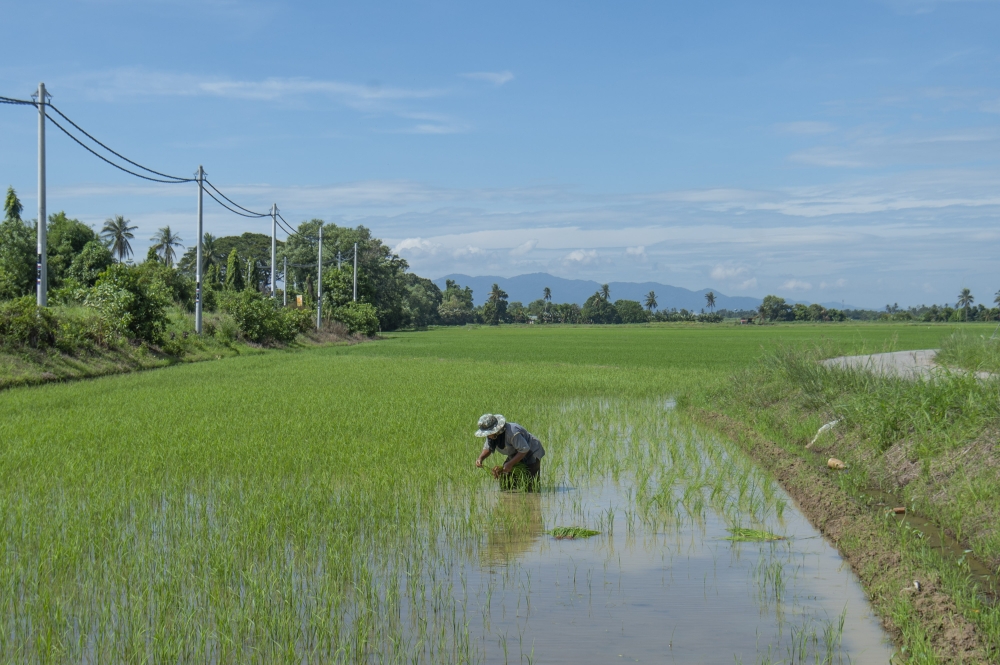
State governments in Malaysia have been urged to designate paddy-growing areas as part of efforts to address the decline in the rice self-sufficiency ratio (SSR), which fell from 68% in 2018 to 54.3% in 2025.
This proposal was discussed in a meeting chaired by Minister Datuk Seri Mohamad Sabu, aiming to strengthen the country's food security.
The meeting also covered zoning food-producing areas, enhancing strategic commodity production, participating in Malaysia Fest in Singapore, and reviewing ongoing agro-food programs.
Additionally, it highlighted the drafting of a Fertiliser Bill to establish a robust regulatory framework for the industry.
PUTRAJAYA, Oct 2 — State governments have been urged to gazette paddy-growing areas to sustain rice cultivation and strengthen the country’s food security after the rice self-sufficiency ratio (SSR) declined last year.
SSR measures how much of a country’s domestic demand for a particular food or agricultural product it can meet with its own production.
According to the Agriculture and Food Security Ministry (KPKM), the proposal was among the matters discussed at the second 2026 Agriculture and Food Security Ministers’ Meeting with state agriculture executive councillors, chaired by Minister Datuk Seri Mohamad Sabu yesterday.
KPKM said the proposal takes into account the decline in rice cultivation areas, which contributed to the fall in the rice SSR from 68 per cent in 2018 to 54.3 per cent in 2025, as well as a recommendation in the Auditor-General’s Report to gazette padi-growing areas to preserve the amount of land used for rice cultivation.
“Malaysia’s reliance on imported rice was estimated at 1.416 million metric tonnes, worth RM2.953 billion, in 2025,” KPKM said in a statement today.
Agriculture executive councillors from nine states, representatives from the state Economic Planning Units, the Finance Ministry and the Economy Ministry, as well as senior officers, department heads and agency chiefs under KPKM attended the meeting.
KPKM said the meeting also discussed measures to strengthen the country’s food-producing areas by zoning them in structure and local plans, in line with the National Land Use Master Plan.
Among the measures are the immediate gazetting of 24 state agro-food areas under the Permanent Food Production Parks, Permanent Ruminant Production Parks and Aquaculture Industry Zones, as well as implementing the Livestock Farm Regularisation Scheme and Food Area Protection Mechanism in Sabah and Sarawak.
“These measures support KPKM’s efforts to raise the SSR for strategic commodities while increasing domestic production and strengthening the country’s food resilience and security,” the statement said.
KPKM said the meeting also considered a proposal for state governments to participate in Malaysia Fest in Singapore, which has served as a platform to promote Malaysian agro-food products since 2006 through the Malaysia Fruits, Food Fiesta programme, giving local entrepreneurs greater opportunities to enter the Singapore market.
“Malaysia Fest has shown positive growth, with attendance rising from 75,000 in 2017 to 179,400 in 2025, while sales increased from RM6.59 million to RM15.8 million,” it said.
According to the ministry, the meeting also reviewed the status of the National Agro-Food Empowerment Programme under the 13th Malaysia Plan, with 347 projects worth RM349.15 million approved out of 782 applications totalling RM2.09 billion received this year.
Also discussed were the findings of the 2024 Outcome Evaluation Study of the Land Optimisation Programme with state governments, involving 97 projects, 19,447 participants, about 40,000 hectares and RM149.59 million in funding, to assess the programme’s effectiveness and benefits to target groups and the agro-food sector.
On industry regulation, the meeting acknowledged the drafting of the Fertiliser Bill to establish a more structured, transparent and effective regulatory framework for the fertiliser industry, particularly on quality, distribution and price stability, as well as protecting farmers’ interests. — Bernama
MCMC probes AI‑manipulated footage of Dr Mahathir grieving wife’s death, warns of legal action
Anwar: Lee Chean Chung effectively quit PKR for ‘sometime already’
Safe return of solo Malaysian after 37 days in Nepal floods offers hope to 54 still missing
马来西亚各州政府被敦促指定水稻种植区,以应对大米自给率(SSR)下降的问题。大米自给率已从 2018 年的 68% 下降到 2025 年的 54.3%。
该提案在由部长拿督斯里莫哈末沙布主持的会议上进行了讨论,旨在加强国家的粮食安全。
会议还讨论了粮食生产区划定、加强战略性商品生产、参加在新加坡举行的马来西亚节以及审查正在进行的农业食品计划等议题。
此外,报告还重点介绍了化肥法案的起草工作,旨在为该行业建立健全的监管框架。
布城,10 月 2 日讯——去年大米自给率下降后,各州政府被敦促将水稻种植区划为法定区域,以维持水稻种植并加强国家的粮食安全。
自主生产率衡量的是一个国家能够用自身产量满足其对某种特定食品或农产品国内需求的程度。
据农业及粮食安全部(KPKM)称,该提案是昨天由部长拿督斯里莫哈末沙布主持的第二次2026年农业及粮食安全部长与州农业行政议员会议上讨论的事项之一。
KPKM表示,该提案考虑到了水稻种植面积的减少,这导致水稻SSR从2018年的68%下降到2025年的54.3%,同时也考虑到了审计长报告中关于划定水稻种植区以保护水稻种植用地面积的建议。
马来西亚粮食及农业生产委员会(KPKM)今天在一份声明中表示:“预计到2025年,马来西亚对进口大米的依赖程度将达到141.6万吨,价值29.53亿令吉。”
来自九个州的农业行政委员、州经济规划单位、财政部和经济部的代表,以及KPKM下属的高级官员、部门负责人和机构负责人出席了会议。
KPKM表示,会议还讨论了加强该国粮食生产区的措施,通过对粮食生产区进行分区,使其符合国家土地利用总体规划。
这些措施包括立即将 24 个州级农产品加工区划定为永久食品生产园区、永久反刍动物生产园区和水产养殖产业区,并在沙巴和砂拉越实施畜牧场正规化计划和食品区保护机制。
声明称:“这些措施支持KPKM提高战略商品安全供应标准的努力,同时增加国内产量,增强国家的粮食韧性和安全。”
KPKM表示,会议还考虑了州政府参与新加坡马来西亚节的提议。自2006年以来,马来西亚节通过“马来西亚水果美食节”项目,一直致力于推广马来西亚农产品,为当地企业家进入新加坡市场提供更多机会。
“马来西亚节呈现积极增长态势,参观人数从 2017 年的 75,000 人次增加到 2025 年的 179,400 人次,销售额也从 659 万令吉增加到 1580 万令吉,”报告称。
据该部称,会议还审查了第十三个马来西亚计划下的国家农业食品赋权计划的进展情况,今年共收到 782 份申请,总额达 20.9 亿令吉,其中 347 个项目获得批准,总价值达 3.4915 亿令吉。
会议还讨论了与州政府合作开展的 2024 年土地优化计划成果评估研究的结果,该研究涉及 97 个项目、19447 名参与者、约 40000 公顷土地和 1.4959 亿令吉的资金,旨在评估该计划的有效性以及对目标群体和农业食品部门的益处。
关于行业监管,会议肯定了《化肥法案》的草案,该法案旨在为化肥行业建立一个更加结构化、透明和有效的监管框架,尤其是在质量、分销和价格稳定方面,以及保护农民的利益。——马新社
马来西亚通讯及多媒体委员会(MCMC)调查人工智能篡改马哈蒂尔医生悼念亡妻的视频,并警告将采取法律行动。
安华:李清忠实际上已经退出人民公正党“一段时间了”
一名马来西亚男子在尼泊尔洪灾中滞留37天后安全返回,为54名仍然失踪的男子带来了希望。