Delayed RTS Link could face early crowd test if it opens near Chinese New Year or Hari Raya, analysts say分析人士称,如果RTS Link在春节或开斋节前后开通,可能会面临提前进行的客流量测试。
Analysts say border clearance and ticketing will also need to keep up to allow smooth passenger service during a holiday surge.
Analysts say border clearance and ticketing will also need to keep up to allow smooth passenger service during a holiday surge.
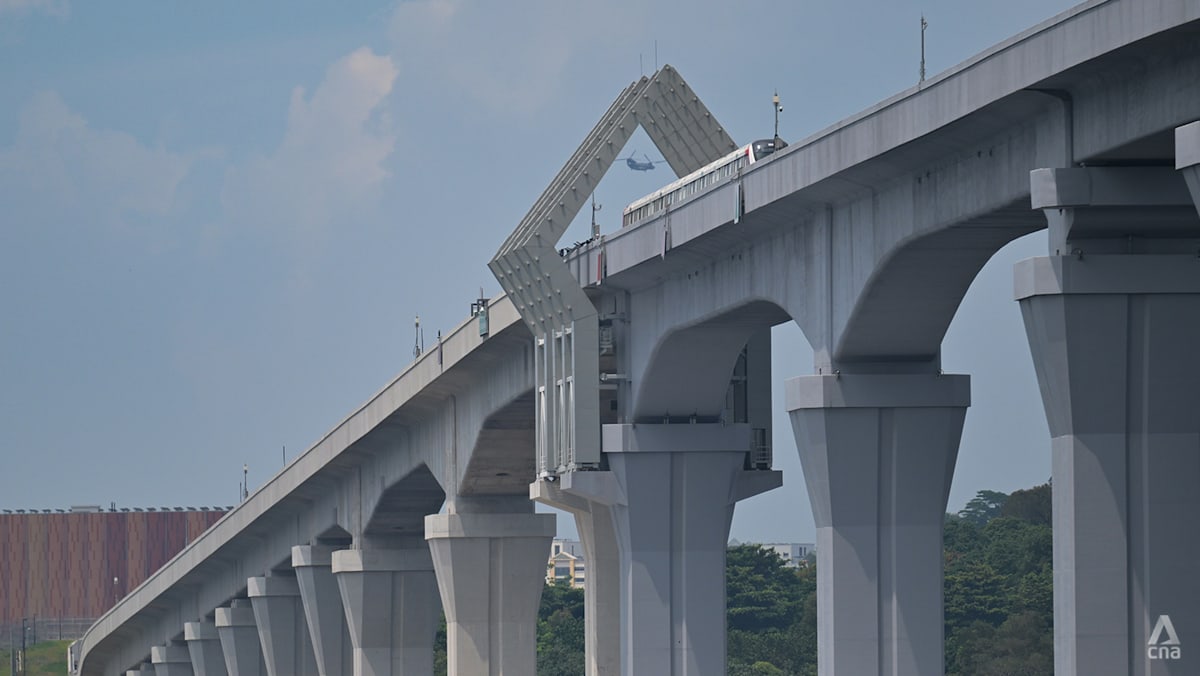
An RTS Link train undergoes a test run on Jul 15, 2026. (File photo: CNA/Zamzahuri Abas)
This audio is generated by an AI tool.
SINGAPORE: Opening the delayed Johor Bahru-Singapore Rapid Transit System (RTS) Link around holiday periods could put its passenger-handling arrangements to an early test, transport experts said on Friday (Oct 2), pointing to possible crowd management issues.
An exact opening date has not been announced, but the experts warned that operations beyond the train systems must be ready to welcome passengers in large numbers.
“If it opens immediately before the holiday, I would want to see the whole passenger journey tested under peak-demand conditions, not just the trains,” said Professor Lee Der-Horng, a fellow of Singapore’s Academy of Engineering.
Because passengers will clear immigration for both countries at their departure station, his concern extends to how quickly people can move through ticketing, clearance and boarding.
CNA Games Guess Word Crack the word, one row at a time Buzzword Create words using the given letters Mini Sudoku Tiny puzzle, mighty brain teaser Mini Crossword Small grid, big challenge Word Search Spot as many words as you can Show More Show Less “Trains could have available capacity while queues are building up elsewhere in the station,” he said. His comments come after Singapore and Malaysia authorities announced on Friday that the RTS Link is now expected to begin operations in February next year instead of the end of this year. They said more time is needed to complete testing, obtain independent safety certification and secure regulatory approvals. Transport Minister Jeffrey Siow said the service will open before Hari Raya Puasa, which falls on Mar 10. Chinese New Year falls on Feb 6 and 7. Prof Lee cautioned that safety certification does not guarantee smooth operations during a holiday surge. He said he hoped to see realistic crowd-management rehearsals, sufficient staffing and a jointly rehearsed response to service interruptions. Ideally, the service should have run for some time before a holiday peak so that staff and passengers are familiar with the arrangements, he added. “The holiday rush should not be the first serious test of those arrangements,” he said. Dr David Ng of the Institution of Engineers Singapore agreed that problems are likelier at stations than on the trains. Capacity can be raised by running trains more often, but authorities are unlikely to try that soon after opening, he said. If they keep to the tried-and-tested peak capacity of up to 10,000 passengers per hour in each direction, any crowd that builds up will fall to station managers. “Passengers will just have to queue up at the station, which is not a problem for the train,” he said. But Dr Ng, who is also executive director of One Smart Engineering, said there is no “best time” to open the RTS Link, noting that it is going to be highly utilised at many times of the year. The launch should instead come when operators are confident the system can run smoothly without breakdowns or disruptions, he said. Associate Professor Walter Theseira from the Singapore University of Social Sciences said demand for transport to Malaysia generally exceeds supply during holiday periods, so more options are better. “I’d say it’s better to have the RTS even if it’s just newly opened than not at all,” he said.
“Trains could have available capacity while queues are building up elsewhere in the station,” he said.
His comments come after Singapore and Malaysia authorities announced on Friday that the RTS Link is now expected to begin operations in February next year instead of the end of this year. They said more time is needed to complete testing, obtain independent safety certification and secure regulatory approvals.
Transport Minister Jeffrey Siow said the service will open before Hari Raya Puasa, which falls on Mar 10. Chinese New Year falls on Feb 6 and 7.
Prof Lee cautioned that safety certification does not guarantee smooth operations during a holiday surge. He said he hoped to see realistic crowd-management rehearsals, sufficient staffing and a jointly rehearsed response to service interruptions.
Ideally, the service should have run for some time before a holiday peak so that staff and passengers are familiar with the arrangements, he added.
“The holiday rush should not be the first serious test of those arrangements,” he said. Dr David Ng of the Institution of Engineers Singapore agreed that problems are likelier at stations than on the trains.
Capacity can be raised by running trains more often, but authorities are unlikely to try that soon after opening, he said. If they keep to the tried-and-tested peak capacity of up to 10,000 passengers per hour in each direction, any crowd that builds up will fall to station managers.
“Passengers will just have to queue up at the station, which is not a problem for the train,” he said.
But Dr Ng, who is also executive director of One Smart Engineering, said there is no “best time” to open the RTS Link, noting that it is going to be highly utilised at many times of the year. The launch should instead come when operators are confident the system can run smoothly without breakdowns or disruptions, he said.
Associate Professor Walter Theseira from the Singapore University of Social Sciences said demand for transport to Malaysia generally exceeds supply during holiday periods, so more options are better. “I’d say it’s better to have the RTS even if it’s just newly opened than not at all,” he said.
The transport experts cited a range of possible reasons for the delay, from glitches during testing to the lingering effects of the COVID-19 pandemic.
Prof Lee noted that the announcement did not identify a specific technical fault and cautioned against interpreting the delay as a sign that something had gone wrong during tests.
“Issues at the interfaces between trains, signalling and station systems can require adjustments and repeat testing. That is a possible explanation for needing more time, but we should not assume it is what has happened here,” he said.
Testing and certification are known requirements that need to be factored in from the outset, including time for rectification.
More information would be needed to determine the cause, such as whether unexpected issues emerged during testing or earlier work took longer than planned, leaving less time for the final stages, Prof Lee added.
Dr Ng said technical glitches are often found during testing, and fixing them takes time to ensure the system is safe.
He said the revised timeline is understandable because a cross-border train system requires close coordination and is more complicated than a domestic one.
Given the team’s expertise, he does not expect a further delay to the opening.
Assistant Professor of Strategy and Entrepreneurship (Education) Terence Fan from the Singapore Management University pointed to changes to the project over the past 16 years. It was suspended in 2019 at Malaysia’s request for a review, before work resumed in 2020 during the COVID-19 pandemic.
Many construction projects faced delays during the pandemic, and some of those setbacks “could not be completely made up”, he said.
The project also changed when it resumed in 2020. The link would be a standalone light rail transit system instead of leveraging the Thomson-East Coast MRT line as initially planned.
“That might have resulted in some additional workaround and it could very well be that this workaround ultimately led to some delays, and therefore delaying, as a result, the need for certification,” said Asst Prof Fan.
Given the “interruptions” over whether the project would proceed and the later changes to its scope and technical details, he felt the delay was understandable.
“I don’t think the delay is by a huge amount right now, it’s still estimated to be within two months later than the earlier projection of the end of this year.”
Prof Lee said he would treat February as a “conditional target” rather than a confirmed opening date.
“The important question is whether the remaining work is now sufficiently well understood and whether the revised programme allows for any necessary corrective work and retesting,” he said.
If those steps take longer than expected, further delays could still occur. But public detail is insufficient to conclude whether another delay is likely, he acknowledged.
“I would look for progress against those milestones before expressing greater confidence in the opening date,” he said.
Asst Prof Fan said the February target appeared realistic and he did not expect further delays at this point. Unforeseen issues could still emerge, however, given that the construction works are near the Causeway, where land meets the sea.
These could include early signs of corrosion or cracks caused by soil shifting around the area, though such problems would not typically be expected in Singapore, he said.
What mattered was ensuring the link was safe to operate, he stressed.
“I would definitely want this project to be safe, rather than having it launched and then later on having to interrupt the service for rectification work, for example.”
Get our pick of top stories and thought-provoking articles in your inbox
Stay updated with notifications for breaking news and our best stories
Join our channel for the top reads for the day on your preferred chat app
分析人士表示,边境清关和票务系统也需要跟上步伐,以确保在节假日客流高峰期间旅客服务顺畅。
2026年7月15日,一列RTS Link列车进行试运行。(资料照片:中央社/Zamzahuri Abas)
这段音频由人工智能工具生成。
新加坡:交通专家周五(10月2日)表示,在节假日期间开通延期的柔佛新山-新加坡捷运系统(RTS)连接线可能会对其乘客处理安排进行早期考验,并指出可能出现人群管理问题。
确切的开放日期尚未公布,但专家警告说,除铁路系统外,其他运营部门也必须做好准备,迎接大量乘客。
“如果在假期前立即开放,我希望看到在高峰需求条件下测试整个乘客旅程,而不仅仅是列车,”新加坡工程院院士李德宏教授说。
由于乘客将在出发站办理两国的入境手续,他担心人们办理购票、入境和登机手续的速度会有多快。
CNA游戏 猜词游戏 逐行破解单词 流行词游戏 用给定的字母组成单词 迷你数独 小谜题,脑力挑战 迷你填字游戏 小方格,大挑战 单词搜索 尽可能多地找出单词 显示更多 显示更少 “列车可能还有空余运力,而车站其他地方却排起了长队,”他说。此前,新加坡和马来西亚当局于周五宣布,RTS Link预计将于明年2月开始运营,而不是今年年底。他们表示,需要更多时间来完成测试、获得独立的安全认证和监管部门的批准。交通部长萧敬腾表示,该服务将在3月10日开斋节前开通。农历新年是2月6日和7日。李教授提醒说,安全认证并不能保证在节假日高峰期运营顺畅。他表示,希望看到切实可行的客流管理演练、充足的人员配备以及针对服务中断的联合演练应对方案。他补充说,理想情况下,这项服务应该在节假日高峰期前运行一段时间,以便工作人员和乘客熟悉相关安排。“节假日高峰期不应该是对这些安排的首次严峻考验,”他说。新加坡工程师学会的David Ng博士也认为,车站比列车更容易出现问题。他表示,增加列车班次可以提高运力,但当局不太可能在开通后立即尝试这样做。如果他们坚持每小时单向最多1万名乘客的成熟运力,那么任何拥堵都将由车站管理人员负责。“乘客只需在车站排队,这对列车来说不是问题,”他说。但同时也是One Smart Engineering执行董事的Ng博士表示,RTS Link并没有“最佳”的开通时间,并指出它在一年中的很多时候都会被频繁使用。他表示,开通时间应该在运营商确信系统能够平稳运行、不会出现故障或中断时进行。新加坡社会科学大学副教授沃尔特·泰塞拉表示,节假日期间前往马来西亚的交通需求通常超过供给,因此选择越多越好。“我认为,即使RTS刚刚开通,也比没有RTS要好,”他说。
他说:“列车可能还有空余运力,而车站其他地方却排起了长队。”
此前,新加坡和马来西亚当局于周五宣布,RTS Link预计将于明年2月而非今年年底开始运营。他们表示,需要更多时间完成测试、获得独立安全认证和监管部门批准。
交通部长萧敬腾表示,这项服务将在开斋节(3月10日)前开通。农历新年是2月6日和7日。
李教授提醒说,安全认证并不能保证节假日高峰期运营顺畅。他表示,希望看到切实可行的客流管理演练、充足的人员配备以及针对服务中断的联合应急预案。
他补充说,理想情况下,这项服务应该在节假日高峰期之前运行一段时间,以便工作人员和乘客熟悉相关安排。
“节假日高峰不应成为这些安排面临的第一个严峻考验,”他说道。新加坡工程师学会的David Ng博士也认为,车站比列车上更容易出现问题。
他表示,增加列车班次可以提高运力,但当局不太可能在开通后不久就采取这种做法。如果他们维持目前行之有效的高峰运力,即每个方向每小时最多1万名乘客,那么任何拥堵都将由车站管理人员负责。
“乘客只需在车站排队,这对列车来说不是问题,”他说。
但同时也是One Smart Engineering执行董事的吴博士表示,RTS Link并没有所谓的“最佳开通时机”,并指出该线路在一年中的很多时段都会被频繁使用。他认为,开通时间应该等到运营商确信系统能够平稳运行,不会出现故障或中断时再进行。
新加坡社会科学大学副教授沃尔特·泰塞拉表示,节假日期间前往马来西亚的交通需求通常超过供给,因此选择越多越好。“我认为,即使RTS刚刚开通,也比没有RTS要好,”他说。
交通运输专家列举了造成延误的一系列可能原因,从测试过程中的故障到 COVID-19 疫情的持续影响。
李教授指出,公告并未指出具体的技术故障,并告诫大家不要将延迟解读为测试过程中出现问题的迹象。
他说:“列车、信号系统和车站系统之间的接口问题可能需要进行调整和重复测试。这或许可以解释为什么需要更多时间,但我们不应就此断定这就是此次事件的真正原因。”
测试和认证是已知的必要条件,需要从一开始就考虑在内,包括纠正的时间。
李教授补充说,还需要更多信息来确定原因,例如测试过程中是否出现了意想不到的问题,或者之前的工作是否比计划的时间更长,导致最后阶段的时间减少。
吴博士表示,技术故障经常在测试过程中被发现,修复这些故障需要时间,以确保系统安全。
他表示,修改后的时间表是可以理解的,因为跨境铁路系统需要密切协调,比国内铁路系统更加复杂。
鉴于团队的专业水平,他预计开幕式不会再推迟。
新加坡管理大学战略与创业学(教育)助理教授范德伦指出,该项目在过去16年中经历了多次变化。2019年,应马来西亚的要求,该项目暂停进行审查,之后在2020年新冠疫情期间恢复。
他说,疫情期间许多建筑项目都面临延误,其中一些挫折“无法完全弥补”。
该项目在 2020 年重启时也发生了变化。该连接线将是一个独立的轻轨交通系统,而不是像最初计划的那样利用汤申-东海岸地铁线。
范助理教授表示:“这可能导致了一些额外的变通办法,而这些变通办法最终很可能导致了一些延误,因此也因此推迟了认证的必要性。”
鉴于该项目是否会继续进行以及后来其范围和技术细节的变更,他认为延误是可以理解的。
“我认为目前的延误时间并不算太长,预计仍会比之前预测的今年年底晚两个月左右。”
李教授表示,他会将二月份视为一个“有条件的目标”,而不是一个确定的开放日期。
他说:“重要的问题是,剩余的工作现在是否得到了充分的理解,以及修订后的方案是否允许进行任何必要的纠正工作和重新测试。”
他承认,如果这些步骤耗时超出预期,则可能出现进一步延误。但他同时指出,目前公开的信息不足以判断是否可能再次延误。
“在对开业日期更有信心之前,我会先观察这些里程碑的进展情况。”他说。
范助理教授表示,二月份的目标似乎比较现实,他预计目前不会再出现延误。但考虑到施工地点靠近堤道,即陆地与海洋交界处,仍有可能出现一些意想不到的问题。
他说,这些可能包括腐蚀的早期迹象或由于周围土壤移动造成的裂缝,尽管在新加坡通常不会出现此类问题。
他强调,最重要的是确保链路运行安全。
“我当然希望这个项目能够安全可靠,而不是先启动,然后再因为需要进行整改工作而中断服务。”
订阅我们的邮件,即可获取精选热点新闻和引人深思的文章。
订阅通知,第一时间获取突发新闻和精彩报道。
加入我们的频道,即可在您常用的聊天应用上获取当日热门文章。