Two new Chinese blockbusters show us how it’s done两部新的中国大片向我们展示了如何做到这一点。
OCT 3 — For the longest time, when it comes to the sheer scale and spectacle of cinematic blockbusters, local moviegoers have almost instinctively looked toward Hollywood to...
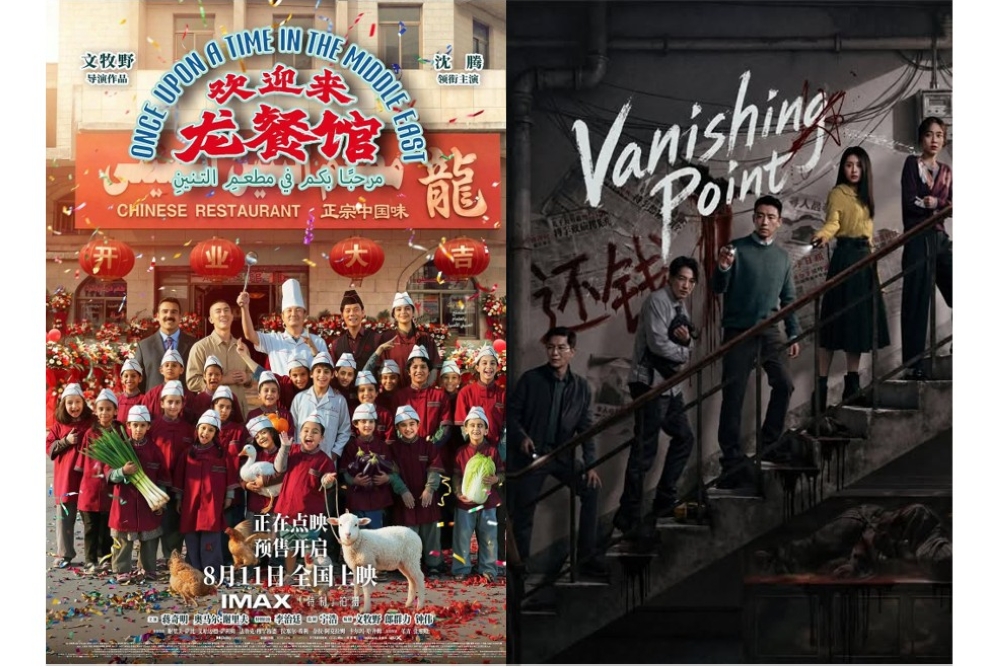
The article discusses the evolving landscape of Chinese cinema, highlighting two contemporary blockbusters, "Once Upon A Time In The Middle East" and "Vanishing Point," that are gaining traction in Malaysia.
These films demonstrate a shift away from traditional martial arts tropes, embracing nuanced storytelling and technical prowess. "Once Upon A Time In The Middle East" offers a unique anti-American perspective set against a war backdrop, while "Vanishing Point" delivers a compelling mix of suspense and social critique.
Together, they signify China's growing influence in the global cinematic blockbuster scene.
OCT 3 — For the longest time, when it comes to the sheer scale and spectacle of cinematic blockbusters, local moviegoers have almost instinctively looked toward Hollywood to deliver the goods.
European cinema, for all its artistic pedigree, has very rarely made a dent in our local multiplexes on a blockbuster scale.
At most, Asian audiences seeking high budget escapism have turned to Korean or Japanese hits, or looked back fondly at the glory days of Hong Kong action cinema in the 1980s and 1990s.
When blockbusters from Mainland China do manage to reach our shores, they usually arrive tightly wrapped in specific, predictable packages: sweeping Wu Xia epics or explosive crime thrillers.
But contemporary Chinese cinema has quietly expanded its palette far beyond martial arts and urban shootouts.
The huge success of the Ne Zha films have made people realise that there’s more to Chinese blockbusters than just kung fu movies.
Lately, two distinct Chinese blockbusters have been gaining serious traction across Malaysian social media, Once Upon A Time In The Middle East , which has so far grossed around US$341 million (RM1.39 billion) worldwide and opened in local cinemas roughly two weeks ago, and Vanishing Point , which bagged around US$81 million worldwide but which most Malaysians have recently caught and championed on Netflix.
Together, they offer a fascinating look at how Chinese big budget filmmaking is evolving.
‘Once Upon A Time In The Middle East’
On almost every technical level, Once Upon A Time In The Middle East has all the hallmarks of a sprawling, multi-million-dollar Hollywood war drama.
It features sweeping visuals, terrifyingly visceral combat sequences, and a razor sharp sense of geography during its high stakes military set-pieces.
It is an impressively professional technical feat, boasting crisp cinematography and sound design that holds its own against any Western counterpart.
What makes the film so utterly refreshing, however, is its perspective.
Rather than serving as another platform for Western heroism, the film offers a perspective that is slyly anti-American and fiercely empathetic toward the local civilian population.
Even though the narrative carefully avoids explicitly naming the specific Middle Eastern nation it is set in, the historical and political parallels to the invasion of Iraq are unmistakable.
By centering the human cost of foreign intervention through the eyes of local citizens caught in the crossfire, the film flips the standard Hollywood military trope on its head.
Yet, it never forgets its duties as an Asian blockbuster.
* This is the personal opinion of the columnist.
It knows exactly when to lean into a healthy dose of earnest, sweeping melodrama, the kind of unabashed emotional conviction that Asian audiences genuinely love and connect with, and the film is generously peppered with these moments.
It is a thrilling, deeply human piece of action cinema that proves blockbuster scale doesn’t have to come at the expense of local perspective.
If Once Upon A Time In The Middle East demonstrates how to handle large-scale military thrills, Vanishing Point proves that Chinese cinema can be just as formidable when executing taut, high concept suspense.
Twisty thrillers, honest emotional resonance, and sharp social commentary very rarely collide smoothly in a single film.
Too often, a director will sacrifice character logic for the sake of a cheap plot twist, or bury the narrative momentum beneath heavy handed moralising.
Yet, Vanishing Point manages to balance all three elements quite beautifully.
Beginning as a seemingly straightforward procedural about the mysterious disappearance of a child from a housing block, the film gradually peels back its layers to expose a web of institutional compromise, class anxiety, societal pressure and personal regret.
The twists are genuinely earned, deriving their power not from cheap shock value, but from the tragic flaws of its characters.
What elevates the film beyond a standard crime thriller is its emotional honesty.
The characters feel lived in, grounded by a narrative that takes time to let its quiet moments breathe amid the mystery.
It delivers the propulsive, binge worthy thrill of a top tier mystery while sneaking in a subtle, incisive critique of contemporary social pressures.
Both Once Upon A Time In The Middle East and Vanishing Point serve as potent reminders that the global blockbuster landscape is shifting.
Whether tackling high stakes war zone politics on the big screen or delivering intricate, emotionally grounded suspense to streaming audiences worldwide, these two releases showcase a film industry operating at the peak of its commercial and technical powers.
Hollywood may still hold the traditional crown for box-office scale, but these two films show exactly how it’s done.
Are your children sleeping in a hostel tonight?
When everything is an advertisement
Will pet-parenting take over from actual parenting... in the future?
Bahrain GP in Malaysia: F1 fans complain of gridlocked traffic, over three-hour waits for shuttles
Hannah Yeoh: 8,000 KL businesses renew licences in two months under streamlined system
Malaysia’s largest MMEA vessel launched in Türkiye, set to sail home in January
文章探讨了中国电影的发展格局,重点介绍了两部在马来西亚越来越受欢迎的当代大片《黄飞鸿》和《消失点》。
这些影片展现了武术电影摆脱传统套路、注重细腻叙事和精湛技术的转变。《中东往事》以战争为背景,呈现了独特的反美视角;而《消失点》则巧妙地融合了悬疑和社会批判。
它们共同标志着中国在全球电影大片领域日益增长的影响力。
10 月 3 日 — 长期以来,就电影大片的规模和壮观程度而言,本地影迷几乎本能地将目光投向好莱坞,期待他们能带来精彩的视听盛宴。
欧洲电影虽然拥有悠久的艺术传统,但很少能以大片的形式打入我们当地的多厅影院。
亚洲观众如果想看高预算的娱乐电影,最多也就是会选择韩国或日本的热门影片,或者怀念上世纪八九十年代香港动作电影的辉煌岁月。
当中国大陆的大片成功登陆我国时,它们通常以特定的、可预测的形式出现:气势恢宏的武侠史诗或惊险刺激的犯罪悬疑片。
但当代中国电影已经悄然拓展了其题材,远远超越了武术和都市枪战。
《哪吒之魔童降世》系列电影的巨大成功让人们意识到,中国大片不仅仅只有功夫片。
最近,两部截然不同的中国大片在马来西亚社交媒体上引起了广泛关注,一部是《中东往事》,该片迄今为止全球票房已达约 3.41 亿美元(13.9 亿令吉),大约两周前在当地影院上映;另一部是《消失点》,该片全球票房约为 8100 万美元,但大多数马来西亚人最近在 Netflix 上观看并大力支持。
它们共同展现了中国大制作电影的发展演变,令人着迷。
《中东往事》
从几乎所有技术层面来看,《中东往事》都具备好莱坞耗资数百万美元的宏大战争剧情片的全部特征。
它拥有宏大的视觉效果、令人毛骨悚然的战斗场面,以及在紧张刺激的军事场景中对地理环境的精准把握。
这是一部技术上非常精湛的作品,拥有清晰的摄影和音效设计,足以与任何西方同类作品相媲美。
然而,这部电影最令人耳目一新的,是它的视角。
这部电影并没有成为西方英雄主义的又一个平台,而是提供了一种巧妙的反美视角,并对当地平民百姓表达了强烈的同情。
尽管故事叙述刻意避免明确指出故事发生的中东具体国家,但其与伊拉克战争的历史和政治相似之处是显而易见的。
这部电影通过身陷战火的当地居民的视角,展现了外国干预造成的人道主义代价,从而颠覆了好莱坞传统的军事题材电影模式。
然而,它从未忘记自己作为一部亚洲大片的职责。
* 这是专栏作家的个人观点。
它非常清楚何时该投入适量的真挚、宏大的情节剧,这种毫不掩饰的情感信念正是亚洲观众真正喜爱和产生共鸣的,而影片中也大量穿插着这样的时刻。
这是一部激动人心、充满人文关怀的动作电影,它证明了大片的规模并不一定要以牺牲本土视角为代价。
如果说《黄飞鸿》展现了如何处理大规模军事惊悚片,那么《消失点》则证明了中国电影在处理紧张刺激、高概念的悬疑片方面同样出色。
跌宕起伏的惊悚情节、真挚的情感共鸣和尖锐的社会评论很少能在一部电影中完美融合。
导演常常为了廉价的情节转折而牺牲人物逻辑,或者用生硬的说教来掩盖叙事动力。
然而,《消失点》却巧妙地平衡了这三个要素。
影片开头看似是一部简单的程序性案件,讲述了一个孩子在住宅楼里神秘失踪的故事,但随着剧情的展开,影片逐渐揭开了层层迷雾,暴露出一张由制度妥协、阶级焦虑、社会压力和个人悔恨交织而成的复杂网络。
剧情的转折合情合理,其力量并非来自廉价的噱头,而是来自人物的悲剧性缺陷。
这部电影之所以超越普通的犯罪惊悚片,在于它的情感真实性。
人物形象鲜活生动,叙事手法也十分细腻,在悬念迭起的氛围中,不时穿插一些安静的时刻,使人物显得更加真实可信。
它提供了顶级悬疑剧那种扣人心弦、令人欲罢不能的刺激感,同时又巧妙地融入了对当代社会压力的深刻批判。
《中东往事》和《消失点》都强有力地提醒我们,全球大片格局正在发生变化。
无论是在大银幕上探讨高风险的战区政治,还是为全球流媒体观众带来错综复杂、情感饱满的悬疑故事,这两部影片都展现了电影行业在商业和技术实力方面都达到了巅峰。
好莱坞或许仍然保持着票房规模的传统优势,但这两部电影恰恰展示了如何做到这一点。
你的孩子今晚睡在青年旅舍吗?
当一切都是广告
未来,宠物养育会取代真正的育儿吗?
马来西亚巴林大奖赛:F1车迷抱怨交通堵塞,摆渡车等待时间超过三小时
杨巧双:简化制度下,吉隆坡8000家企业两个月内续签营业执照
马来西亚最大的海事执法局(MMEA)船只在土耳其下水,将于1月启程回国。