Most Singaporeans hit exercise targets but overload on sodium and calories: Survey调查显示,大多数新加坡人虽然达到了运动目标,但钠和卡路里的摄入量却过高。
Most Singaporeans meet exercise goals but consume excess sodium and calories, risking health despite high physical activity levels, says nutrition survey. Read more at straitstimes.com.
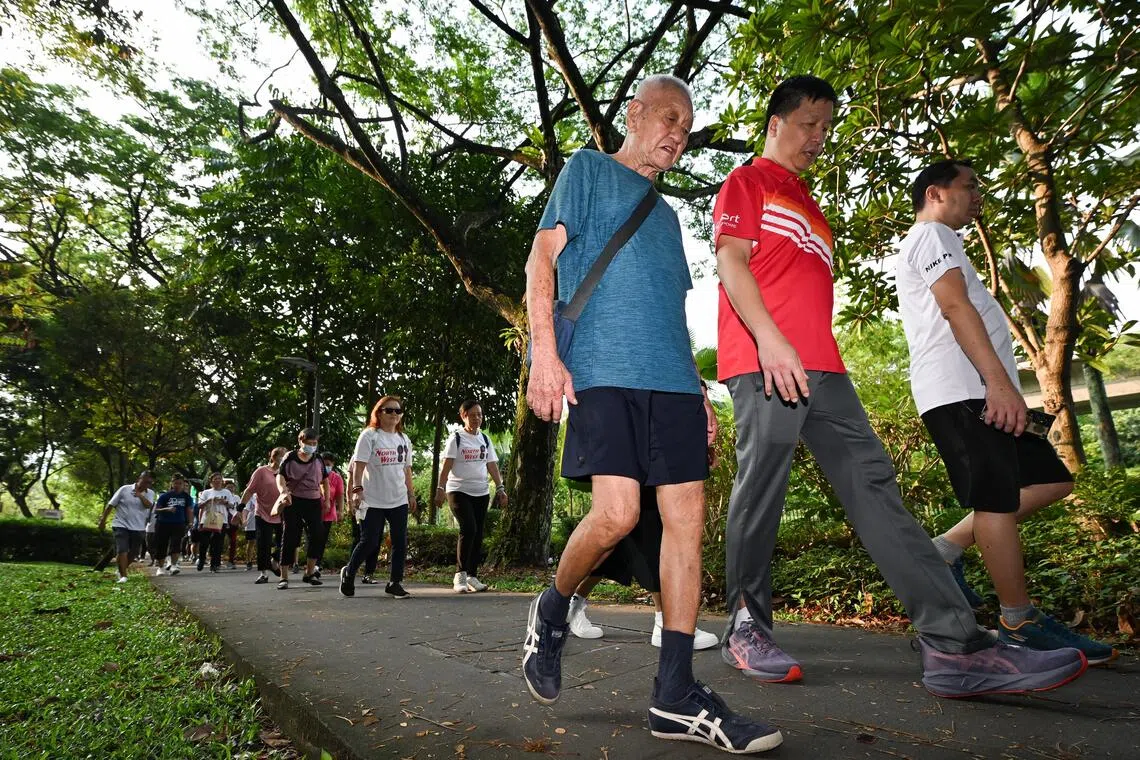
Singapore’s population is moving more but also consuming too much sodium and too many calories, according to the latest national health and nutrition surveys.
ST PHOTO: LIM YAOHUI
Published Oct 03, 2026, 03:00 PM
Updated Oct 03, 2026, 03:00 PM
Nearly 95% of Singaporeans consume double the recommended sodium, and over half exceed calorie limits, despite 87% meeting physical activity targets, highlighting diet as a major health concern.
Experts warn exercise alone cannot offset poor diet and hidden sodium in common foods like soups, sauces, and snacks; high sodium intake risks hypertension and related diseases.
Rising dining out and trendy foods increase hidden sodium; reducing salt intake improves blood pressure and health, urging public awareness and healthier cooking practices in eateries.
SINGAPORE – Nearly all residents consume double the global limit for sodium, and more than half eat too many calories, despite a whopping 87% of the population hitting recommended physical activity targets.
Nevertheless, staying active remains a vital pillar of health, but health experts warn that physical fitness cannot completely offset a bad diet.
Newly released findings from the 2025 National Nutrition Survey show that more than half of Singapore’s population consumes too many calories relative to their energy needs, pushing average daily intake to 2,460 kcal, up from 2,410 kcal in 2022 and 2,360 kcal in 2019.
Total dietary fat intake has also risen over the years. Worse still, more than nine in 10 residents (95%) consume too much sodium, averaging roughly 4,000mg a day, double the recommended daily threshold of 2,000mg or about one teaspoon of salt.
With more people eating out more frequently, avoiding hidden calories and sodium can be an uphill battle, especially as commonly consumed dishes like fried carrot cake with dark soy sauce, mee siam and nasi biryani have become saltier and higher in calories over time. At the same time, people are also eating more processed foods.
Doctors say they often encounter patients who think burning calories through some form of physical activity, including just brisk walking or daily active commuting, grants them a free pass at the hawker centre.
“My patients are exercising more today than before, but many of them erroneously think they can compensate for that with excessive calorie and sodium intake,” said Donna Tan, a family physician, consultant and deputy director of NHG Polyclinics’ clinical services department.
“You might run three times a week but still be overweight. For someone who goes to the gym regularly, if your diabetes is not optimally controlled, you would be considered unhealthy.”
Tan, who has a special interest in weight management, said she reminds her patients that exercise alone cannot offset poor diet, inadequate sleep, stress, or poorly controlled conditions such as diabetes and hypertension.
Continue exercising, but pay attention to portion sizes and do not overeat after a workout, she said.
Hidden traps in healthy foods
Tan cautioned that seemingly healthy options such as granola, smoothies, fruit juices, salads with creamy dressings and large sandwiches may contain excessive calories, sugar, fat or sodium.
Yong tau foo stuffed with fish paste can also be high in sodium, so Tan said it is about balancing these items with vegetables and plain tofu.
Even hydration habits can be misconstrued as healthy. Tan said that some people drink a bottle of isotonic drink or more after 30 to 45 minutes of brisk walking, line dancing or recreational cycling, but this is typically unnecessary and adds extra sodium and even calories.
The Health Promotion Board said soupy dishes are among the foods commonly consumed by residents with the highest sodium intake . Certain gravy-based dishes can also hide a lot of sodium. A bowl of mee siam contains 3,800mg of sodium today, up from 2,700mg in 2023, HPB said.
Indeed, Ng Teng Fong General Hospital’s principal dietitian Lim Ruey Jiun said most people opt for clear soup-based meals as part of healthier eating.
However, soup can be high in sodium, especially when made with stock cubes, seasoning powders, sauces and processed ingredients.
One teaspoon of stock powder can add about 750mg of sodium while one teaspoon of dark soy sauce can have 400mg of sodium, she said.
A bowl of sliced fish noodle soup can have 1,400mg of sodium, so you can halve your sodium intake by drinking half the broth or leaving most of it behind, she said.
Also, watch out for the sodium content in these commonly consumed items: one cup noodle has approximately 1,900mg, one salted egg has 1,500mg and one tablespoon of ikan bilis has 450mg, Lim said.
Exercise cannot work in a vacuum
This disconnect extends beyond daily eating habits to how patients view chronic disease management.
At the National University Hospital, Tai E Shyong, a senior consultant at the Division of Endocrinology, said many patients refuse medication, telling him instead that they will just exercise.
“Patients often fall into the trap of thinking in silos, for example, believing that eating sugar is the only thing that causes diabetes, or that a high-salt diet is the only thing that causes high blood pressure,” said Tai.
But most conditions have multiple risk factors, and every choice interacts with our bodies in different ways and across different time frames, he said.
“People often underestimate the amount of lifestyle modification they make. They are consuming less sugar, but if their calories have gone up, they are not going to lose weight.”
Caloric excess can lead to obesity, which already affects 12.7% of residents aged 18 to 74, according to the 2024 National Population Health Survey, while rising sodium intake can cause even higher rates of hypertension.
“As blood pressure rises across the board, we will see a corresponding increase in severe, life-altering complications, specifically things like chronic kidney disease and strokes,” warned Tai.
In addition, while protein intake is largely adequate for the population, sarcopenia or age-related muscle loss remains a lingering concern among older adults.
According to the survey, half of those aged 50 to 69 still do not meet their daily protein target of 1.2g per kilogram of body weight.
Overestimating activity levels while eating too much
Although total physical activity levels here – defined as participating in at least 150 minutes of moderate-intensity physical activity or 75 minutes of vigorous-intensity physical activity – are high on paper, it is unclear if they align with overall health.
Tai said there is evidence showing that when people self-report their activities in surveys – the National Population Health Survey was conducted via household interviews – they tend to over-report moderate- and high-intensity activity and under-report the total.
Much also depends on the type of exercise performed, as active commuting may contribute to total physical activity but may not be sufficient to burn off excessive calories. “Walking to the bus stop, some people will say that’s moderate intensity,” Tai said.
Meanwhile, Mary Chong, assistant dean of education at the NUS Saw Swee Hock School of Public Health, said that relatively new culinary options such as hotpots, mala tang and xiang guo have gained popularity here.
Because these dishes are heavily seasoned, their intense spicy or rich herbal profiles can often mask high sodium levels, she added.
Even trendy items commonly viewed as sweet snacks or desserts, such as salted caramel items and salted egg or spicy Korean snacks, contain sodium.
However, as more people become more aware that high sodium intake can cause high blood pressure and other long-term health risks, they will actively ask for less salt, gravy or sauces, which would encourage more eateries to use less sodium in their cooking, Chong said.
The good news is that dietary tweaks are helpful. Research demonstrates a clear link between a low-sodium diet and better blood pressure control, which in turn protects kidney health and reduces the long-term risks associated with hypertension, Tan said.
“If someone’s salt intake is very high and the blood pressure is borderline high, I will typically say, short of adding more medicine, just by decreasing your sodium intake, I’m very confident that the blood pressure will hit optimal control,” she added.
Joyce Teo is senior health correspondent at The Straits Times and the host of ST podcast series Health Check.
根据最新的全国健康和营养调查,新加坡人口的活动量增加,但钠和卡路里的摄入量也过高。
ST 照片:林耀辉
发布于2026年10月3日下午3:00
更新于2026年10月3日下午3:00
尽管 87% 的新加坡人达到了体育锻炼目标,但近 95% 的新加坡人摄入的钠是推荐量的两倍,超过一半的人卡路里摄入量超标,这凸显了饮食是一个主要的健康问题。
专家警告说,单靠运动无法抵消不良饮食和常见食物(如汤、酱汁和零食)中隐藏的钠;高钠摄入量会增加高血压和相关疾病的风险。
外出就餐和流行食品的增加导致隐形钠的摄入量增加;减少盐的摄入可以改善血压和健康,因此呼吁公众提高意识,并在餐馆中推广更健康的烹饪方式。
新加坡——几乎所有居民的钠摄入量都是全球限值的两倍,超过一半的居民卡路里摄入过量,尽管高达 87% 的人口达到了推荐的身体活动目标。
尽管如此,保持活跃仍然是健康的重要支柱,但健康专家警告说,身体锻炼并不能完全弥补不良的饮食习惯。
2025 年全国营养调查最新公布的调查结果显示,新加坡超过一半的人口摄入的热量超过了他们的能量需求,导致平均每日摄入量达到 2460 千卡,高于 2022 年的 2410 千卡和 2019 年的 2360 千卡。
多年来,膳食总脂肪摄入量也有所增加。更糟糕的是,超过十分之九的居民(95%)摄入过量钠,平均每天约4000毫克,是每日推荐摄入量2000毫克(约一茶匙盐)的两倍。
随着越来越多的人外出就餐,避免摄入隐形卡路里和钠含量成为一项艰巨的任务,尤其是一些常见的菜肴,例如用黑酱油煎萝卜糕、暹罗面和印度香饭,随着时间的推移,盐分和卡路里含量都越来越高。与此同时,人们也越来越多地食用加工食品。
医生表示,他们经常遇到这样的病人:他们认为通过某种形式的体育活动(包括快走或日常积极的通勤)来消耗卡路里,就可以在小贩中心畅行无阻。
“我的病人现在比以前运动量更大,但他们中的许多人错误地认为可以通过摄入过多的卡路里和钠来弥补这一点,”NHG综合诊所临床服务部的家庭医生、顾问兼副主任唐娜·谭说道。
“你可能每周跑步三次,但仍然超重。对于经常去健身房的人来说,如果你的糖尿病没有得到最佳控制,你也会被认为是不健康的。”
对体重管理特别感兴趣的谭医生说,她会提醒她的病人,单靠运动无法弥补不良饮食、睡眠不足、压力或糖尿病、高血压等控制不佳的疾病。
她建议大家继续锻炼,但要注意控制食量,锻炼后不要吃得过多。
健康食品中的隐藏陷阱
谭提醒说,看似健康的食品,如格兰诺拉麦片、冰沙、果汁、配奶油酱汁的沙拉和大三明治,可能含有过量的卡路里、糖、脂肪或钠。
酿豆腐里包着鱼肉馅,钠含量也可能很高,所以谭说,关键是要用蔬菜和原味豆腐来平衡这些食材的钠含量。
就连补水习惯也可能被误解为健康。谭女士表示,有些人会在快走、跳排舞或骑自行车30到45分钟后喝一瓶或更多等渗饮料,但这通常是不必要的,而且还会摄入额外的钠和卡路里。
新加坡保健促进局表示,汤类菜肴是钠摄入量最高的居民常吃的食物之一。某些汤汁类菜肴也可能隐藏着大量的钠。保健促进局指出,目前一碗暹罗面(mee siam)的钠含量为3800毫克,高于2023年的2700毫克。
吴廷方综合医院首席营养师林瑞俊表示,大多数人选择清汤作为健康饮食的一部分。
然而,汤的钠含量可能很高,尤其是用浓汤宝、调味粉、酱汁和加工配料制成的汤。
她说,一茶匙高汤粉大约含有 750 毫克钠,而一茶匙老抽大约含有 400 毫克钠。
她说,一碗鱼片面汤可能含有 1400 毫克钠,所以你可以通过喝掉一半的汤或者把大部分汤留下来,将钠的摄入量减半。
林先生还表示,要注意这些常见食品中的钠含量:一碗方便面约含1900毫克钠,一个咸蛋含1500毫克钠,一汤匙江鱼仔含450毫克钠。
运动不能脱离实际环境而产生效果。
这种脱节不仅体现在日常饮食习惯上,还体现在患者对慢性病管理的看法上。
新加坡国立大学医院内分泌科高级顾问戴义勇表示,许多患者拒绝服药,而是告诉他,他们会通过锻炼来改善病情。
“例如,患者常常陷入孤立思维的陷阱,认为吃糖是导致糖尿病的唯一原因,或者高盐饮食是导致高血压的唯一原因,”Tai说道。
他说,大多数疾病都有多种风险因素,而且每一个选择都会以不同的方式、在不同的时间范围内与我们的身体相互作用。
“人们常常低估了他们生活方式改变的程度。他们减少了糖的摄入,但如果卡路里摄入量增加了,他们就不会减肥。”
热量过剩会导致肥胖,根据 2024 年全国人口健康调查,肥胖已经影响到 18 至 74 岁居民的 12.7%,而钠摄入量的增加会导致高血压发病率更高。
“随着血压全面上升,我们将看到严重的、改变人生的并发症相应增加,特别是慢性肾病和中风等疾病,”泰警告说。
此外,虽然人群的蛋白质摄入量基本充足,但肌肉减少症或与年龄相关的肌肉流失仍然是老年人面临的一个长期问题。
调查显示,50 至 69 岁人群中有一半仍未达到每日每公斤体重 1.2 克蛋白质的目标摄入量。
高估活动量,同时进食过多
虽然这里的总体体力活动水平(定义为至少进行 150 分钟的中等强度体力活动或 75 分钟的高强度体力活动)从纸面上看很高,但尚不清楚这是否与整体健康状况相符。
戴伊表示,有证据表明,当人们在调查中自我报告他们的活动时(全国人口健康调查是通过家庭访谈进行的),他们往往会高估中等强度和高强度活动,而低估总活动量。
运动类型也至关重要,因为积极的通勤方式虽然可以增加总运动量,但可能不足以消耗掉多余的卡路里。“步行去公交车站,有些人会说这是中等强度的运动,”泰说道。
与此同时,新加坡国立大学苏瑞福公共卫生学院教育助理院长玛丽·张表示,火锅、麻辣烫和香锅等相对较新的烹饪选择在这里越来越受欢迎。
她补充说,由于这些菜肴调味很重,其浓烈的辛辣味或丰富的香草味往往会掩盖较高的钠含量。
即使是像咸焦糖制品、咸蛋黄或韩国辣味零食这样通常被视为甜点或零食的流行食品,也含有钠。
Chong表示,随着越来越多的人意识到高钠摄入会导致高血压和其他长期健康风险,他们会主动要求少放盐、肉汁或酱料,这将鼓励更多餐馆在烹饪中减少钠的使用。
好消息是,调整饮食习惯确实有帮助。谭医生表示,研究表明,低钠饮食与更好的血压控制之间存在着明确的联系,而血压控制的改善反过来又能保护肾脏健康,并降低高血压相关的长期风险。
她补充说:“如果某人的盐摄入量非常高,血压也处于临界高值,我通常会说,除了增加药物剂量外,只要减少钠的摄入量,我很有信心血压就能达到最佳控制状态。”
Joyce Teo 是《海峡时报》的高级健康记者,也是《海峡时报》播客系列节目“健康检查”的主持人。