Singapore’s sugar consumption falls, but sodium, calorie intakes have gone up, new survey shows最新调查显示,新加坡的糖分消费量下降,但钠和卡路里摄入量却有所上升。
Singapore’s sugar intake has decreased, but calorie and sodium consumption have risen as more residents eat out frequently, according to new health surveys. Read more at straitstimes.com.
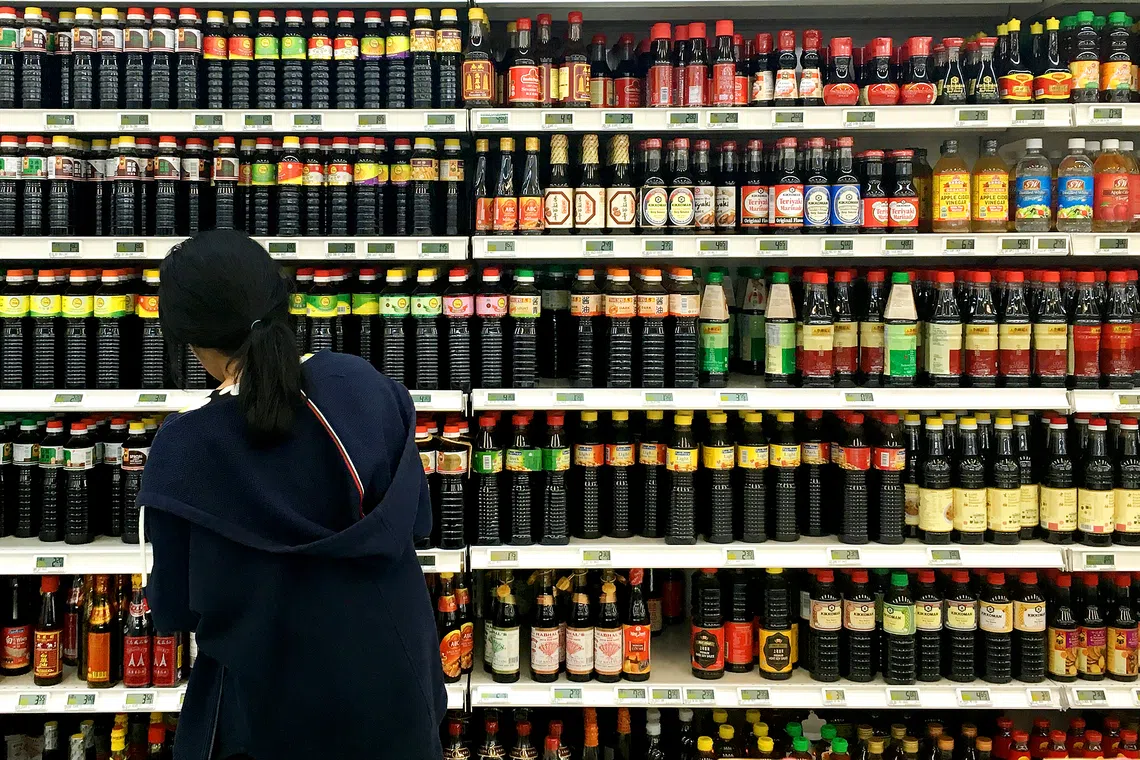
The National Nutrition Survey – which polled 3,000 Singapore residents between the ages of 18 and 69 – found the daily total sugar intake here had fallen from 60g in 2018 to 48g in 2025.
Published Oct 03, 2026, 03:29 PM
Updated Oct 03, 2026, 03:55 PM
Singapore’s sugar intake has decreased from 60g to 48g daily due to industry reformulation and consumer shifts towards lower-sugar drinks, supported by mandatory Nutri-Grade labels.
Calorie and sodium consumption have increased, with 95% exceeding sodium limits and daily calorie intake rising, linked to more frequent eating out and saltier dishes.
Health screenings and preventive initiatives like Healthier SG have improved, but efforts must intensify to reduce sodium intake and promote healthier diets to prevent heart disease.
SINGAPORE – More people in Singapore are taking less sugar, and they are engaging in physical activity and getting screened for chronic diseases and cancers.
However, as more residents eat out frequently, the country’s consumption of calories and sodium has increased , with almost all Singapore citizens and permanent residents exceeding the daily recommended sodium intake limit.
This is according to findings from the Ministry of Health’s (MOH) National Population Health Survey, and the Health Promotion Board’s (HPB) National Nutrition Survey.
They were announced by Minister for Health Ong Ye Kung on Oct 3 at the National Heart Week and World Heart Day event at Heartbeat@Bedok, organised by the Singapore Heart Foundation.
The National Nutrition Survey – which polled 3,000 Singapore residents between the ages of 18 and 69 – found that the daily total sugar intake here had fallen from 60g in 2018 to 48g in 2025.
Ong said this was the equivalent of cutting down about 2½ teaspoons of sugar daily.
The percentage of respondents whose sugar consumption was within the daily recommended sugar limit of no more than 10% daily total energy intake – equivalent to about 50g, or 10 teaspoons, of sugar – had increased from 61% in 2019 to 79% in 2025.
Ong attributed the decrease to people consuming less sugar from sugar-sweetened drinks, a change driven by industry reformulation and consumers making a conscious shift towards lower-sugar options.
He said: “Our taste buds are changing, which is good.”
Health Minister and Coordinating Minister for Social Policies Ong Ye Kung touring exhibition booths at the Singapore Heart Foundation’s National Heart Week and World Heart Day 2026 event on Oct 3. ST PHOTO: GAVIN FOO
Health Minister and Coordinating Minister for Social Policies Ong Ye Kung touring exhibition booths at the Singapore Heart Foundation’s National Heart Week and World Heart Day 2026 event on Oct 3.
This follows the introduction of mandatory Nutri-Grade labels , which grade drinks based on their sugar and saturated fat content.
HPB noted that median sugar levels in beverages had dropped over the years, decreasing from 7.1% in 2017 to 4.6% in 2024 for pre-packaged drinks, while the levels for freshly prepared drinks fell from 7.5% in 2020 to 4.1% in 2025.
Meanwhile, the National Population Health Survey – which surveyed some 8,100 residents – showed more had undergone screening for chronic diseases. The percentage of respondents who had done so increased from 62.6% in 2023 to 66.4% in 2024.
More had also undergone screening for colorectal cancer, with the number increasing from 41.7% of those surveyed in 2023 to 46.9% in 2025. Breast cancer screening participation also rose – from 34.7% in 2023 to 40.8% in 2025.
This is consistent with the Republic’s move towards preventive health with the introduction of Healthier SG in 2023 , Ong said.
He noted that as at end-August, 1.5 million people – or 61% of those eligible – had signed up for the preventive health initiative, most of whom had completed their first health plan.
However, Singapore’s consumption of calories has shot up, with the mean calorie intake increasing from 2,360kcal in 2019 to 2,460kcal in 2025.
While this may not seem like a lot, this increase could lead to 5kg of weight gain a year, said Ong, noting that this, in turn, increases the risk of obesity and heart disease.
The survey found that 57% of the country’s population exceeded their daily recommended calorie intake – estimated based on factors such as age, gender and weight – after factoring in energy requirement from physical activity.
Sodium consumption, meanwhile, also increased, with the average daily sodium intake here up from 3,480mg in 2019 to 4,000mg in 2025, attributed to salt and sauces added during cooking. Worryingly, 4,000mg is double the daily recommended sodium limit.
The survey found that 95% of people here exceeded the daily recommended sodium intake limit of 2,000mg, or the equivalent of one teaspoon of salt, up from 88% in 2019.
Ong said excessive sodium raises blood pressure, and increases the risk of heart disease and stroke.
He noted that more than 60 people suffer heart attacks or strokes in Singapore daily, while a third of all deaths here were due to heart disease.
A greater push is needed for a healthier diet, Ong said, adding that the success in lowering sugar consumption needs to be replicated for sodium as well.
He said in the future, mandatory Nutri-Grade labelling measures and advertising prohibitions will be extended to items such as salt, sauces and other seasonings, which are the main contributors of sodium and saturated fat.
Originally scheduled to be introduced by mid-2027 , this move has been delayed to 2028 to provide more time for businesses to reformulate their products, Ong said.
The main driver of rising sodium in Singapore’s diet, however, has been more people eating out more regularly, he said, adding that dishes have been getting saltier.
According to the survey, seven in 10 reported eating out at least once a day, up from six in 10 in 2019, with the frequency increasing from six times a week in 2019 to nine times weekly in 2025.
Ong encouraged consumers to make it a habit to request less salt and soya sauce where possible when dining out, while cooks should cut back on using salt and sodium-rich sauces in their dishes.
HPB will continue in its efforts get more food and beverage establishments to use lower-sodium ingredients, he added.
Ong said 3,000 F&B outlets do that now, up from 500 four years ago, but this is not enough to reverse the worrying diet trend.
He added: “We need a very serious effort to step up engagement with the F&B industry to try to address this issue.”
Senior consultant at the National Heart Centre Singapore’s cardiology department, Muhammad Idu Jion, also spoke at the event.
The Singapore Heart Foundation board member noted that healthier habits and diets can help prevent cardiovascular disease, which accounts for about a third of all deaths in Singapore and contributes to poor health in later life.
He said: “The encouraging part is that prevention also starts with small choices. The food we eat, the habits we build up to keep ourselves fit and healthy can help reduce this risk.”
Zhaki Abdullah is a correspondent at The Straits Times. He is on the health beat, in addition to occasionally covering science, environmental, tech and Muslim affairs issues.
Health Promotion Board
全国营养调查(对 3000 名年龄在 18 岁至 69 岁之间的新加坡居民进行了调查)发现,新加坡人每日总糖摄入量已从 2018 年的 60 克下降到 2025 年的 48 克。
发布于 2026 年 10 月 3 日下午 3:29
更新于2026年10月3日下午3:55
由于行业配方调整和消费者转向低糖饮料,加上强制性营养等级标签的支持,新加坡的每日糖摄入量已从 60 克减少到 48 克。
卡路里和钠的摄入量均有所增加,95% 的人钠摄入量超过限制,每日卡路里摄入量也在增加,这与外出就餐频率增加和菜肴含盐量增加有关。
健康筛查和预防举措(如“更健康的新加坡”)有所改善,但必须加大力度减少钠的摄入量,并推广更健康的饮食,以预防心脏病。
新加坡——新加坡越来越多的人减少糖的摄入量,他们积极参与体育锻炼,并接受慢性疾病和癌症筛查。
然而,随着越来越多的居民经常外出就餐,该国的卡路里和钠摄入量有所增加,几乎所有新加坡公民和永久居民的钠摄入量都超过了每日推荐摄入量限制。
这是根据卫生部 (MOH) 全国人口健康调查和健康促进局 (HPB) 全国营养调查的结果得出的结论。
这些消息由卫生部长王乙康于 10 月 3 日在新加坡心脏基金会主办的“国家心脏周暨世界心脏日”活动上宣布。该活动在勿洛心脏节拍中心举行。
全国营养调查(对 3000 名年龄在 18 岁至 69 岁之间的新加坡居民进行了调查)发现,新加坡人均每日糖摄入量已从 2018 年的 60 克下降到 2025 年的 48 克。
Ong表示,这相当于每天减少约2.5茶匙的糖。
糖摄入量在每日推荐糖摄入量限制(不超过每日总能量摄入量的 10%,相当于约 50 克或 10 茶匙糖)内的受访者比例从 2019 年的 61% 增加到 2025 年的 79%。
Ong 将这一下降归因于人们减少了从含糖饮料中摄入的糖分,而这一变化是由行业配方调整和消费者自觉转向低糖产品所推动的。
他说:“我们的味蕾正在发生变化,这是件好事。”
10月3日,卫生部长兼社会政策统筹部长王乙康在新加坡心脏基金会举办的全国心脏周暨2026年世界心脏日活动上参观展位。(海峡时报摄影:Gavin Foo)
10月3日,卫生部长兼社会政策统筹部长王乙康参观了新加坡心脏基金会举办的2026年全国心脏周暨世界心脏日活动的展位。
此前,政府推出了强制性的营养等级标签,根据饮料中的糖分和饱和脂肪含量对其进行分级。
HPB指出,饮料中的平均含糖量逐年下降,预包装饮料的含糖量从2017年的7.1%下降到2024年的4.6%,而新鲜制备饮料的含糖量从2020年的7.5%下降到2025年的4.1%。
与此同时,一项针对约8100名居民的全国人口健康调查显示,接受慢性病筛查的人数有所增加。接受筛查的受访者比例从2023年的62.6%上升至2024年的66.4%。
接受结直肠癌筛查的人数也有所增加,从 2023 年的 41.7% 增加到 2025 年的 46.9%。乳腺癌筛查参与率也有所上升,从 2023 年的 34.7% 增加到 2025 年的 40.8%。
王乙康表示,这与新加坡在2023年推出“更健康的新加坡”计划,朝着预防性健康方向发展的战略是一致的。
他指出,截至 8 月底,已有 150 万人(占符合条件人数的 61%)报名参加了预防性健康计划,其中大多数人已经完成了他们的第一个健康计划。
然而,新加坡的卡路里消耗量却大幅上升,平均卡路里摄入量从 2019 年的 2360 千卡增加到 2025 年的 2460 千卡。
Ong表示,虽然这看起来不多,但这种增加可能导致每年体重增加5公斤,而这反过来又会增加肥胖和心脏病的风险。
调查发现,该国 57% 的人口每日摄入的卡路里超过了推荐摄入量(根据年龄、性别和体重等因素估算),这还考虑了体力活动所需的能量。
与此同时,钠的摄入量也随之增加,平均每日钠摄入量从2019年的3480毫克增至2025年的4000毫克,这主要归因于烹饪过程中添加的盐和酱料。令人担忧的是,4000毫克是每日推荐钠摄入量的两倍。
调查发现,这里 95% 的人每日钠摄入量超过建议限值 2000 毫克(相当于一茶匙盐),高于 2019 年的 88%。
Ong表示,过量的钠会升高血压,并增加患心脏病和中风的风险。
他指出,新加坡每天有超过 60 人遭受心脏病发作或中风,而这里三分之一的死亡是由心脏病引起的。
Ong表示,需要加大力度推广更健康的饮食习惯,并补充说,降低糖摄入量的成功经验也需要复制到钠的摄入量上。
他表示,未来将强制执行营养等级标签措施和广告禁令,并将推广至盐、酱汁和其他调味料等食品,这些食品是钠和饱和脂肪的主要来源。
Ong表示,这项措施原计划于2027年中期推出,但已推迟到2028年,以便给企业更多时间来重新调整其产品配方。
他表示,新加坡饮食中钠含量上升的主要原因是人们外出就餐的频率越来越高,而且菜肴也变得越来越咸。
根据调查,十分之七的人表示每天至少外出就餐一次,高于 2019 年的十分之六,外出就餐的频率从 2019 年的每周 6 次增加到 2025 年的每周 9 次。
Ong鼓励消费者养成在餐厅就餐时尽可能少放盐和酱油的习惯,同时厨师也应该减少在菜肴中使用盐和高钠酱汁。
他补充说,HPB将继续努力,促使更多食品和饮料企业使用低钠原料。
Ong表示,目前已有3000家餐饮店这样做,比四年前的500家有所增加,但这还不足以扭转令人担忧的饮食趋势。
他补充道:“我们需要认真努力,加强与餐饮行业的沟通,以期解决这个问题。”
新加坡国家心脏中心心脏病科高级顾问穆罕默德·伊杜·吉翁也在活动上发表了讲话。
新加坡心脏基金会董事会成员指出,更健康的生活习惯和饮食有助于预防心血管疾病,心血管疾病约占新加坡所有死亡人数的三分之一,并会导致晚年健康状况不佳。
他说:“令人鼓舞的是,预防也始于一些小的选择。我们吃的食物,以及我们为保持健康而养成的习惯,都有助于降低这种风险。”
扎基·阿卜杜拉是《海峡时报》的记者。他主要负责健康新闻报道,偶尔也报道科学、环境、科技和穆斯林事务等议题。
健康促进局