Time for a review: Creative industry seeks more Budget 2027 support as TV production rates lag behind costs是时候进行回顾了:创意产业寻求2027年预算案提供更多支持,因为电视制作速度落后于成本增长。
KUALA LUMPUR, Oct 3 — Creative industry players are calling on the government to maintain and enhance existing funds and incentives in the upcoming Budget 2027, while reviewing...
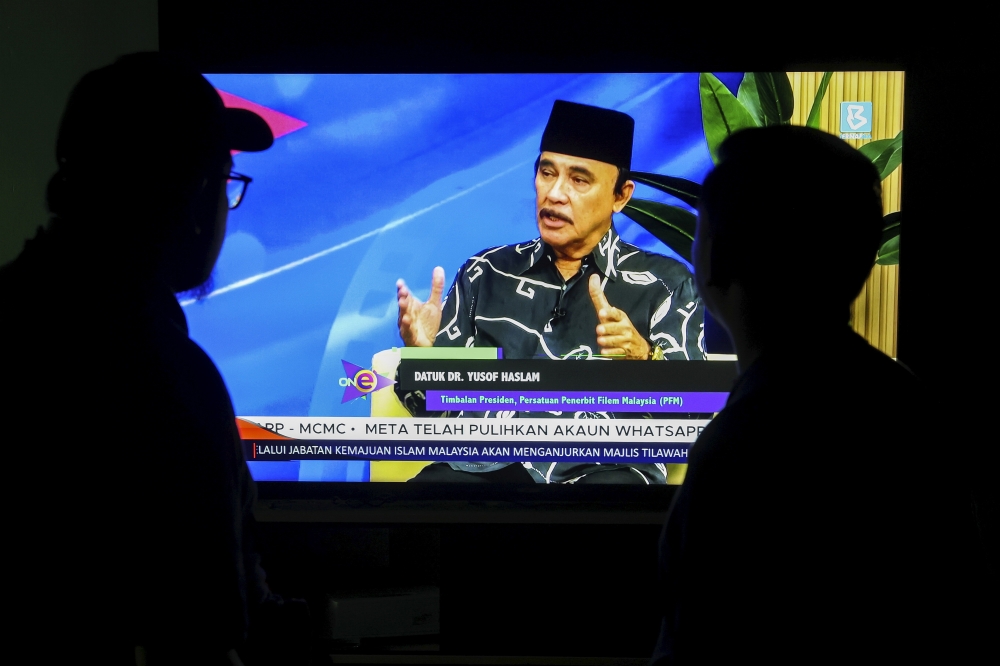
Creative industry leaders in Malaysia are urging the government to maintain and enhance funding and incentives in the upcoming Budget 2027, citing the need to adjust television production rates amid rising costs.
Datuk Dr Yusof Haslam, a prominent figure in the industry, emphasized the importance of preserving government support to sustain the creative ecosystem and called for a review of long-stagnant television rates.
Additionally, Nazira Ibrahim highlighted the need for improved marketing and distribution mechanisms and advocated for practical training in technical roles on film sets as part of the existing TVET Madani Creative Multimedia programs.
Budget 2027 is expected to be presented on October 9.
KUALA LUMPUR, Oct 3 — Creative industry players are calling on the government to maintain and enhance existing funds and incentives in the upcoming Budget 2027, while reviewing television programme production rates, which they say are no longer realistic amid rising costs.
Malaysian Film Producers Association deputy president Datuk Dr Yusof Haslam said government incentives and assistance should be maintained without cuts to safeguard the sustainability of the local creative industry ecosystem.
“I hope the government will look at this from a positive perspective and maintain all the assistance that has been provided to the industry. If there are plans for cuts, I hope they can be avoided,” he said when he appeared as a guest on Bernama TV’s ‘On E’ programme at Wisma Bernama here today.
Yusof also reminded industry players to uphold their responsibilities and integrity when managing any grant or allocation received from the government.
“Filmmakers must complete their films within the allocated budget and take the work seriously. These funds should not be used as a platform to make money for personal gain,” he said.
On the Film in Malaysia Incentive (FIMI), Yusof said the initiative has not only succeeded in attracting international production companies but has also provided crucial support for large-scale patriotic productions such as ‘MALBATT: Misi Bakara’.
He also appealed for television programme production rates, particularly those offered by Radio Televisyen Malaysia (RTM), to be reviewed in line with current cost increases, saying there had been no significant adjustment for almost four decades.
“I have been producing television dramas since 1985. At that time, the cost of a TV drama was within RM40,000. But after 40 years, the increase (in RTM’s payment) has only been about RM10,000.
“These rates should be reviewed every 10 years because if RTM increases its rates, other private companies will follow suit,” he said.
Meanwhile, film producer Nazira Ibrahim said the creative sector is a comprehensive ecosystem that requires consistent support, particularly in film marketing and distribution, to assist smaller-scale productions.
“Sometimes we have good products and compelling stories, but we have no avenue to market and distribute them to audiences. If the government can assist in developing these mechanisms, it could significantly raise the profile of our films and help them reach both local and international audiences,” she said.
On the RM10 million allocation for TVET Madani Creative Multimedia programmes, Nazira called for practical training on film sets to be prioritised over theoretical learning to produce highly skilled technical personnel behind the scenes.
“Skills are needed not only for those in front of the camera, such as the actors, scriptwriters and directors, but are equally important for people working behind the scenes, including camera operators, lighting crews and those handling visual effects, post-production and sound systems.
“Theoretical exposure alone is not enough. Students need industry training with production companies and should be exposed to actual film sets to see firsthand how a production operates,” she said.
Under Budget 2026, the government allocated RM110 million in incentives to encourage local and international film producers to create high-quality productions in Malaysia.
The initiative included a dedicated RM10 million allocation for the production of nation-building content as part of efforts to strengthen the orange economy ecosystem.
Budget 2027 is scheduled to be tabled in Parliament on October 9. — Bernama
Malaysia cuts use of ozone-depleting HCFC by nearly 80pc, eyes full phase-out by 2030
Police arrest motorcyclist for riding against traffic, crashing into two KL marathon participants
Family of Bandar Utama school stabbing victim files civil suit against government agencies, boy and his parents
马来西亚创意产业领袖敦促政府在即将出台的 2027 年财政预算案中维持并加强资金投入和激励措施,理由是成本不断上涨,需要调整电视制作价格。
业内知名人士拿督尤索夫·哈斯拉姆博士强调了保持政府支持以维持创意生态系统的重要性,并呼吁重新审视长期停滞不前的电视价格。
此外,纳齐拉·易卜拉欣强调了改进营销和发行机制的必要性,并倡导在现有的TVET Madani创意多媒体课程中,对电影片场的技术岗位进行实践培训。
预计2027年预算案将于10月9日公布。
吉隆坡,10 月 3 日讯——创意产业从业者呼吁政府在即将出台的 2027 年财政预算案中维持并加强现有资金和激励措施,同时审查电视节目制作费率,他们表示,在成本不断上涨的情况下,目前的费率已不再现实。
马来西亚电影制片人协会副主席拿督尤索夫·哈斯拉姆博士表示,政府的激励措施和援助应该继续维持,不应削减,以保障本地创意产业生态系统的可持续发展。
“我希望政府能以积极的态度看待此事,并继续向该行业提供所有援助。如果真有削减开支的计划,我希望能够避免,”他今天在马新社大厦做客马新社电视台“On E”节目时说道。
尤索夫还提醒业内人士,在管理从政府获得的任何拨款或资助时,要恪守职责和诚信。
他说:“电影制作人必须在分配的预算内完成电影,并认真对待这项工作。这些资金不应该被用作谋取私利的平台。”
尤索夫在谈到马来西亚电影奖励计划(FIMI)时表示,该计划不仅成功吸引了国际制片公司,而且还为《MALBATT:Misi Bakara》等大型爱国主义电影提供了至关重要的支持。
他还呼吁审查电视节目制作费率,特别是马来西亚广播电视台(RTM)提供的费率,以适应当前的成本增长,并表示近四十年来都没有进行过重大调整。
“我从1985年就开始制作电视剧。当时,一部电视剧的成本在4万令吉以内。但40年后,(马来西亚广播电视台支付的)费用只增加了大约1万令吉。”
“这些费率应该每10年审查一次,因为如果RTM提高费率,其他私营公司也会效仿,”他说。
与此同时,电影制片人纳齐拉·易卜拉欣表示,创意产业是一个综合性的生态系统,需要持续的支持,尤其是在电影营销和发行方面,以帮助小规模制作。
“有时候我们有优秀的作品和引人入胜的故事,但却没有渠道将它们推向市场,发行给观众。如果政府能够协助我们建立这些机制,就能显著提升我们电影的知名度,帮助它们触达本地和国际观众,”她说道。
关于为TVET Madani创意多媒体课程拨款1000万令吉,Nazira呼吁优先考虑在电影片场进行实践培训,而不是理论学习,以培养幕后高技能技术人员。
“技能不仅对镜头前的演员、编剧和导演等人员至关重要,对幕后工作人员,包括摄影师、灯光组以及负责视觉特效、后期制作和音响系统的人员来说,也同样重要。
“仅仅理论学习是不够的。学生需要接受制片公司的行业培训,应该有机会到实际的片场参观,亲眼了解电影制作的运作方式,”她说道。
在 2026 年财政预算案中,政府拨款 1.1 亿令吉作为奖励,鼓励本地和国际电影制片人在马来西亚制作高质量的电影作品。
该计划包括专门拨款 1000 万令吉用于制作国家建设内容,作为加强橙色经济生态系统努力的一部分。
2027年财政预算案预计将于10月9日提交国会审议。——马新社
马来西亚将破坏臭氧层的氢氯氟烃(HCFC)使用量削减近80%,并计划在2030年前全面淘汰。
警方逮捕了一名逆向行驶的摩托车手,该车撞倒了两名吉隆坡马拉松参赛者。
班达尔乌塔玛学校刺伤案受害者家属对政府机构、受害者及其父母提起民事诉讼