Polyclinics to train all front-line staff to better help people with intellectual disabilities综合诊所将对所有一线工作人员进行培训,以便更好地帮助智力障碍人士
A new health communication passport will capture the communication preferences and support needs of these patients. Read more at straitstimes.com.
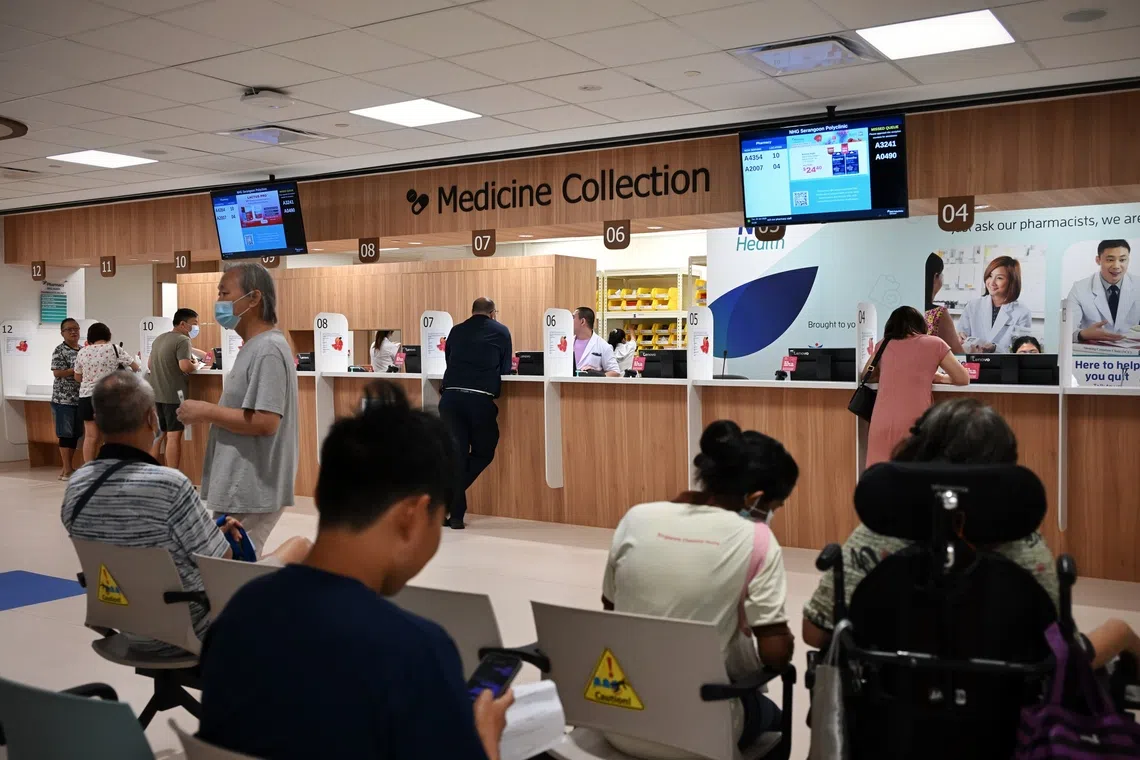
From 2027, all front-line staff at polyclinics will be trained to better communicate and support people with intellectual disabilities and autism.
ST PHOTO: KUA CHEE SIONG
Published Oct 04, 2026, 06:01 PM
Updated Oct 04, 2026, 06:01 PM
All frontline staff at polyclinics will be trained from 2027 to better support persons with intellectual disabilities and autism, including practical measures like priority queueing to reduce wait times.
By 2028, at least three polyclinics will offer enhanced support with longer consultations, pre-visit preparation, and closer caregiver engagement, building on a successful pilot programme.
A Health Communication Passport will be introduced from 2027 to capture patients' communication needs, helping staff tailor care and improve clinic visits for persons with disabilities.
SINGAPORE – All front-line staff at local polyclinics will be trained from 2027 to better communicate with and support people with intellectual disabilities and autism.
This is among the new measures announced by the Ministry of Health (MOH) on Oct 4 to improve healthcare for people with disabilities (PWDs).
The measures also include practical accommodations such as priority queueing to reduce waiting times for patients with behavioural or anxiety-related needs.
By 2028, MOH will also designate at least three polyclinics, one from each of the three public healthcare clusters – National University Health System, NHG Health and Singapore Health Services – across the country, to provide enhanced support for those with higher needs.
These polyclinics will provide pre-visit preparation with patients and caregivers, longer consultations if needed, and closer caregiver engagement and assistance with navigating appointments and follow-up care.
Healthcare staff at the polyclinic can also direct patients and caregivers to relevant disability services where needed.
The decision to have the designated polyclinics follows a successful two-year pilot at NHG Ang Mo Kio Polyclinic, which has run a specialised clinic for PWDs aged 18 and above, and their caregivers, since July 2024.
The SPARk Clinic, which stands for Supporting PWDs with Accessible Resources and (k)are, will be expanded to NHG Khatib Polyclinic by the end of 2026.
The measures are part of recommendations announced by the Taskforce on Assurance for Families with Persons with Disabilities, which was formed in December 2025 .
Led by Goh Pei Ming, Senior Minister of State for Social and Family Development, the inter-agency task force aims to strengthen support for PWDs and their families across different stages of life.
The new measures reflect a shift towards a healthcare system that looks beyond physical accessibility, said Minister of State for Health Rahayu Mahzam, who is also a member of the task force.
“When we deal with those with intellectual disabilities and autism, it’s less visible and less defined. We’ve not had those kinds of infrastructure in place in the past,” she said on Oct 2 at a press conference at the Enabling Village in Bukit Merah.
Rahayu added that providing enhanced support at polyclinics for people with intellectual disabilities and autism is not straightforward and will take time.
Considerations include providing proper spaces for people with sensory issues, dealing with patients who may become violent and providing longer consultations for PWDs without holding up other patients.
“So we also need to provide the proper training and make these capabilities available before we stand this up,” Rahayu said.
Minister of State for Health Rahayu Mahzam speaking at a press conference at the Enabling Village on Oct 2. With her are (from left) Senior Minister of State for Social and Family Development Goh Pei Ming, Senior Parliamentary Secretary for Education and National Development Syed Harun Alhabsyi and Senior Parliamentary Secretary for Finance and Manpower Shawn Huang. ST PHOTO: JASON QUAH
Minister of State for Health Rahayu Mahzam speaking at a press conference at the Enabling Village on Oct 2. With her are (from left) Senior Minister of State for Social and Family Development Goh Pei Ming, Senior Parliamentary Secretary for Education and National Development Syed Harun Alhabsyi and Senior Parliamentary Secretary for Finance and Manpower Shawn Huang.
ST PHOTO: JASON QUAH
Health Communication Passport
MOH will also collaborate with SG Enable to implement a Health Communication Passport from 2027 at selected polyclinics for people with intellectual disabilities and autism.
The passport will capture key information on the communication preferences and support needs of such patients.
Bhavani Sriram, a doctor and clinical lead of the MINDS Developmental Disabilities Medical Clinic, said the passport is a practical way to support these patients.
It would help make clinic visits less stressful, as caregivers would not have to repeat information about how to best engage with the patients.
Responding to queries from The Straits Times, the MOH said the during the initial phase, participating social service agencies will work with their clients to complete the passports and submit them to the polyclinic ahead of their upcoming healthcare appointments.
Not all PWDs will receive a passport in the initial phase, as MOH and SG Enable have to refine the passport and its operational processes for implementation at more polyclinics and other suitable healthcare settings.
The ministry did not say which polyclinics would be involved in the initial phase, but it said that it will also explore how the passport can be adapted for people with other types of disabilities.
MINDS’ Bhavani said that healthcare staff being able to directly engage with patients in the way they prefer can reduce anxiety, support rapport-building, and help practitioners make a more accurate diagnosis.
“For example, we won’t ask patients ‘What is your name?’, if we know that they are non-verbal. If details show that they can write or type, we will use that instead to engage them,” she said.
Bhavani, who has worked with PWDs for more than 30 years, said navigating the public healthcare system can be a challenge for these patients and their caregivers, and MOH’s new measures are a step in the right direction towards making clinical visits a more comfortable experience for them.
Some of the key challenges such patients face in general clinics and polyclinics include communication barriers, crowded environments and long waiting times.
“They tend to get quite fidgety, and so their parents worry about how long they can keep them occupied in a crowded area where there’s a lot of sensory overload,” Bhavani said.
These patients tend to exhibit behaviours that may appear concerning or challenging to the public, and caregivers find it difficult to explain that this is how they express themselves, she said.
Furthermore, when patients see different doctors at every visit, they could experience “stranger anxiety”, and providing an accurate diagnosis is difficult when the doctor is unable to establish rapport with their patient.
“It becomes a lot more challenging because you are not talking to the patient. You are talking to the caregiver, and then the patient is completely disengaged during the consultation,” Bhavani said.
At MINDS’ specialised clinic, which is the first of its kind here to serve people with intellectual disabilities since 2018, patients are provided with “reasonable accommodation”, such as quieter spaces and shorter waiting times.
The clinic also tries to have the same doctor attend to each patient, giving the doctor the chance to understand the patient’s communication styles and build rapport with the patient and their family.
“We also get the families to prepare the patient in advance… So they tell them the doctor will check you with a stethoscope, how they will check blood pressure or perform a simple blood test,” Bhavani said. This helps patients feel less anxious during the actual appointment.
Apart from these accommodations, Bhavani said equipping front-line staff with the knowledge and skills to communicate with and support PWDs also goes a long way towards improving patients’ comfort during clinical visits.
“Body language is very important so that they feel at ease with you… by looking into their eyes, calling them by their preferred names, and using really simple language – like words and phrases instead of structured sentences – with a combination of gestures to help them understand what’s happening,” she said.
Help with planning for the future
Under another initiative that the inter-agency task force will put in place from 2027, PWDs and their families will be able to work with care planners to identify their short- and long-term goals, aspirations and needs.
The Ministry of Social and Family Development and SG Enable will help these families plan for PWDs’ care across life stages, which will involve adult disability services such as day activity centres and enabling services hubs.
Building on the Individual Transition Plans already offered in special education schools for all students, care planners will map out options to address their needs and possible contingencies when they graduate, and connect them with relevant services.
Plans can be updated whenever circumstances change, and families can reach out to their care planner to revisit the plan.
Elisha Tushara is a correspondent at The Straits Times, specialising in Singapore’s education landscape.
从 2027 年起,所有综合诊所的一线工作人员都将接受培训,以便更好地与智力障碍和自闭症人士沟通和支持他们。
《海峡时报》摄影:郭志雄
发布于 2026 年 10 月 4 日下午 6:01
更新于2026年10月4日下午6:01
从 2027 年起,所有综合诊所的一线工作人员都将接受培训,以更好地支持智力障碍和自闭症人士,包括采取优先排队等实际措施来减少等待时间。
到 2028 年,至少有三家综合诊所将提供更完善的支持,包括更长的咨询时间、就诊前的准备工作以及更密切的照护者参与,以此为基础,开展一项成功的试点项目。
从 2027 年起,将推出健康沟通护照,以了解患者的沟通需求,帮助工作人员为残疾人量身定制护理方案,改善就诊体验。
新加坡——从2027年起,所有本地综合诊所的一线工作人员都将接受培训,以便更好地与智力障碍和自闭症人士沟通并为他们提供支持。
这是卫生部于 10 月 4 日宣布的一系列旨在改善残疾人医疗保健的新措施之一。
这些措施还包括一些实际的便利措施,例如优先排队,以减少有行为或焦虑相关需求的患者的等待时间。
到 2028 年,卫生部还将指定至少三家综合诊所,分别来自全国三个公共医疗保健集群——国立大学医疗系统、NHG 医疗集团和新加坡卫生服务集团——为有更高需求的人群提供更完善的支持。
这些综合诊所将为患者和护理人员提供就诊前准备,如有需要,还将提供更长时间的咨询,并加强护理人员的参与,协助他们安排预约和后续护理。
综合诊所的医护人员还可以根据需要指导患者和护理人员使用相关的残疾人服务。
设立指定综合诊所的决定是在NHG宏茂桥综合诊所成功开展为期两年的试点项目之后做出的。该诊所自2024年7月起为18岁及以上的残疾人士及其护理人员开设了一家专门诊所。
SPARk 诊所(全称为 Supporting PWDs with Accessible Resources and (k)are)将于 2026 年底扩展至 NHG Khatib 综合诊所。
这些措施是2025年12月成立的残疾人家庭保障工作组提出的建议的一部分。
由社会及家庭发展部高级政务部长吴佩铭领导的跨部门工作组旨在加强对残疾人士及其家庭在人生不同阶段的支持。
卫生部国务部长拉哈尤·马赫扎姆(Rahayu Mahzam)表示,这些新措施反映出医疗保健系统正在向超越物理可及性的方向转变,他同时也是该工作组的成员。
“当我们与智力障碍和自闭症患者打交道时,这些问题不太明显,也不太容易界定。过去我们还没有建立起这类基础设施,”她在10月2日于红山赋能村举行的新闻发布会上说道。
拉哈尤补充说,为智力障碍和自闭症患者在综合诊所提供更完善的支持并非易事,需要时间。
需要考虑的因素包括为有感官障碍的人提供合适的空间,处理可能出现暴力行为的患者,以及在不耽误其他患者的情况下为残疾人提供更长的咨询时间。
“因此,在正式启动这个项目之前,我们也需要提供适当的培训,并使这些能力到位,”拉哈尤说道。
卫生部政务部长拉哈尤·马扎姆于10月2日在赋能村举行的新闻发布会上发表讲话。与她一同出席的还有(从左至右):社会及家庭发展部高级政务部长吴佩明、教育及国家发展部高级政务次长赛义德·哈伦·阿尔哈布西以及财政及人力部高级政务次长黄晓明。海峡时报摄影:JASON QUAH
卫生部政务部长拉哈尤·马赫扎姆于 10 月 2 日在赋能村举行新闻发布会。与她一同出席的还有(从左至右)社会及家庭发展部高级政务部长吴佩明、教育及国家发展部高级政务次长赛义德·哈伦·阿尔哈布西以及财政及人力部高级政务次长黄晓明。
《海峡时报》摄影:JASON QUAH
健康传播护照
卫生部还将与 SG Enable 合作,从 2027 年起在指定的综合诊所为智力障碍和自闭症人士实施健康沟通护照。
该护照将记录此类患者的沟通偏好和支持需求等关键信息。
MINDS发育障碍医疗诊所的医生兼临床负责人巴瓦尼·斯里拉姆表示,护照是支持这些患者的一种切实可行的方法。
这将有助于减轻就诊的压力,因为护理人员不必重复说明如何最好地与患者沟通。
卫生部在回应《海峡时报》的询问时表示,在初期阶段,参与的社会服务机构将与其服务对象合作完成护照,并在他们即将进行的医疗保健预约之前将其提交给综合诊所。
并非所有残疾人士都能在初期阶段获得护照,因为卫生部和SG Enable需要完善护照及其操作流程,以便在更多综合诊所和其他合适的医疗保健机构实施。
该部门没有透露哪些综合诊所将在初期阶段参与,但表示还将探讨如何调整护照以适应其他类型的残疾人士。
MINDS 的 Bhavani 表示,医护人员能够以患者喜欢的方式直接与他们互动,可以减轻焦虑,有助于建立融洽的关系,并帮助医护人员做出更准确的诊断。
“例如,如果我们知道病人不会说话,我们就不会问他们‘你叫什么名字?’。如果细节表明他们会写字或打字,我们会用这种方式与他们交流,”她说。
与残疾人士共事超过 30 年的 Bhavani 表示,对于这些患者及其护理人员来说,使用公共医疗保健系统可能是一个挑战,卫生部的新措施是朝着使他们的就医体验更加舒适的方向迈出的正确一步。
这类患者在普通诊所和综合诊所面临的一些主要挑战包括沟通障碍、拥挤的环境和长时间的等待。
“他们往往会变得很烦躁不安,所以他们的父母担心在人多拥挤、感官刺激过载的地方,能让他们安静下来多久,”巴瓦尼说。
她说,这些患者往往会表现出一些在公众看来令人担忧或难以接受的行为,而护理人员很难解释这是他们表达自己的方式。
此外,当患者每次就诊都见到不同的医生时,他们可能会产生“陌生人焦虑”,而且当医生无法与患者建立融洽的关系时,就很难做出准确的诊断。
“这变得更具挑战性,因为你不是在和病人交谈,而是在和护理人员交谈,而病人在咨询过程中完全没有参与感,”巴瓦尼说。
MINDS 的这家专科诊所是本地首家为智力障碍人士提供服务的诊所,自 2018 年以来,诊所为患者提供“合理的便利”,例如更安静的空间和更短的等待时间。
诊所还尽量安排同一位医生为每位患者看诊,让医生有机会了解患者的沟通方式,并与患者及其家人建立融洽的关系。
“我们还会提前让家属为患者做好准备……比如告诉他们医生会用听诊器检查,会量血压或者做一些简单的血液检查,”巴瓦尼说。这有助于患者在就诊时减轻焦虑。
除了这些便利措施外,Bhavani 表示,让一线工作人员掌握与残疾人沟通和支持残疾人的知识和技能,对于提高患者在就诊期间的舒适度也大有裨益。
“肢体语言非常重要,这样他们才会感到自在……看着他们的眼睛,用他们喜欢的名字称呼他们,使用非常简单的语言——比如单词和短语而不是结构化的句子——并结合手势来帮助他们理解正在发生的事情,”她说。
协助规划未来
根据跨部门工作组将于 2027 年开始实施的另一项举措,残疾人士及其家人将能够与护理规划人员合作,确定他们的短期和长期目标、愿望和需求。
社会及家庭发展部和SG Enable将帮助这些家庭规划残疾人士在人生各个阶段的照护,其中包括成人残疾人服务,例如日间活动中心和辅助服务中心。
在特殊教育学校为所有学生提供的个人过渡计划的基础上,护理计划员将制定方案,以满足他们毕业时的需求和可能出现的情况,并将他们与相关服务联系起来。
计划可以根据情况变化进行更新,家属可以联系他们的护理计划员重新审视计划。
Elisha Tushara 是《海峡时报》的记者,专门报道新加坡的教育领域。