Singapore to table law reinforcing deterrent sentences for scam offenders, including youths: Shanmugam新加坡将提交法案,加强对诈骗罪犯(包括青少年)的威慑性刑罚:尚穆根
A High Court ruling in September had given several young money mule offenders probation and community sentences. "This is not the time to go soft," says Senior Minister K Shanmugam.
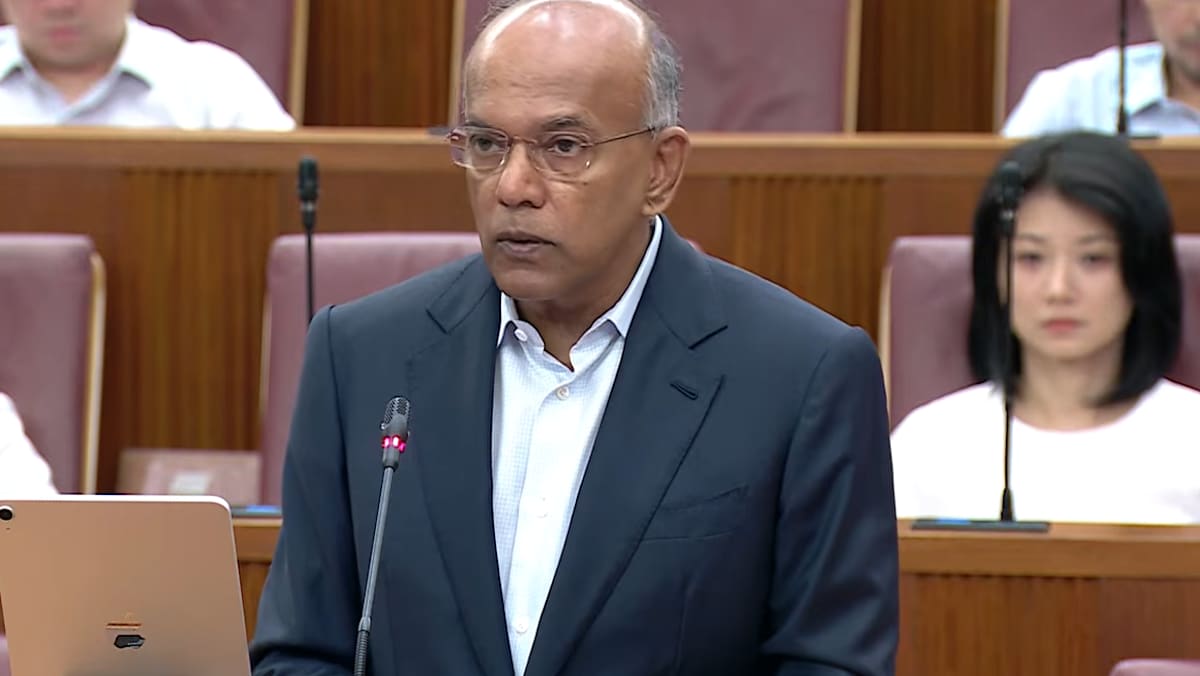
A High Court ruling in September had given several young money mule offenders probation and community sentences. "This is not the time to go soft," says Senior Minister K Shanmugam.
Coordinating Minister for National Security and the Minister for Home Affairs K Shanmugam speaking in Parliament on Oct 6, 2026.
This audio is generated by an AI tool.
SINGAPORE: New legislation will be tabled in parliament to reinforce the deterrence approach when sentencing all scammers and those who facilitate scams "including those who are young", said Senior Minister K Shanmugam on Tuesday (Oct 6).
This comes after a High Court ruling in September that allowed appeals by youth offenders and sentenced them to probation and community sentences instead of a deterrent one, putting weight on rehabilitation as the primary sentencing consideration.
This rationale by the courts "contradicts the approach set out in sentencing guidelines" that recommend jail or reformative training, said Mr Shanmugam.
He was responding to a parliamentary question by Mr Christopher de Souza (PAP-Holland-Bukit Timah) on whether the government will consider additional legislative provisions for youth offenders involved in scams.
CNA Games Guess Word Crack the word, one row at a time Buzzword Create words using the given letters Mini Sudoku Tiny puzzle, mighty brain teaser Mini Crossword Small grid, big challenge Word Search Spot as many words as you can Show More Show Less "We wanted this message to go out that every offender, young or old, will be very seriously dealt with. If a number of cases are dealt with in this way, many other would-be offenders would take reference," said Mr Shanmugam, who is also the Coordinating Minister for National Security and the Minister for Home Affairs. "Word will get around, and people, including young people, will be much more careful. That will make it harder for scammers to operate, and help reduce the number of victims and the losses they suffer." On Sept 10, a three-judge coram comprising Chief Justice Sundaresh Menon and Justice Ang Cheng Hock and Justice Hoo Sheau Peng, dealt with an appeal case involving Mohamed Erzan Taib Zohri and six separate cases that also involve scams. The seven cases involved money mule offenders, six of whom were under the age of 21. Speaking on Tuesday, Mr Shanmugam said the sentencing guidelines had laid out that fines, probation, and community sentences are generally not appropriate, and that imprisonment or reformative training should be considered "given the need for deterrence and the public interest in suppressing scams". He noted that while it was understandable for the court to be inclined to impose rehabilitative sentences to youth offenders, the government has to consider the wider consequences of such crimes, including the huge amount of financial losses and "the full human costs of such scams". Leniency towards scammers and those who facilitate scams will lead to many Singaporeans becoming victims. "And if young offenders are being treated more leniently simply because of their age, scam syndicates will have every incentive to recruit more young people as mules. We cannot allow this to happen," said Mr Shanmugam. To this end, the senior minister said the Ministry of Home Affairs (MHA) will be tabling new legislation in parliament "soon" to give effect to its policy position. The legislation will be "quite express" and make clear that the court's position in the Erzan case is not to be followed, said Mr Shanmugam. "This is not the time to go soft," said Mr Shanmugam. YOUTH INVOLVEMENT IN SCAMS "PARTICULARLY" CONCERNING Mr Shanmugam noted that scams today are the most prevalent crime type in Singapore, with the police receiving an average of 90 reports on such cases every day involving about S$2 million of losses daily. "My ministry is particularly concerned that many young people are getting involved in scam-related offences. In 2025, more than 1,000 youths were investigated in connection with scam reports," he said. In September, the Ministry of Social and Family Development reported that the youth offending rate rose in Singapore in 2025, driven mainly by an increase in cheating and related offences . Such offences jumped 37 per cent from 814 in 2024 to 1,114 in 2025, the highest since 2021, with youths in this category largely involved in scams as mules. In such cases, they were found to have relinquished their bank account and Singpass credentials, registered and handed over SIM cards or mobile phone lines, and facilitated transactions for scammers.
"We wanted this message to go out that every offender, young or old, will be very seriously dealt with. If a number of cases are dealt with in this way, many other would-be offenders would take reference," said Mr Shanmugam, who is also the Coordinating Minister for National Security and the Minister for Home Affairs.
"Word will get around, and people, including young people, will be much more careful. That will make it harder for scammers to operate, and help reduce the number of victims and the losses they suffer."
On Sept 10, a three-judge coram comprising Chief Justice Sundaresh Menon and Justice Ang Cheng Hock and Justice Hoo Sheau Peng, dealt with an appeal case involving Mohamed Erzan Taib Zohri and six separate cases that also involve scams. The seven cases involved money mule offenders, six of whom were under the age of 21.
Speaking on Tuesday, Mr Shanmugam said the sentencing guidelines had laid out that fines, probation, and community sentences are generally not appropriate, and that imprisonment or reformative training should be considered "given the need for deterrence and the public interest in suppressing scams".
He noted that while it was understandable for the court to be inclined to impose rehabilitative sentences to youth offenders, the government has to consider the wider consequences of such crimes, including the huge amount of financial losses and "the full human costs of such scams".
Leniency towards scammers and those who facilitate scams will lead to many Singaporeans becoming victims.
"And if young offenders are being treated more leniently simply because of their age, scam syndicates will have every incentive to recruit more young people as mules. We cannot allow this to happen," said Mr Shanmugam.
To this end, the senior minister said the Ministry of Home Affairs (MHA) will be tabling new legislation in parliament "soon" to give effect to its policy position.
The legislation will be "quite express" and make clear that the court's position in the Erzan case is not to be followed, said Mr Shanmugam.
"This is not the time to go soft," said Mr Shanmugam.
YOUTH INVOLVEMENT IN SCAMS "PARTICULARLY" CONCERNING
Mr Shanmugam noted that scams today are the most prevalent crime type in Singapore, with the police receiving an average of 90 reports on such cases every day involving about S$2 million of losses daily.
"My ministry is particularly concerned that many young people are getting involved in scam-related offences. In 2025, more than 1,000 youths were investigated in connection with scam reports," he said.
In September, the Ministry of Social and Family Development reported that the youth offending rate rose in Singapore in 2025, driven mainly by an increase in cheating and related offences .
Such offences jumped 37 per cent from 814 in 2024 to 1,114 in 2025, the highest since 2021, with youths in this category largely involved in scams as mules.
In such cases, they were found to have relinquished their bank account and Singpass credentials, registered and handed over SIM cards or mobile phone lines, and facilitated transactions for scammers.
The Sentencing Advisory Panel, which comprises members of the judiciary, Attorney-General's Chambers, Public Defender's Office, lawyers and MHA, worked intensively on sentencing guidelines for scam offences.
"The guidelines recommend imprisonment or reformative training when sentencing scams-related offenders, including those below the age of 21, except those dealt with in the Youth Court," he said.
REHABILITATIVE, EDUCATIONAL APPROACHES
In general, the legislation has evolved over the years to bring in rehabilitative justice through community-based sentences, probation and reformative training, and young offenders are generally dealt with within that framework, said Mr Shanmugam.
The jurisdiction of the Youth Courts, which mainly dispenses rehabilitative sentences, was also expanded in 2025 to youths below 18, he added.
"We take rehabilitation seriously. Young people should be given guidance, and we should try and rehabilitate them as much as possible, rather than to immediately treat them as hardened criminals," said Mr Shanmugam.
However, when it comes to scam-related offences specifically, the government has made a deliberate policy judgement that deterrence and prevention must carry greater weight.
"That is because rehabilitation of the individual offender has to be balanced against the need to deter others from facilitating scams, and thereby prevent many more people from becoming victims," said Mr Shanmugam.
He noted that MHA has tabled new legislation for scam-related offences in parliament in the last three years.
"When these laws were debated, parliament deliberately made no distinction between young and not so young offenders," he added.
On youths, Mr Shanmugam noted that they may be attracted by the promise of quick money, misled by purported job offers, influenced by peers or approached through social media.
"Some may not fully appreciate that their actions can enable serious criminal activity. Criminal syndicates exploit precisely this combination of inexperience, financial temptation and digital exposure," said Mr Shanmugam.
Hence, education is another key strategy to prevent youth offending, said Mr Shanmugam in response to another parliamentary question on how MHA is working with schools and parents to prevent young people from being recruited as money mules.
The police work with the Ministry of Education to conduct crime prevention talks in schools and to disseminate anti-scam advisories through the Parents Gateway platform, said Mr Shanmugam, adding that a youth-centric anti-scam campaign was also launched in April.
The government will also study whether structured scam-awareness and financial-literacy training would be appropriate and effective for youths who are issued with conditional warnings.
Get our pick of top stories and thought-provoking articles in your inbox
Stay updated with notifications for breaking news and our best stories
Join our channel for the top reads for the day on your preferred chat app
高等法院9月份的一项裁决对几名年轻的洗钱罪犯判处缓刑和社区服务。“现在不是手软的时候,”高级部长尚穆根说。
国家安全统筹部长兼内政部长尚穆根于2026年10月6日在国会发表讲话。
这段音频由人工智能工具生成。
新加坡:高级部长尚穆根周二(10月6日)表示,国会将提交新的立法,以加强对所有诈骗犯和协助诈骗者(包括年轻人)的量刑时的威慑手段。
此前,高等法院在 9 月份裁定,允许青少年罪犯上诉,并判处他们缓刑和社区服务,而不是威慑性刑罚,将改造作为主要的量刑考虑因素。
尚穆根先生表示,法院的这种理由“与量刑指南中规定的做法相矛盾”,该指南建议判处监禁或进行改造培训。
他是在回应克里斯托弗·德·索萨先生(人民行动党-荷兰-武吉知马选区)在议会提出的质询,该质询询问政府是否会考虑为参与诈骗的青少年罪犯制定额外的立法条款。
CNA游戏 猜词游戏 逐行破解单词 流行词游戏 用给定的字母组成单词 迷你数独 小谜题,脑力挑战 迷你填字游戏 小方格,大挑战 单词搜索 尽可能多地找出单词 显示更多 显示更少 “我们希望传达的信息是,所有违法者,无论老幼,都将受到严肃处理。如果许多案件都以这种方式处理,许多其他潜在的违法者就会以此为鉴,”国家安全统筹部长兼内政部长尚穆根先生说。“消息会传播开来,人们,包括年轻人,都会更加谨慎。这将使诈骗分子更难作案,并有助于减少受害者人数及其损失。” 9月10日,由首席大法官桑达雷什·梅农、洪成福法官和胡秀萍法官组成的三人合议庭审理了穆罕默德·埃尔赞·泰益·佐赫里(Mohamed Erzan Taib Zohri)的上诉案以及另外六起涉及诈骗的案件。这七起案件均涉及洗钱者,其中六人未满21岁。尚穆根先生周二表示,量刑指南规定,罚款、缓刑和社区服务通常不合适,应考虑监禁或改造性培训,“因为需要起到威慑作用,并且公众有理由打击诈骗”。他指出,虽然法院倾向于对青少年罪犯判处改造性刑罚可以理解,但政府必须考虑此类犯罪的更广泛后果,包括巨额经济损失和“此类诈骗造成的全部人员伤亡”。对诈骗者和协助诈骗者宽容对待,将导致许多新加坡人成为受害者。 “如果仅仅因为年龄就对年轻罪犯网开一面,诈骗团伙就会更有动机招募更多年轻人充当洗钱工具。我们绝不能允许这种情况发生,”尚穆根先生说道。为此,这位高级部长表示,内政部将“很快”向国会提交新的立法草案,以落实其政策立场。尚穆根先生表示,该立法草案将“非常明确”,并明确指出不应遵循法院在埃尔赞案中的判决。“现在不是手软的时候,”尚穆根先生强调。年轻人参与诈骗活动尤其令人担忧。尚穆根先生指出,如今诈骗是新加坡最普遍的犯罪类型,警方平均每天接到90起此类案件的报案,涉及金额约为每天200万新元。 “我的部门尤其关注许多年轻人卷入诈骗相关犯罪活动。2025年,超过1000名青少年因涉嫌诈骗被调查,”他说道。今年9月,社会及家庭发展部发布报告称,新加坡青少年犯罪率在2025年有所上升,主要原因是诈骗及相关犯罪案件的增加。此类犯罪案件数量从2024年的814起跃升至2025年的1114起,增幅达37%,为2021年以来的最高水平。这类青少年大多充当诈骗工具的“骡子”。在这些案件中,他们被发现放弃了自己的银行账户和Singpass账户信息,注册并交出SIM卡或手机号码,为诈骗分子提供交易便利。
“我们希望传达的信息是,所有违法者,无论老幼,都将受到非常严肃的处理。如果许多案件都以这种方式处理,许多其他潜在的违法者就会以此为鉴,”国家安全统筹部长兼内政部长尚穆根先生说道。
“消息会传开,人们,包括年轻人,都会更加谨慎。这将使诈骗分子更难作案,并有助于减少受害者人数及其损失。”
9月10日,由首席大法官桑达雷什·梅农、大法官洪成福和大法官胡秀萍组成的三人合议庭审理了穆罕默德·埃尔赞·泰布·佐赫里的上诉案以及另外六起涉及诈骗的案件。这七起案件均涉及洗钱者,其中六人未满21岁。
尚穆根先生周二表示,量刑指南规定,罚款、缓刑和社区服务通常不合适,应考虑监禁或改造培训,“因为需要起到威慑作用,并且公众有理由打击诈骗行为”。
他指出,虽然法院倾向于对青少年罪犯判处改造性刑罚是可以理解的,但政府必须考虑此类犯罪的更广泛后果,包括巨额经济损失和“此类诈骗造成的全部人员伤亡”。
对诈骗犯和协助诈骗者宽容,将导致许多新加坡人成为受害者。
“如果仅仅因为年龄就对年轻罪犯网开一面,诈骗团伙就会更有动机招募更多年轻人充当洗钱工具。我们绝不能允许这种情况发生,”尚穆根先生说。
为此,这位高级部长表示,内政部将“很快”向议会提交新的立法,以落实其政策立场。
尚穆根先生表示,该立法将“非常明确”,并明确指出不应遵循法院在埃尔赞案中的立场。
“现在不是手软的时候,”尚穆根先生说。
青少年参与诈骗活动“尤其”涉及
尚穆根先生指出,诈骗是目前新加坡最普遍的犯罪类型,警方平均每天接到90起此类案件的报案,每天造成的损失约为200万新元。
他说:“我的部门尤其关注许多年轻人卷入诈骗相关犯罪活动。2025年,超过1000名青少年因涉嫌诈骗接受调查。”
9 月,新加坡社会及家庭发展部报告称,到 2025 年,新加坡青少年犯罪率将上升,主要原因是作弊及相关犯罪的增加。
此类犯罪案件数量从 2024 年的 814 起跃升 37% 至 2025 年的 1114 起,为 2021 年以来的最高水平,其中这类青少年大多是作为洗钱工具参与诈骗活动的。
在这种情况下,他们被发现放弃了自己的银行账户和 Singpass 凭证,注册并交出了 SIM 卡或手机号码,并为诈骗分子提供了交易便利。
由司法部门、总检察署、公共辩护人办公室、律师和内政部成员组成的量刑咨询小组,对诈骗罪的量刑指南进行了深入研究。
他说:“指导方针建议对诈骗相关罪犯(包括 21 岁以下的罪犯)判刑时,应处以监禁或改造培训,但青少年法庭处理的案件除外。”
康复教育方法
尚穆根先生表示,总体而言,多年来,相关立法不断发展,通过社区矫正、缓刑和改造培训等方式引入了康复性司法,青少年罪犯通常都会在这个框架内受到处理。
他还补充说,主要负责判处改造性刑罚的青少年法院的管辖范围也于 2025 年扩大到 18 岁以下的青少年。
“我们非常重视改造工作。应该对年轻人进行引导,尽可能地帮助他们改过自新,而不是立即将他们视为顽固罪犯,”尚穆根先生说。
然而,就诈骗相关犯罪而言,政府已明确做出政策判断,即威慑和预防必须更加重视。
“这是因为必须平衡对个别罪犯的改造与阻止其他人协助诈骗的需要,从而防止更多的人成为受害者,”尚穆根先生说。
他指出,内政部在过去三年中已向议会提交了有关诈骗相关罪行的新立法。
“在讨论这些法律时,议会故意没有区分年轻罪犯和不太年轻的罪犯,”他补充道。
尚穆根先生指出,年轻人可能会被快速赚钱的承诺所吸引,被所谓的招聘信息所误导,受到同龄人的影响,或者通过社交媒体被接触。
“有些人可能没有充分意识到他们的行为会助长严重的犯罪活动。犯罪集团正是利用了这些人缺乏经验、受金钱诱惑以及接触网络的机会,”尚穆根先生说。
因此,教育是预防青少年犯罪的另一项关键策略。尚穆根先生在回答议会关于内政部如何与学校和家长合作以防止年轻人被招募为洗钱骡子的另一个问题时表示。
尚穆根先生表示,警方与教育部合作,在学校开展防犯罪讲座,并通过家长门户平台传播反诈骗建议。他还补充说,4月份也启动了一项以青少年为中心的反诈骗运动。
政府还将研究对收到有条件警告的青少年进行有组织的防诈骗意识和金融知识培训是否合适有效。
订阅我们的邮件,即可获取精选热点新闻和引人深思的文章。
订阅通知,第一时间获取突发新闻和精彩报道。
加入我们的频道,即可在您常用的聊天应用上获取当日热门文章。