MOM weighs ‘action’ against firms that can afford retrenchment benefits but refuse to pay: Jasmin Lau人力部正在考虑对有能力支付裁员补偿金却拒绝支付的公司采取行动:刘嘉敏
MOM considers penalties for firms able to pay but refusing retrenchment benefits amid rising layoffs and falling re-employment rates in Singapore. Read more at straitstimes.com.
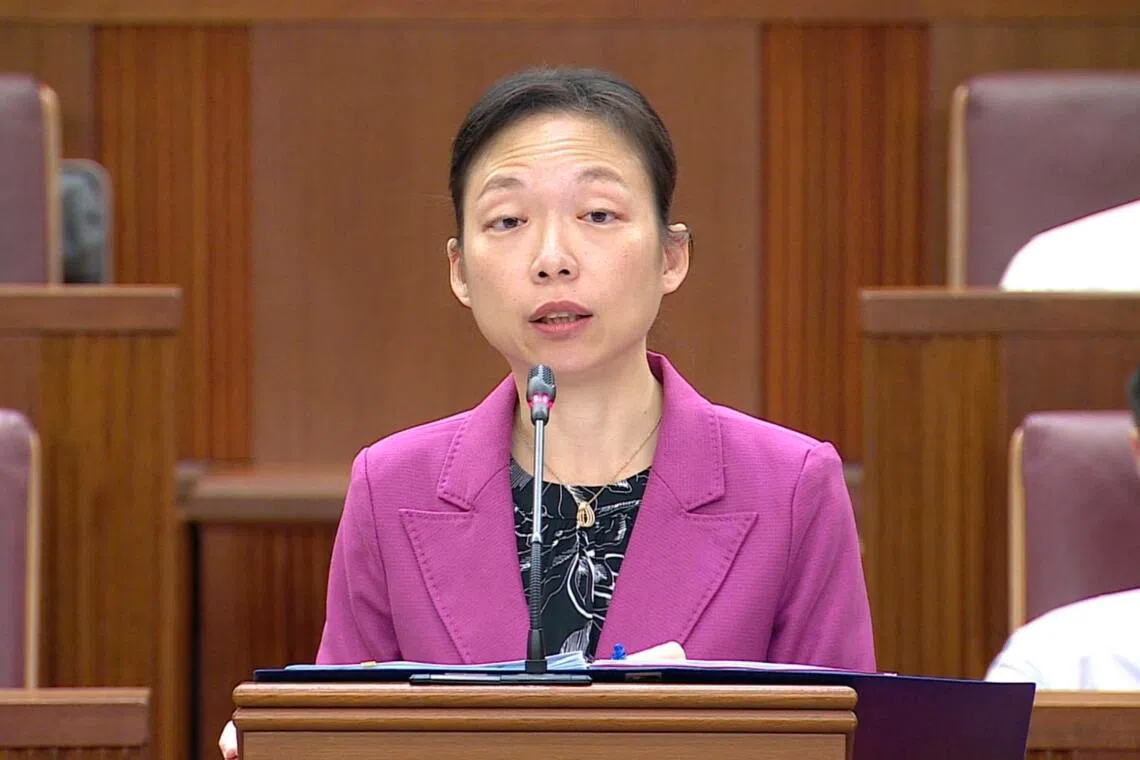
Of the 12% of employers that did not pay retrenchment benefits to their employees, only about a fifth said they had financial difficulties, said Acting Manpower Minister Jasmin Lau.
Published Oct 06, 2026, 07:45 PM
Updated Oct 06, 2026, 07:45 PM
MOM considers administrative actions against firms able but unwilling to pay retrenchment benefits. Most non-payers are smaller firms.
Retrenchments rose to a post-pandemic high in Q2 2026, mostly due to restructuring, disproportionately affecting PMETs and older workers, with re-employment rates declining to 54.9% within six months.
About four in 10 retrenched workers took pay cuts upon re-employment, with a median wage drop of 25 per cent.
Follow our live coverage here.
SINGAPORE – The Ministry of Manpower (MOM) is weighing possible “administrative action” against employers that are able but unwilling to pay retrenchment benefits despite repeated engagements and warnings, Acting Manpower Minister Jasmin Lau told Parliament on Oct 6.
She was responding to a raft of questions on rising retrenchments and falling re-employment rates from over 10 MPs, following official data that showed layoffs in Singapore reached a post-pandemic high in the second quarter of 2026.
Retrenchment benefits are not mandated by law in Singapore. Employers are guided by a tripartite advisory, which sets the prevailing norm for retrenchment payouts at two weeks to one month’s salary per year of service.
Based on mandatory retrenchment notifications submitted to MOM in 2025, about 88 per cent of employers paid retrenchment benefits to their workers.
Of those who did not, only about a fifth cited financial difficulties, Lau said. The rest pointed to other reasons including the lack of a legal obligation to do so, or said they had provided alternative support, such as keeping employees on the payroll longer.
Close to 80% of retrenched workers who did not receive retrenchment benefits in 2025 were from firms with less than 200 employees, Lau added.
MOM has faced growing queries from MPs regarding retrenchment trends in recent parliamentary sittings. In August, Minister of State for Manpower Dinesh Vasu Dash said trade unions and employers would be consulted on retrenchment benefits before any decision on writing it into law.
Lau said tripartite partners are also weighing bringing forward the mandatory retrenchment notification window so that affected staff can receive job support earlier.
Under current rules, firms with 10 or more employees have up to five working days after notifying staff to inform MOM.
She said the ministry has received feedback from the Employment and Employability Institute (e2i) about the challenge in reaching retrenched workers directly when MOM is notified after they have left the company, as contact details may not be available.
“We are exploring how we can address this while protecting the privacy and personal preferences of retrenched workers,” she said, in response to a parliamentary question from MP Patrick Tay (Pioneer SMC).
Lau added that these measures are being weighed as part of an ongoing review of the Employment Act. The tripartite workgroup tasked with the review, which began in 2025, has said it expects to submit recommendations to the government by the second half of 2026.
Several MPs including He Ting Ru (Sengkang GRC) and Shawn Loh (Jalan Besar GRC) also asked for more details about the profiles of retrenched workers.
In the second quarter, 4,620 workers were retrenched, up from 3,830 in the first quarter. More than three quarters of these workers were laid off due to business reorganisation or restructuring, Lau said.
Singapore residents accounted for about three quarters of retrenchments, as they are disproportionately represented in professionals, managers, executives and technicians (PMET) roles, which are more impacted by restructuring, she added.
Among PMETs, the likelihood of retrenchment was similar for both residents and non-residents, at 3.2 in every 1,000 employees in the second quarter of 2026, she said.
More than half of retrenched residents are in their 40s and 50s, she said. Degree-holders account for a growing proportion of retrenched residents, with their share rising from 51% in 2021 to 66.4% in 2025.
MPs also raised concerns over slowing re-employment rates, after MOM data showed that the proportion of retrenched workers securing a new job within six months dropped from 60.7 per cent in the first quarter to 54.9 per cent in the second quarter.
The acting minister said that while seasonal hiring patterns partly explained the decline, the re-entry rate into employment was lower than in previous years and showed a “broader downtrend”.
PMETs continued to face the lowest re-entry rates, with 54.1% landing a new job within six months after layoffs according to MOM data. About seven in 10 PMET residents were employed again within 12 months, and about eight in 10 within 24 months, Lau added. These re-entry rates were lower for older retrenched PMETs.
For those who re-entered the workforce, about six in 10 earned more than they did before they were retrenched, she said. But those who earned less saw a median wage reduction of around 25%.
The sector with the lowest re-entry rate for retrenched residents six months after layoffs varied by quarter, she said, with financial services recording the lowest rate over the last 14 quarters, often followed by wholesale trade.
The acting minister said that MOM, the labour movement and employers’ federation were looking at how to support workers who face longer transitions back into employment, including older workers and those in sectors undergoing significant restructuring. This was being done through channels such as a Tripartite Workgroup on Senior Employment announced in 2025.
As more firms in Singapore use artificial intelligence (AI) to boost productivity, concerns over job security have surfaced.
Sengkang GRC’s He asked about the proportion of retrenchments due to cyclical restructuring rather than AI adoption and if MOM would start tracking AI-attributed retrenchments as a distinct category.
Lau said it was “not clear at present” if the second quarter retrenchments were driven by AI adoption, as it is difficult to isolate the specific impact of AI adoption from broader business transformation and reorganisation.
She said that according to MOM’s surveys, only a small minority of firms adopting AI have reduced headcounts, while more are creating new roles or redesigning jobs.
“We will continue to refine our surveys and market sensing mechanisms to better understand the impact of AI on jobs,” she said.
Singapore Parliament
Ministry of Manpower
人力部代理部长刘嘉敏表示,在12%没有向员工支付裁员补偿金的雇主中,只有大约五分之一表示他们遇到了财务困难。
发布于 2026 年 10 月 6 日晚上 7:45
更新于2026年10月6日晚上7:45
人力部考虑对有能力但不愿支付裁员补偿金的公司采取行政措施。大多数拒付补偿金的公司规模较小。
2026 年第二季度,裁员人数达到疫情后的最高水平,主要原因是企业重组,对专业人士、经理、执行人员和老年工人的影响尤为严重,六个月内再就业率下降至 54.9%。
约有十分之四的被裁员工在重新就业时接受了减薪,工资中位数下降了 25%。
请点击此处关注我们的实时报道。
新加坡——人力部代理部长刘嘉敏于10月6日在国会表示,人力部正在考虑对那些有能力但无视多次沟通和警告仍不愿支付裁员补偿金的雇主采取“行政措施”。
在官方数据显示新加坡的裁员人数在 2026 年第二季度达到疫情后最高水平后,超过 10 位国会议员就裁员人数上升和再就业率下降提出了一系列问题,她对此作出了回应。
新加坡法律并未强制规定必须支付裁员补偿金。雇主需遵循三方咨询机构的建议,该机构规定了裁员补偿金的普遍标准,即每服务一年支付两周至一个月的工资。
根据2025年向人力部提交的强制裁员通知,约88%的雇主向其员工支付了裁员补偿金。
刘先生表示,在那些没有这样做的人中,只有大约五分之一是出于财务困难。其余的人则指出其他原因,包括没有法律义务这样做,或者表示他们提供了其他支持,例如延长员工的工资发放期限。
刘补充说,到 2025 年,近 80% 没有获得裁员补偿的被裁员工来自员工人数少于 200 人的公司。
在最近的国会会议上,人力部收到了越来越多议员关于裁员趋势的质询。今年8月,人力部政务部长迪内什·瓦苏·达什表示,在将裁员福利写入法律之前,会先与工会和雇主进行磋商。
刘先生表示,三方合作伙伴也在考虑提前强制裁员通知窗口期,以便受影响的员工能够更早地获得就业支持。
根据现行规定,拥有 10 名或以上员工的公司在通知员工后最多有五个工作日的时间通知人力部。
她说,人力部已收到就业与就业能力研究所 (e2i) 的反馈,指出在裁员工人离开公司后才通知人力部,由于联系方式可能不可用,因此很难直接联系到这些工人。
“我们正在探索如何在保护被裁员工的隐私和个人意愿的同时解决这个问题,”她在回答国会议员郑德源(先驱单选区)的议会质询时说道。
刘先生补充说,这些措施正在作为对《雇佣法》持续审查的一部分进行权衡。负责这项审查的三方工作组于2025年启动,并表示预计将于2026年下半年向政府提交建议。
包括何廷儒(盛港集选区)和罗绍文(惹兰勿刹集选区)在内的几位国会议员也要求提供更多关于被裁员工个人信息的详细资料。
刘先生表示,第二季度共有4620名员工被裁,高于第一季度的3830人。其中超过四分之三的员工是因为企业重组或结构调整而被解雇的。
她补充说,新加坡居民约占裁员总数的四分之三,因为他们在专业人士、经理、主管和技术人员 (PMET) 职位中的比例过高,而这些职位更容易受到重组的影响。
她表示,在专业人士、经理、执行人员和技术人员(PMET)中,居民和非居民被裁员的可能性相似,到 2026 年第二季度,每 1000 名员工中将有 3.2 人被裁员。
她说,超过一半的被裁居民年龄在40岁到50岁之间。拥有大学学位的被裁居民所占比例越来越高,从2021年的51%上升到2025年的66.4%。
国会议员们也对再就业率放缓表示担忧,人力部数据显示,被裁员工在六个月内找到新工作的比例从第一季度的 60.7% 下降到第二季度的 54.9%。
代理部长表示,虽然季节性招聘模式在一定程度上解释了就业人数下降的原因,但重新就业率低于往年,并显示出“更广泛的下降趋势”。
根据人力部的数据,专业人士、经理、执行人员和技术人员(PMET)的再就业率仍然最低,仅有54.1%的人在被裁员后的六个月内找到了新工作。刘先生补充说,大约十分之七的PMET居民在12个月内重新就业,大约十分之八的PMET居民在24个月内重新就业。年龄较大的被裁PMET的再就业率更低。
她表示,在重新进入职场的人中,约有十分之六的人收入比被裁员前更高。但收入下降的人,工资中位数则下降了约25%。
她表示,被裁居民在裁员六个月后重返工作岗位比例最低的行业因季度而异,过去 14 个季度以来,金融服务业的重返工作岗位比例最低,其次是批发贸易业。
代理部长表示,人力部、劳工运动和雇主联合会正在研究如何支持那些面临较长过渡期重返工作岗位的劳动者,包括老年劳动者和那些在经历重大重组的行业工作的劳动者。这项工作正通过诸如2025年宣布成立的“老年人就业三方工作组”等渠道进行。
随着新加坡越来越多的企业利用人工智能(AI)来提高生产力,人们对工作保障的担忧也随之出现。
盛港集选区的议员询问,由于周期性重组而非人工智能应用而导致的裁员比例是多少,以及人力部是否会将人工智能导致的裁员作为一个单独的类别进行跟踪。
刘先生表示,目前“尚不清楚”第二季度裁员是否是由人工智能的应用所驱动,因为很难将人工智能的应用的具体影响与更广泛的业务转型和重组区分开来。
她表示,根据人力部(MOM)的调查,只有少数采用人工智能的公司减少了员工人数,而更多的公司正在创造新的职位或重新设计工作。
“我们将继续改进我们的调查和市场感知机制,以更好地了解人工智能对就业的影响,”她说。
新加坡国会
人力部