Budget-tight Suhakam wants stronger public funding even if allowed to generate own revenue, says chairman预算紧张的泰国人权委员会主席表示,即使允许其自行创收,也希望获得更多公共资金支持。
KUALA LUMPUR, Oct 7 — The Human Rights Commission of Malaysia (Suhakam) has been operating on a shoestring budget for years despite taking on more responsibilities, its chairman...
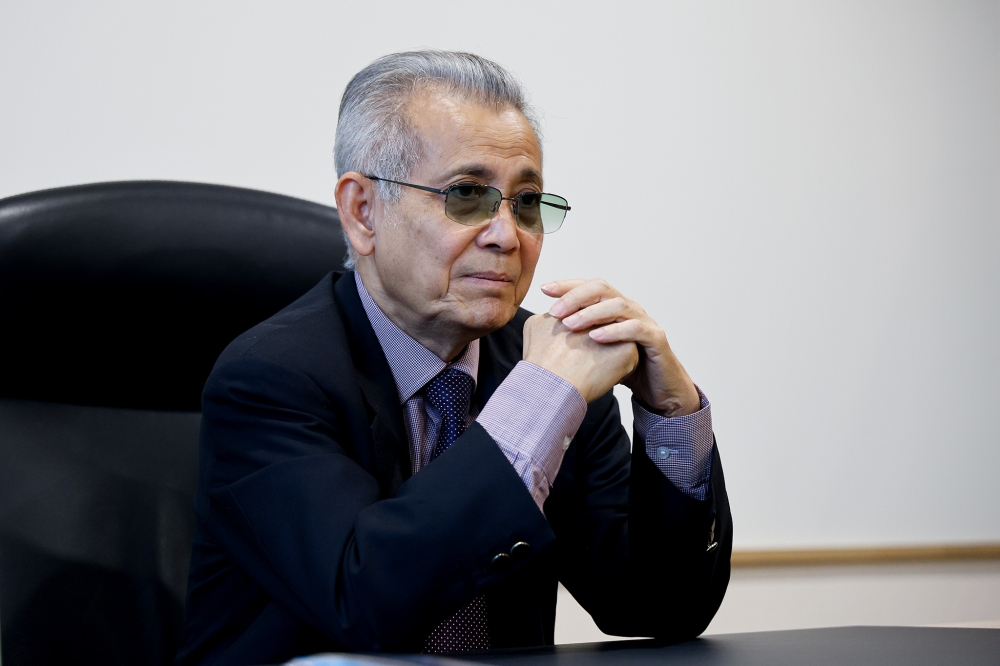
Suhakam has struggled with limited funding despite expanded responsibilities, affecting its operations outside Klang Valley and hindering investigations and public engagements.
Nearly 90% of Suhakam's budget is spent on emoluments and essential operations, leaving little for programmes, while delayed funding impacts initiated commitments.
Suhakam supports generating its own revenue to supplement, not replace, government funding, advocating for stronger statutory safeguards for funding and commissioner appointments.
KUALA LUMPUR, Oct 7 — The Human Rights Commission of Malaysia (Suhakam) has been operating on a shoestring budget for years despite taking on more responsibilities, its chairman Datuk Seri Mohd Hishamudin Md Yunus said.
Mohd Hishamudin said the funding gap has hampered Suhakam’s plans to widen its presence outside the Klang Valley and has limited its ability to launch probes and public engagements.
“Financial constraints require Suhakam to prioritise how its limited resources are used.
“The issue has become pressing as Suhakam’s statutory responsibilities have expanded,” he told Malay Mail during an exclusive interview recently.
Section 19(1) of the Human Rights Commission of Malaysia Act 1999 mandates the federal government to provide Suhakam with adequate funds annually for its operations.
The same Act also prohibits Suhakam from receiving foreign funds but Section 19(3) permits it to receive unconditional funds from individuals or organisations — strictly only to promote human rights awareness and education.
The Act also does not provide for Suhakam to generate its own revenue — an option that may ease the national human rights body’s ongoing cash flow woes.
Challenges from financial constraints
Mohd Hishamudin said nearly 90 per cent of Suhakam’s annual budget goes towards emoluments and essential operational expenditure, leaving only 10 per cent for programmes and activities.
The lean budget limits Suhakam’s capacity to conduct investigations, monitoring, human rights education, research, advocacy and public engagement.
Amendments to the Suhakam Act in 2024 and a slew of new laws passed since then have also left greater responsibilities on Suhakam’s shoulders.
These include the formal institutionalisation of the Office of the Children’s Commissioner as well as its monitoring and advisory roles under the Online Safety Act 2025 and the Anti-Bullying Act 2026.
Plans to make the organisation more accessible to other parts of the country have also hit a snag.
Mohd Hishamudin said Suhakam could not establish proposed offices in the northern and east coast regions of the peninsula because of budget constraints.
Some of Suhakam’s approved financial commitments were also delivered almost a year late because of budget constraints. For instance, the revised remuneration for Suhakam commissioners, which was approved in November 2025, only took effect in September 2026 after Suhakam received the necessary funds.
Own revenue cannot replace government funding
On July 1, Deputy Minister in the Prime Minister’s Department (Law and Institutional Reform) M. Kulasegaran told the Dewan Rakyat that the government is reviewing suggestions to allow Suhakam to generate its own revenue through training and related programmes.
Mohd Hishamudin welcomed the plan but stressed an important caveat: Public funding must remain the foundation of Suhakam’s funding.
“Any income Suhakam is permitted to generate should supplement, not substitute, government funding,” Mohd Hishamudin said.
Mohd Hishamudin also said that Suhakam’s reliance on government funding does not affect its independence since institutions like Parliament, the courts and even several oversight bodies are publicly funded.
However, he pointed out that stronger statutory safeguards concerning funding and the appointments and tenure of Suhakam commissioners would reinforce public confidence in that independence.
“As such, Suhakam respectfully appeals to the Government to provide it with adequate funding.
“We are not asking for more. We are only asking for what we are entitled to under the Suhakam Act and the Paris Principles: adequate funding.”
Nearly 51 years later, daughter of former Perak police chief Khoo Chong Kong remembers the man behind his uniform
‘A happy family?’: Zara Qairina’s stepsister says she never met teen, but regularly viewed photos on social media
Myanmar president to visit Malaysia tomorrow as migrant returns draw rights groups’ warnings
尽管职责范围扩大,但马来西亚人权委员会 (Suhakam) 仍面临资金不足的困境,这影响了其在巴生谷以外地区的运作,并阻碍了调查和公众参与。
泰国人权委员会近 90% 的预算用于薪酬和基本运营,留给项目的资金很少,而资金延迟到位也影响了已启动的承诺。
马来西亚人权委员会支持通过自身创收来补充而非取代政府拨款,并倡导加强对拨款和专员任命的法律保障。
吉隆坡,10月7日讯——马来西亚人权委员会(Suhakam)主席拿督斯里莫哈末·希沙姆丁·莫哈末·尤努斯表示,尽管承担了更多责任,但该委员会多年来一直依靠捉襟见肘的预算运作。
莫哈末·希沙姆丁表示,资金缺口阻碍了马来西亚人权委员会扩大其在巴生谷以外地区的影响力的计划,并限制了其开展调查和公众参与的能力。
“财政限制要求马来西亚人权委员会优先考虑如何利用其有限的资源。
“随着马来西亚人权委员会的法定职责不断扩大,这个问题变得日益紧迫,”他最近在接受《马来邮报》独家采访时表示。
1999 年马来西亚人权委员会法令第 19(1) 条规定,联邦政府每年必须向马来西亚人权委员会提供充足的资金用于其运作。
该法案还禁止人权委员会接受外国资金,但第 19(3) 条允许其接受个人或组织的无条件资金——严格来说,只能用于促进人权意识和教育。
该法案也没有规定人权委员会可以自行创收——而这一选项或许可以缓解该国家人权机构持续存在的现金流困境。
财务限制带来的挑战
莫哈末·希沙姆丁表示,人权委员会年度预算的近 90% 用于薪酬和必要的运营支出,只有 10% 用于项目和活动。
预算紧张限制了泰国人权委员会开展调查、监督、人权教育、研究、宣传和公众参与的能力。
2024 年对《人权法案》的修订以及此后通过的一系列新法律也给人权委员会带来了更大的责任。
其中包括正式设立儿童事务专员办公室,以及根据 2025 年《网络安全法》和 2026 年《反欺凌法》发挥监督和咨询作用。
让该组织更容易被全国其他地区的人接触到的计划也遇到了阻碍。
莫哈末·希沙姆丁表示,由于预算限制,马来西亚人权委员会无法在半岛北部和东部沿海地区设立拟议的办事处。
由于预算限制,马来西亚人权委员会(Suhakam)部分已获批准的财政承诺也延迟了近一年才得以兑现。例如,2025年11月获批的人权委员会委员修订薪酬方案,直到2026年9月人权委员会收到所需资金后才生效。
自有收入无法取代政府拨款
7月1日,首相署(法律及体制改革)副部长古拉塞加兰在下议院表示,政府正在审查允许人权委员会通过培训及相关项目创造自身收入的建议。
莫哈末·希沙姆丁对该计划表示欢迎,但强调了一个重要的前提:公共资金必须仍然是人权委员会资金的基础。
“人权委员会获准获得的任何收入都应该作为政府资金的补充,而不是替代,”莫哈末·希沙姆丁说。
莫哈末·希沙姆丁还表示,人权委员会依赖政府资助并不影响其独立性,因为国会、法院甚至一些监督机构都是由公共资金资助的。
不过,他指出,加强有关资金、任命和人权委员会委员任期等方面的法律保障,将增强公众对该委员会独立性的信心。
“因此,马来西亚人权委员会恳请政府为其提供充足的资金。
“我们并非要求更多。我们只是要求根据《人权法案》和《巴黎原则》获得我们应得的权利:充足的资金。”
近51年后,霹雳州前警察总长邱崇光的女儿依然记得这位身着制服的男人。
“幸福的家庭?”:扎拉·凯里娜的继妹称她从未见过这位少女,但经常在社交媒体上看到照片。
缅甸总统将于明日访问马来西亚,此前移民返乡引发人权组织警告。