Commentary: Keep medicine out of the US-China tech war评论:让医药行业远离美中科技战
Novel medicines can’t be treated in the same zero-sum way as semiconductors or electric vehicles, where one competitor’s win comes at the expense of the other, says Juliana Liu for Bloomberg Opinion.
新闻视频
Novel medicines can’t be treated in the same zero-sum way as semiconductors or electric vehicles, where one competitor’s win comes at the expense of the other, says Juliana Liu for Bloomberg Opinion.
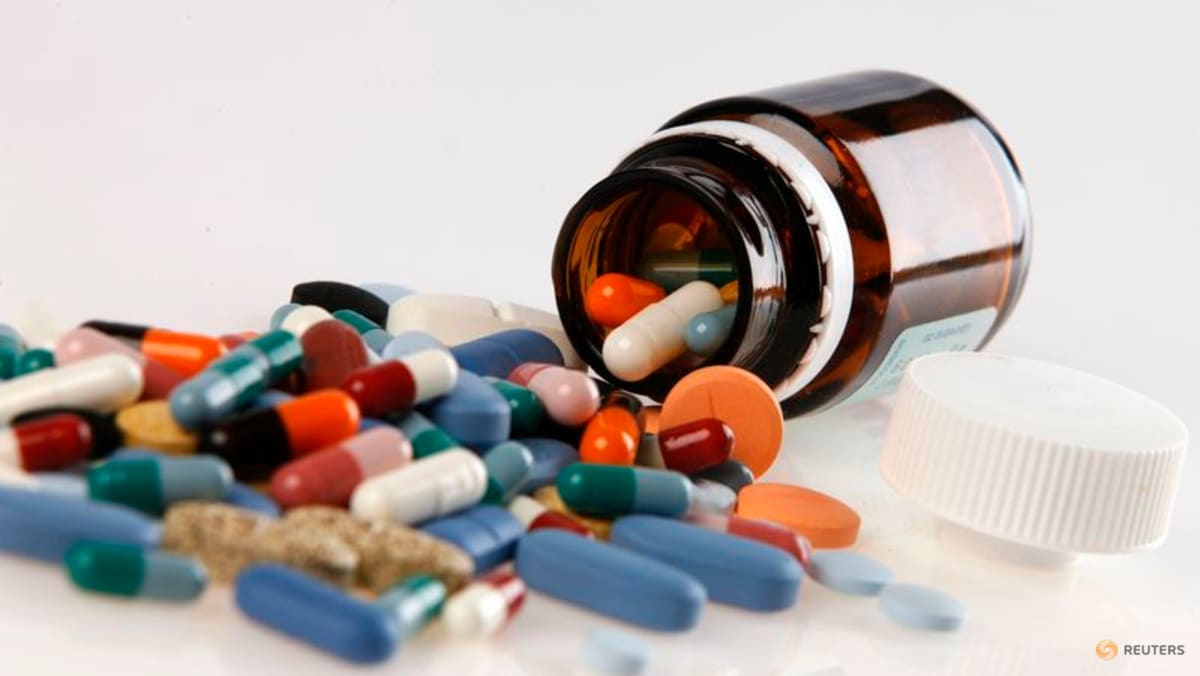
File photo of pharmaceutical tablets and capsules. (Photo: Reuters/Srdjan Zivulovic)
HONG KONG: As Washington and Beijing tussle for dominance in frontier technologies, there’s one area in which competition shouldn’t preclude collaboration: innovative medicines. Beijing’s latest five-year plan for the biotechnology sector details how the country wants to lead the field globally. Unusually for an industrial blueprint, it comes with numeric targets.
By 2030, Chinese drugmakers are expected to have made a “major leap” in competitiveness with sales of new medications growing 20 per cent annually. Pharmaceutical companies aim to develop at least 25 per cent of the world’s first-in-class medicines, which are drugs that work in an entirely new way to treat a condition. They’re also expected to have originated at least five blockbuster therapies with sales of more than US$1 billion a year.
BETTING ON CHINESE RESEARCH
These ambitions aren’t as farfetched as they might seem. Decades of policy support, including investment in education, have helped turn the country into an increasingly fertile source of innovation from a follower in drug development.
Big Pharma has taken notice. To replenish their pipeline before a slew of lucrative patents expire, global companies have gone on a shopping spree, particularly in areas such as cancer and obesity treatments where China excels. Over the past five years, the value of overseas drug-licensing deals has surged more than 10-fold to a record US$134 billion.
CNA Games Guess Word Crack the word, one row at a time Buzzword Create words using the given letters Mini Sudoku Tiny puzzle, mighty brain teaser Mini Crossword Small grid, big challenge Word Search Spot as many words as you can Show More Show Less
Recent deals illustrate the strength of international demand. Last week, Novo Nordisk agreed to pay Jiangsu Hengrui Pharmaceuticals as much as US$2.6 billion for rights to an experimental obesity pill that can be taken just once a week. The deal stood out for its hefty US$300 million upfront payment for a therapy that has no human trial data.
The willingness to place such a large bet so early demonstrates how Western drugmakers now value Chinese research. Because the two mainstream oral GLP-1 weight-loss drugs (from Novo and Eli Lilly) require daily dosing, a successful weekly alternative holds obvious commercial appeal. On Friday (Oct 2), Novartis struck an even bigger deal with Abogen Biosciences, paying as much as US$7.8 billion for an experimental mRNA treatment for autoimmune diseases.
That success has created a dilemma for Washington. The argument goes that if pharma giants can license cheaper Chinese molecules rather than funding American startups, it will drain capital and expertise from the US biotech ecosystem. The logic resembles the US government’s export controls on advanced semiconductors, which are intended to prevent US-designed chips from helping accelerate China’s AI development or curb Chinese carmakers’ access to the US market.
The US has already sought to cut its reliance on Chinese biotechnology companies through the Biosecure Act, which restricts federal agencies from working with designated companies. A bipartisan proposal introduced this year would go further, potentially limiting the kind of licensing deals now attracting Western drugmakers.
RESTRICTIONS WILL BE A MISTAKE
But that would be a mistake. Novel medicines can’t be treated in the same zero-sum way as semiconductors, electric vehicles or large language models , where one competitor’s win comes at the expense of the other. The industry is inherently collaborative, especially in life sciences. The origin of a lifesaving treatment matters far less than whether patients can get access to it.
The US Treasury Department appears to understand the distinction. It’s considering rules that would preserve American drugmakers’ ability to license innovative treatments from Chinese companies, Reuters reported recently, while restricting investments involving pathogens or technology that could be weaponised. It’s a sensible approach. Washington has a strong incentive to keep potentially dangerous technologies out of an adversary’s hands, but that doesn’t mean every discovery from Shanghai is a national security threat.
To be sure, the US absolutely should be trying to beat China in the biotech race with its greater access to capital and a larger cohort of international scientists. That’s why the Trump administration would be wise to back away from further cuts to America’s top science agencies, whose funding supports the basic research that can ultimately produce commercial breakthroughs, and which draws top scientific talent to the country. Washington could also press ahead with plans to create a supply chain that is independent of China for producing raw materials needed to make generic medicines.
There are legitimate reasons to ensure domestic pharmaceutical capacity and preserve US innovation. But restricting access to foreign medicines is not the way to accomplish that goal. Washington should try to outdo China, not ignore its innovations.
Get our pick of top stories and thought-provoking articles in your inbox
Stay updated with notifications for breaking news and our best stories
Join our channel for the top reads for the day on your preferred chat app
彭博社专栏作家朱莉安娜·刘表示,新药不能像半导体或电动汽车那样以零和博弈的方式对待,在半导体或电动汽车领域,一个竞争对手的成功是以另一个竞争对手的失败为代价的。
药品片剂和胶囊的资料照片。(图片:路透社/Srdjan Zivulovic)
香港:当华盛顿和北京在尖端技术领域争夺主导权时,有一个领域竞争不应妨碍合作:创新药物。北京最新的五年生物技术发展规划详细阐述了中国希望如何引领全球该领域。与一般的产业规划不同,该规划提出了具体的量化目标。
到2030年,中国制药企业有望在竞争力方面实现“重大飞跃”,新药销售额将以每年20%的速度增长。制药公司的目标是开发出至少25%的全球首创药物(即作用机制全新的药物),并研发出至少五种年销售额超过10亿美元的重磅疗法。
押注中国研究
这些雄心壮志并非遥不可及。数十年来,包括教育投资在内的政策支持,已帮助该国从药物研发领域的追随者,转型成为创新日益蓬勃发展的源泉。
大型制药公司已经注意到这一点。为了在大量利润丰厚的专利到期前补充产品线,全球各大公司纷纷展开收购行动,尤其是在中国实力雄厚的癌症和肥胖症治疗等领域。过去五年,海外药品授权交易额飙升十倍以上,达到创纪录的1340亿美元。
CNA游戏 猜词游戏 逐行破解单词 流行词游戏 用给定的字母组成单词 迷你数独 小小谜题,挑战你的大脑 迷你填字游戏 小方格,大挑战 单词搜索 尽可能多地找出单词 显示更多 显示更少
近期达成的交易凸显了国际市场的强劲需求。上周,诺和诺德同意向江苏恒瑞药业支付高达26亿美元的费用,以获得一种只需每周服用一次的实验性减肥药的专利权。这笔交易最引人注目之处在于,诺和诺德为这种尚无人体试验数据的疗法支付了高达3亿美元的预付款。
西方制药商如此迅速地投入如此巨资,表明他们现在对中国科研的重视程度。由于目前主流的两种口服GLP-1减肥药(分别来自诺和诺德和礼来)都需要每日服用,因此,一种成功的每周一次的替代疗法显然具有巨大的商业吸引力。10月2日(周五),诺华与Abogen Biosciences达成了一项更大的交易,斥资高达78亿美元购买了一种用于治疗自身免疫性疾病的实验性mRNA疗法。
这一成功给华盛顿带来了一个难题。一种观点认为,如果制药巨头能够以更低的价格获得中国药物的授权,而不是投资美国初创企业,这将导致美国生物技术生态系统的资金和专业技术流失。这种逻辑类似于美国政府对先进半导体的出口管制,其目的是为了防止美国设计的芯片帮助中国加速人工智能发展,或限制中国汽车制造商进入美国市场。
美国已通过《生物安全法案》试图减少对中国生物技术公司的依赖,该法案限制联邦机构与特定公司开展合作。今年提出的一项两党提案将更进一步,可能限制目前吸引西方制药商的许可协议类型。
限制将会是个错误
但那样做是错误的。新药不能像半导体、电动汽车或大型语言模型那样,以零和博弈的方式看待,一方的成功必然以另一方的失败为代价。这个行业本质上是合作的,尤其是在生命科学领域。一种救命疗法的来源远不如患者能否获得它重要。
美国财政部似乎明白其中的区别。路透社近日报道称,财政部正在考虑制定相关规则,以保障美国制药商从中国公司获得创新疗法的许可,同时限制涉及病原体或可能被武器化的技术的投资。这是一种明智的做法。华盛顿有强烈的动机阻止潜在的危险技术落入对手之手,但这并不意味着来自上海的每一项发现都构成国家安全威胁。
诚然,美国凭借其更雄厚的资金实力和更庞大的国际科学家群体,理应在生物技术领域力争超越中国。正因如此,特朗普政府明智的做法是停止进一步削减美国顶级科研机构的经费。这些机构的资金支持着基础研究,而这些研究最终可能带来商业突破,同时也吸引着顶尖的科研人才来到美国。此外,华盛顿还可以推进相关计划,建立一条独立于中国的供应链,用于生产仿制药所需的原材料。
确保国内制药能力和保护美国创新固然有其合理理由,但限制外国药品的获取并非实现这一目标的正确途径。华盛顿应该努力超越中国,而不是忽视其创新。
订阅我们的邮件,即可获取精选热点新闻和引人深思的文章。
订阅通知,第一时间获取突发新闻和精彩报道。
加入我们的频道,即可在您常用的聊天应用上获取当日热门文章。