No transition period for changes to P1 registration taking effect from 2027: Desmond Lee李德斯表示,P1注册变更自2027年起生效,没有过渡期。
Several Members of Parliament called for a transition period as some families have made residential arrangements based on the existing framework.
Several Members of Parliament called for a transition period as some families have made residential arrangements based on the existing framework.
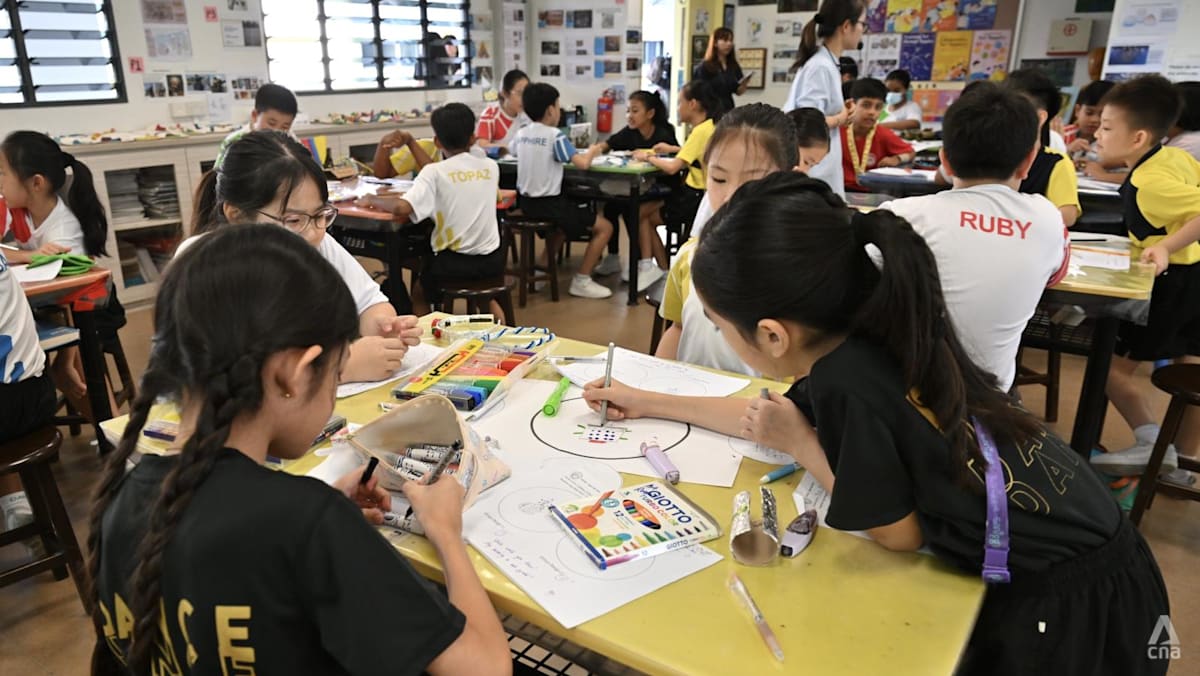
A classroom at Oasis Primary School on Jul 8, 2025. (File photo: CNA/Jeremy Long)
This audio is generated by an AI tool.
SINGAPORE: Changes to the Primary 1 registration framework will go ahead from 2027 without a transition period, despite calls from several Members of Parliament (MPs) to give families more time to adjust.
Speaking in parliament on Wednesday (Oct 7), Education Minister Desmond Lee said: “On implementation timing, we recognise that on one hand, some families have made residential arrangements based on the existing framework.
“But on the other hand, more families would benefit the sooner we implement the changes. In fact, some have asked why we did not make these changes earlier for the 2026 Primary 1 registration exercise.”
Mr Lee was responding to parliamentary questions filed by MPs calling for a transition period. The MPs pointed out that some families may have already made significant decisions on where to live, childcare and schooling based on the existing registration rules.
CNA Games Guess Word Crack the word, one row at a time Buzzword Create words using the given letters Mini Sudoku Tiny puzzle, mighty brain teaser Mini Crossword Small grid, big challenge Word Search Spot as many words as you can Show More Show Less Urging the ministry to defer the changes by one year, Ms Tin Pei Ling (PAP-Marine Parade–Braddell Heights) said these families had made “significant and long-term decisions” based on the current framework. Another MP, Ms Gho Sze Kee (PAP-Mountbatten), proposed a transition period of about three years for those who had already made residential, childcare and schooling arrangements. To this, Mr Lee said that the changes to the framework do not by themselves lead to a more diverse socio-economic mix in schools. “Many other factors, including parents’ preferences and eventual school choices, matter too. “We will thus monitor the implementation of the two changes, continually review our Primary 1 registration framework, and make further refinements as needed,” Mr Lee said. The 2027 changes to the Primary 1 registration framework which MOE announced in September include an increase to the number of places for Phase 2C from 40 to 60 for most primary schools. Phase 2C is open to all children regardless of prior connection to a school, so more reserved places should widen access for those without such ties, MOE previously said. The larger Phase 2C allocation could reduce the number of places available in Phase 2A, which is for children whose parent is a former student of the school. In addition, 12 schools in neighbourhoods where public housing makes up less than 40 per cent of homes within 2km will also split their Phase 2C places into two tracks – one for applicants living within 2km, another for those beyond it – with no home-school distance priority within either track. This two-track scheme applies to schools such as CHIJ (Katong) Primary School and Ngee Ann Primary School. On Wednesday, Mr Lee said the changes are intended to enable schools to “remain open and accessible”. “Our schools are important common spaces where children from different backgrounds interact and learn together, in turn appreciating different perspectives and developing mutual understanding,” said the minister. “This helps to lay the foundations for a cohesive and inclusive Singapore.”
Urging the ministry to defer the changes by one year, Ms Tin Pei Ling (PAP-Marine Parade–Braddell Heights) said these families had made “significant and long-term decisions” based on the current framework.
Another MP, Ms Gho Sze Kee (PAP-Mountbatten), proposed a transition period of about three years for those who had already made residential, childcare and schooling arrangements.
To this, Mr Lee said that the changes to the framework do not by themselves lead to a more diverse socio-economic mix in schools.
“Many other factors, including parents’ preferences and eventual school choices, matter too.
“We will thus monitor the implementation of the two changes, continually review our Primary 1 registration framework, and make further refinements as needed,” Mr Lee said.
The 2027 changes to the Primary 1 registration framework which MOE announced in September include an increase to the number of places for Phase 2C from 40 to 60 for most primary schools.
Phase 2C is open to all children regardless of prior connection to a school, so more reserved places should widen access for those without such ties, MOE previously said.
The larger Phase 2C allocation could reduce the number of places available in Phase 2A, which is for children whose parent is a former student of the school.
In addition, 12 schools in neighbourhoods where public housing makes up less than 40 per cent of homes within 2km will also split their Phase 2C places into two tracks – one for applicants living within 2km, another for those beyond it – with no home-school distance priority within either track.
This two-track scheme applies to schools such as CHIJ (Katong) Primary School and Ngee Ann Primary School.
On Wednesday, Mr Lee said the changes are intended to enable schools to “remain open and accessible”.
“Our schools are important common spaces where children from different backgrounds interact and learn together, in turn appreciating different perspectives and developing mutual understanding,” said the minister.
“This helps to lay the foundations for a cohesive and inclusive Singapore.”
NO RESERVED PLACES ALONG SOCIO-ECONOMIC LINES
Responding to a parliamentary question by Ms Elysa Chen (PAP-Bishan Toa Payoh) on whether a proportion of Phase 2C places could be reserved for children living in public rental flats or smaller flats in place of or alongside the two-track distance criterion, Mr Lee said MOE does not intend to do so.
“As our objective is to broaden opportunities for access, rather than to reserve places for specific socio-economic groups, we have not introduced priority for particular socio-economic groups including those living in rental flats,” he said.
Instead, the two-track scheme for Phase 2C for the 12 schools is based on the proportion of public housing “as it is simple and easier to implement”, said Mr Lee.
It also gives greater certainty to parents given that housing make-up does not change frequently, he added.
Get our pick of top stories and thought-provoking articles in your inbox
Stay updated with notifications for breaking news and our best stories
Join our channel for the top reads for the day on your preferred chat app
多位国会议员呼吁设立过渡期,因为一些家庭已经根据现有框架做出了居住安排。
2025年7月8日,绿洲小学的一间教室。(资料照片:CNA/Jeremy Long)
这段音频由人工智能工具生成。
新加坡:尽管一些国会议员呼吁给家庭更多时间适应,但小学一年级注册框架的改革将从 2027 年起直接实施,没有过渡期。
教育部长李智陞周三(10月7日)在国会发言时表示:“关于实施时间,我们认识到,一方面,一些家庭已经根据现有框架做出了住宿安排。
“但另一方面,我们越早实施这些改革,就会有更多家庭受益。事实上,有人问我们为什么不在2026年小学一年级入学登记时就做出这些改变。”
李显龙先生是在回应议员们提出的议会质询,这些质询要求设立过渡期。议员们指出,一些家庭可能已经根据现行的登记规则,就居住地、子女照护和子女教育等问题做出了重大决定。
CNA游戏 猜词游戏 逐行破解单词 流行词游戏 用给定的字母组成单词 迷你数独 小谜题,脑力挑战 迷你填字游戏 小方格,大挑战 单词搜索 尽可能多地找出单词 显示更多 显示更少 陈佩玲女士(人民行动党-马林百列-布莱德尔高地选区)敦促教育部将改革推迟一年,她表示这些家庭已经根据现行框架做出了“重大且长期的决定”。另一位议员许思琪女士(人民行动党-蒙巴顿选区)建议,对于那些已经安排好住宿、托儿和入学事宜的家庭,应给予大约三年的过渡期。对此,李显龙先生表示,框架的改革本身并不能带来学校社会经济构成更加多元化的情况。 “包括家长意愿和最终择校在内的诸多因素也至关重要。因此,我们将密切关注这两项改革的实施情况,持续检讨小学一年级入学登记框架,并根据需要进行进一步完善。”李显龙先生表示。教育部9月份宣布的2027年小学一年级入学登记框架改革方案包括将大多数小学第二阶段C类入学名额从40个增加到60个。教育部此前表示,第二阶段C类入学面向所有儿童开放,无论其之前是否与学校有联系,因此增加预留名额将扩大没有此类联系的儿童的入学机会。第二阶段C类入学名额的增加可能会减少第二阶段A类入学名额,第二阶段A类入学面向父母是该校校友的儿童。此外,在公共住房占比低于2公里范围内40%的社区中,有12所学校的第二阶段C类入学名额将分为两条通道——一条通道面向居住在2公里范围内的申请人,另一条通道面向居住在2公里范围之外的申请人——两条通道均不设家庭住址距离的优先考虑因素。这项双通道方案适用于以下学校:例如圣婴女校(加东)小学和义安小学。李显龙部长周三表示,这些调整旨在确保学校“保持开放和无障碍”。部长说:“我们的学校是重要的公共空间,来自不同背景的孩子们在这里互动学习,从而欣赏不同的观点,增进相互理解。这有助于为建设一个团结包容的新加坡奠定基础。”
谭佩玲女士(人民行动党-马林百列-布莱德尔高地选区)敦促该部将改革推迟一年,她说这些家庭已经根据目前的框架做出了“重大而长远的决定”。
另一位国会议员许思琪(人民行动党蒙巴顿选区)提议,对于已经安排好住宿、托儿和入学事宜的人,应给予大约三年的过渡期。
对此,李先生表示,框架的改变本身并不能导致学校中社会经济构成更加多元化。
“还有许多其他因素,包括父母的偏好和最终的学校选择,也很重要。”
李先生表示:“因此,我们将密切关注这两项改革的实施情况,不断审查我们的小学一年级注册框架,并根据需要进行进一步完善。”
教育部在9月份宣布的2027年小学一年级入学登记框架改革方案包括将大多数小学第二阶段C期的入学名额从40个增加到60个。
教育部此前表示,第二阶段C计划面向所有儿童开放,无论他们之前是否与学校有联系,因此预留更多名额应该能扩大那些没有此类联系的人的入学机会。
2C 阶段的较大分配可能会减少 2A 阶段的可用名额,2A 阶段是为父母是该校前学生的子女提供的。
此外,在公屋占比低于 40% 的 2 公里范围内社区中,有 12 所学校也将把 2C 阶段的入学名额分成两条路线——一条路线面向居住在 2 公里范围内的申请人,另一条路线面向居住在 2 公里范围之外的申请人——两条路线中均不考虑家庭与学校之间的距离。
这种双轨制方案适用于圣婴女校(加东)小学和义安小学等学校。
李先生周三表示,这些改变旨在使学校能够“保持开放和畅通”。
部长表示:“我们的学校是重要的公共空间,来自不同背景的孩子们在这里互动学习,从而欣赏不同的观点,并发展相互理解。”
“这有助于为建设一个团结包容的新加坡奠定基础。”
不按社会经济地位预留名额
针对陈怡玲女士(人民行动党碧山大巴窑选区)在国会提出的质询,即是否可以将第二阶段C部分名额预留给居住在公共租赁组屋或较小组屋中的儿童,以取代或补充双轨距离标准,李显龙先生表示,教育部不打算这样做。
他说:“我们的目标是扩大入学机会,而不是为特定社会经济群体保留名额,因此我们没有对特定社会经济群体(包括租房居住者)实行优先权。”
李先生表示,第二阶段C期12所学校的双轨制方案是根据公共住房的比例制定的,“因为这样更简单,更容易实施”。
他还补充说,由于住房构成不会经常变化,这也让家长们更有保障。
订阅我们的邮件,即可获取精选热点新闻和引人深思的文章。
订阅通知,第一时间获取突发新闻和精彩报道。
加入我们的频道,即可在您常用的聊天应用上获取当日热门文章。