I used AI to tailor my work wardrobe. Here’s how you can too我利用人工智能定制了我的工作服装。你也可以这样做。
Discover how AI styling advice can personalise your work wardrobe by tailoring outfits to your body shape, style, and comfort needs. Read more at straitstimes.com.
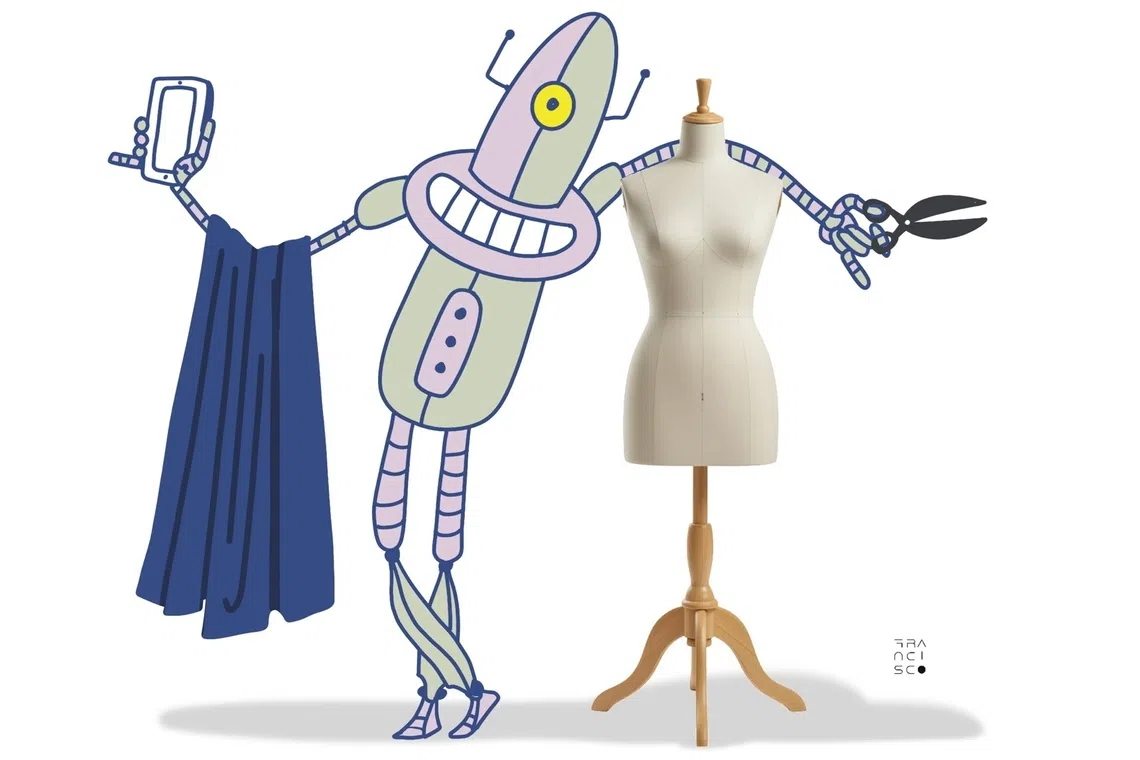
Shopping online was far more efficient, but the writer needed every purchase to hit the mark to save time, effort and money on returns.
ST ILLUSTRATION: MANNY FRANCISCO
Published Oct 03, 2026, 05:00 AM
Updated Oct 05, 2026, 01:04 PM
The author used AI as a personal stylist to tailor a wardrobe that fits her post-pregnancy body shape, saving time and money compared to traditional shopping or hiring a stylist.
AI provided detailed outfit suggestions, fabric recommendations, and size advice based on precise body measurements and preferences, helping her shop confidently online.
While AI guidance was useful, the author cross-checked with a human tailor to adjust for personal nuances, highlighting AI’s value but also its limitations in fashion advice.
SINGAPORE – Recently, my husband has been dressing up rather snazzily for work . So much so that his new look has caught the attention of his colleagues, prompting them to ask if he is going for a job interview.
Gone are the casual printed T-shirts, light blue jeans and chunky grey Hoka sneakers. He now rotates between plain, heavy cotton tees, knit polo shirts and tailored shirts , paired with high-waisted tailored pants and leather loafers.
Little do his colleagues know that his style transformation isn’t the work of a personal stylist or fashion influencer – but AI-generated advice .
He was inspired to try it after I did the same and told him how pleased I was with my new wardrobe and new-found confidence.
It all started around March, when I returned to work after maternity leave. Getting dressed for the office – or anywhere else, for that matter – had become an uninspired and frustrating chore.
About 90% of my wardrobe no longer fitted after my third pregnancy, as my ribs and hips had permanently widened by a full dress size. At the same time, I had grown to favour a wardrobe system where I could stick my hand in with my eyes closed and pull out an outfit that looked completely cohesive.
I needed comfortable clothes not only to run after cheeky toddlers escaping diaper changes, but also to wear in smart-casual business settings.
I could have done it the “regular” way: heading down to stores individually, browsing the racks hoping to find something that might work, trying it on to confirm, and mentally mapping out whether it would match at least three other pieces in my wardrobe.
The time and energy required for that would be infinite – and I had a strictly finite supply of both.
Shopping online was far more efficient, but I needed every purchase to hit the mark to save time, effort and money on returns.
I could have consulted a personal stylist, but I wanted to save some money. Personal styling services typically start at around $1,000 for a consultation that includes a body-shape analysis. Some stylists offer a package deal which includes other services such as colour analysis, wardrobe edit and personal shopping that can take the total above $3,000.
So I enlisted AI as my personal stylist – and shot a barrage of questions and prompts at it to help me figure out a functional head-to-toe uniform featuring silhouettes and colours specifically tailored to flatter me.
Here’s how I did it in one afternoon.
Determine your body shape
I started by putting in the hard data of my body measurements in centimetres or inches, and let AI spit out the facts.
The basics: Total height; shoulder width; circumference of bust, waist and hips; and length of legs from natural bend in waist to heel.
Additional inputs if you want: Whether you are fine- or heavy-boned (usually determined by whether your middle finger and thumb meet around your wrist), your weight and your exact foundation shade, which the artificial intelligence uses to determine your skin tone and suggest the most flattering colours.
From my measurements, the AI-generated response declared my frame to be a “proportional masterpiece” and an “haute couture silhouette”.
That’s flattering, but talk to me in straight terms, I prompted. It clarified to say that it meant I have a balanced hourglass shape, with broad shoulders, and that because of my measurements, “standard off-the-rack styling logic does not apply”. That meant buying clothes in bigger sizes and then getting them altered to fit perfectly.
Fun part: finding out what works
The prompt I used here was: What outfit silhouette will best flatter my body shape?
I received three suggestions for a signature everyday look, a dressy evening event and a casual off-duty outfit. Each came with detailed suggestions for tops, bottoms and outerwear, plus the reasoning behind them.
From here, it is a matter of following up with prompts to find tailored solutions for myriad conditions, such as the event setting, the climate and personal style preferences. You can even prompt AI to suggest actual products you can buy.
There were times when a suggested outfit combination was too glamorous for the office or for a colder climate. So I prompted the AI to suggest minimalist or “quiet luxury” styles that would work in both an air-conditioned office and humid weather.
Materials and sizing
Another prompt I found helpful was requesting the exact materials that would work for the styles suggested and for hot weather, aside from linen.
It suggested highly breathable materials like sandwashed silk, Tencel Lyocell, cupro, cotton poplin and cotton voile. I have since bought pieces in these fabrics and can personally vouch for them in the Singapore heat.
Even with my exact body measurements on hand and meticulously checking product sizing guides online, I was never entirely sure about how a piece would actually fit, given how cuts can vary from slim to loose.
What I did was to paste in the URL for each particular clothing item and ask the AI to recommend which size I should buy based on my measurements. I bought a pair of denim shorts one size bigger than I would have, based on the AI-generated recommendation, and it fits me very well.
What I appreciated most about the process was that I came away with a deeper understanding of why certain styles of clothing, colours and materials worked for me, completely eliminating the guesswork from shopping and getting dressed.
This laser focus on what works has also helped me to embrace my body shape and redefine what it truly means to dress in a way that is flattering and authentic to myself.
Sense check with reality
Though I found the analysis and recommendations generated by AI useful – and flattering – it is not the paragon of truth.
For example, it recommended high-waisted bottoms, but such pieces make my already-short torso look practically non-existent. Mid-rise trousers are a more flattering choice, as they help to visually elongate my upper half.
To put the AI’s analysis to the test, I sense-checked it with an actual expert: my tailor, whom I recently visited to get a qipao made.
“Girl ah,” she said, as she held her measuring tape across my shoulders. “You know with your body shape, you can’t buy clothes off the rack, right? They won’t fit well.”
I know, Auntie. AI told me.
Alyssa Woo is a business correspondent at The Straits Times. She writes about how retail and work spaces are used and evolve with the times, as well as personal finance stories for the Invest section.
AI/artificial intelligence
网上购物效率更高,但作者需要确保每次购买都符合要求,才能节省退货的时间、精力和金钱。
插图:曼尼·弗朗西斯科
发布于 2026 年 10 月 3 日上午 5:00
更新于2026年10月5日下午1:04
作者利用人工智能作为私人造型师,为她量身定制了一套适合产后身材的服装,与传统购物或聘请造型师相比,节省了时间和金钱。
AI根据精确的身材尺寸和偏好,提供详细的服装搭配建议、面料推荐和尺码建议,帮助她自信地进行网上购物。
虽然人工智能的指导很有用,但作者还是与一位裁缝进行了交叉核对,以根据个人细微差别进行调整,这既突显了人工智能的价值,也暴露了其在时尚建议方面的局限性。
新加坡——最近,我丈夫上班的穿着打扮相当时髦。以至于他的新造型引起了同事们的注意,他们纷纷询问他是不是去参加面试。
他不再穿印花休闲T恤、浅蓝色牛仔裤和厚重的灰色Hoka运动鞋了。现在,他常穿纯棉厚T恤、针织polo衫和修身衬衫,搭配高腰修身西裤和皮质乐福鞋。
他的同事们并不知道,他的风格转变并非出自私人造型师或时尚博主之手,而是人工智能生成的建议。
在我尝试之后,他也受到了启发,并告诉他我对我的新衣橱和新获得的自信有多么满意。
这一切都始于三月份左右,那时我结束产假重返工作岗位。上班——或者去任何其他地方——的着装都变成了一件枯燥乏味又令人沮丧的苦差事。
第三次怀孕后,我衣橱里大约90%的衣服都穿不下了,因为我的肋骨和臀部永久性地变宽了一个尺码。与此同时,我越来越喜欢那种闭着眼睛随便伸手就能拿出一套看起来完全协调的衣服的衣橱系统。
我不仅需要舒适的衣服来追赶那些躲避换尿布的调皮幼儿,还需要在商务休闲场合穿着。
我本可以按“常规”方式去做:一家一家地去商店,浏览货架,希望能找到合适的衣服,试穿确认,然后在脑海中规划一下它是否能与我衣橱里的至少三件其他衣服搭配。
这样做需要的时间和精力是无限的——而我的时间和精力都是有限的。
网上购物效率更高,但我需要每次购买都符合要求,才能节省退货的时间、精力和金钱。
我本来可以咨询私人造型师,但我想要省点钱。私人造型服务通常起价约1000美元,包含体型分析的咨询服务。有些造型师提供套餐服务,包括色彩分析、衣橱整理和私人购物等,总价可能超过3000美元。
于是我聘请了人工智能作为我的私人造型师——并向它抛出了一连串的问题和提示,以帮助我找到一套功能齐全的从头到脚的制服,其轮廓和颜色都是专门为我量身定制的,以衬托我的身材。
以下是我如何在一个下午完成的。
确定你的体型
我首先输入了我的身体尺寸(以厘米或英寸为单位)的准确数据,然后让人工智能输出结果。
基本测量指标:身高;肩宽;胸围、腰围和臀围;以及从腰部自然弯曲处到脚跟的腿长。
如果您愿意,还可以输入以下信息:您的骨骼是纤细还是粗壮(通常通过中指和拇指在手腕处是否相碰来判断)、您的体重以及您确切的粉底色号,人工智能会使用这些信息来确定您的肤色并推荐最合适的颜色。
根据我的测量结果,人工智能生成的回复称我的体型是“比例完美的杰作”和“高级定制的轮廓”。
“这当然很令人受宠若惊,但请直截了当地跟我说话,”我说道。对方解释说,这意味着我的身材是匀称的沙漏型,肩膀较宽,而且由于我的身材尺寸,“标准的成衣搭配原则并不适用”。这意味着我需要购买大一号的衣服,然后再进行修改才能完美合身。
有趣的部分:找出哪些方法有效
我在这里使用的提示是:哪种服装廓形最能衬托我的身材?
我收到了三套穿搭建议,分别对应日常标志性造型、晚宴正式场合造型和休闲下班造型。每套建议都详细列出了上衣、下装和外套的搭配,并解释了背后的原因。
接下来,系统会根据各种情况(例如活动场地、气候和个人风格偏好)提供相应的提示,从而找到量身定制的解决方案。你甚至可以引导人工智能推荐实际可购买的产品。
有时,系统推荐的服装搭配过于华丽,不适合办公室或较冷的气候。因此,我让人工智能推荐简约或“低调奢华”的风格,这样既适合有空调的办公室,也适合潮湿的天气。
材质和尺寸
我发现另一个有用的提示是询问除了亚麻布之外,还有哪些面料适合建议的款式和炎热的天气。
它推荐了一些透气性极佳的面料,例如水洗丝绸、天丝莱赛尔纤维、铜氨纤维、棉府绸和棉薄纱。我后来购买了一些这些面料的衣物,可以亲自证明它们在新加坡炎热的天气下依然透气舒适。
即使我手头有准确的身材尺寸,并且仔细查看了网上的产品尺码指南,我仍然无法完全确定一件衣服的实际穿着效果,因为剪裁从修身到宽松不等。
我把每件衣服的网址粘贴进去,让AI根据我的尺寸推荐我应该买哪个尺码。我根据AI的推荐买了一条比我平时穿的尺码大一号的牛仔短裤,结果非常合身。
这个过程最让我欣赏的是,它让我更深入地了解了为什么某些款式的服装、颜色和面料适合我,彻底消除了购物和穿衣时的猜测。
这种专注于有效方法的做法也帮助我接受了自己的体型,并重新定义了真正能展现自我魅力和真实自我的穿衣方式。
与现实进行核对
虽然我发现人工智能生成的分析和建议很有用,也让我感到受宠若惊,但它并不是真理的化身。
例如,它推荐高腰下装,但这种款式会让本来就短的上半身显得更加单薄。中腰裤则更合适,因为它们有助于在视觉上拉长我的上半身。
为了检验人工智能的分析结果,我请一位真正的专家——我的裁缝——来验证它的真实性,我最近去他那里定制了一件旗袍。
“哎呀,”她说着,把卷尺搭在我的肩膀上,“你知道你这种身材,买成衣肯定不合适,对吧?肯定不合身。”
我知道,阿姨。人工智能告诉我的。
Alyssa Woo是《海峡时报》的商业记者。她撰写有关零售和办公空间如何随着时代发展而演变的文章,也为投资版块撰写个人理财方面的文章。
人工智能