General Dynamics taps Primordial to build AI assistant for combat vehicle crews通用动力公司委托Primordial公司为作战车辆乘员打造人工智能助手
Like a militarized Alexa, Primordial Labs’ Anura AI is trained to understand soldiers’ voice commands and translate them into specific actions — but not deadly ones.
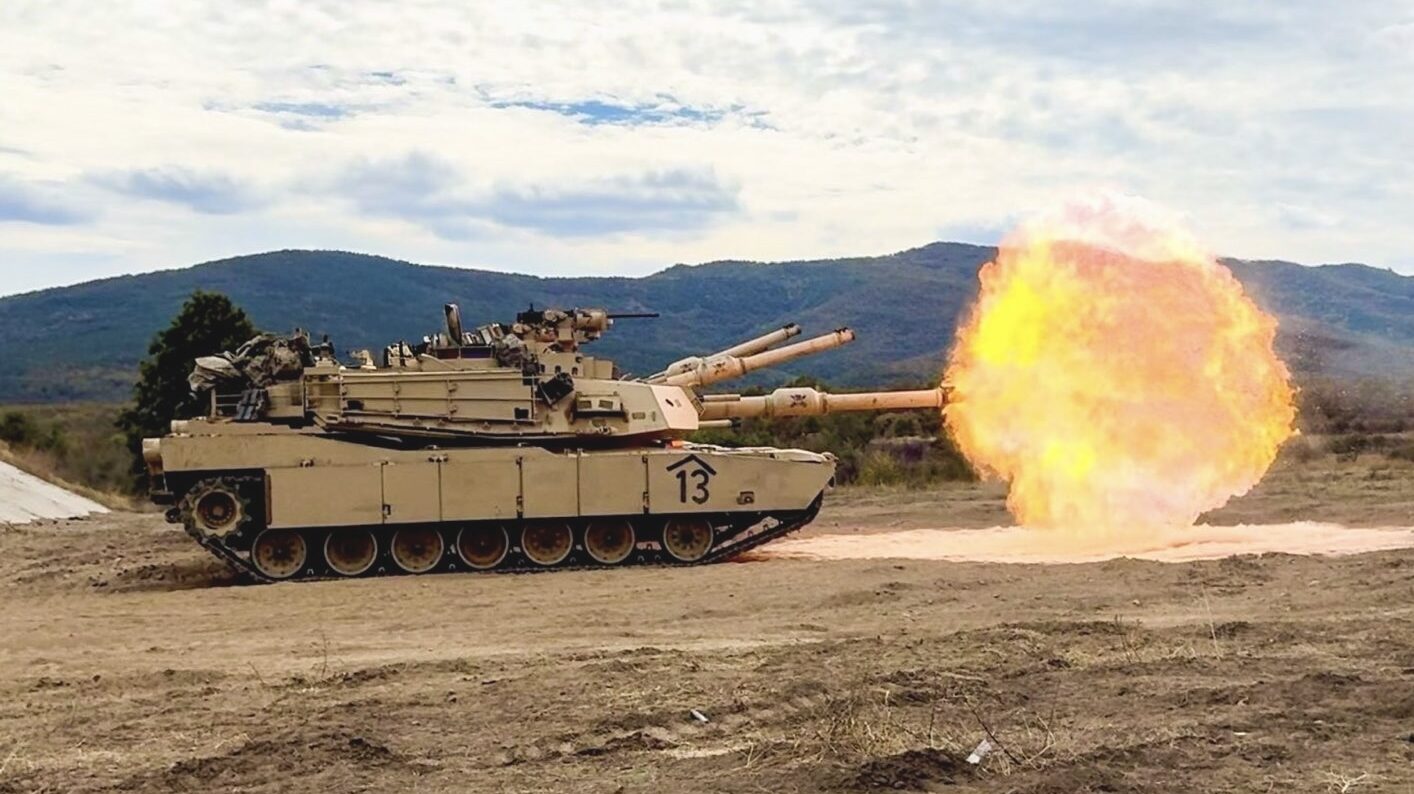
An M1A2 Abrams main battle tank with 1-16th Infantry, 1st Armored Brigade Combat Team, 1st Infantry Division, conducts a Live Fire Accuracy Screening Test Sept. 28, 2025, on Novo Selo Training Area, Bulgaria. (U.S. Army photo by Spc. Brandi Frizzell)
WASHINGTON — General Dynamics Land Systems has partnered with Primordial Labs to bring AI voice-control to its combat vehicles, ranging from the iconic M1 tank to the next-gen XM30, the companie s plan to an nounce later this morning.
Coming jus t days ahead of the massive annual AUSA trade shadow in DC, this odd couple combines a classic heavy-metal military manufacturer, which has built the M1 for over 40 years , with a young AI startup best known for demonstrations with small drones.
But Primordial built its Anura voice-control system to be platform-agnostic — it’s also working on AI assistance for Army helicopter crews — and adaptable to any kind of vehicle, co-founder Lee Ritholz told Breaking Defense. “We’re [used to] doing everything on a really tiny processor,” he said. “As we get to these larger platforms, it becomes almost a luxury” by comparison.
GDLS, for its part, sees tremendous potential for voice control to help increasingly overburdened human soldiers manage an ever-growing array of complex systems, from tactical data networks to AI target recognition , company officials said in interviews.
“There’s a bunch of technology being thrown at soldiers,” explained Salem Auclair, a 20-year Army veteran who helped write the official requirements for the XM30 before joining GDLS. The XM30 program, for which GDLS is competing with American Rheinmetall , actually calls for shrinking the crew from three soldiers on today’s M2 Bradley to two on XM30, while adding more technology.
“These are the same 18- to 22-year-old soldiers that that are driving these vehicles now, and we’re giving them more complex system,” Auclair said. “Well, how can we help them use those systems? Give them a mechanism that they’re used to, their voice.”
Geoff Norman, GDLS’s director of strategy, a retired Army general who worked on the next-gen vehicle program, said, “having to flip switches and push buttons and type on keyboards and do the manual tasks in a combat vehicle, on the move, in the dark, in bad weather … will be a challenge in the future, especially given that those tasks are going to be done by a smaller crew.”
With AI voice control, by contrast, a soldier just needs to give a verbal order, and the software should be smart enough to take care of the rest, the two companies’ experts explained. In many ways, Anu ra is designed to act as an additional, virtual crew member, to which the human soldiers can delegate a wide range of tasks — especially time-consuming or technically complex ones — so they can stay focused on the fight. Company officials said it can even help manage other automated systems, for example by telling an AI threat-detection system to scan for flank attacks while the humans focus a target up ahead.
However, Anura won’t be able to fire a vehicle’s weapons, the companies emphasized.
“We’re not talking to the fire control system and doing … lethality tasks,” Norman said. “What we’ve chosen are things like doing communications, adjusting which radio net you’re on, sending reports that otherwise you would have to type in, adjusting the camera view that you’re looking out of the vehicle on. Those things are easy to verify and validate for a safety case.”
Anura isn’t using generative AI, the kind of superpowered but unpredictable chatbot that has roiled the world since the launch of ChatGPT.
“We can’t hallucinate because we don’t generate things,” Ritholtz said. “We’re not using generative AI.”
Instead, he explained, Anura uses more narrowly focused and predictable forms of machine learning, which in turn serve as translators between the human soldier’s voice commands and the complex, often user-unfriendly interfaces of military systems.
Anura isn’t installed on the current XM30 prototypes now in testing by the Army, Norman said, but GDLS aims to offer it on future upgrades, both to XM30 and to legacy vehicles like the M1 tank and Stryker troop carrier.
2025年9月28日,在保加利亚新塞洛训练场,隶属于美国陆军第1步兵师第1装甲旅战斗队第1-16步兵团的一辆M1A2艾布拉姆斯主战坦克正在进行实弹射击精度测试。(美国陆军下士布兰迪·弗里泽尔摄)
华盛顿——通用动力陆地系统公司与Primordial Labs合作,将人工智能语音控制技术引入其作战车辆,从标志性的M1坦克到下一代XM30坦克,该公司计划于今天上午晚些时候宣布这一消息。
就在一年一度的 AUSA 贸易展在华盛顿特区盛大开幕前几天,这对奇特的组合将一家拥有 40 多年 M1 步枪制造经验的经典重型金属军工制造商,与一家以小型无人机演示而闻名的年轻人工智能初创公司结合在一起。
但Primordial公司联合创始人Lee Ritholz告诉Breaking Defense,该公司打造的Anura语音控制系统旨在实现平台无关性——该公司还在为陆军直升机机组人员开发人工智能辅助系统——并可适应任何类型的车辆。“我们(过去)习惯于在非常小的处理器上完成所有工作,”他说。“但随着我们应用到这些更大的平台上,相比之下,这几乎成了一种奢侈。”
GDLS公司官员在采访中表示,该公司认为语音控制具有巨大的潜力,可以帮助日益不堪重负的士兵管理日益复杂的系统,从战术数据网络到人工智能目标识别。
“现在士兵们要接受的新技术太多了,”萨勒姆·奥克莱尔解释道。他是一名有着20年军龄的老兵,在加入通用动力激光系统公司(GDLS)之前,曾参与编写XM30的官方需求。XM30项目(GDLS正与美国莱茵金属公司竞争)实际上要求将目前M2布雷德利步兵战车的乘员人数从三人减少到两人,同时还要增加更多技术。
奥克莱尔说:“驾驶这些车辆的还是那些18到22岁的士兵,而我们却要给他们配备更复杂的系统。那么,我们该如何帮助他们使用这些系统呢?给他们提供他们熟悉的机制,让他们能够使用自己的语音。”
通用动力陆地系统公司 (GDLS) 战略总监杰夫·诺曼 (Geoff Norman) 是一位退役陆军将军,曾参与下一代车辆项目。他表示:“在战斗车辆中,在行进中、在黑暗中、在恶劣天气下,还要拨动开关、按下按钮、在键盘上打字以及执行手动任务……这在未来将是一个挑战,尤其是在这些任务将由较少的人员完成的情况下。”
相比之下,使用人工智能语音控制时,士兵只需发出语音指令,软件就能智能地处理其余工作,两家公司的专家解释道。在很多方面,Anu ra 的设计初衷是作为一名额外的虚拟船员,士兵可以将各种任务——尤其是耗时或技术复杂的任务——委托给它,从而专注于战斗。公司官员表示,它甚至可以帮助管理其他自动化系统,例如,当士兵集中精力瞄准前方目标时,它可以指示人工智能威胁检测系统扫描侧翼攻击。
不过,两家公司强调,Anura 无法发射车辆上的武器。
诺曼说:“我们并没有与火控系统进行通信,也没有执行……致命性任务。我们选择的是一些通信操作,比如调整无线电网络、发送原本需要手动输入的报告、调整车外摄像头的视角等等。这些操作都很容易验证,以确保安全。”
Anura 没有使用生成式人工智能,这种功能强大但不可预测的聊天机器人自 ChatGPT 发布以来就一直在席卷全球。
“我们无法产生幻觉,因为我们不生成任何东西,”里索尔兹说。“我们没有使用生成式人工智能。”
他解释说,Anura 使用的是更集中、更可预测的机器学习形式,这些机器学习反过来充当人类士兵的语音命令和复杂、通常对用户不友好的军事系统界面之间的翻译器。
诺曼表示,Anura系统目前尚未安装在陆军正在测试的XM30原型车上,但通用动力陆地系统公司(GDLS)计划在未来的升级中提供该系统,包括XM30以及M1坦克和斯特瑞克装甲运兵车等传统车辆。