Bangladesh’s first nuclear plant brings hope for power, worries for neighbours孟加拉国首座核电站为电力带来希望,却也令邻国担忧。
PABNA (Bangladesh), Oct 7 — Bangladesh is preparing to switch on its first nuclear power plant, a long-delayed project promising relief from chronic electricity shortages —...
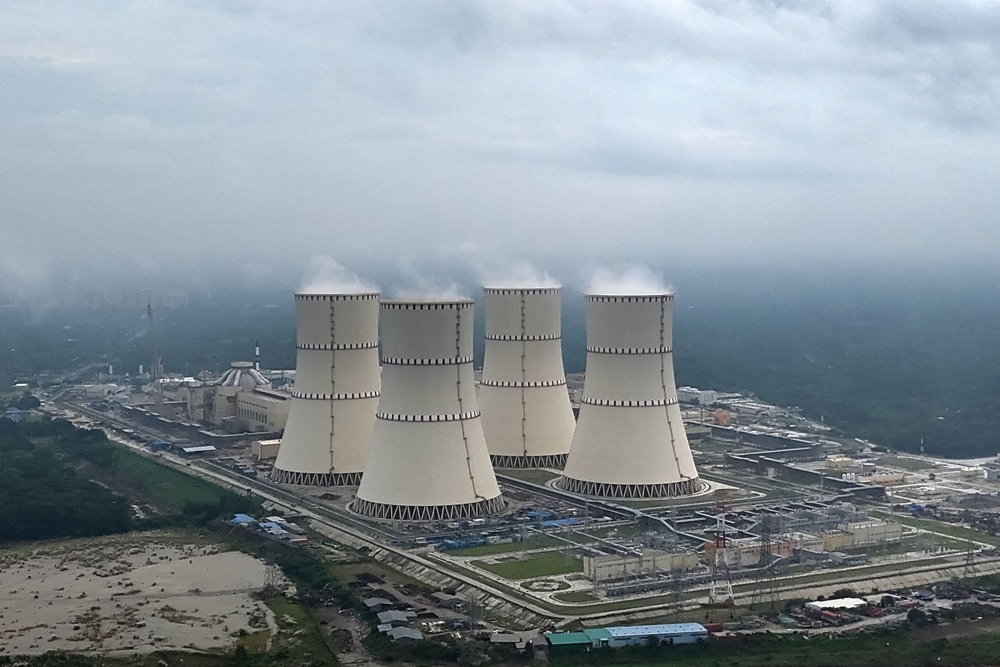
Bangladesh's Rooppur nuclear plant, costing US$13 billion, aims to address power shortages and supply over 10 per cent of the nation's electricity needs.
Constructed with Russian partnership, the project has transformed the local economy but sparked safety concerns among nearby residents.
Despite challenges like delays and corruption allegations, many Bangladeshis anticipate reliable electricity once the plant becomes operational.
PABNA (Bangladesh), Oct 7 — Bangladesh is preparing to switch on its first nuclear power plant, a long-delayed project promising relief from chronic electricity shortages — even as some fear living beside it.
The 2.4-gigawatt Rooppur nuclear plant, a US$13-billion (RM53.1 billion) project more than a decade in the making, has transformed the once sleepy nearby village of the same name, bringing Russian workers, new businesses and jobs.
Once fully operational, its two reactors are expected to supply more than 10 per cent of electricity demand in the South Asian nation of 170 million people, which has been hit hard by the fuel crisis sparked by the conflict in the Middle East.
For Md Zahedul Hasan, managing director of state-owned Nuclear Power Plant Company Bangladesh, the giant complex represents the culmination of a decades-old ambition to bring nuclear power to the country.
The plant’s first reactor is scheduled to be turned on by the end of this year, and the second unit “will be operational within a year”, Hasan said at the site on the banks of the Padma River, 150 kilometres (93 miles) west of Dhaka.
Bangladesh’s power sector is dominated by fossil fuels, particularly natural gas, with coal, oil and renewables making up the rest.
The project, built with Russian state nuclear corporation Rosatom, has also brought an unlikely Russian enclave to rural Bangladesh.
Thousands of Russian workers have spent years building and installing equipment, with a residential complex, shops and restaurants springing up around them.
Shop signs appear in Bangla, English and Russian, while some restaurants serve borscht soup alongside local dishes.
Alexander Vladimirovich Skvortsov, a Russian installation technician, said he had a choice between working in Turkey or Bangladesh. He chose Rooppur, moving there with his family in 2024.
“When I first saw the construction site at Rooppur, I realized how much work lay ahead on this project... honestly, Rooppur changed me and my life,” he told AFP.
The project has also transformed the local economy.
Md Emon Khan, 28, left his garment-factory job in Dhaka and returned to Rooppur, where he now sells vegetables and fruit to workers.
“I can speak a bit of Russian, and they can speak Bangla, too,” he said.
Plant officials say stringent safety measures have been followed and lessons from previous nuclear accidents were incorporated into the project.
Standing near a radiation monitoring tower and an alarm post, 15-year-old Mohammad Nafiz said he saw little to fear.
“We are glad that Rooppur is known to the world, and my friends and I hope that we will work at the plant after graduating from engineering schools,” he added.
Not everyone shares that confidence.
Md Yunus Ali, 80, whose home is a 15-minute walk from the plant, said opposition to building a nuclear facility in the densely populated area dates back decades.
“A few days ago, they ran a compressor test with a big bang... even the children who were asleep woke up in fear,” said Ali, a retired paper mill worker.
“I am old now, and I am not afraid for my life... but I have children and grandchildren, and I want safety for them.”
The ambition to build a nuclear power plant at Rooppur dates back to the 1960s.
Several attempts came after independence, including approaches to Saudi Arabia and France, and talks with China and South Korea. No deals materialised.
Bangladesh finally signed an agreement with Moscow in 2015, with the Russian state offering a loan covering about 90 per cent of the project’s original cost.
Construction began in 2017.
The project has since faced delays, including disruption from the Covid-19 pandemic and sanctions on Russia after its invasion of Ukraine, which complicated equipment deliveries and payments.
There have also been corruption allegations surrounding the project, including against ousted former prime minister Sheikh Hasina and members of her family. They have rejected the accusations.
For most Bangladeshis, however, the biggest question is when Rooppur will finally deliver reliable electricity.
Belly Begum, a 55-year-old farmer, struggles to irrigate her land during frequent power cuts.
“I wish the Rooppur nuclear power plant goes into operation soon, and we reap the full benefit,” she said.
“I hope we will get electricity for 24 hours without interruption, as the plant is near my house.” — AFP
Saudi-led coalition says 82 Houthi targets destroyed across Yemen
Israeli strikes kill five in Gaza on Oct 7 anniversary
Turkish NGOs see COP31 as rare chance to push climate action despite crackdown fears
MOF: Malaysia to pursue continued legal action, global cooperation for maximum 1MDB asset recovery
Felda’s outstanding government-guaranteed loans stand at RM5.88b, says MOF
LCS 1 delivery pushed to April 2027, Defence Ministry issues damages notice to Lunas, says minister
孟加拉国的鲁普尔核电站耗资 130 亿美元,旨在解决电力短缺问题,并满足该国 10% 以上的电力需求。
该项目由俄罗斯参与建设,改变了当地经济,但也引发了附近居民的安全担忧。
尽管面临延误和腐败指控等挑战,许多孟加拉国人仍然期待该电厂投入运营后能够获得可靠的电力供应。
巴布纳(孟加拉国),10 月 7 日——孟加拉国正准备启用其首座核电站,这是一个长期延误的项目,有望缓解长期电力短缺问题——尽管有些人担心住在核电站旁边会带来危险。
耗资 130 亿美元(531 亿令吉)、历经十余年建设的 2.4 吉瓦鲁普尔核电站,改变了附近曾经宁静的同名村庄,带来了俄罗斯工人、新企业和就业机会。
一旦全面投入运营,其两座反应堆预计将满足这个拥有 1.7 亿人口的南亚国家 10% 以上的电力需求。该国曾因中东冲突引发的燃料危机而遭受重创。
对于孟加拉国国有核电站公司总经理 Md Zahedul Hasan 而言,这座巨型综合体代表着数十年来将核电引入该国的雄心壮志的最终实现。
哈桑在位于达卡以西 150 公里(93 英里)帕德玛河畔的工厂现场表示,该工厂的第一台反应堆计划于今年年底投入运行,第二台反应堆“将在一年内投入运行”。
孟加拉国的电力行业以化石燃料为主,特别是天然气,煤炭、石油和可再生能源仅占其余部分。
该项目由俄罗斯国家原子能公司(Rosatom)参与建设,也给孟加拉国农村地区带来了一个意想不到的俄罗斯飞地。
数千名俄罗斯工人花费数年时间建造和安装设备,住宅区、商店和餐馆在周围拔地而起。
商店招牌上会显示孟加拉语、英语和俄语,一些餐馆还会在当地菜肴之外供应罗宋汤。
俄罗斯安装技师亚历山大·弗拉基米罗维奇·斯克沃尔佐夫表示,他可以选择去土耳其或孟加拉国工作。他选择了鲁普尔,并于2024年带着家人搬到那里。
“当我第一次看到鲁普尔的建筑工地时,我意识到这个项目还有很多工作要做……说实话,鲁普尔改变了我和我的生活,”他告诉法新社。
该项目也改变了当地经济。
28 岁的 Md Emon Khan 辞去了在达卡服装厂的工作,回到鲁普尔,现在在那里向工人们出售蔬菜和水果。
“我会说一点俄语,他们也会说孟加拉语,”他说。
工厂官员表示,他们遵循了严格的安全措施,并将以往核事故的教训融入到项目中。
15岁的穆罕默德·纳菲兹站在辐射监测塔和警报哨附近,他说他没看到什么可怕的事情。
“我们很高兴鲁普尔闻名于世,我和我的朋友们希望从工程学院毕业后能到这家工厂工作,”他补充道。
并非每个人都拥有这种自信。
80 岁的 Md Yunus Ali 的家距离核电站步行 15 分钟,他说,反对在人口稠密的地区建造核设施的呼声可以追溯到几十年前。
“几天前,他们进行了一次压缩机测试,结果发出了一声巨响……就连睡着的孩子都被吓醒了,”退休造纸厂工人阿里说道。
“我现在年纪大了,虽然不担心自己的生命安全……但我有孩子和孙子孙女,我希望他们安全。”
在鲁普尔建造核电站的雄心壮志可以追溯到上世纪60年代。
独立后曾多次尝试,包括与沙特阿拉伯和法国接触,以及与中国和韩国进行谈判,但均未达成协议。
2015年,孟加拉国最终与莫斯科签署了一项协议,俄罗斯政府提供了一笔贷款,涵盖了该项目原成本的约90%。
工程于2017年开始。
此后,该项目遭遇了延误,包括新冠疫情造成的干扰以及俄罗斯入侵乌克兰后受到的制裁,这些都使设备交付和付款变得复杂。
该项目也牵涉到腐败指控,其中包括针对被罢黜的前总理谢赫·哈西娜及其家人的指控。他们否认了这些指控。
然而,对于大多数孟加拉国人来说,最大的问题是鲁普尔何时才能最终提供可靠的电力。
55岁的农民贝莉·贝古姆在频繁停电的情况下艰难地灌溉着她的土地。
“我希望鲁普尔核电站能尽快投入运营,让我们能够充分受益,”她说。
“我希望我们能24小时不间断供电,因为发电厂就在我家附近。”——法新社
沙特领导的联军称在也门摧毁了82个胡塞武装目标。
以色列空袭加沙造成五人死亡,当天是10月7日周年纪念日。
尽管担心遭到镇压,土耳其非政府组织仍将COP31视为推动气候行动的难得机会。
财政部:马来西亚将继续采取法律行动,并寻求全球合作,以最大限度地追回1MDB资产。
财政部表示,联邦土地发展局(Felda)未偿还的政府担保贷款总额为58.8亿令吉。
LCS 1交付推迟至2027年4月,国防部向卢纳斯发出损害赔偿通知,部长表示