Recent Taiwan simulation highlights US cyberdefense gaps against China, experts warn专家警告:近期台湾的模拟演习凸显了美国网络防御体系在对抗中国方面的漏洞
Organizers of a cyber exercise say Washington needs to prepare for attacks that both disrupt civilian services and pressure Taipei without triggering outright military conflict.
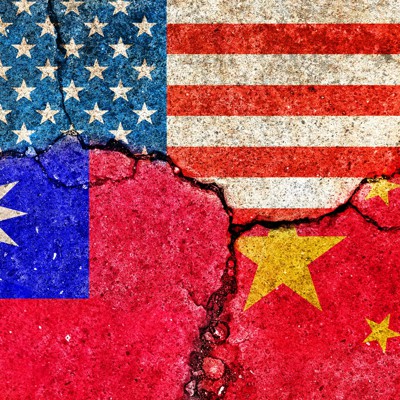
Barks_japan / Getty Images
Organizers of a cyber exercise say Washington needs to prepare for attacks that both disrupt civilian services and pressure Taipei without triggering outright military conflict.
The United States devotes too little attention toward preparedness for a Chinese campaign of cyberattacks and economic pressure against Taiwan, organizers of a recent war game warned Tuesday, arguing that gaps between military and civilian planning could delay assistance to the island.
The Foundation for Defense of Democracies exercise examined how Beijing could disrupt Taiwan’s communications networks to extract political concessions without launching an invasion. The simulation was held in Taiwan in late September, and its findings were briefed to Taiwanese President Lai Ching-te and his national security team, according to the think tank.
Mark Montgomery, an FDD senior fellow and retired Navy rear admiral who helped lead the exercise, said Washington routinely rehearses possible military conflict over Taiwan but is less systematic about preparing for the cyber operations he considers more likely to occur.
“The Department of Defense sees it as a problem for the other federal agencies, and the other federal agencies don’t have a budget or a systematic process for running these kinds of tabletops,” he said in a briefing with reporters.
The exercise began with localized cellular disruptions, information manipulation and pressure on satellite connectivity. A second phase escalated to damaged undersea cables, disabled electrical substations supporting telecommunications and strained backup networks, according to Craig Singleton, FDD’s China program director, who played China in the simulation.
The aim was to make daily life less reliable and undermine confidence in Taiwan’s government while avoiding a direct confrontation with the United States, Singleton said. Communications outages could also compound problems in other sectors, disrupting payments, slowing emergency coordination and making power failures harder to manage.
Taiwanese participants rerouted traffic and activated alternatives. But the harder test was whether those systems could sustain services for weeks as Beijing studied the response and targeted the backups, he said.
Asked by Nextgov/FCW about lessons from Salt Typhoon, the Chinese hacking campaign that breached U.S. and global telecommunications networks, Singleton said that operation informed the scenario, but it wasn’t named directly in the exercise packets.
A separate Chinese hacking collective dubbed Volt Typhoon—which seeks to establish access to critical infrastructure for disruptive or destructive attacks during a major crisis or conflict—was also not mentioned directly, but its activities also influenced the war game.
“If an adversary already understands the network, its dependencies and its fallback pathways, then disruption can become much more targeted and adaptive,” Singleton said.
Montgomery said policymakers also tend to underestimate recovery times for systems that are taken down, especially when restoring one service depends on bringing others back online. He described that as a recurring problem in exercises across several countries.
“You know they’re speaking in minutes and hours, and my experience is days or weeks,” he said.
The warnings underscore the range of threats Taiwan faces beyond a possible Chinese invasion. In its 2026 worldwide threat assessment , the Office of the Director of National Intelligence said Chinese leaders did not currently plan to invade Taiwan in 2027 and had no fixed timeline for unification. Beijing preferred achieving its goal without force, the assessment said, while continuing to develop military options.
More recently, U.S. officials have assessed an invasion before 2028 as increasingly unlikely , citing military readiness delays and China’s interest in Taiwan’s next presidential election.
China claims Taiwan as its territory, although it has never governed the self-ruled island, and views bringing the island under its control as central to national unification. China has not ruled out using force, but cyberattacks and economic pressure could offer ways to weaken Taiwan’s resistance and push its leaders toward concessions without the risks of an invasion.
Montgomery separately warned that early 2028 could bring intensified cyber and economic coercion if Taiwan’s Democratic Progressive Party wins a fourth consecutive presidential election. FDD hopes to run future exercises with congressional staff and federal agencies, he added.
NEXT STORY: Pentagon, FBI personnel-data breaches raise questions
Barks_japan / Getty Images
网络演习的组织者表示,华盛顿需要做好准备,应对那些既能扰乱民用服务又能向台北施压,但又不引发直接军事冲突的攻击。
周二,最近一次战争演习的组织者警告说,美国对中国可能对台湾发动的网络攻击和经济施压的准备工作重视不足,他们认为军事和民事计划之间的差距可能会延误对台湾的援助。
保卫民主基金会开展的演习旨在研究北京如何在不发动入侵的情况下破坏台湾的通信网络,从而迫使台湾做出政治让步。据该智库称,此次模拟演习于9月下旬在台湾举行,演习结果已汇报给台湾总统赖清德及其国家安全团队。
FDD 高级研究员、退役海军少将马克·蒙哥马利曾协助领导此次演习,他表示,华盛顿经常就可能发生的台湾军事冲突进行演练,但在准备他认为更有可能发生的网络行动方面却不够系统。
他在向记者通报情况时说:“国防部认为这是其他联邦机构的问题,而其他联邦机构没有预算或系统流程来运行这类桌面演练。”
演习伊始,模拟内容包括局部蜂窝网络中断、信息篡改和卫星连接压力。据FDD中国项目主管克雷格·辛格尔顿(Craig Singleton)介绍,第二阶段演习升级,涉及海底电缆损坏、支持电信的变电站瘫痪以及备用网络压力增大。辛格尔顿在模拟演习中扮演中国一方。
辛格尔顿表示,此举旨在降低台湾民众日常生活的可靠性,削弱他们对台湾政府的信任,同时避免与美国发生直接对抗。通信中断还可能加剧其他领域的困境,例如扰乱支付、延缓应急协调以及使停电事故更难应对。
台湾方面重新规划了交通路线并启用了备用方案。但他表示,更严峻的考验在于,在北京方面研究应对措施并针对备用方案展开调查期间,这些系统能否维持数周的服务。
当 Nextgov/FCW 询问 Singleton 关于“盐台风”(中国黑客攻击美国和全球电信网络的行动)的经验教训时,Singleton 表示,该行动为演习场景提供了参考,但演习资料中并未直接提及该行动。
另一个名为“伏特台风”(Volt Typhoon)的中国黑客组织虽然没有被直接提及,但其活动也对这场战争游戏产生了影响。该组织试图在重大危机或冲突期间获取关键基础设施的访问权限,以进行破坏性或毁灭性攻击。
“如果对手已经了解了网络、其依赖关系及其备用路径,那么破坏活动就会变得更加有针对性和适应性,”辛格尔顿说。
蒙哥马利表示,政策制定者往往低估了系统宕机后的恢复时间,尤其是在恢复一项服务依赖于其他服务恢复在线的情况下。他指出,这是多个国家演习中反复出现的问题。
“你知道他们说的时间是以分钟或小时计算的,而我的经验是以天或周计算的,”他说。
这些警告凸显了台湾面临的威胁范围,远不止中国可能的入侵。美国国家情报总监办公室在其2026年全球威胁评估报告中指出,中国领导人目前没有在2027年入侵台湾的计划,也没有统一的具体时间表。评估报告称,北京倾向于以非武力方式实现其目标,同时也在继续发展军事选项。
最近,美国官员评估认为,在 2028 年之前入侵台湾的可能性越来越小,理由是军事准备工作有所延误,以及中国对台湾下届总统选举的兴趣。
中国声称台湾是其领土,尽管从未实际统治过这个自治岛屿,但中国仍将台湾纳入其控制之下视为国家统一的核心。中国并未排除使用武力的可能性,但网络攻击和经济压力或许能在不冒入侵风险的情况下削弱台湾的抵抗力量,迫使其领导人做出让步。
蒙哥马利另行警告称,如果台湾民进党连续第四次赢得总统大选,2028年初可能会出现网络和经济胁迫加剧的情况。他还补充说,FDD希望未来能与国会工作人员和联邦机构开展联合演习。
下一篇报道:五角大楼和联邦调查局人员数据泄露事件引发质疑