National Climate Change Bill to institutionalise mandatory carbon accounting, says Arthur Kurup亚瑟·库鲁普表示,《国家气候变化法案》将把强制性碳核算制度化。
KUALA LUMPUR, Oct 8 — The proposed National Climate Change Bill will institutionalise mandatory carbon accounting and clear governance to give businesses the legal certainty...
The proposed National Climate Change Bill will enforce mandatory carbon accounting and governance, aligning Malaysia's environmental goals with national energy and industrial plans.
The National Carbon Market Policy ensures a robust regulatory framework for trading carbon credits, boosting domestic and global investor confidence.
The Green Technology Financing Scheme 5.0 and the Green Investment Tax Allowance improve financing and viability for green projects, supported by expanded tools like the MyHIJAU Mark.
KUALA LUMPUR, Oct 8 — The proposed National Climate Change Bill will institutionalise mandatory carbon accounting and clear governance to give businesses the legal certainty needed to decarbonise.
Natural Resources and Environmental Sustainability (NRES) Minister Datuk Seri Arthur Joseph Kurup said the legislation, alongside the National Climate Change Policy 2.0, would align Malaysia’s environmental agenda with the National Energy Transition Roadmap (NETR) and New Industrial Master Plan 2030 (NIMP 2030).
He said the measure would also strengthen investor confidence and encourage domestic and international investment in clean technologies.
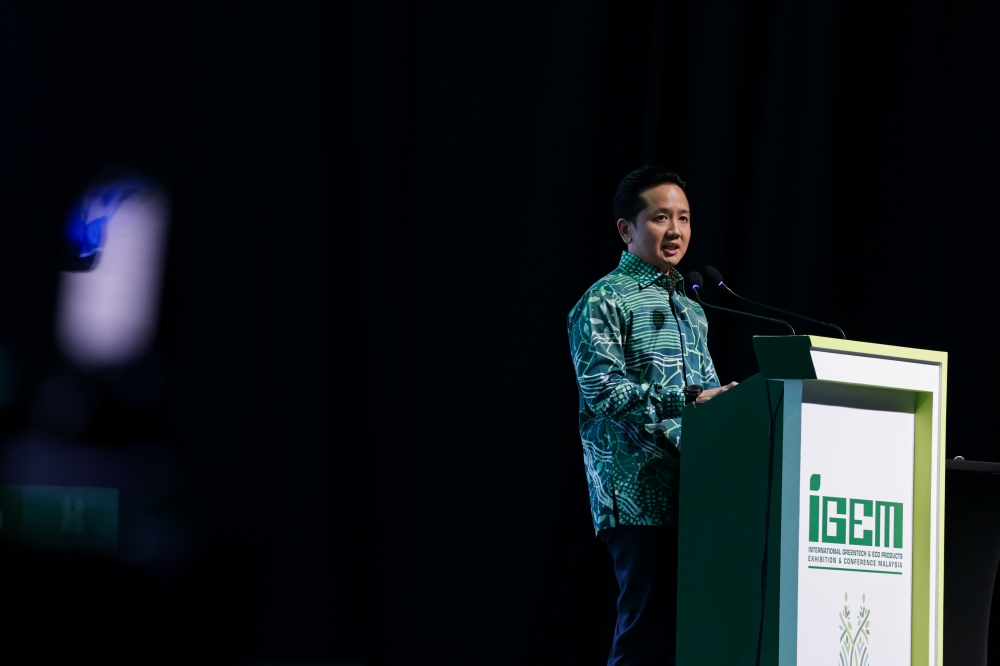
“With our upcoming National Climate Change Bill, we will institutionalise mandatory carbon accounting and clear governance to give businesses the legal certainty they need to decarbonise,” he said in his opening remarks at the 17th International Greentech and Eco Products Exhibition and Conference Malaysia (IGEM) 2026, held alongside the Kuala Lumpur Sustainability Summit (KLSS) 2026 at Kuala Lumpur Convention Centre, today.
The event was officiated by Deputy Prime Minister Datuk Seri Fadillah Yusof, who is also Minister of Energy Transition and Water Transformation.
Arthur said the National Carbon Market Policy, launched in April, established a transparent and high-integrity regulatory framework for voluntary and compliance markets, with clear Monitoring, Reporting and Verification (MRV) standards aligned with Article 6 of the Paris Agreement.
He said the policy would provide domestic developers and global investors with the regulatory certainty needed to trade carbon credits, particularly in driving decarbonisation across hard-to-abate sectors.
“Through the Green Technology Financing Scheme 5.0, we support the industry by providing government guarantees that help reduce financing risks and ease access to financing for green projects,” he said.
He noted that the scheme, together with the Green Investment Tax Allowance, would improve the viability of green investments and give project developers greater confidence to turn green ambitions into bankable projects.
He said the Malaysian Green Technology and Climate Change Corporation (MGTC) was also expanding practical tools such as the MyHIJAU Mark to verify green products and services, while enabling Malaysian businesses to access government green procurement and high-value green supply chains across Asean.
At the sub-national level, Arthur said the ministry was working with state governments and local authorities to accelerate green technology adoption, including through the Low Carbon Cities Framework, which enables local councils to measure, manage and reduce urban emissions.
He said IGEM and KLSS complemented each other by connecting green technologies with industry and local leaders, while bringing regulators, financiers and thought leaders together on governance, taxonomy and transition finance needed to scale green technologies.
The minister said IGEM had generated more than RM86 billion in business leads and attracted over 700,000 global participants since its inception, while IGEM 2025, held alongside the inaugural KLSS, generated RM7.3 billion in potential green investments through structured business-matching sessions.
The 17th edition of IGEM, themed “Race Towards Net Zero: Action Beyond Boundaries”, is being held from October 7 to 9. It is organised by the NRES and its agency, MGTC. — Bernama
Anwar personally contacts Indonesian President Prabowo over haze crisis
Selangor govt, state education dept to discuss measures to address haze and Super El Nino, says MB
Hazy math: DoE explains why your AQI says 250 when the official API is 175
King calls for schools to close if API stays above 150-180 for prolonged period
拟议的《国家气候变化法案》将强制执行碳核算和治理,使马来西亚的环境目标与国家能源和工业计划保持一致。
国家碳市场政策确保了碳信用交易的健全监管框架,提振了国内外投资者的信心。
绿色技术融资计划 5.0 和绿色投资税收优惠政策改善了绿色项目的融资和可行性,并得到了 MyHIJAU 标志等扩展工具的支持。
吉隆坡,10 月 8 日——拟议中的《国家气候变化法案》将强制实施碳核算和明确的治理制度,为企业提供脱碳所需的法律确定性。
自然资源与环境可持续发展部长拿督斯里亚瑟·约瑟夫·库鲁普表示,该立法与国家气候变化政策 2.0 一起,将使马来西亚的环境议程与国家能源转型路线图 (NETR) 和 2030 年新工业总体规划 (NIMP 2030) 保持一致。
他表示,这项措施还将增强投资者信心,鼓励国内外对清洁技术的投资。
“我们将通过即将出台的《国家气候变化法案》,把强制性碳核算和明确的治理制度化,为企业提供脱碳所需的法律确定性,”他在今天于吉隆坡会议中心举行的第十七届马来西亚国际绿色科技与生态产品展览会暨会议(IGEM)2026 开幕致辞中说道。此次会议与吉隆坡可持续发展峰会(KLSS)2026 同期举行。
此次活动由副首相兼能源转型和水务转型部长拿督斯里法迪拉·尤索夫主持开幕。
亚瑟表示,4 月份推出的《国家碳市场政策》为自愿市场和合规市场建立了一个透明、高度诚信的监管框架,并制定了与《巴黎协定》第 6 条相一致的明确的监测、报告和核查 (MRV) 标准。
他表示,该政策将为国内开发商和全球投资者提供交易碳信用额所需的监管确定性,尤其是在推动难以减排行业的脱碳方面。
他说:“通过绿色技术融资计划 5.0,我们为该行业提供政府担保,以帮助降低融资风险,并简化绿色项目获得融资的途径。”
他指出,该计划与绿色投资税收优惠政策相结合,将提高绿色投资的可行性,并增强项目开发商将绿色愿景转化为可融资项目的信心。
他表示,马来西亚绿色科技与气候变化公司(MGTC)也在推广MyHIJAU标志等实用工具,以验证绿色产品和服务,同时使马来西亚企业能够获得政府绿色采购和东盟范围内的高价值绿色供应链。
阿瑟表示,在次国家层面,该部正与州政府和地方当局合作,加快绿色技术的应用,包括通过低碳城市框架,使地方议会能够衡量、管理和减少城市排放。
他表示,IGEM 和 KLSS 相辅相成,将绿色技术与行业和地方领导人联系起来,同时将监管机构、金融家和思想领袖聚集在一起,共同探讨扩大绿色技术规模所需的治理、分类和转型融资。
部长表示,自成立以来,IGEM 已创造了超过 860 亿令吉的商业机会,吸引了超过 70 万名全球参与者;而与首届吉隆坡国际绿色峰会 (KLSS) 同期举办的 IGEM 2025,通过结构化的商业配对会议,创造了 73 亿令吉的潜在绿色投资。
第十七届IGEM大会以“迈向净零排放:超越界限的行动”为主题,于10月7日至9日举行。大会由国家可再生能源服务局(NRES)及其下属机构MGTC主办。——马新社
安瓦尔就雾霾危机亲自联系了印尼总统普拉博沃
雪兰莪州政府和州教育局将讨论应对雾霾和超级厄尔尼诺现象的措施,州务大臣表示。
数学计算令人困惑:美国能源部解释了为什么您的空气质量指数显示为 250,而官方空气质量指数为 175。
金呼吁,如果API(学术表现指数)长时间保持在150-180以上,学校就应该关闭。