Priority for families with children, new ride-share car category among ideas left out of COE review优先考虑有子女家庭的需求,以及新增共享汽车类别等想法被排除在拥车证审查之外。
LTA reviews COE ideas, including family priority and a separate category for private-hire vehicles in Singapore. Read more at straitstimes.com.
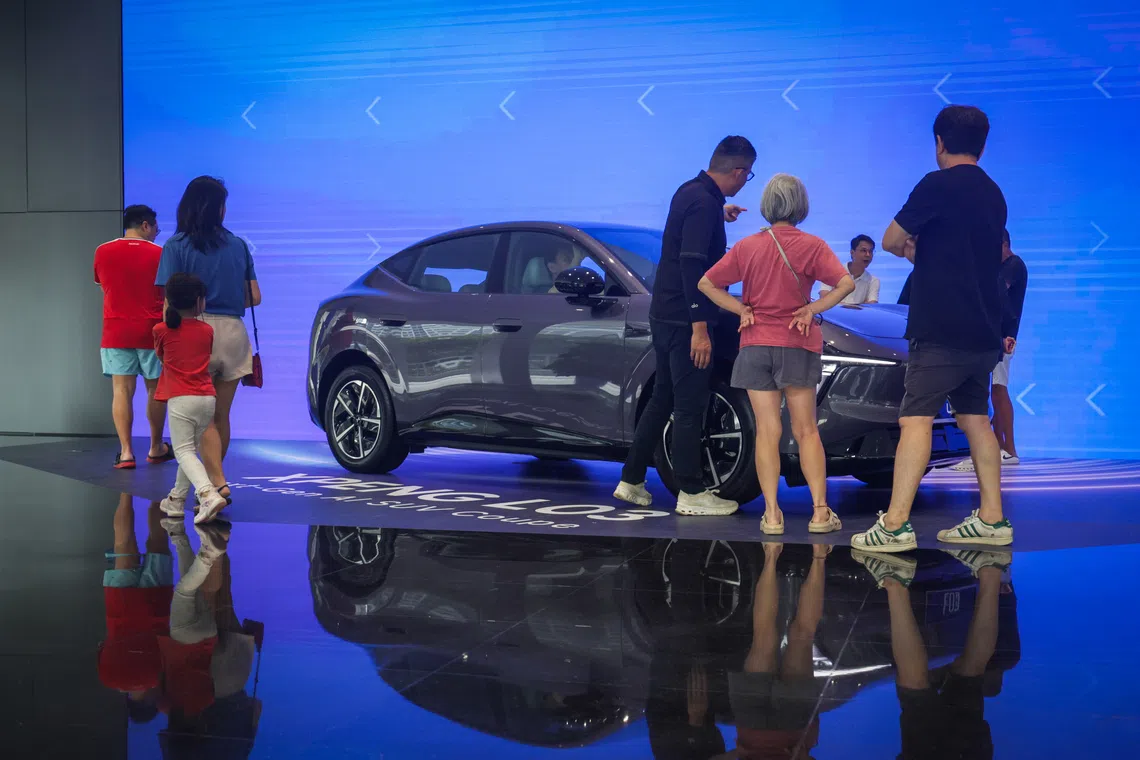
Several suggestions were not part of the public review as they were deemed unsuitable to implement now.
Published Oct 08, 2026, 05:03 PM
Updated Oct 08, 2026, 05:03 PM
SINGAPORE – Families who feel that a car will make school runs, childcare and caregiving tasks easier revealed they wanted more help with car ownership during discussions on changes to the certificate of entitlement (COE) system .
The Land Transport Authority (LTA), in its Oct 8 consultation paper, said such concerns are understandable and families will have different transport needs at different stages of life.
The key question, however, is how to best support these families while ensuring the COE system remains fair , transparent and driven by market forces.
The LTA said: “Choosing to allocate COEs based on household circumstances requires judgment about whose needs should receive greater priority.
“Allocating more COEs for one group, such as families with young children, would necessarily mean fewer COEs for other groups, such as caregivers and multi-generational households, who may also have compelling transport needs.”
As household circumstances change over time, the LTA said it would be difficult to implement such a system fairly over the 10-year period covered by the COE.
The suggestion was among several ideas raised dur in g discussions with more than 200 people as part of the COE review that the LTA said may not be suitable for implementation now.
Another proposal was for private-hire vehicles to be spun off into a new, separate COE category.
That could make the bidding process fairer because ride-hail operators and car-leasing companies would no longer be directly competing with private car buyers, said those who took part in the LTA engagement exercise.
The LTA said the move will mean setting aside some COEs for the new category, and prices could rise if too many COEs are reallocated from the existing pool.
On the other hand, setting aside too few would reduce the number of private-hire vehicles on roads, leading to higher rental fees for drivers and more expensive fares for travellers.
Since private-hire vehicles can be used for personal transport, new rules would be needed to ensure they are used only for their intended purpose.
There were also calls to impose a surcharge on people owning more than one car and discourage the ownership of multiple cars, thus making more COEs available for first-time or single-car owners.
The LTA said such a move is unlikely to have a significant impact on COE prices because people with more than one car are not the key drivers of COE demand.
Also, fewer households own multiple cars now. The LTA said in 2025 that there were about 66,000 such households, representing about 13 per cent of all households that own cars.
In 2012, there were about 87,000 multi-car households, making up nearly a fifth of all households that own cars.
As for imposing a surcharge, the LTA said it will be “difficult to administer fairly or effectively”, because different households have different transport needs.
There were also suggestions to make change s to the bidding process, including allowing only prospective car owners to bid for COEs, instead of letting car dealers do it.
The LTA said it is looking at ways to encourage buyers to submit COE bids on their own. It added that buyers can already submit bids now using DBS Bank or POSB automated teller machines.
It said it is reviewing suggestions to get car dealers to be more transparent, such as publishing car prices without adding COE prices to the total cost.
Another suggestion to revise the COE system was to change the practice of making all successful bidders pay the same price, based on adding $1 to the highest unsuccessful bid.
Instead, each successful bidder could pay only the amount submitted.
The LTA said such a change is unlikely to lower COE prices because private buyers can observe the prevailing price and adjust their bids, and those more willing to pay will generally be the ones obtaining a certificate.
Aqil Hamzah is a transport journalist at The Straits Times. He is also interested in issues related to crime and technology.
一些建议没有纳入公开审查范围,因为它们被认为现在不适合实施。
发布于 2026 年 10 月 8 日下午 5:03
更新于2026年10月8日下午5:03
新加坡——在讨论拥车证(COE)制度改革时,一些认为汽车能让接送孩子上下学、照顾孩子和照料家务变得更加轻松的家庭表示,他们希望在汽车拥有方面获得更多帮助。
陆路交通管理局(LTA)在10月8日的咨询文件中表示,这种担忧是可以理解的,家庭在人生的不同阶段会有不同的交通需求。
然而,关键问题在于如何才能最好地支持这些家庭,同时确保拥车证制度保持公平、透明,并由市场力量驱动。
陆路交通管理局表示:“根据家庭情况分配拥车证需要判断谁的需求应该得到更优先考虑。”
“为某一群体(例如有幼儿的家庭)分配更多拥车证,必然意味着其他群体(例如照顾者和多代同堂的家庭)的拥车证数量会减少,而这些群体也可能有迫切的交通需求。”
陆路交通管理局表示,随着家庭情况随时间推移而变化,在拥车证涵盖的 10 年期间内公平地实施这样的制度将很困难。
该建议是在与 200 多人讨论 COE 审查过程中提出的几个想法之一,陆路交通管理局表示,这些想法现在可能不适合实施。
另一项提议是将私召车从私召车中分离出来,设立一个新的、独立的拥车证类别。
参与陆路交通管理局 (LTA) 意见征询活动的人士表示,这可能会使竞标过程更加公平,因为网约车运营商和汽车租赁公司将不再与私家车买家直接竞争。
陆路交通管理局表示,此举意味着要为新类别预留一些拥车证,如果从现有拥车证池中重新分配过多的拥车证,价格可能会上涨。
另一方面,预留的车辆数量太少会减少道路上的私人出租车数量,导致司机租金上涨,乘客车费上涨。
由于私人租赁车辆可以用于私人交通,因此需要制定新的规则来确保它们仅用于其预期用途。
还有人呼吁对拥有多辆汽车的人征收附加费,以减少拥有多辆汽车的可能性,从而使更多的拥车证可供首次购车者或单车车主使用。
陆路交通管理局表示,此举不太可能对拥车证价格产生重大影响,因为拥有多辆车的人并不是拥车证需求的主要驱动因素。
此外,现在拥有多辆汽车的家庭数量也减少了。陆路交通管理局表示,到2025年,这类家庭大约有6.6万户,约占所有拥有汽车家庭的13%。
2012 年,拥有多辆汽车的家庭约有 87,000 个,占所有拥有汽车的家庭的近五分之一。
至于征收附加费,陆路交通管理局表示“很难公平有效地实施”,因为不同家庭的交通需求不同。
也有人建议对竞标流程进行修改,包括只允许未来的车主竞标拥车证,而不是让汽车经销商竞标。
陆路交通管理局表示,正在研究鼓励买家自行提交拥车证竞标的方法。陆路交通管理局还补充说,买家现在已经可以通过星展银行或邮政储蓄银行的自动取款机提交竞标。
该公司表示,正在审查有关提高汽车经销商透明度的建议,例如公布汽车价格而不将拥车证价格计入总成本。
另一项关于修改 COE 制度的建议是,改变目前所有中标者支付相同价格的做法,改为在最高未中标报价的基础上加 1 美元。
相反,每个中标者只需支付提交的金额即可。
陆路交通管理局表示,这样的变化不太可能降低拥车证价格,因为私人买家可以观察现行价格并调整出价,而那些更愿意支付价格的人通常会获得拥车证。
阿基尔·哈姆扎是《海峡时报》的交通记者。他也对犯罪和科技相关议题感兴趣。