From student hunger to bigger Sara aid, what could Budget 2027 have in store for Malaysians?从解决学生饥饿问题到加大对Sara的援助,2027年财政预算案会给马来西亚人带来什么?
KUALA LUMPUR, Oct 9 — All eyes will be on Prime Minister and Finance Minister Datuk Seri Anwar Ibrahim as he tables Budget 2027 in the Dewan Rakyat this afternoon.Anwar’s fifth...
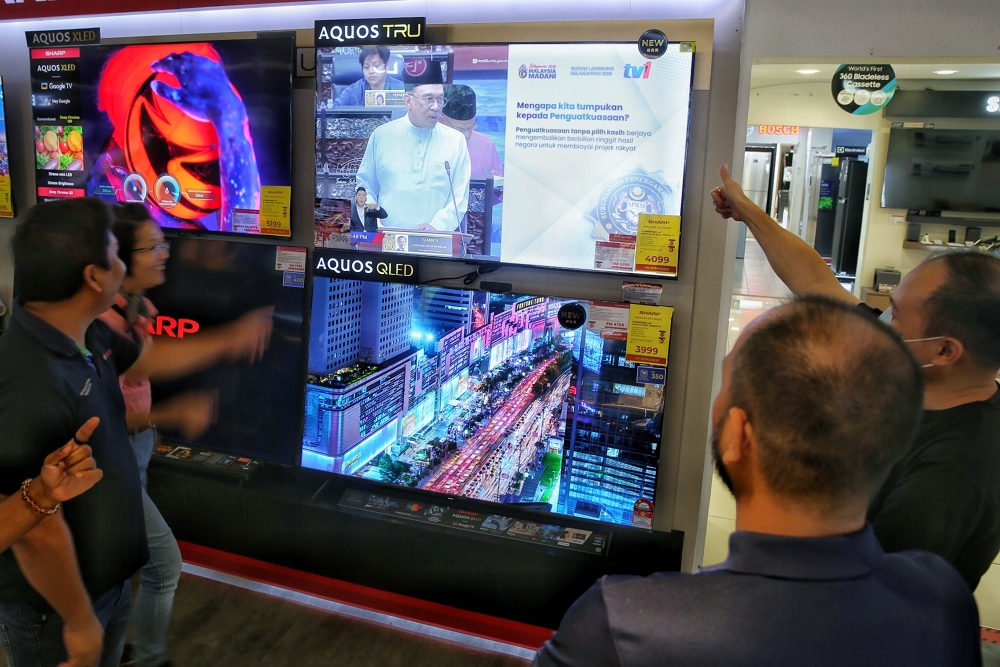
Prime Minister and Finance Minister Datuk Seri Anwar Ibrahim is set to present Malaysia's Budget 2027, which is considered crucial amidst increasing geopolitical tensions and the country's progression towards an aged society by 2030.
Emphasizing three core priorities—national growth, improved living standards, and good governance—the budget focuses on social justice, cost-of-living support, worker welfare, and securing investments among others.
Anwar has hinted at potential increases in minimum wage, enhanced support for small traders, bigger allocations for defence, and the possibility of introducing a new hybrid tax model combining GST and SST.
KUALA LUMPUR, Oct 9 — All eyes will be on Prime Minister and Finance Minister Datuk Seri Anwar Ibrahim as he tables Budget 2027 in the Dewan Rakyat this afternoon.
Anwar’s fifth national Budget since taking office in 2022 comes amid growing speculation over an early 16th general election (GE16), raising expectations that it could be an election-year spending plan.
The Budget comes at a time of geopolitical uncertainties rattling global fuel markets and continued cost-of-living pressures on Malaysians.
Household finances, wages and social assistance are expected to feature prominently, although the extent of the government’s commitments will only become clear when Anwar delivers his Budget speech.
The big picture: Growth, living standards and governance
According to the Finance Ministry, Budget 2027 is built around three core priorities: raising the ceiling for national growth, raising the floor for living standards and driving reform in governance.
These priorities underpin 10 focus areas, including social justice, easing cost-of-living pressures, strengthening social protection and improving access to education, healthcare and essential services.
Other priorities include workers’ welfare and decent wages, better governance and public service delivery, support for home-grown entrepreneurs, investment-driven growth and high-value jobs, as well as strengthening energy, food, climate and cyber security.
In recent weeks, Anwar and several Cabinet ministers have signalled possible measures aimed at easing cost-of-living pressures and improving Malaysians’ livelihoods.
More cash aid through STR and Sara?
In July, Anwar raised the possibility of increasing cash assistance under the Sumbangan Tunai Rahmah (STR) and Sumbangan Asas Rahmah (Sara) schemes in Budget 2027 amid rising cost-of-living pressures.
When tabling Budget 2026 last year, Anwar announced a record RM15 billion for both schemes, up from the initial RM13 billion allocated for 2025, with about nine million recipients expected to benefit.
Tackling hunger on university campuses
On October 3, Anwar said Budget 2027 would address the plight of university students struggling to afford daily meals, after hearing accounts of students going hungry and surviving on instant noodles.
Under Budget 2026, the government allocated RM26.9 million for Dapur Siswa Madani and campus food-bank programmes, with Anwar announcing an additional RM15 million in January 2026.
The student kitchen programme, aimed at benefiting some 10,000 students, has been implemented across all 20 public universities.
A RM2,000 minimum wage on the cards?
Last month, Anwar noted that wages in Malaysia remained stagnant despite higher productivity, particularly in larger corporations, plantations, factories and industries recording substantial profits.
A proposed increase in the minimum wage from RM1,700 to RM2,000 could also feature in Budget 2027.
Economy Minister Akmal Nasrullah Mohd Nasir previously indicated that an announcement could be made during the tabling of the Budget.
Akmal Nasrullah had also said wage compression was preventing many Malaysian workers from enjoying progressive wage increases once they moved beyond the minimum wage level.
Malaysia raised the minimum wage from RM1,500 to RM1,700 per month in February 2025, with the increase extended to employers with fewer than five workers in August that year.
The government aims to raise the minimum wage to RM3,000 by 2030 under the 13th Malaysia Plan.
In May 2025, six major government-linked investment companies (GLICs) also announced that they had implemented a living wage policy for their permanent Malaysian employees, using a benchmark of around RM3,100 a month.
More help for hawkers and small businesses
Last month, Anwar signalled the possibility of higher allocations for small traders and entrepreneurs nationwide.
He urged village traders to nominate others who deserved financial assistance under Budget 2027.
As of June, Anwar’s government had allocated RM9.8 billion in financing through six major institutions to expand and simplify access to microcredit for hawkers and small entrepreneurs.
Will a GST-SST hybrid tax model take shape?
Another question surrounding Budget 2027 is whether Anwar will provide an update on a proposed hybrid taxation system combining elements of the current Sales and Service Tax (SST) and the former Goods and Services Tax (GST).
In August, Anwar directed the Finance Ministry to study the idea in detail, with Finance Minister II Datuk Seri Amir Hamzah Azizan overseeing the review.
Subsequently, government spokesman Datuk Seri Fahmi Fadzil said the findings would be brought back to the Cabinet for discussion.
It is understood that the hybrid model would draw lessons from Malaysia’s previous experience with GST while addressing challenges under the existing SST system.
However, no timeline has been announced for a decision, leaving it unclear whether the proposal will feature in Budget 2027.
More money for defence and military facilities
Anwar has pledged to increase defence spending in Budget 2027, including funding for asset procurement, upgrades to living quarters, a new hospital and the maintenance of basic facilities.
He pointed out that the government had progressively increased defence spending by more than 35 per cent.
Under Budget 2026, the government increased the Defence Ministry’s allocation to RM21.7 billion, up from RM21.2 billion in Budget 2025 and RM16 billion in Budget 2022.
AI Nation 2030 push: Ministry of Digital offers 100,000 Coursera licences via Rakyat Digital
Schools in Malaysia to close from tomorrow if haze index tops 180, Education Ministry says
Form Two boy injured after alleged beating by Form Four student at Kuala Pilah hostel
马来西亚总理兼财政部长拿督斯里安华·易卜拉欣即将提交马来西亚2027年财政预算案,鉴于地缘政治紧张局势加剧以及该国到2030年将步入老龄化社会,该预算案被认为至关重要。
该预算强调三个核心优先事项——国家增长、提高生活水平和良好治理——重点关注社会正义、生活成本支持、工人福利和确保投资等。
安华暗示可能会提高最低工资,加大对小商贩的支持力度,增加国防拨款,并有可能引入结合消费税和销售税的新型混合税收模式。
吉隆坡,10 月 9 日——所有人的目光都将集中在总理兼财政部长拿督斯里安瓦尔易卜拉欣今天下午在下议院提出 2027 年财政预算案时。
安华自 2022 年上任以来的第五份国家预算案出台之际,外界对提前举行第 16 届全国大选 (GE16) 的猜测日益增多,人们预期这可能是一份选举年的支出计划。
这份预算案出台之际,正值地缘政治不确定性动摇全球燃料市场,马来西亚人也持续面临生活成本压力。
家庭财务、工资和社会援助预计将成为重点,但政府的承诺程度只有在安华发表预算演讲时才会明朗。
宏观视角:增长、生活水平和治理
据财政部称,2027 年预算围绕三个核心优先事项展开:提高国家增长上限、提高生活水平下限和推动治理改革。
这些优先事项支撑着 10 个重点领域,包括社会正义、缓解生活成本压力、加强社会保障以及改善获得教育、医疗保健和基本服务的机会。
其他优先事项包括工人福利和体面工资、更好的治理和公共服务、支持本土企业家、投资驱动型增长和高价值就业,以及加强能源、食品、气候和网络安全。
最近几周,安华和几位内阁部长都表示可能会采取措施,以缓解生活成本压力,改善马来西亚人的生活。
通过STR和Sara获得更多现金援助?
7 月,安华提出,鉴于生活成本压力不断上升,可能会在 2027 年财政预算案中增加 Sumbangan Tunai Rahmah (STR) 和 Sumbangan Asas Rahmah (Sara) 计划下的现金援助。
安华去年提交 2026 年财政预算案时宣布,两项计划的拨款将达到创纪录的 150 亿令吉,高于 2025 年最初分配的 130 亿令吉,预计将有约 900 万受益人。
解决大学校园饥饿问题
10月3日,安华表示,在听取了学生们挨饿、靠方便面度日的讲述后,2027年财政预算案将解决大学生难以负担日常餐食的困境。
在 2026 年财政预算案中,政府拨款 2690 万令吉用于 Dapur Siswa Madani 和校园食物银行计划,安华于 2026 年 1 月宣布追加 1500 万令吉。
学生厨房计划旨在惠及约 10,000 名学生,已在所有 20 所公立大学实施。
最低工资标准拟定为2000令吉?
上个月,安华指出,尽管马来西亚的生产率有所提高,尤其是在大型企业、种植园、工厂和利润丰厚的行业,但工资水平仍然停滞不前。
2027 年财政预算案中也可能包括将最低工资从 1700 令吉提高到 2000 令吉的提案。
经济部长阿克马尔·纳斯鲁拉·莫哈末·纳西尔此前曾表示,可能会在提交预算案时宣布相关消息。
阿克马尔·纳斯鲁拉也曾表示,工资压缩使得许多马来西亚工人在超过最低工资水平后无法享受逐步增长的工资。
马来西亚于 2025 年 2 月将最低工资从每月 1500 令吉提高到 1700 令吉,同年 8 月,这一增长也扩展到了员工人数少于 5 人的雇主。
根据马来西亚第十三个五年计划,政府的目标是到 2030 年将最低工资提高到 3000 令吉。
2025 年 5 月,六家主要的政府关联投资公司 (GLIC) 也宣布,他们已对其马来西亚永久雇员实施生活工资政策,基准工资为每月约 3100 令吉。
为小贩和小企业提供更多帮助
上个月,安华暗示可能会增加对全国小商贩和创业者的拨款。
他敦促乡村商贩提名其他值得在 2027 年预算案中获得财政援助的人。
截至6月,安华政府已通过六家主要机构拨款98亿令吉,用于扩大和简化小贩和小企业主获得小额信贷的途径。
消费税-销售与服务税混合税制会形成吗?
关于 2027 年财政预算案的另一个问题是,安华是否会就拟议的混合税收制度提供最新进展,该制度结合了现行的销售和服务税 (SST) 和以前的商品和服务税 (GST) 的要素。
8月,安华指示财政部详细研究这一想法,由第二财政部长拿督斯里阿米尔·哈姆扎·阿齐赞监督审查工作。
随后,政府发言人拿督斯里法米·法兹尔表示,调查结果将提交内阁讨论。
据了解,混合模式将借鉴马来西亚以往在消费税方面的经验,同时解决现有销售与服务税制度下面临的挑战。
然而,目前尚未公布做出决定的时间表,因此尚不清楚该提案是否会出现在 2027 年预算案中。
增加国防和军事设施的资金
安华承诺在 2027 年财政预算案中增加国防开支,包括为资产采购、生活区升级、新建医院和基本设施维护提供资金。
他指出,政府已逐步增加国防开支,增幅超过 35%。
根据 2026 年财政预算案,政府将国防部的拨款增加到 217 亿令吉,高于 2025 年财政预算案的 212 亿令吉和 2022 年财政预算案的 160 亿令吉。
推动“人工智能国家2030”计划:数字部通过《人民数字》杂志提供10万个Coursera课程许可证
马来西亚教育部表示,如果雾霾指数超过180,马来西亚学校将从明天起停课。
一名高二男生在瓜拉庇劳宿舍疑遭高四学生殴打受伤