Two US counter-mine ships based in the Middle East are now in Singapore, Navy says美国海军称,两艘驻扎在中东的美国反水雷舰目前已抵达新加坡。
The USS Santa Barbara and USS Tulsa, which are homeported in Bahrain, arrived in Singapore this week.
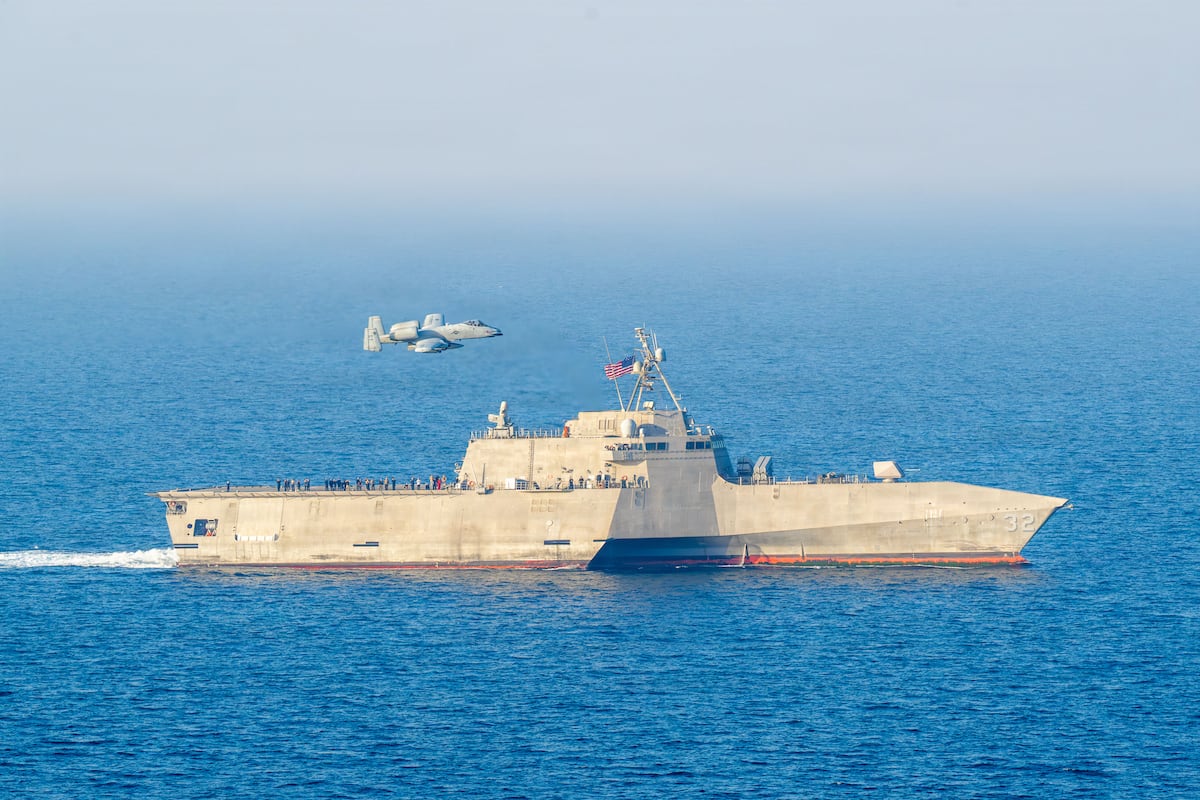
A pair of U.S. Navy counter-mine vessels that are homeported in Bahrain arrived in Singapore this week, according to a U.S. Fifth Fleet spokesperson.
The Independence-class littoral combat ships USS Santa Barbara and USS Tulsa entered the U.S. Seventh Fleet area of responsibility earlier in the week, the spokesperson said, stopping first in Malaysia for a port call.
Each ship is equipped with a mine countermeasures mission package designed to detect and destroy naval mines.
“Tulsa and Santa Barbara are conducting scheduled maintenance and logistics stop in Singapore,” the spokesperson said.
The two nations, according to the spokesperson, have an agreement to allow littoral combat ships to operate primarily from Singapore as a logistics and maintenance hub.
As of Monday, the USS Canberra, the other Bahrain-based LCS with a mine countermeasures package, was in the Indian Ocean, parts of which are in the U.S. Fifth Fleet area of responsibility.
The U.S. Navy previously deployed four Avenger-class mine countermeasures ships in the Middle East, but they were decommissioned in 2025 after each serving for over 30 years.
Those minesweepers are made of wood and fiberglass and possess a nonmagnetic signature and low acoustic footprint that allows them to operate inside and near a mine zone.
The vessels used acoustic devices, electromagnetic tools, cables and cutters to hunt, detonate and destroy over 1,000 mines off of Kuwait during the Gulf War.
Three Independence-class littoral combat ships with a mine countermeasures mission package replaced those vessels in 2025.
The LCS with the MCM package is made of aluminum and can only operate outside the mine threat zone.
These ships deploy unmanned surface and underwater vehicles, along with an attached Sikorsky MH-60S Seahawk helicopter, to identify and destroy mines.
The migration of the two littoral combat ships with the MCM package could be a strategic repositioning by the U.S. Navy, according to Dr. Steven Wills, a navalist for the Center for Maritime Strategy and a U.S. Navy veteran who served aboard a mine countermeasures ship.
“I think that was a desire to just reduce the number of targets,” Wills said.
The LCS has a 57mm MK-110 gun system and a SeaRAM self-defense system, but it isn’t as defensively capable as a destroyer, which wields a vertical launch system, according to Wills.
Riley Ceder is a Navy reporter at Military Times, where he covers issues directly affecting service members and their families, as well as breaking news.
据美国第五舰队发言人称,两艘以巴林为母港的美国海军反水雷舰艇本周抵达新加坡。
发言人表示,独立级濒海战斗舰“圣巴巴拉”号和“塔尔萨”号于本周早些时候进入美国第七舰队责任区,首先在马来西亚停靠访问。
每艘舰艇都配备了扫雷任务包,旨在探测和摧毁水雷。
发言人表示:“塔尔萨号和圣巴巴拉号正在新加坡进行计划内的维护和后勤补给停靠。”
发言人表示,两国已达成协议,允许濒海战斗舰主要以新加坡为后勤和维护中心进行作战。
截至周一,另一艘驻巴林的濒海战斗舰“堪培拉”号(配备扫雷装置)位于印度洋,该海域部分区域属于美国第五舰队的责任区。
美国海军此前在中东部署了四艘复仇者级扫雷舰,但这些舰艇在服役超过 30 年后于 2025 年退役。
这些扫雷器由木材和玻璃纤维制成,具有非磁性特征和低声学特征,使其能够在雷区内和雷区附近作业。
在海湾战争期间,这些舰艇使用声学设备、电磁工具、电缆和切割器在科威特附近海域搜寻、引爆并摧毁了 1000 多枚水雷。
2025 年,三艘配备扫雷任务包的独立级濒海战斗舰将取代这些舰艇。
配备MCM组件的LCS由铝制成,只能在水雷威胁区外运行。
这些舰艇部署无人水面和水下航行器,以及一架附属的西科斯基 MH-60S 海鹰直升机,用于识别和摧毁水雷。
据美国海军战略中心海军专家、曾在扫雷舰上服役的美国海军退伍军人史蒂文·威尔斯博士称,两艘搭载扫雷装置的濒海战斗舰的迁移可能是美国海军的一次战略重新部署。
“我认为这只是为了减少目标数量,”威尔斯说。
威尔斯表示,濒海战斗舰配备了57毫米MK-110舰炮系统和SeaRAM自卫系统,但其防御能力不如配备垂直发射系统的驱逐舰。
Riley Ceder 是《军事时报》的海军记者,他负责报道直接影响军人及其家属的问题以及突发新闻。