Standard Chartered CEO calls for AI guardrails, says human judgment remains key to jobs渣打银行首席执行官呼吁为人工智能设立安全屏障,并表示人类判断力仍然是就业的关键。
In an exclusive interview with CNA’s Julie Yoo, Mr Bill Winters also discusses the contrasting fortunes across China's economy and the impact of the Middle East conflict on Gulf nations.
新闻视频
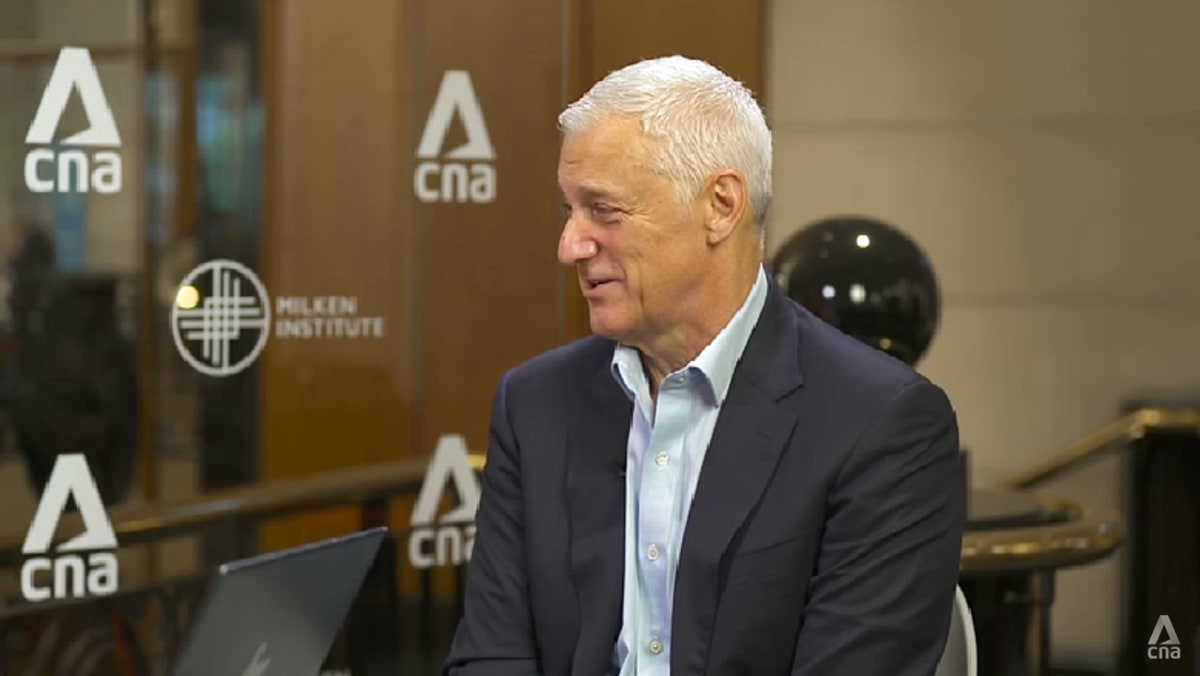
In an exclusive interview with CNA’s Julie Yoo, Mr Bill Winters also discusses the contrasting fortunes across China's economy and the impact of the Middle East conflict on Gulf nations.
Standard Chartered Group CEO Bill Winters speaks to CNA on the sidelines of the Milken Institute Asia Summit in Singapore on Oct 9, 2026. (Image: CNA)
This audio is generated by an AI tool.
SINGAPORE: Stronger regulation and greater international cooperation are needed to manage the growing risks of artificial intelligence , Standard Chartered Group CEO Bill Winters said on Friday (Oct 9).
Speaking to CNA on the sidelines of the Milken Institute Asia Summit at the Four Seasons Hotel Singapore, Mr Winters discussed the opportunities AI presents for businesses, alongside concerns over cybersecurity and its impact on jobs.
In the wide-ranging interview, he also shared his outlook for China's economy and his views on how the prolonged Middle East conflict is affecting Gulf nations.
The three-day summit, held from Oct 7 to 9, brought together business and government leaders to discuss economic and geopolitical challenges, with AI a key focus of this year's event.
CNA Games Guess Word Crack the word, one row at a time Buzzword Create words using the given letters Mini Sudoku Tiny puzzle, mighty brain teaser Mini Crossword Small grid, big challenge Word Search Spot as many words as you can Show More Show Less
AI RISKS AND OPPORTUNITIES
Asked whether governments should intervene to address the risks posed by AI, Mr Winters called for greater regulation of the industry.
"I can think of very few industries that have needed regulation more than this one," he said.
"I mean, it takes three years to get a new aspirin formulation through various regulators, but we have not put any guardrails on AI."
Mr Winters acknowledged that technology companies intend to develop AI responsibly, but also highlighted geopolitical competition between the United States and China, with both countries concerned about the other gaining dominance in the technology.
"To me, there's never been a stronger – maybe second only to nuclear weapons – backdrop for cooperation between global players," he said.
Mr Winters said Standard Chartered is already using AI to develop new customer experiences and improve efficiency across its operations.
But he also warned that cybercriminals could use the technology to breach corporate security systems.
"It's also the best defence to have a really good, strong set of AI-based defensive capabilities," he said.
"So we're in an arms race. And I think we're holding our own."
Still, Mr Winters cautioned that the risks are unlikely to disappear.
"I don't think we will reflect a year, two, three years from now on this whole period and say, wow, it's amazing that nothing bad happened. Some bad things will happen,” he said.
Asked about AI's impact on employment, Mr Winters said automation would change the nature of jobs at Standard Chartered, but would not necessarily lead to a smaller workforce.
While the bank has already automated almost 25 per cent of the roles it previously had, its overall headcount has increased, he said.
About 85 per cent of employees whose roles were displaced by automation have been reskilled for other positions, according to Mr Winters.
He added the bank would continue to invest in reskilling employees as AI became more widely used, with the skills required in an AI-driven workplace likely to be significantly different.
"Our job as a bank, as a corporation, is to offer our employees that opportunity to acquire those skills, and we are (doing so)," he said.
Asked which banking jobs would remain relevant over the next decade or two, Mr Winters said roles requiring human judgment or interaction would continue to be important.
In wealth management, for instance, digital tools can already provide investment guidance, but demand for human relationship managers remains strong, he said.
"People still trust people, and it's going to be a long time before we trust the machine over the person, even if we think the machine may have better information or may be smarter."
CHINA'S TWO-TIER ECONOMY
The interview also touched on China, where a prolonged property downturn has weighed on domestic demand even as emerging industries have expanded.
Asked which parts of the economy were attracting greater optimism and where businesses remained cautious, Mr Winters described contrasting fortunes across different sectors.
He highlighted rapid development in green technology, electric vehicles, batteries and advanced electronics, including semiconductor manufacturing.
These industries are helping transform China's industrial base, particularly through robotics .
Mr Winters said the property sector has not recovered, while other manufacturing industries are also under pressure from rising costs and tariffs.
He also noted that China's public finances were under strain as revenue from land sales, an important source of income for local governments, had declined.
Nevertheless, Mr Winters remained confident about China's economic outlook, saying the country still has fiscal and monetary policy tools available to support growth.
GLOBAL ECONOMY AND GULF RESILIENCE
Asked whether rising interest rates signalled trouble for the global economy, Mr Winters said economic growth remained resilient despite higher borrowing costs and persistent inflation.
He identified rising energy and food prices, along with supply-chain disruptions, including those affecting energy supplies from the Gulf amid the Middle East conflict, as factors keeping inflation elevated.
Still, Mr Winters said Gulf economies, including Saudi Arabia, the United Arab Emirates, Qatar and Oman, continue to function relatively well despite the conflict.
However, he acknowledged that the conflict had caused significant damage, particularly in Qatar, where important parts of the gas industry had been temporarily taken out of operation after Iranian strikes .
He also cited Saudi Arabia's escalating conflict with the Houthis in Yemen as another source of disruption.
While acknowledging the conflict's impact, Mr Winters said businesses across the Gulf were carrying on.
"It's impressive how resilient the region has been," he said.
Get our pick of top stories and thought-provoking articles in your inbox
Stay updated with notifications for breaking news and our best stories
Join our channel for the top reads for the day on your preferred chat app
在接受中央社记者朱莉·尤的独家专访时,比尔·温特斯先生还谈到了中国经济的截然不同的发展状况以及中东冲突对海湾国家的影响。
渣打银行集团首席执行官比尔·温特斯于2026年10月9日在新加坡举行的米尔肯研究院亚洲峰会期间接受亚洲新闻台(CNA)采访。(图片:亚洲新闻台)
这段音频由人工智能工具生成。
新加坡:渣打银行集团首席执行官比尔·温特斯周五(10月9日)表示,需要加强监管和扩大国际合作来应对人工智能日益增长的风险。
在新加坡四季酒店举行的米尔肯研究院亚洲峰会期间,温特斯先生接受亚洲新闻台采访时,谈到了人工智能为企业带来的机遇,以及对网络安全及其对就业的影响的担忧。
在这次内容广泛的采访中,他还分享了他对中国经济的展望,以及他对中东长期冲突如何影响海湾国家的看法。
为期三天的峰会于 10 月 7 日至 9 日举行,汇聚了商界和政府领导人,共同探讨经济和地缘政治挑战,人工智能是今年峰会的重点。
CNA游戏 猜词游戏 逐行破解单词 流行词游戏 用给定的字母组成单词 迷你数独 小小谜题,挑战你的大脑 迷你填字游戏 小方格,大挑战 单词搜索 尽可能多地找出单词 显示更多 显示更少
人工智能的风险与机遇
当被问及政府是否应该干预以应对人工智能带来的风险时,温特斯先生呼吁加强对该行业的监管。
他说:“我想不出有哪个行业比这个行业更需要监管。”
“我的意思是,一种新的阿司匹林配方要经过各种监管机构的审批需要三年时间,但我们却没有对人工智能设置任何限制。”
温特斯先生承认科技公司打算以负责任的方式开发人工智能,但也强调了美国和中国之间的地缘政治竞争,两国都担心对方在该技术领域占据主导地位。
他说:“在我看来,全球大国之间开展合作的背景从未如此强大——或许仅次于核武器。”
温特斯先生表示,渣打银行已经在使用人工智能来开发新的客户体验并提高其运营效率。
但他同时警告说,网络犯罪分子可能会利用这项技术入侵企业安全系统。
“拥有一套真正优秀、强大的基于人工智能的防御能力也是最好的防御手段,”他说。
“所以我们正处于一场军备竞赛中。我认为我们目前还能与之抗衡。”
不过,温特斯先生也提醒说,这些风险不太可能消失。
“我不认为一年、两年、三年后,我们会回顾这段时期,然后说,哇,真神奇,竟然什么坏事都没发生。坏事肯定会发生的,”他说。
当被问及人工智能对就业的影响时,温特斯先生表示,自动化将改变渣打银行的工作性质,但不一定会导致员工人数减少。
他表示,虽然该银行已经实现了近 25% 的岗位自动化,但其员工总数却有所增加。
温特斯先生表示,约有 85% 因自动化而失业的员工已经接受了再培训,从事其他工作。
他还补充说,随着人工智能的广泛应用,银行将继续投资于员工技能再培训,因为人工智能驱动的工作场所所需的技能可能会有很大的不同。
他说:“作为一家银行、一家公司,我们的职责是为员工提供获得这些技能的机会,而我们正在这样做。”
当被问及未来十年或二十年哪些银行工作仍将保持相关性时,温特斯先生表示,需要人为判断或互动的工作岗位将继续保持重要性。
他表示,例如在财富管理领域,数字工具已经可以提供投资指导,但对人际关系经理的需求依然强劲。
“人们仍然信任人,即使我们认为机器可能掌握更好的信息或更聪明,我们也还需要很长时间才能信任机器而不是人。”
中国两级经济
采访中还谈到了中国,尽管新兴产业不断扩张,但中国房地产市场的长期低迷抑制了国内需求。
当被问及经济的哪些领域更令人乐观,哪些领域企业仍然保持谨慎时,温特斯先生描述了不同行业截然不同的境况。
他重点介绍了绿色科技、电动汽车、电池和先进电子产品(包括半导体制造)的快速发展。
这些行业正在帮助中国改造其工业基础,特别是通过机器人技术。
温特斯先生表示,房地产行业尚未复苏,而其他制造业也面临着成本和关税上涨的压力。
他还指出,由于土地出售收入(地方政府的重要收入来源)下降,中国的公共财政面临压力。
尽管如此,温特斯先生仍然对中国的经济前景充满信心,他表示,中国仍然拥有财政和货币政策工具来支持经济增长。
全球经济与海湾地区的韧性
当被问及利率上升是否预示着全球经济将面临困境时,温特斯先生表示,尽管借贷成本上升和通货膨胀持续,但经济增长依然保持韧性。
他认为,能源和食品价格上涨,以及供应链中断(包括中东冲突期间海湾地区能源供应中断),都是导致通货膨胀居高不下的因素。
不过,温特斯先生表示,包括沙特阿拉伯、阿拉伯联合酋长国、卡塔尔和阿曼在内的海湾国家经济体,尽管存在冲突,但仍然运转良好。
然而,他承认这场冲突造成了重大损失,尤其是在卡塔尔,伊朗的袭击导致该国天然气行业的重要部分暂时停止运营。
他还指出,沙特阿拉伯与也门胡塞武装之间不断升级的冲突也是造成混乱的另一个原因。
温特斯先生承认冲突的影响,但他表示海湾地区的商业活动仍在继续。
他说:“该地区展现出的韧性令人印象深刻。”
订阅我们的邮件,即可获取精选热点新闻和引人深思的文章。
订阅通知,第一时间获取突发新闻和精彩报道。
加入我们的频道,即可在您常用的聊天应用上获取当日热门文章。