At least S$185,000 lost to phishing scams involving hotel bookings since January自1月份以来,涉及酒店预订的网络钓鱼诈骗已造成至少18.5万新元的损失。
In some cases, the messages contain legitimate details of the victims' hotel reservations, making the scam appear more convincing, police say.
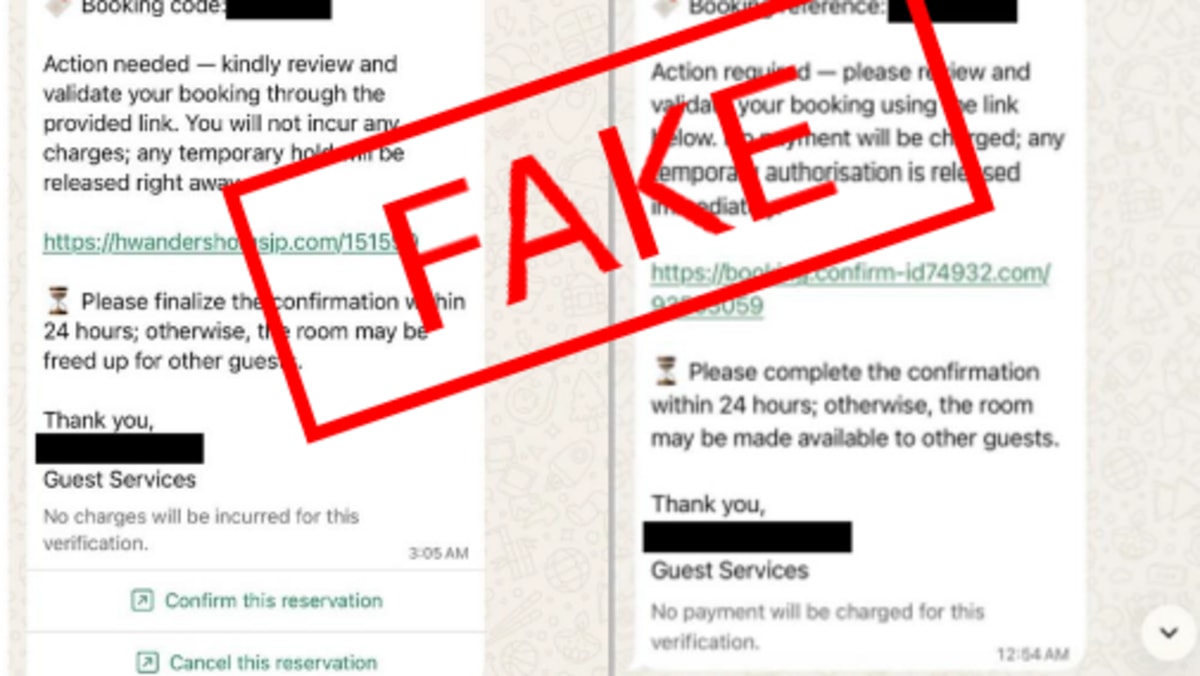
In some cases, the messages contain legitimate details of the victims' hotel reservations, making the scam appear more convincing, police say.
Example of a fraudulent hotel booking message. (Image: Singapore Police Force)
This audio is generated by an AI tool.
SINGAPORE: At least 148 cases of phishing scams involving hotels and hotel booking platforms have been reported since January, with victims losing at least S$185,000 (US$144,700) in total, the police said on Friday (Oct 9).
The Singapore Police Force (SPF) warned of a surge in such scams, in which fraudsters impersonate hotels or accommodation booking platforms and contact victims mainly through WhatsApp or email.
Victims are typically told that they need to verify their card details or confirm an upcoming accommodation booking.
In some cases, the messages contain legitimate details of the victims' hotel reservations, making the scam appear more convincing, police said.
CNA Games Guess Word Crack the word, one row at a time Buzzword Create words using the given letters Mini Sudoku Tiny puzzle, mighty brain teaser Mini Crossword Small grid, big challenge Word Search Spot as many words as you can Show More Show Less Victims are then directed to a phishing link and told that they need to enter their card details to secure or confirm their reservations. They may also be assured that no money will be deducted. Many realise that they have been scammed only after discovering unauthorised transactions on their cards or after contacting the hotel directly to check on their bookings. Police advised travellers who receive messages about their reservations to verify the information directly with the hotel using official contact details published on its website. Members of the public should also avoid clicking links in unsolicited messages and should be alert to signs that a website may be fraudulent. Police reminded the public not to disclose personal information, bank or card details, or one-time passwords to others. They also recommended using safeguards such as two-factor or multifactor authentication, setting limits for internet banking transactions and using banks' Money Lock features to prevent a portion of savings from being transferred digitally. Those who suspect that they have fallen victim to a scam should report fraudulent transactions to their bank immediately and inform the authorities. Members of the public can also use the ScamShield app or call the 24-hour ScamShield Helpline at 1799 to check suspicious messages or transactions.
Victims are then directed to a phishing link and told that they need to enter their card details to secure or confirm their reservations. They may also be assured that no money will be deducted.
Many realise that they have been scammed only after discovering unauthorised transactions on their cards or after contacting the hotel directly to check on their bookings.
Police advised travellers who receive messages about their reservations to verify the information directly with the hotel using official contact details published on its website.
Members of the public should also avoid clicking links in unsolicited messages and should be alert to signs that a website may be fraudulent.
Police reminded the public not to disclose personal information, bank or card details, or one-time passwords to others.
They also recommended using safeguards such as two-factor or multifactor authentication, setting limits for internet banking transactions and using banks' Money Lock features to prevent a portion of savings from being transferred digitally.
Those who suspect that they have fallen victim to a scam should report fraudulent transactions to their bank immediately and inform the authorities.
Members of the public can also use the ScamShield app or call the 24-hour ScamShield Helpline at 1799 to check suspicious messages or transactions.
Get our pick of top stories and thought-provoking articles in your inbox
Stay updated with notifications for breaking news and our best stories
Join our channel for the top reads for the day on your preferred chat app
警方表示,在某些情况下,这些信息包含受害者酒店预订的真实细节,使骗局看起来更具说服力。
酒店预订诈骗信息示例。(图片来源:新加坡警方)
这段音频由人工智能工具生成。
新加坡:警方周五(10月9日)表示,自1月份以来,已报告至少148起涉及酒店和酒店预订平台的网络钓鱼诈骗案件,受害者总共损失至少185,000新元(144,700美元)。
新加坡警察部队 (SPF) 警告称,此类诈骗案件激增,诈骗分子冒充酒店或住宿预订平台,主要通过 WhatsApp 或电子邮件联系受害者。
受害者通常会被告知,他们需要验证自己的银行卡信息或确认即将到来的住宿预订。
警方表示,在某些情况下,这些信息包含受害者酒店预订的真实细节,使骗局看起来更具说服力。
CNA游戏猜词游戏:逐行破解单词;流行词游戏:用给定的字母组成单词;迷你数独:小巧的谜题,强大的脑力挑战;迷你填字游戏:小网格,大挑战;单词搜索:尽可能多地找到单词。显示更多 显示更少 受害者随后会被引导至钓鱼链接,并被告知需要输入银行卡信息以确保或确认预订。他们可能还会被告知不会扣款。许多人只有在发现银行卡上出现未经授权的交易,或直接联系酒店核实预订后,才意识到自己被骗了。警方建议收到有关预订信息的旅客,使用酒店网站上公布的官方联系方式直接与酒店核实信息。公众也应避免点击未经请求的信息中的链接,并警惕网站可能存在欺诈的迹象。警方提醒公众不要向他人透露个人信息、银行或银行卡信息,或一次性密码。他们还建议使用双重或多重身份验证等安全措施,设置网上银行交易限额,并使用银行的资金锁定功能来阻止部分存款被以电子方式转移。如果怀疑自己遭遇诈骗,应立即向银行举报欺诈交易并通知有关部门。公众还可以使用 ScamShield 应用程序或拨打 24 小时 ScamShield 热线 1799 来检查可疑信息或交易。
受害者随后会被引导至一个钓鱼链接,并被告知需要输入银行卡信息以确保或确认预订。他们可能还会被告知不会扣款。
许多人只有在发现银行卡上有未经授权的交易,或者直接联系酒店核实预订情况后,才意识到自己被骗了。
警方建议收到有关预订信息的旅客,使用酒店网站上公布的官方联系方式直接与酒店核实信息。
公众也应避免点击未经请求的消息中的链接,并应警惕网站可能存在欺诈行为的迹象。
警方提醒公众不要向他人透露个人信息、银行或银行卡详细信息或一次性密码。
他们还建议使用双因素或多因素身份验证等安全措施,设置网上银行交易限额,并使用银行的资金锁定功能来防止部分储蓄以数字方式转移。
怀疑自己成为诈骗受害者的人应立即向银行报告欺诈交易,并通知有关部门。
公众还可以使用 ScamShield 应用程序或拨打 24 小时 ScamShield 热线 1799 来检查可疑信息或交易。
订阅我们的邮件,即可获取精选热点新闻和引人深思的文章。
订阅通知,第一时间获取突发新闻和精彩报道。
加入我们的频道,即可在您常用的聊天应用上获取当日热门文章。