N95 masks will be distributed to eligible Singaporeans when PSI hits 201当PSI达到201时,符合条件的新加坡公民将获发N95口罩。
Based on the current situation, it is possible that the 24-hour PSI may exceed 200. Read more at straitstimes.com.
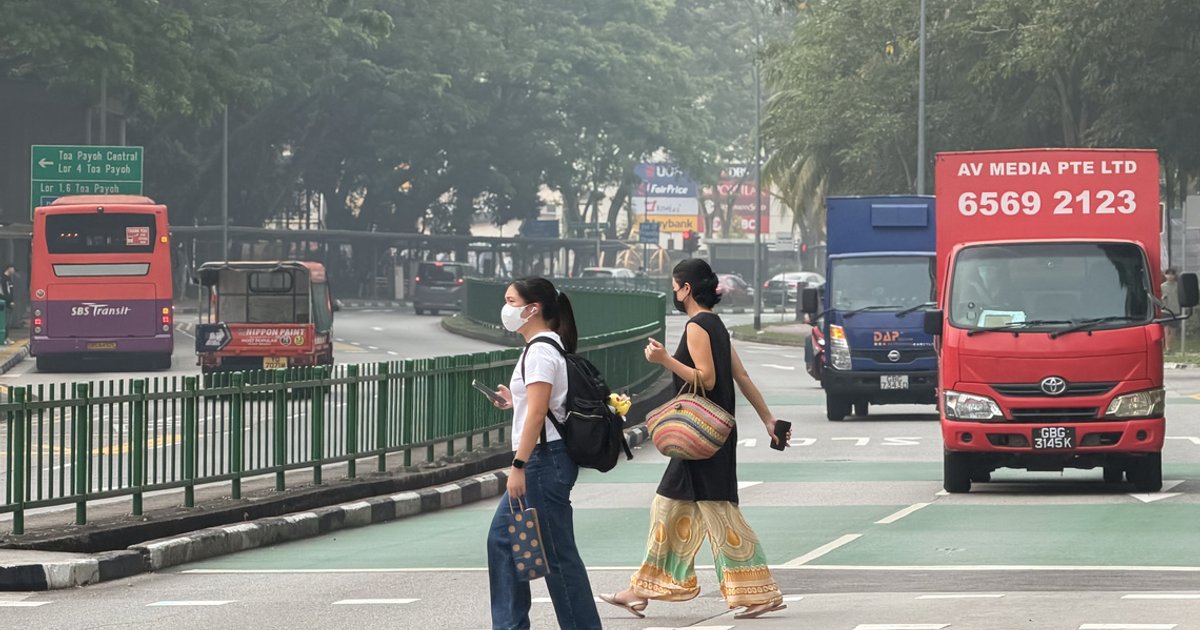
Based on the current situation, it is possible that the 24-hour PSI may exceed 200 and enter the “Very Unhealthy” range, the authorities said in a media statement on Oct 9.
Published Oct 09, 2026, 07:35 PM
Updated Oct 09, 2026, 07:37 PM
SINGAPORE — N95 masks will be distributed to eligible Singaporeans who may be more vulnerable to the effects of haze or who may have limited means of obtaining them when air quality hits ‘very unhealthy’ levels, the authorities said on Oct 9.
Such levels are denoted by a Pollutant Standards Index (PSI) reading above 200.
Mask vending machines will also be made available at selected public transport hubs and social services offices to supplement the distribution efforts by grassroots organisations , Singapore’s haze task force announced in an update on Oct 9.
It comes as the PSI – a measure of air quality in Singapore – hit 192 in central Singapore at 6pm, the highest so far in 2026, while the hourly PM2.5 reading stood in the “elevated” band at 123 in the central region.
Based on the current situation, it is possible that the 24-hour PSI may exceed 200 and enter the ‘Very Unhealthy’ range, the authorities said in a media statement issued at about 7pm.
When the PSI exceeds 200, the People’s Association (PA) grassroots organisations will start distributing N95 masks to eligible Singaporeans. To complement PA’s distribution, mask vending machines will also be made available at selected public transport hubs and social services offices.
Eligible Singaporeans can collect N95 masks at vending machines at selected public transport hubs, Social Service Offices and PA venues with using their NRICs. They may also ask a family member or friend to collect the masks on their behalf using the eligible person’s NRIC.
Pioneer Generation (PG)
Merdeka Generation (MG)
CHAS Orange card holder
CHAS Blue card holder
Medical Fee Exemption Card (MFEC) holder
Recipients of ComCare Assistance
Meanwhile, pregnant women, children aged between seven and 16 and individuals with medical conditions like asthma may collect masks at PA venues with their NRICs.
When air quality breaches the ‘very unhealthy’ threshold , the Early Childhood Development Agency (ECDA) will also require preschools to cease all outdoor activities and strenuous indoor activities.
Children with chronic heart and lung conditions will be exempted from all indoor physical activities.
Preschools are also required to ensure that all children remain in enclosed and well-ventilated indoor spaces with doors and windows closed, and fans or air conditioners switched on.
In addition, preschools are to prepare at least one enclosed room with air purifiers turned on to temporarily accommodate children who may become unwell or develop respiratory problems due to the impact of haze.
The task force last issued an update on Sept 4, when air quality in SIngapore breached unhealthy levels for the first time since Oct 2023.
National Environment Agency
当局在10月9日的一份媒体声明中表示,根据目前的情况,24小时PSI值有可能超过200,进入“非常不健康”的范围内。
发布于 2026 年 10 月 9 日晚上 7:35
更新于2026年10月9日晚上7:37
新加坡——当局于10月9日表示,当空气质量达到“非常不健康”的水平时,将向符合条件的、可能更容易受到雾霾影响或可能难以获得口罩的新加坡人分发N95口罩。
污染物标准指数 (PSI) 读数高于 200 表示该水平。
新加坡雾霾应对工作组在 10 月 9 日发布的最新消息中宣布,将在部分公共交通枢纽和社会服务办公室提供口罩自动售货机,以补充基层组织的口罩分发工作。
就在新加坡空气质量指数(PSI)于下午 6 点在新加坡中部达到 192 之际,这是 2026 年迄今为止的最高值,而中部地区的 PM2.5 小时读数也处于“偏高”水平,为 123。
当局在晚上7点左右发布的一份媒体声明中表示,根据目前的情况,24小时PSI值有可能超过200,进入“非常不健康”的范围内。
当新加坡的感染指数(PSI)超过200时,人民协会(PA)基层组织将开始向符合资格的新加坡公民分发N95口罩。为了配合人民协会的分发工作,指定的公共交通枢纽和社会服务机构也将设立口罩自动售货机。
符合资格的新加坡公民可凭身份证在指定公共交通枢纽、社会服务处和人民协会场所的自动售货机领取N95口罩。他们也可委托家人或朋友凭身份证代为领取。
先驱一代(PG)
独立世代(MG)
CHAS橙色卡持有人
CHAS 蓝色卡持有人
医疗费用豁免卡(MFEC)持有人
ComCare援助的受益人
与此同时,孕妇、7至16岁的儿童以及患有哮喘等疾病的人士可凭身份证在人民协会场所领取口罩。
当空气质量超过“非常不健康”的阈值时,幼儿培育署(ECDA)也将要求幼儿园停止所有户外活动和剧烈的室内活动。
患有慢性心脏和肺部疾病的儿童将免于参加所有室内体育活动。
幼儿园还必须确保所有儿童都待在封闭且通风良好的室内空间,门窗关闭,并打开风扇或空调。
此外,幼儿园应准备至少一间封闭的房间,并开启空气净化器,以便暂时安置因雾霾影响而感到不适或出现呼吸系统问题的儿童。
该工作组上一次发布最新消息是在 9 月 4 日,当时新加坡的空气质量自 2023 年 10 月以来首次突破不健康水平。
国家环境局