Yes, The United States Did Draw Up A Plan To Drop 80 Nuclear Weapons On North Korea是的,美国确实制定了一项向朝鲜投放80枚核武器的计划。
In 2017, a war between North Korea and the United States was “much closer than anyone would know,” President Trump claims.
Updated Nov 27, 2020 6:24 PM EST
Current nuclear war plans are among any nuclear-armed military’s most closely guarded secrets. Details of one such attack plan recently became available, however, revealing that the United States envisaged using 80 nuclear weapons in case of war with North Korea. The way this particular detail emerged is also pretty unusual — the associated passage appeared in U.S. journalist Bob Woodward’s book Rage , detailing President Trump’s administration, which was published this week.
In fact, the particular quote from the book was not entirely clear:
“The Strategic Command in Omaha had carefully reviewed and studied OPLAN 5027 for regime change in North Korea — the U.S. response to an attack that could include the use of 80 nuclear weapons.”
This can be read two ways: a potential attack from the North could involve the use of 80 nuclear weapons, or the same number of weapons can be envisaged as a possible U.S. response to a first strike ordered by Pyongyang.
An unarmed Trident II D5 missile launches from the Ohio -class ballistic missile submarine USS Nebraska (SSBN 739) off the coast of California., U.S. NAVY/MASS COMMUNICATION SPECIALIST 1ST CLASS RONALD GUTRIDGE
In an interview with NPR, Woodward cleared up any confusion, noting that the 80 nuclear weapons were part of a U.S. attack plan — OPLAN 5027, which would include ‘decapitating’ the North Korean regime of dictator Kim Jong-un.
“I think given North Korea is a rogue nation, they have, as I report, probably a couple of dozen nuclear weapons well-hidden and concealed,” Woodward explained to NPR. The veteran journalist confirmed that the then U.S. Secretary of Defense James Mattis was worried he might have to issue orders for a nuclear strike on North Korea. “The potential we’d have to shoot to prevent a second launch was real,” Mattis admitted.
“You’re going to incinerate a couple million people,” Mattis told himself, according to Woodward. “No person has the right to kill a million people as far as I’m concerned, yet that’s what I have to confront.”
Secretary Mattis departs an E-4B airborne command post. , DoD
According to Woodward, Trump was worried that shooting down a North Korean ballistic missile (nuclear-armed or otherwise) on a trajectory headed toward the United States could prompt a full-scale nuclear attack from the “Hermit Kingdom.” Woodward writes that Trump had delegated authority to Jim Mattis to launch a conventionally armed interceptor missile to shoot down any North Korean missile that might be headed for the United States.
Woodward said that Mattis confided in him that he was not worried that Trump might launch a preemptive strike against North Korea. Instead, the source of his angst was the North Korean leader in Pyongyang.
In fact, such was Mattis’s level of concern that he would sleep in his gym clothes, Woodward claims. “There was a light in his bathroom… if he was in the shower and they detected a North Korean launch.”
There were alarm bells set up in Mattis’s bedroom and kitchen too, and on more than one occasion during the summer of 2017 they sounded the alert, and he entered the communications room in his Washington DC residency. Woodward explains that Mattis’s car was also constantly followed by an SUV with a team equipped to plot the flight path of any incoming missile, whether it was threatening Japan, South Korea, or the United States. If Mattis considered the missile hostile, he had a mobile communications link to issue launch orders to shoot it down.
Kim inspects a Hwasong-15 ICBM., North Korean State Media
The book describes one particular missile alarm in particular detail. This occurred at 5:57 a.m. on August 29, 2017, when “exquisite” intelligence indicated that North Korea was about to launch another missile. Mattis was at home and entered the communications room, where he was told that U.S. interceptor missiles were ready to fire. The defense secretary monitored the progress of the North Korean missile on a geospatial map, watching it pass over Japan then come down in the sea. Woodward describes Mattis’s job at this time as “a nonstop crucible, personal and hellish. There were no holidays or weekends off, no dead time.”
Clearly, the status of a nuclear-armed North Korea provided much pause for thought within the U.S. administration during Mattis’ tenure as Secretary of Defense. That a strike plan against North Korea involving 80 nuclear weapons was discussed between the president and his defense secretary isn’t all that hard to imagine.
Back in September 2017, of course, North Korea conducted its sixth (and most recent) nuclear test, claiming the device in question was a thermonuclear bomb . The same year also saw considerable activity by North Korea’s strategic missile forces , including the first test of the Hwasong-14 and Hwasong-15 intercontinental ballistic missiles (ICBMs), and several tests in which missiles passed over Japan .
Amid tensions between Washington and Pyongyang in 2017, The War Zone looked in detail at the U.S. Strategic Command’s (STRATCOM) OPLAN 8010 — outlining the nuclear option for strikes against various unnamed states. One of the passages from the report we highlighted at the time is of particular interest (the authors’ own emphasis is included):
While dynamic security concerns in space and cyberspace evolve, traditional threats to national security continue to be presented by sovereign states, both the peer and near-peer and those regional adversary states with emerging WMD [weapons of mass destruction] capabilities.
The War Zone obtained a redacted version of the report, which does not mention North Korea by name, but which includes a section on “countries that present global threats” — more than likely coded language for North Korea.
An extract from the U.S. Strategic Command’s Operations Plan 8010. , STRATCOM
One of the options under consideration in Washington was OPLAN 5015, a nuclear strike to take out the North Korean leadership, which Woodward also refers to, drawing again from his extensive interviews with Trump. Specifically, Woodward mentions “updating” such a plan — after all, Kim Jong-un and his predecessors will have always been priority targets in the case of an all-out war.
Kim inspects what was supposedly a thermonuclear weapon before the country’s sixth nuclear test. , North Korean State Media
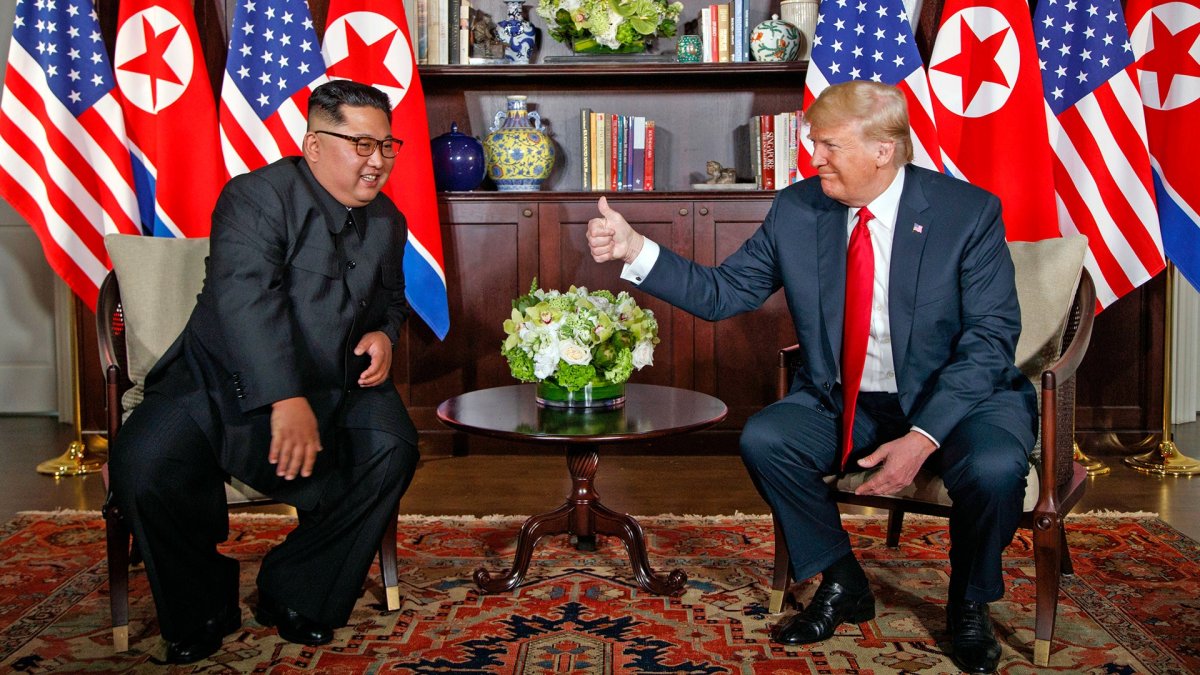
In one of his interviews, Trump tells Woodward he considered that Korean Kim Jong-un “was totally prepared” to go to war with the United States, and that full-blown conflict between the two nations was “much closer than anyone would know.” The U.S. president told Woodward that Kim Jong Un’s previously warlike outlook had been confirmed to him in his meeting with the North Korean leader. Trump considered that the situation was eventually diffused by the first-ever U.S.-North Korea summit held in Singapore in June 2018.
While tensions between North Korea and the United States have receded somewhat since 2017, the nuclear issue remains totally unresolved, with talks stalled since the second U.S.-North Korea summit in Vietnam in early 2019.
There are also signs that Pyongyang is further refining its nuclear weapons delivery systems, with claims from officials in South Korea that the North may be preparing to test a fully functional submarine-launched ballistic missile in around a year.
By increasing the portion of its nuclear arsenal carried aboard submarines , North Korea could make the detection and destruction of these weapons harder. The ability of North Korea to then launch a second strike, even if the chances of success were remote, would, in turn, require another update to the U.S. nuclear attack plans — and might involve more than the 80 nuclear weapons that Woodward wrote about.
Contact the author: thomas@thedrive.com
Comments couldn’t be loaded. Please refresh the page.
更新于美国东部时间2020年11月27日下午6:24。
现行的核战争计划是任何拥有核武器的军队最严密保守的秘密之一。然而,最近一份此类攻击计划的细节被曝光,揭示了美国设想在与朝鲜发生战争时使用80枚核武器。这一细节的曝光方式也相当不同寻常——相关内容出现在美国记者鲍勃·伍德沃德(Bob Woodward)的著作《愤怒》(Rage)中,该书详细描述了特朗普总统的执政时期,并于本周出版。
事实上,书中那段引文的含义并不完全清晰:
“奥马哈战略司令部仔细审查并研究了朝鲜政权更迭作战计划 5027——这是美国对可能包括使用 80 枚核武器的袭击所作出的回应。”
这可以从两个方面来解读:一是朝鲜可能发动的攻击会动用 80 枚核武器;二是同样数量的武器可以被视为美国对平壤下令的第一次打击的可能回应。
一枚未装弹头的“三叉戟II D5”导弹从俄亥俄级弹道导弹潜艇“内布拉斯加”号(SSBN 739)在加利福尼亚海岸附近发射。美国海军/一级大众传播专家罗纳德·古特里奇
伍德沃德在接受美国国家公共电台采访时澄清了所有误解,指出这 80 枚核武器是美国攻击计划——作战计划 5027 的一部分,该计划将包括“斩首”朝鲜独裁者金正恩政权。
伍德沃德向美国国家公共电台解释说:“我认为,鉴于朝鲜是一个流氓国家,正如我报道的那样,他们可能拥有几十枚隐藏得很好的核武器。”这位资深记者证实,时任美国国防部长詹姆斯·马蒂斯担心他可能不得不下令对朝鲜进行核打击。“我们为了阻止第二次发射而不得不开火的可能性是真实存在的,”马蒂斯承认。
据伍德沃德所述,马蒂斯对自己说:“你要把几百万人烧死。在我看来,任何人都没有权利杀害一百万人,但这就是我不得不面对的现实。”
马蒂斯部长离开E-4B空中指挥所。(美国国防部)
伍德沃德称,特朗普担心击落一枚射向美国的朝鲜弹道导弹(无论是否携带核弹头)可能会引发“隐士王国”的全面核打击。伍德沃德写道,特朗普已授权吉姆·马蒂斯发射一枚常规拦截导弹,击落任何可能射向美国的朝鲜导弹。
伍德沃德说,马蒂斯曾向他透露,他并不担心特朗普会对朝鲜发动先发制人的打击。相反,他真正担忧的是平壤的朝鲜领导人。
伍德沃德声称,事实上,马蒂斯对局势的担忧程度之高,甚至让他穿着运动服睡觉。“他的浴室里开着灯……以防他在洗澡时,他们探测到朝鲜发射导弹。”
马蒂斯的卧室和厨房里也安装了警报器。2017年夏天,警报不止一次响起,马蒂斯随即进入位于华盛顿特区的住所的通讯室。伍德沃德解释说,马蒂斯的车也一直被一辆SUV跟踪,车上配备的团队负责绘制任何来袭导弹的飞行轨迹,无论其威胁目标是日本、韩国还是美国。如果马蒂斯认为导弹具有敌意,他可以通过移动通讯链路下达击落导弹的指令。
金正恩视察“火星-15”洲际弹道导弹。(朝鲜官方媒体)
书中详细描述了一次导弹警报。2017年8月29日凌晨5点57分,情报显示朝鲜即将发射另一枚导弹。当时马蒂斯正在家中,他进入通讯室,被告知美国拦截导弹已准备就绪。这位国防部长通过地理空间地图监控朝鲜导弹的飞行轨迹,目睹它飞越日本上空,最终落入海中。伍德沃德将马蒂斯当时的工作描述为“一场永不停歇的炼狱,既是个人考验,又是炼狱般的折磨。没有节假日,没有周末休息,没有丝毫空闲时间。”
显然,在马蒂斯担任国防部长期间,朝鲜拥有核武器的现状令美国政府深思熟虑。总统和国防部长讨论过一项涉及80枚核武器的对朝打击计划,这并不难想象。
当然,早在2017年9月,朝鲜就进行了第六次(也是最近一次)核试验,并声称所试装置是一枚热核炸弹。同年,朝鲜战略导弹部队也进行了相当多的活动,包括首次试射“火星-14”和“火星-15”洲际弹道导弹,以及多次导弹飞越日本上空的试验。
2017年华盛顿和平壤关系紧张之际,《战区》杂志详细分析了美国战略司令部(STRATCOM)的8010作战计划——该计划概述了对多个未具名国家进行核打击的选项。当时我们重点报道的报告中有一段话尤其值得关注(文中保留了作者的强调):
尽管太空和网络空间的动态安全问题不断演变,但主权国家,包括势均力敌和接近势均力敌的国家,以及拥有新兴大规模杀伤性武器能力的地区敌对国家,仍然对国家安全构成传统威胁。
战区网站获得了一份经过删减的报告版本,其中没有直接提及朝鲜,但包含一个关于“构成全球威胁的国家”的章节——这很可能是朝鲜的暗语。
摘自美国战略司令部第8010号作战计划。
华盛顿当时考虑的方案之一是“作战计划5015”,即对朝鲜领导层发动核打击。伍德沃德也提到了这一点,这再次印证了他与特朗普的多次访谈。伍德沃德特别提到要“更新”这项计划——毕竟,一旦爆发全面战争,金正恩及其前任始终是优先打击目标。
金正恩在朝鲜第六次核试验前视察了一枚据称是热核武器的装置。(朝鲜官方媒体)
在一次采访中,特朗普告诉伍德沃德,他认为朝鲜领导人金正恩“完全做好了”与美国开战的准备,而且两国之间的全面冲突“比任何人想象的都要近得多”。这位美国总统告诉伍德沃德,他在与金正恩的会晤中证实了金正恩此前的好战倾向。特朗普认为,2018年6月在新加坡举行的首次美朝峰会最终缓和了局势。
虽然自 2017 年以来朝鲜和美国之间的紧张局势有所缓和,但核问题仍然完全没有得到解决,自 2019 年初在越南举行的第二次美朝峰会以来,谈判一直处于停滞状态。
还有迹象表明,平壤正在进一步改进其核武器运载系统。韩国官员声称,朝鲜可能准备在一年左右的时间里测试一枚功能齐全的潜射弹道导弹。
通过增加潜艇携带的核武库比例,朝鲜可以加大这些武器被探测和销毁的难度。即便成功的可能性微乎其微,朝鲜若要发动第二次核打击,反过来也需要美国再次更新其核打击计划——而且可能涉及的核武器数量将超过伍德沃德所描述的80枚。
联系作者:thomas@thedrive.com
评论加载失败,请刷新页面。