MUIS to strengthen religious guidance, spiritual care and family support at mosques伊斯兰宗教理事会将加强清真寺的宗教指导、精神关怀和家庭支持。
Acting Minister-in-charge of Muslim Affairs Zaqy Mohamad stressed the importance of safeguarding the trust that families and young people place in mosques and religious teachers.
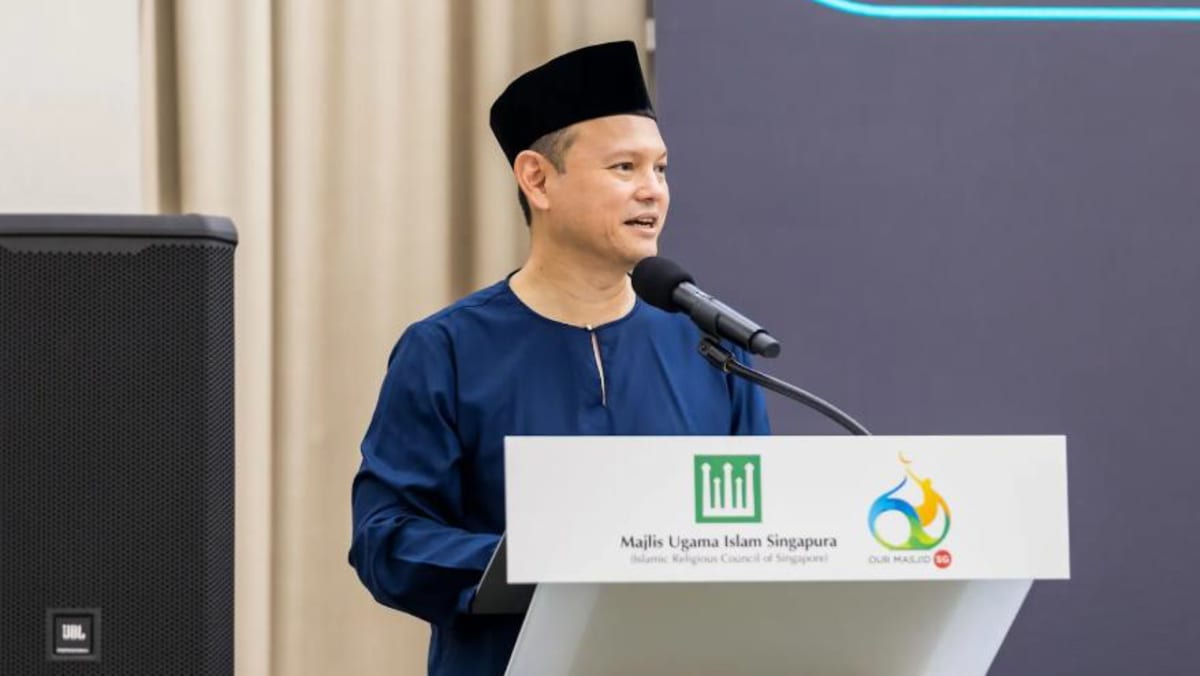
Acting Minister-in-charge of Muslim Affairs Zaqy Mohamad stressed the importance of safeguarding the trust that families and young people place in mosques and religious teachers.
Acting Minister-in-charge for Muslim Affairs, Mr Zaqy Mohamad, delivering a speech at One Mosque Sector Townhall on Oct 10, 2026. (Photo: MUIS)
This audio is generated by an AI tool.
SINGAPORE: The Islamic Religious Council of Singapore (MUIS) is introducing new initiatives to strengthen religious guidance, spiritual care and community support at mosques, as it seeks to better respond to the changing needs of the Muslim community.
These include appointing Mufti Associates across four mosque districts, developing an Islamic Spiritual Care and Guidance framework, and expanding community outreach through Qaryah networks, or local Muslim community groups.
The initiatives were announced at the One Mosque Sector Townhall on Saturday (Oct 10), which brought together about 350 mosque and Qaryah leaders and officers for a dialogue with Acting Minister-in-charge of Muslim Affairs Zaqy Mohamad.
Mr Zaqy also stressed the importance of safeguarding the trust that families and young people place in mosques and religious teachers.
CNA Games Guess Word Crack the word, one row at a time Buzzword Create words using the given letters Mini Sudoku Tiny puzzle, mighty brain teaser Mini Crossword Small grid, big challenge Word Search Spot as many words as you can Show More Show Less "Recent events have shown us how painful it is when it is broken. A sacred space was misused. Young people seeking guidance in our mosque space had their trust broken. It should never have happened," he said. "We must learn from it, act on it, and strengthen our safeguards. But safeguards must not make our mosques distant or unwelcoming," he added. "We should never have to choose between being open and being safe. Our mosques must be both." His remarks came after a case involving the sexual abuse of two young boys by a self-styled religious mentor, who is not an accredited religious teacher, conducting religious lessons at a mosque. The 37-year-old offender was sentenced in August to 27 years and 10 months' jail and 24 strokes of the cane. Mr Zaqy earlier said that the offender was neither a mosque staff member or volunteer, nor an accredited religious teacher under the Asatizah Recognition Scheme (ARS) and was not conducting a formal religious class organised or approved by the mosque. Following the case, MUIS announced measures to strengthen security at mosques, including patrols and CCTV monitoring.
"Recent events have shown us how painful it is when it is broken. A sacred space was misused. Young people seeking guidance in our mosque space had their trust broken. It should never have happened," he said.
"We must learn from it, act on it, and strengthen our safeguards. But safeguards must not make our mosques distant or unwelcoming," he added.
"We should never have to choose between being open and being safe. Our mosques must be both."
His remarks came after a case involving the sexual abuse of two young boys by a self-styled religious mentor, who is not an accredited religious teacher, conducting religious lessons at a mosque.
The 37-year-old offender was sentenced in August to 27 years and 10 months' jail and 24 strokes of the cane.
Mr Zaqy earlier said that the offender was neither a mosque staff member or volunteer, nor an accredited religious teacher under the Asatizah Recognition Scheme (ARS) and was not conducting a formal religious class organised or approved by the mosque.
Following the case, MUIS announced measures to strengthen security at mosques, including patrols and CCTV monitoring.
MUFTI ASSOCIATES ACROSS FOUR MOSQUE DISTRICTS
The initiatives announced on Saturday were part of a broader effort under the One Mosque Sector to bring help closer to the Muslim community as its needs evolve, while strengthening collaboration among mosques, asatizah, Qaryah networks and community partners.
Four District Office of Mufti Associates will be appointed to serve Singapore's four mosque districts.
They will provide more localised religious guidance and mentor Mosque Religious Officers (MROs), acting as a bridge between individual mosques and the Office of the Mufti.
MUIS said this would give mosque officers stronger support when responding to religious questions and emerging issues in the community.
The Mufti Associates will work alongside MUIS' Religious Content and Guidance unit, which will oversee religious content and guidance standards, while the associates will support their delivery across the four mosque districts.
SPIRITUAL CARE FRAMEWORK
MUIS is also developing a structured Islamic Spiritual Care and Guidance framework to establish a more consistent approach to spiritual care across the mosque sector.
Asatizah and MROs will be trained to identify people's spiritual care needs, provide appropriate religious and spiritual guidance, and connect them with professional or community services when additional support is required.
The support is intended to complement care provided by counsellors, healthcare professionals and social service agencies.
Implementation will begin with 20 MROs across four pilot mosques undergoing structured training in spiritual care.
The four pilot mosques are expected to be ready by the second quarter of 2027. The pilots will allow MUIS to refine the framework before effective approaches are progressively expanded across the mosque sector.
The framework is intended to address complex needs including family difficulties, end-of-life care, rehabilitation and social isolation.
MUIS is also working with PPIS on a study examining how mosques can better support seniors, families and young people, including those dealing with caregiving, illness, bereavement, family difficulties and social isolation.
SUPPORT FOR FAMILIES
Four Family Development Officers have also been deployed to Al-Khair Mosque, An-Nur Mosque, Al-Falah Mosque and Darul Ghufran Mosque.
Together with AMP Singapore, a non-profit organisation serving the Muslim community, they will enhance the delivery of the ARIF programme, which is expected to support more than 500 families by 2027 through parenting programmes, fathering support and marriage enrichment programmes.
The four mosques will act as first-stop centres for Muslim couples seeking help.
MUIS is also expanding its Qaryah networks to reach residents who may be less connected to mosque programmes.
For instance, in District West, Qaryah 2.0 is reaching families in rental housing estates through home-based religious education, while QaryahKITA has been rolled out at five locations to serve the broader community.
Later this year, Masjid Hasanah at Teban Gardens will pilot Qaryah Emas to connect seniors with their local mosque and strengthen their social networks.
SAFEGUARDS COMMITTEE BEGINS WORK
Mr Zaqy also gave an update on the Committee to Strengthen Safeguards in Religious Settings , which he previously announced.
The committee held its first meeting on Thursday and has begun its work.
It will engage selected stakeholders including religious teachers, madrasah staff, parents, young people and children to understand existing safeguards, assess how well they work and identify gaps.
This will inform "practical, prioritised recommendations" to make religious settings safer, Mr Zaqy said.
He added that having safeguards in place was not enough if they were not properly implemented.
"Do our people know the boundaries expected of them? Does someone feel safe raising a concern? Are warning signs recognised, and acted on quickly?" he said.
"This responsibility cannot rest with the Committee or MUIS alone. It is also the responsibility of every mosque leader, asatizah, staff member and volunteer, especially to protect the young persons and children that parents have entrusted to us."
Get our pick of top stories and thought-provoking articles in your inbox
Stay updated with notifications for breaking news and our best stories
Join our channel for the top reads for the day on your preferred chat app
代理穆斯林事务部长扎基·穆罕默德强调,维护家庭和年轻人对清真寺和宗教教师的信任至关重要。
2026年10月10日,穆斯林事务代理部长扎基·穆罕默德先生在清真寺区市政厅发表讲话。(图片:新加坡伊斯兰宗教理事会)
这段音频由人工智能工具生成。
新加坡:新加坡伊斯兰宗教理事会(MUIS)正在推出新的举措,以加强清真寺的宗教指导、精神关怀和社区支持,从而更好地回应穆斯林社区不断变化的需求。
这些措施包括在四个清真寺区任命穆夫提助理,制定伊斯兰精神关怀和指导框架,并通过卡里亚网络(当地穆斯林社区团体)扩大社区外展范围。
这些举措于周六(10 月 10 日)在“一个清真寺区市政厅”上宣布,约 350 名清真寺和卡里亚领导人及官员聚集在一起,与负责穆斯林事务的代理部长扎基·穆罕默德进行对话。
扎基先生还强调了维护家庭和年轻人对清真寺和宗教教师的信任的重要性。
CNA游戏 猜词游戏 逐行破解单词 流行词游戏 用给定的字母组成单词 迷你数独 小小的谜题,强大的脑力挑战 迷你填字游戏 小方格,大挑战 单词搜索 尽可能多地找出单词 显示更多 显示更少 “最近发生的事件让我们看到,当信任被打破时,会是多么痛苦。一个神圣的空间被滥用了。在我们清真寺寻求指导的年轻人,他们的信任被辜负了。这本不应该发生,”他说。“我们必须从中吸取教训,采取行动,并加强我们的安全保障。但安全保障绝不能使我们的清真寺变得疏远或不友好,”他补充道。“我们绝不应该在开放和安全之间做出选择。我们的清真寺必须两者兼备。” 他发表这番言论之前,发生了一起案件,一名自称宗教导师(并非认证宗教教师)的人在清真寺进行宗教课程时,性侵了两名幼童。这名37岁的罪犯于8月被判处27年10个月监禁和24下鞭刑。扎基先生此前表示,该罪犯既非清真寺工作人员或志愿者,也非根据“阿萨提扎认可计划”(ARS)获得认证的宗教教师,并且没有进行任何由清真寺组织或批准的正式宗教课程。案件发生后,伊斯兰宗教理事会(MUIS)宣布了加强清真寺安保的措施,包括巡逻和闭路电视监控。
“最近发生的事件让我们看到,信任被打破是多么痛苦。一个神圣的空间被滥用了。前来清真寺寻求指引的年轻人,他们的信任被辜负了。这本不应该发生,”他说。
“我们必须从中吸取教训,采取行动,并加强保障措施。但保障措施绝不能使我们的清真寺变得疏远或不受欢迎,”他补充道。
“我们不应该被迫在开放和安全之间做出选择。我们的清真寺必须两者兼备。”
此前发生了一起案件,一名自称宗教导师(但并非正规宗教教师)的人在清真寺进行宗教授课时,性侵了两名幼童。
这名 37 岁的罪犯于 8 月被判处 27 年 10 个月监禁和 24 下鞭刑。
扎基先生早些时候表示,该违法者既不是清真寺的工作人员或志愿者,也不是根据阿萨提扎认可计划 (ARS) 获得认可的宗教教师,也没有进行由清真寺组织或批准的正式宗教课程。
案件发生后,伊斯兰宗教理事会宣布采取措施加强清真寺的安全,包括巡逻和闭路电视监控。
穆夫提在四个清真寺区
周六宣布的这些举措是“一个清真寺”部门下更广泛努力的一部分,旨在随着穆斯林社区需求的演变,为他们提供更贴近社区的帮助,同时加强清真寺、阿萨提扎、卡里亚网络和社区伙伴之间的合作。
Mufti Associates 将设立四个地区办事处,为新加坡的四个清真寺区提供服务。
他们将提供更具地方性的宗教指导,并指导清真寺宗教官员(MRO),充当各个清真寺与穆夫提办公室之间的桥梁。
新加坡伊斯兰宗教理事会表示,这将为清真寺工作人员在回应宗教问题和社区中出现的新问题时提供更有力的支持。
穆夫提助理将与伊斯兰宗教理事会的宗教内容和指导部门合作,该部门将监督宗教内容和指导标准,而助理们将支持他们在四个清真寺区的实施。
灵性关怀框架
MUIS 还正在制定一个结构化的伊斯兰精神关怀和指导框架,以在清真寺领域建立更一致的精神关怀方法。
Asatizah 和 MRO 将接受培训,以识别人们的精神关怀需求,提供适当的宗教和精神指导,并在需要额外支持时将他们与专业或社区服务联系起来。
该支持旨在补充咨询师、医疗保健专业人员和社会服务机构提供的护理。
实施工作将首先在四个试点清真寺中选拔 20 名宗教事务官,对他们进行精神关怀方面的系统培训。
这四座试点清真寺预计将于 2027 年第二季度建成。这些试点项目将使伊斯兰宗教理事会 (MUIS) 能够在有效方法逐步推广到整个清真寺领域之前完善相关框架。
该框架旨在解决包括家庭困难、临终关怀、康复和社会孤立在内的复杂需求。
MUIS 还与 PPIS 合作开展一项研究,探讨清真寺如何更好地支持老年人、家庭和年轻人,包括那些面临照护、疾病、丧亲之痛、家庭困难和社会孤立的人。
对家庭的支持
此外,还向 Al-Khair 清真寺、An-Nur 清真寺、Al-Falah 清真寺和 Darul Ghufran 清真寺部署了四名家庭发展官员。
他们将与服务于穆斯林社区的非营利组织 AMP Singapore 携手,加强 ARIF 计划的实施。该计划预计到 2027 年将通过育儿计划、父亲支持和婚姻增进计划,为 500 多个家庭提供支持。
这四座清真寺将作为寻求帮助的穆斯林夫妇的第一站中心。
伊斯兰宗教理事会(MUIS)也在扩大其诵经员网络,以接触那些可能不太常参与清真寺活动的居民。
例如,在西部地区,Qaryah 2.0 通过家庭宗教教育惠及租赁住宅区的家庭,而 QaryahKITA 已在五个地点推出,服务于更广泛的社区。
今年晚些时候,特班花园的哈萨纳清真寺将试点“Qaryah Emas”项目,旨在将老年人与当地清真寺联系起来,并加强他们的社交网络。
保障监督委员会开始工作
扎基先生还介绍了此前宣布成立的加强宗教场所安全保障委员会的最新进展。
委员会于周四召开了第一次会议,并已开始工作。
它将与包括宗教教师、伊斯兰学校工作人员、家长、年轻人和儿童在内的特定利益相关者进行互动,以了解现有的保障措施,评估其运作情况,并找出差距。
扎基先生表示,这将为制定“切实可行的、优先考虑的建议”提供依据,以使宗教场所更加安全。
他还补充说,即使制定了保障措施,如果不能正确实施,也是不够的。
“我们的员工是否清楚对他们的期望界限?是否有人觉得提出担忧是安全的?预警信号是否能够被识别并迅速采取行动?”他说道。
“这项责任不能仅仅由委员会或伊斯兰宗教理事会承担。每一位清真寺的领导人、女祭司、工作人员和志愿者也都有责任,特别是保护家长们托付给我们的青少年和儿童。”
订阅我们的邮件,即可获取精选热点新闻和引人深思的文章。
订阅通知,第一时间获取突发新闻和精彩报道。
加入我们的频道,即可在您常用的聊天应用上获取当日热门文章。