Prewar US intel found intervention in Iran wasn’t likely to change leadership战前美国情报部门发现,干预伊朗不太可能改变其领导层。
A February intelligence assessment determined that American military intervention was not likely to lead to regime change in the Islamic Republic.
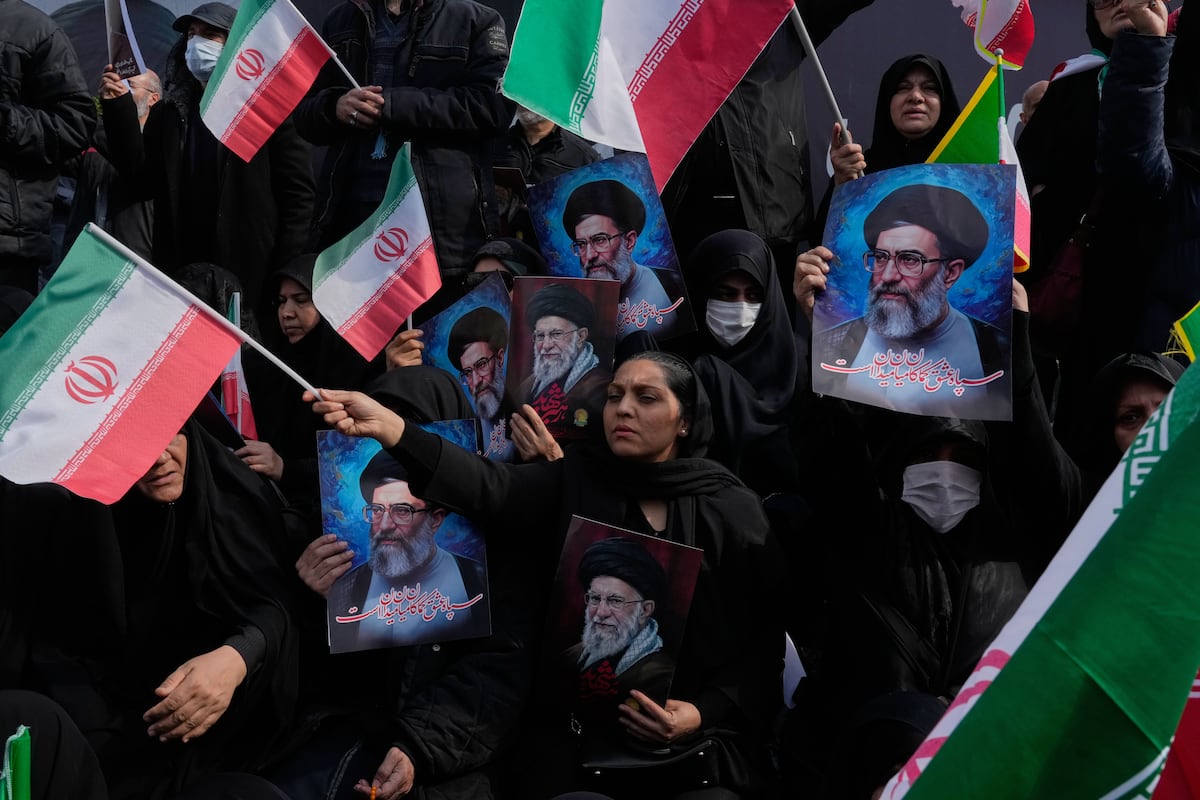
A U.S. intelligence assessment completed shortly before the United States and Israel launched a war in Iran had determined that American military intervention was not likely to lead to regime change in the Islamic Republic, according to two people familiar with the finding.
The National Intelligence Council’s assessment in February concluded that neither limited airstrikes nor a larger, prolonged military campaign would be likely to result in a new government taking over in Iran, even if the current leadership was killed, according to the two people, who spoke on condition of anonymity to describe the classified report.
The determination undercuts the administration’s assertion that it can complete its objectives in Iran relatively quickly, perhaps in a matter of weeks . The administration has asserted that it was not seeking regime change in Iran, even as President Donald Trump considers whom he would like to see lead the country.
The intelligence assessment concluded that no one powerful or unified opposition coalition was poised to take over in Iran if the leadership was killed, according to the people familiar with the report. It determined that Iran’s establishment would attempt to preserve continuity of power if Supreme Leader Ayatollah Ali Khamenei was killed, the people said.
In line with the assessment’s findings, Iran’s leading clerics on Sunday chose a new supreme leader, Mojtaba Khamenei, to succeed his father, who was killed in the war’s opening salvo. The son is believed to hold views that are even more hardline than his father, and his selection is a strong sign of resistance from Iran’s leadership and an indication the government won’t step aside quickly.
The details of the assessment were reported earlier by The Washington Post and The New York Times.
Trump and other top administration leaders have given different justifications for the strikes that began on Feb. 28, saying they were necessary to set back Iran’s nuclear weapons program or to preempt an Iranian ballistic missile attack. While Defense Secretary Pete Hegseth has said the war is not aimed at regime change, Trump has said it’s something he wants to see.
A message seeking comment from the Office of the Director of National Intelligence was not immediately returned Monday. Director Tulsi Gabbard fired the council’s acting chairperson last year after the release of a declassified NIC memo that contradicted statements the Trump administration has used to justify deporting Venezuelan immigrants.
Trump, dating back to his first term, has been deeply skeptical of the U.S. intelligence community and has frequently dismissed its findings as politically motivated or part of a “deep state” effort to undermine his presidency.
据两位知情人士透露,美国情报部门在美以对伊朗发动战争前不久完成的一项评估认定,美国的军事干预不太可能导致伊朗伊斯兰共和国政权更迭。
据两位匿名人士透露,美国国家情报委员会2月份的评估结论是,即使伊朗现任领导层被杀,有限的空袭或更大规模、更持久的军事行动也不太可能导致伊朗出现新政府。这两位人士在匿名的情况下描述了这份机密报告。
这一决定削弱了美国政府关于其能在相对短的时间内(或许只需几周)完成在伊朗目标的说法。尽管特朗普总统正在考虑由谁来领导伊朗,但美国政府仍坚称其无意在伊朗推翻政权。
据知情人士透露,情报评估得出结论,如果伊朗领导层遇害,没有任何一个强大或统一的反对派联盟能够接管政权。他们还表示,评估认为,如果最高领袖阿亚图拉·阿里·哈梅内伊遇害,伊朗当局将试图维持权力的连续性。
根据评估结果,伊朗最高宗教领袖周日推选穆杰塔巴·哈梅内伊为新任最高领袖,接替在战争初期阵亡的父亲。据信,穆杰塔巴的观点比其父更为强硬,他的当选强烈表明伊朗领导层对战争的抵抗,也预示着政府不会轻易让步。
《华盛顿邮报》和《纽约时报》此前已报道了评估的细节。
特朗普和其他政府高官对2月28日开始的空袭给出了不同的理由,称其是为了遏制伊朗的核武器计划或先发制人地阻止伊朗的弹道导弹袭击。国防部长皮特·赫格塞斯表示,这场战争并非旨在推翻伊朗政权,而特朗普则表示,这是他希望看到的局面。
周一,记者向国家情报总监办公室寻求置评,但未立即收到回复。去年,一份解密的美国国家情报委员会备忘录公布后,国家情报总监图尔西·加巴德解雇了该委员会的代理主席。这份备忘录与特朗普政府用来为驱逐委内瑞拉移民辩护的说法相矛盾。
从第一任期开始,特朗普就对美国情报界深表怀疑,并经常将情报界的调查结果斥为出于政治动机,或是“深层政府”破坏其总统任期的阴谋的一部分。