Anwar: Budget 2027 will balance fiscal discipline with cost-of-living relief安华:2027年财政预算案将平衡财政纪律与生活成本纾困。
PUTRAJAYA, Oct 10 — The government will continue to focus on prudent fiscal management in Budget 2027 to return benefits to the people and reduce cost-of-living pressures,...
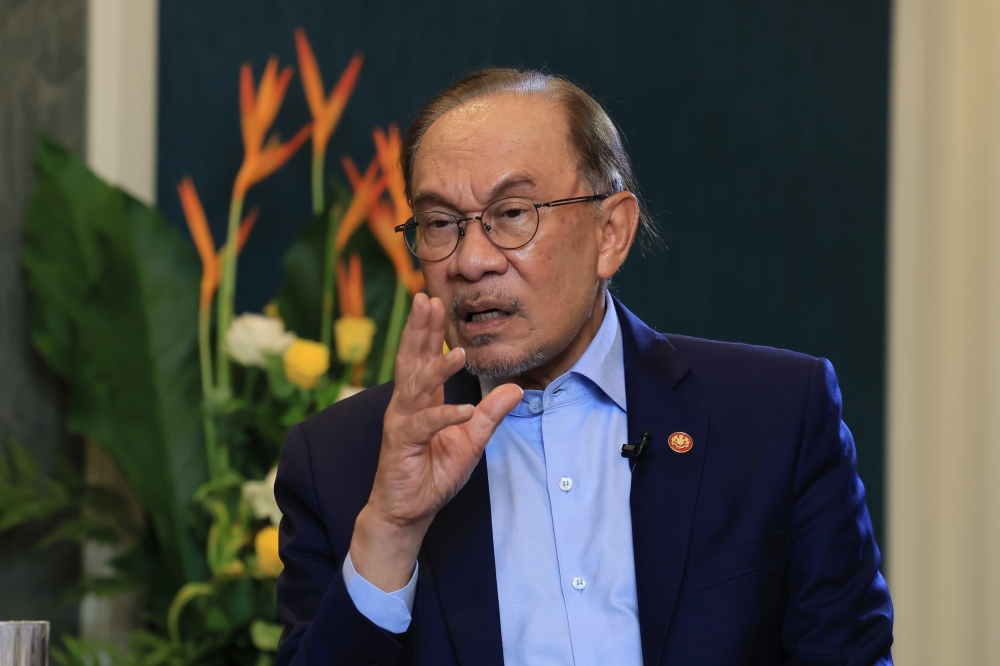
In Budget 2027, Prime Minister Datuk Seri Anwar Ibrahim emphasizes prudent fiscal management aimed at mitigating cost-of-living pressures, particularly for low-income households.
The government plans to strengthen its financial position by redirecting savings from improved governance and curbing leakages to benefit the people.
Focusing on investments in high-value sectors like IT and AI, the government seeks to balance reducing debt and boosting allocations for critical sectors while ensuring enhanced economic and social value from each ringgit spent.
Despite external global market influences on prices, the budget also highlights targeted subsidies and initiatives to protect household incomes and address inequality.
PUTRAJAYA, Oct 10 — The government will continue to focus on prudent fiscal management in Budget 2027 to return benefits to the people and reduce cost-of-living pressures, especially for low-income households, said Prime Minister Datuk Seri Anwar Ibrahim.
The prime minister said that savings from improved governance and efforts to curb leakages will be redirected to the people, in line with the need to strengthen the country’s financial position without compromising assistance to those in need.
Anwar, also the finance minister, said although Malaysia’s inflation rate is around two per cent, one of the lowest in the world, the public still feels cost-of-living pressures due to rising prices of goods and certain services.
“When people ask why this could not be done two years ago, we had to resolve several issues first. We had to address debt, be prudent, and set priorities,” he said in a special Madani Budget 2027 interview aired by RTM tonight.
Anwar noted that the government must balance the need to reduce debt and curb spending with the requirement to increase allocations for critical sectors such as defence, housing for service members and police, and school facilities.
According to him, this approach is important to ensure every ringgit the government spends delivers greater economic and social value for the people.
Anwar said the government’s fiscal space has improved through more disciplined financial management, but these savings must be safeguarded from erosion by leakages and waste.
He noted that a stronger fiscal position enables the government to provide assistance such as sports shoes for schoolchildren, as well as allowances and minimum income support for rubber smallholders and paddy farmers.
“This can all be achieved if we manage finances well and ensure that government expenditure truly reaches the targeted groups,” he stressed.
The prime minister said the government’s economic strategy also focuses on investments in high-value sectors such as information technology and artificial intelligence (AI), but these developments must be accompanied by measures to boost people’s income and productivity.
“Investments, IT, and AI are the things (referencing Budget 2027’s theme) we are ‘reaching for in the skies while anchored on our values’, meaning looking at issues like salaries, the price of goods, the needs of people with disabilities, and children who do not have access to basic facilities,” he said.
Anwar said solid economic growth must translate into quality job opportunities, higher wages, and reduced income inequality, and should not be measured solely by the gross domestic product growth rate.
He said the government would also continue to take into account the needs of social and cultural development in economic planning, including Islamic education training and aid to non-Muslim communities to maintain places of worship.
He acknowledged that Budget 2027 cannot solve all economic problems, but emphasised that the government’s fiscal policy would prioritise easing the burdens on the groups most affected by financial pressures.
In addition, Anwar explained that external factors and global markets influence part of the price of goods, for example, the cost of imported phosphate fertiliser via the Hormuz Strait following the crisis in West Asia.
According to him, fluctuations in commodity prices, logistics costs, and disruptions in international supply chains can directly impact domestic prices, limiting the government’s ability to control all prices.
Nevertheless, he said the government can still reduce price pressures by streamlining the supply chain, expanding farmers’ markets, and increasing sales of goods through the Federal Agricultural Marketing Authority.
Therefore, Anwar said the government would provide assistance and facilities based on the country’s financial capacity, with a more targeted approach to ensure public resources are not wasted.
As an example, he cited the decision to maintain subsidised RON95 petrol at RM1.99 per litre, even as global oil prices rise, as a measure to protect household disposable income.
He said the oil price used in the government’s initial projections was US$70 per barrel, but it rose to about US$110 per barrel, while RON95 petrol remained at RM1.99 per litre.
The decision, he said, reflects the government’s need to balance fiscal pressures from subsidies with the need to maintain stable transportation costs and the public’s purchasing power.
“Ultimately, in managing the national economy, the income and livelihoods of ordinary people become the measuring standards,” he said.
Anwar also emphasised that the government would continue to implement policies based on the country’s fiscal capacity, focusing on strengthening the economy, boosting productivity, reducing leakages, and protecting those most affected by cost-of-living pressures.
Yesterday, Anwar tabled Budget 2027 with the theme “Reaching for the Skies, While Anchored on Our Values,” with government allocations amounting to RM459.8 billion, plus RM25 billion in investments from government-linked investment companies (GLICs); RM11 billion in public-private investments; and RM14.2 billion in investments by Federal Statutory Bodies and the Minister of Finance (Incorporated), resulting in Budget 2027 as an expansionary fiscal policy of RM510 billion.
The Fifth Madani Budget aims to translate resilient economic growth into tangible benefits for the people through higher wages, more efficient targeted support, stronger fiscal discipline, and aggressive steps toward higher-value industries. — Bernama
Anwar says reduced waste and leakages created room for more Budget 2027 aid
Budget 2027 more than numbers, says Anwar — it is a promise to the people
Grieving mother haunted by memories of her three children killed in Pontian accident
Melaka tourist spots remain busy despite unhealthy API readings
在 2027 年财政预算案中,首相拿督斯里安华·易卜拉欣强调了审慎的财政管理,旨在缓解生活成本压力,特别是低收入家庭的生活成本压力。
政府计划通过改善治理和遏制资金流失所节省的资金重新分配,以造福人民,从而增强其财政实力。
政府着重投资信息技术和人工智能等高价值领域,力求在减少债务和增加关键领域拨款之间取得平衡,同时确保每一令吉的支出都能带来更高的经济和社会价值。
尽管价格受到外部全球市场的影响,但该预算也重点强调了有针对性的补贴和举措,以保护家庭收入并解决不平等问题。
布城,10月10日讯——首相拿督斯里安华·易卜拉欣表示,政府将在2027年财政预算案中继续注重审慎的财政管理,以造福人民并减轻生活成本压力,特别是低收入家庭的生活成本压力。
总理表示,通过改善治理和遏制资金流失所节省的资金将重新用于造福人民,这既符合加强国家财政状况的需要,又不会损害对有需要的人的援助。
安华同时也是马来西亚的财政部长,他表示,尽管马来西亚的通货膨胀率在2%左右,是世界上最低的通货膨胀率之一,但由于商品和某些服务的价格上涨,民众仍然感受到生活成本的压力。
“当人们问为什么两年前没能做到这一点时,我们首先必须解决几个问题。我们必须解决债务问题,保持谨慎,并确定优先事项,”他在今晚RTM播出的Madani 2027年预算特别采访中说道。
安华指出,政府必须在减少债务和控制支出的需要与增加国防、军人和警察住房以及学校设施等关键领域的拨款之间取得平衡。
他认为,这种做法非常重要,可以确保政府花的每一令吉都能为人民带来更大的经济和社会价值。
安华表示,政府通过更加严谨的财政管理改善了财政空间,但必须防止这些节省下来的资金因漏洞和浪费而流失。
他指出,更稳健的财政状况使政府能够提供援助,例如为学童提供运动鞋,以及为橡胶小农户和稻农提供津贴和最低收入支持。
他强调:“如果我们能妥善管理财政,确保政府支出真正惠及目标群体,这一切都可以实现。”
总理表示,政府的经济战略也侧重于对信息技术和人工智能等高价值行业的投资,但这些发展必须辅以提高人民收入和生产力的措施。
他说:“投资、信息技术和人工智能是我们(参考 2027 年预算案的主题)‘立足价值观,仰望星空’的目标,这意味着我们要关注工资、商品价格、残疾人的需求以及无法获得基本设施的儿童等问题。”
安瓦尔表示,稳健的经济增长必须转化为高质量的就业机会、更高的工资和更小的收入不平等,而不应仅仅以国内生产总值增长率来衡量。
他表示,政府在经济规划中也将继续考虑社会和文化发展的需求,包括伊斯兰教育培训和援助非穆斯林社区维护礼拜场所。
他承认2027年预算案无法解决所有经济问题,但强调政府的财政政策将优先减轻受金融压力影响最大的群体的负担。
此外,安瓦尔解释说,外部因素和全球市场也会影响部分商品价格,例如,西亚危机后,经霍尔木兹海峡进口磷酸盐肥料的成本。
他认为,大宗商品价格波动、物流成本变化以及国际供应链中断都会直接影响国内价格,从而限制政府控制所有价格的能力。
不过,他表示,政府仍然可以通过精简供应链、扩大农贸市场以及通过联邦农业营销局增加商品销售来减轻价格压力。
因此,安华表示,政府将根据国家的财政能力提供援助和设施,采取更有针对性的方法,以确保公共资源不被浪费。
他举例说,尽管全球油价上涨,但政府仍决定将RON95汽油的补贴价格维持在每升1.99令吉,以此作为保护家庭可支配收入的措施。
他表示,政府最初预测的油价为每桶70美元,但后来上涨到每桶约110美元,而RON95汽油的价格保持在每升1.99令吉。
他表示,这一决定反映了政府需要在补贴带来的财政压力与维持稳定的运输成本和公众购买力之间取得平衡。
“归根结底,在管理国民经济时,普通民众的收入和生活水平就成了衡量标准,”他说。
安华还强调,政府将继续根据国家的财政能力实施各项政策,重点是增强经济实力、提高生产力、减少资金流失,并保护那些受生活成本压力影响最大的人。
昨天,安华提交了以“立足价值观,志存高远”为主题的2027年财政预算案,政府拨款4598亿令吉,加上政府关联投资公司(GLIC)250亿令吉的投资;110亿令吉的公私合营投资;以及联邦法定机构和财政部长(法人)142亿令吉的投资,使得2027年财政预算案成为一项总额达5100亿令吉的扩张性财政政策。
第五份马达尼预算案旨在通过提高工资、更高效的定向支持、更严格的财政纪律以及积极发展高附加值产业,将强劲的经济增长转化为人民的切实利益。——马新社
安华表示,减少浪费和漏洞为2027年财政预算案提供了更多援助。
安华表示,2027年预算案不仅仅是数字,更是对人民的承诺。
悲痛欲绝的母亲,三个孩子在蓬蒂安事故中丧生,往事历历在目。
尽管API读数不佳,马六甲旅游景点依然熙熙攘攘。