9 nations back Ukraine’s Patriot alternative, Freyja — and want it flying in a year9个国家支持乌克兰的“爱国者”导弹系统的替代方案“弗雷娅”导弹系统,并希望它能在一年内投入使用。
Ballistic missiles are the one threat Ukraine can't stop with a weapon it makes itself.
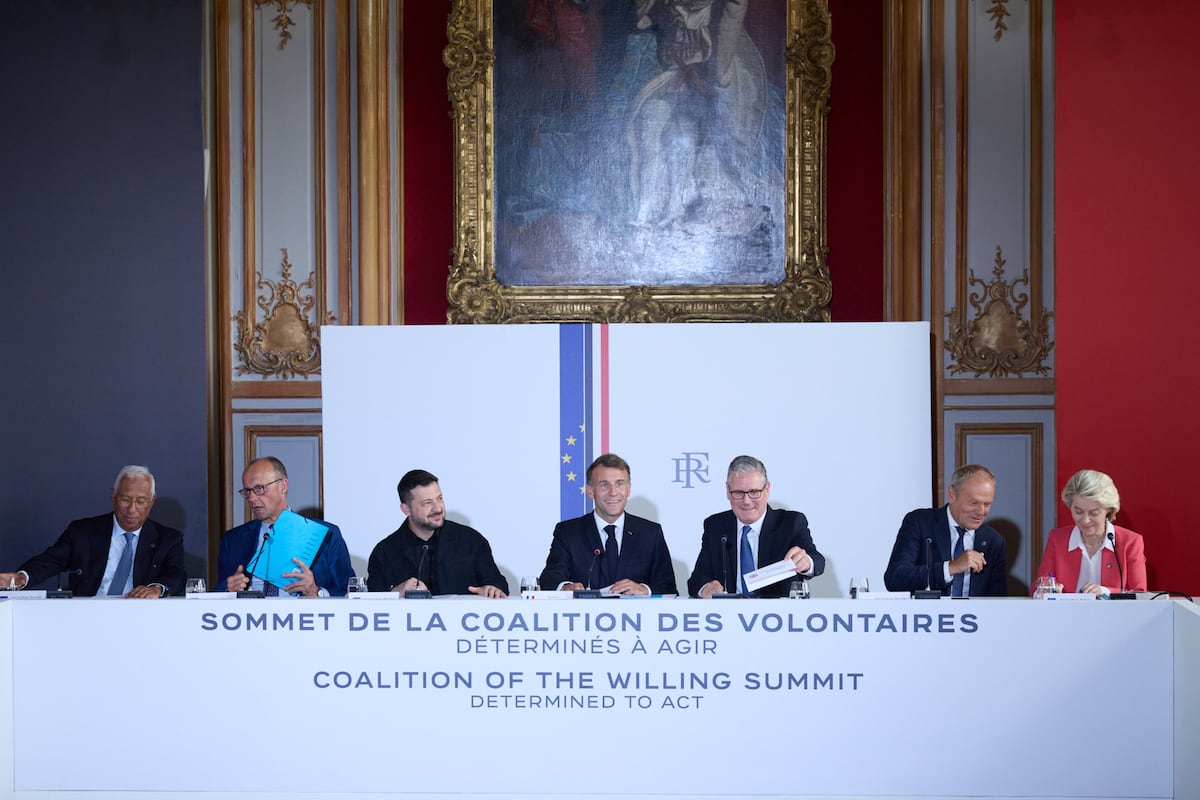
KYIV, Ukraine — Nine nations have joined Ukraine in a nascent anti-ballistic coalition to speed up production of Ukraine’s Freyja interceptor system and get it operational within a year, Ukrainian President Volodymyr Zelenskyy announced at a meeting of defense allies in France on Monday.
He first said a coalition of allies would work together to build the complicated weapon at last week’s NATO summit in Ankara, where U.S. President Donald Trump pledged to let Ukraine build its own Patriot interceptors after recognizing that, in Zelenskyy’s words, Ukraine is “a country that is ready to do this.”
The initiative was launched as a result of a global shortage of anti-ballistic interceptors, as the war in Iran and nearby countries carries on into its fifth month and allied partners across the world push to stock up on defensive weapons.
Nine European countries joined Ukraine as founding members in Paris: Denmark, France, Germany, Italy, the Netherlands, Norway, Spain, Sweden and the United Kingdom.
“We believe that the protection of Europe requires a global solution of integrated missile defence architecture to deter and defeat future missile threats — developed through collective effort, technological openness, and trusted industrial cooperation,” officials wrote in the joint statement formalizing the new coalition.
Although the United States has increased Patriot output and Europe has expanded production of the surface-to-air missile systems SAMP/T, IRIS-T and NASAMS, the shortfall between demand and supply is still wide.
“By bringing together our defence industrial base, our research, and our operational experience, we aim to build a shared antiballistic missile capacity for Europe and support relevant contributory activities. We do this not against any people, but in defence of our own,” the signatories said.
For Ukraine, gaining antiballistic capabilities would enable better protection of its cities and frontlines, both which have increasingly been targeted by Russian ballistic missiles that cannot be taken out by air defenses — and free them from completely depending on allies for this type of support.
For Europe, the coalition offers a fast-tracked path to resolving weapons shortages, strengthening their own defenses at a discount and benefiting from the battlefield expertise Ukraine has gained over years of full-scale war.
The group’s current priorities are to “establish common operational requirements, joint technical working groups, clear governance mechanisms, and a roadmap towards the Coalition’s first operational capabilities,” the announcement said.
In statements about the new coalition posted on social media on Monday, the president explained why Kyiv and Europe need their own anti-ballistic system.
“The threat of ballistic missiles in the world is only going to increase. This is one of the main consequences of the wars in Russia and Iran,” Zelenskyy said. “Therefore, FREYJA must become a reality.”
Ukraine will head the project, supplying the interceptor itself, with partners providing the radar, tracking and command-and-control systems it lacks, Zelenskyy said last week.
“Europe needs more protection against ballistic threats. Together, we can create such a system,” he said. “It is important to politically confirm that FREYJA is our joint project, serving the interests of all of Europe.”
NATO Secretary General Mark Rutte, European Commission President Ursula von der Leyen and European Council President António Costa also attended Monday’s meeting in Paris, in addition to representatives from several European defense companies, including: Destinus, Diehl Defence, Eurosam, Fire Point, HENSOLDT, Kongsberg Defence & Aerospace, Leonardo, MBDA, Saab, Safran, Thales and Weibel Scientific.
“Everyone present here is a vital part of what we need to create this system,” the Ukrainian president said. “I am grateful to the companies for their willingness to work together.”
Although the partnership’s nuts and bolts are still in the works, each country in the coalition will retain a certain degree of autonomy, Zelenskyy said.
“Europeans themselves will be able to decide how many systems Europe needs and where they should be located. This would create a strategically new situation,” he said. “Each European system would add to the overall strength and provide different parts of Europe with a strategic foundation for defense.”
Like Patriot interceptors, Freyja is an entire system that will rely on allies for production support, centering on Fire Point’s FP-7.X interceptor , designed to hit a ballistic target at roughly 15 miles altitude.
But while Patriots take 24 months to build, Zelenskyy said he wants Freyja flying much sooner.
“Each of us holds a crucial piece of the puzzle: we in Ukraine have the missiles, but these are only parts of the system,” he said. “Together, we can create this comprehensive system – FREYJA – within the next twelve months.”
乌克兰基辅——乌克兰总统泽连斯基周一在法国举行的国防盟友会议上宣布,九个国家已加入乌克兰,组成一个新兴的反弹道导弹联盟,以加快乌克兰“弗雷娅”拦截导弹系统的生产,并使其在一年内投入使用。
在上周于安卡拉举行的北约峰会上,他首次表示,盟友联盟将共同努力建造这种复杂的武器。美国总统唐纳德·特朗普在峰会上承诺,在承认乌克兰(用泽连斯基的话来说)是“一个准备好这样做的国家”之后,将允许乌克兰建造自己的“爱国者”拦截导弹。
由于伊朗及其周边国家的战争已持续五个月,全球反弹道导弹拦截器短缺,而世界各地的盟国都在努力储备防御性武器,因此这项倡议应运而生。
九个欧洲国家与乌克兰一起成为巴黎会议的创始成员国:丹麦、法国、德国、意大利、荷兰、挪威、西班牙、瑞典和英国。
“我们认为,保护欧洲需要一个全球性的综合导弹防御架构解决方案,以威慑和击败未来的导弹威胁——该架构的开发需要集体努力、技术开放和值得信赖的工业合作,”官员们在正式成立新联盟的联合声明中写道。
尽管美国增加了爱国者导弹的产量,欧洲也扩大了地对空导弹系统 SAMP/T、IRIS-T 和 NASAMS 的生产,但供需之间的差距仍然很大。
“通过整合我们的国防工业基础、研究成果和作战经验,我们旨在为欧洲构建共享的反弹道导弹能力,并支持相关的辅助活动。我们这样做不是为了对抗任何国家,而是为了保卫我们自己的国家,”签署国表示。
对于乌克兰而言,获得反弹道导弹能力将使其能够更好地保护其城市和前线,这两者都日益成为俄罗斯弹道导弹的目标,而这些导弹无法被防空系统拦截——并且使乌克兰摆脱对盟友此类支持的完全依赖。
对于欧洲而言,该联盟提供了一条快速解决武器短缺问题的途径,可以以较低的成本加强自身的防御,并受益于乌克兰在多年全面战争中积累的战场经验。
公告称,该组织目前的优先事项是“建立共同的作战需求、联合技术工作组、明确的治理机制,以及制定联盟首个作战能力的路线图”。
总统周一在社交媒体上发表声明,解释了为什么基辅和欧洲需要自己的反弹道导弹系统。
泽连斯基表示:“弹道导弹在世界上的威胁只会越来越大。这是俄罗斯和伊朗战争的主要后果之一。因此,‘弗雷娅’导弹系统必须成为现实。”
泽连斯基上周表示,乌克兰将主导该项目,提供拦截器本身,而合作伙伴将提供其所缺乏的雷达、跟踪和指挥控制系统。
“欧洲需要加强对弹道导弹威胁的防御。我们可以携手打造这样的系统,”他说道。“重要的是在政治上确认,FREYJA是我们共同的项目,服务于整个欧洲的利益。”
北约秘书长马克·吕特、欧盟委员会主席乌尔苏拉·冯德莱恩和欧洲理事会主席安东尼奥·科斯塔也出席了周一在巴黎举行的会议,此外还有几家欧洲国防公司的代表,包括:Destinus、Diehl Defence、Eurosam、Fire Point、HENSOLDT、Kongsberg Defence & Aerospace、Leonardo、MBDA、Saab、Safran、Thales 和 Weibel Scientific。
乌克兰总统表示:“在座的各位都是我们构建这一体系不可或缺的一部分。我感谢各公司愿意携手合作。”
泽连斯基表示,虽然伙伴关系的具体细节仍在制定中,但联盟中的每个国家都将保留一定程度的自主权。
“欧洲人将能够自行决定欧洲需要多少套系统以及它们的部署位置。这将创造一种全新的战略格局,”他说道。“每套欧洲系统都将增强整体实力,并为欧洲不同地区提供战略防御基础。”
与爱国者拦截器一样,弗雷亚是一个完整的系统,它将依靠盟友的生产支持,其核心是火点公司的 FP-7.X 拦截器,该拦截器设计用于击中大约 15 英里高度的弹道目标。
但泽连斯基表示,虽然爱国者号战机需要 24 个月才能建成,但他希望弗雷亚号战机能更快投入使用。
他说:“我们每个人都掌握着关键的一环:乌克兰拥有导弹,但这只是整个系统的一部分。我们携手合作,就能在未来十二个月内打造出这套完整的系统——弗雷娅。”