Malaysia has spent decades digitising public healthcare. Why are paper records still in use?马来西亚几十年来一直在推进公共医疗保健的数字化进程。为什么纸质病历仍然在使用?
KUALA LUMPUR, Oct 11 — For a patient visiting a hospital where electronic medical records are already in use, much of the paperwork that has traditionally accompanied a trip to a...
The article outlines Malaysia's ongoing transition to electronic medical records (EMRs) in its public healthcare system to enhance efficiency and patient care.
While EMRs allow for digital management of patient information, reducing reliance on physical documents, the implementation is not yet uniform across all facilities, with some continuing to use paper records.
The government plans to equip 150 hospitals and over 3,000 primary healthcare facilities with EMR systems by 2029, supported by a RM1 billion investment to boost digital infrastructure.
This initiative aims to streamline operations, reduce waiting times, and improve patient experiences by enabling seamless access to medical history across different healthcare settings.
KUALA LUMPUR, Oct 11 — For a patient visiting a hospital where electronic medical records are already in use, much of the paperwork that has traditionally accompanied a trip to a government hospital can now happen behind a screen.
Registration is recorded electronically, appointments are managed through the hospital’s information system, and doctors can retrieve a patient’s medical information without having to wait for a physical folder to arrive from another department.
The idea behind an electronic medical record (EMR) is straightforward: instead of a patient’s medical history being stored primarily in paper files, the information is recorded and managed digitally, allowing authorised healthcare personnel to retrieve it when needed.
But Malaysia is still in the process of making that transition across its public healthcare system.
For patients who continue to encounter paper-based processes, the contrast between the two systems can sometimes be stark.
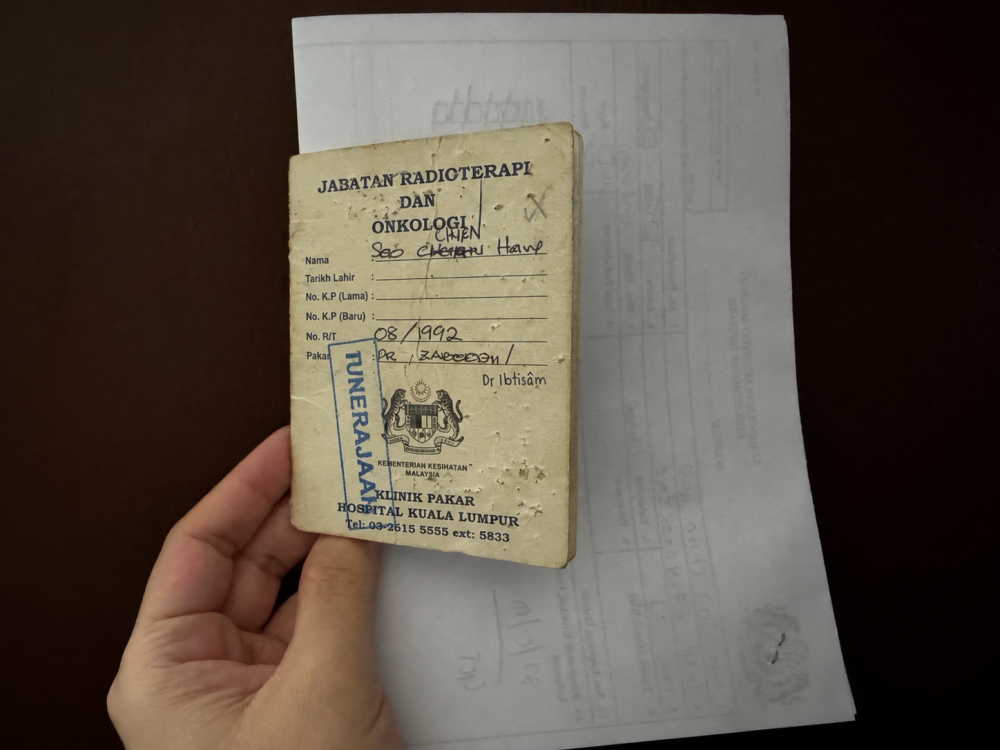
Jensen Lim, 38, recalled how his paper appointment book was once drenched in water, creating problems when he needed to arrange his next appointment.
“If you forget to bring the appointment book, you can’t get an appointment or even change the date of an existing appointment.
“Even a surgery appointment was dependent on a cardboard appointment slip,” Lim said when contacted by Malay Mail .
At an orthopaedic department, another patient who had suffered a dislocated and fractured shoulder said she was made to wait about two hours while a nurse searched for her medical file.
CK Tan, 70, said the hospital was eventually unable to locate it.
“I cannot comprehend how they lost such a thick file (about one inch).
“The doctor had to retrace my recovery process and what treatments I had undergone leading up to the present follow-up in order to plan for my next rehabilitation steps,” Tan told Malay Mail .
At an oncology department in northern Malaysia, another patient had a similar experience.
Her medical report containing biopsy results went missing, leaving her facing the possibility of having to undergo another procedure.
The file was eventually located several days later after efforts were made to find it.
“I was told that they misplaced my files, which I felt was appalling, given that it was not just a simple cough or flu illness I had,” said Medaline Chong, 60, who was diagnosed with leukaemia.
The inconvenience is not limited to hospital records.
At a dental clinic, Rahimah Mohd Razman, 35, said registration still involves dropping a paper appointment card into a designated box to join the queue.
Patients are now required to make appointments through the MySejahtera mobile application.
While this may sound more efficient, Rahimah said she was unable to choose the clinic where her dental records were kept because there were no appointments available there in the near term.
“I was in too much pain, and the next available slot for that particular clinic was in two months’ time.
“So I resorted to whichever clinic had the closest available slot.
“Because they had no access to my dental records, I had to rely on a photo I took of my tooth’s X-ray for the dentist to understand my case (a follow-up treatment),” Rahimah said.
These are individual experiences and do not suggest that every government hospital or clinic operates this way.
But they illustrate the practical problem EMR is intended to address: ensuring that a patient’s medical information can be retrieved when and where it is needed, without depending on the movement and storage of physical files.
What exactly is an EMR?
An EMR is more than a scanned copy of a paper file.
Currently, the Health Ministry’s hospital information system, HIS@KKM, covers areas including registration, appointments, admissions and medical-record management, as well as clinical documentation across different disciplines.
Other systems support specific areas of care, such as laboratory, pharmacy and radiology services.
This matters because Malaysia’s digital healthcare infrastructure was not built as a single nationwide database.
Different systems were introduced at different times and for different parts of the healthcare system.
Why are hospitals still using paper files?
While electronic records have existed in parts of the public healthcare system for years, not all facilities use the same system, and not all systems are connected.
For example, TPC-OHCIS uses a centralised database and allows records to be accessed by participating facilities using the system. It can also integrate with laboratory, pharmacy and radiology systems, as well as MyHIX, the Malaysian Health Information Exchange.
Hospital systems, meanwhile, have developed along a separate track, with HIS@KKM and specialist systems such as the Radiology Information System (RIS) and Picture Archiving and Communication System (PACS) being expanded at different facilities.
Introducing digital systems does not necessarily mean that every document generated during a patient’s treatment immediately becomes electronic.
Hospital Cyberjaya, for example, operates HIS@KKM, but according to the Selangor Health Department, some medical-record documents still remain outside the system and continue to be managed in physical form.
That reflects a wider challenge: a hospital can have a digital core while some documents, older records or other systems remain outside it.
What is the government doing now?
The latest push is backed by an additional RM350 million, bringing the allocation for public healthcare digitalisation to RM1 billion.
The wider initiative involves 150 hospitals and 2,000 health clinics nationwide, and includes accelerating EMR implementation and improving internet connectivity at public healthcare facilities.
Health Minister Datuk Seri Dzulkefly Ahmad said the additional allocation would allow the ministry to speed up EMR implementation and expand the use of digital medical systems.
He said the initiative was expected to improve efficiency, reduce waiting times, improve the patient experience and ease congestion at healthcare facilities.
Communications Minister Datuk Seri Fahmi Fadzil said 15 government hospitals were among the initial group expected to benefit, while efforts would be made to increase the number of hospitals and clinics covered.
How Malaysia ended up with multiple digital systems
Malaysia’s move towards digital public healthcare has been more than two decades in the making.
The broader Hospital Information System (HIS) programme was developed in 2002, with modules covering areas including electronic medical records and clinical documentation, patient management, radiology, laboratory, pharmacy and critical care.
Primary healthcare followed a different path.
The Teleprimary Care (TPC) system was introduced in 2005, while the Oral Health Clinical Information System (OHCIS) dates to 2009.
The two were later integrated into TPC-OHCIS, which was piloted in Seremban in 2017.
The Health Ministry describes TPC-OHCIS as an electronic medical record system used at participating primary healthcare facilities, with a centralised database that allows records to be accessed across facilities using the system.
According to the ministry’s 2011 annual report, development of HIS@KKM was about 90 per cent complete that year, with full development then expected by July 2012 before implementation at Hospital Raja Permaisuri Bainun in Ipoh.
In November 2025, the Health Ministry said it was targeting all 150 public hospitals and more than 3,000 primary healthcare facilities nationwide to be equipped with EMR systems by 2029.
Health Ministry’s EMR timeline
The broader effort is intended to support a more connected health-record system, an aspiration the Malaysian Communications and Multimedia Commission described in August 2026 as “One Individual, One Record”.
The result is a healthcare system in which digital tools are already widely used in some settings, but have been introduced at different times and for different purposes.
The challenge now is not simply to add more digital systems, but to ensure they can work together across facilities and levels of care.
Can a patient’s medical record follow them?
One of the goals of a national EMR is to establish the basis for a Lifetime Health Record, facilitate follow-up care at a healthcare facility closer or more convenient to the patient, and reduce repeated laboratory and radiology investigations.
In simple terms, the aim is for the medical record to follow the patient, rather than the patient having to follow the physical record.
What changes for patients?
As the systems become more connected, some changes could be relatively simple from a patient’s perspective.
Patients may no longer have to depend on carrying a physical appointment book, while a doctor at a participating facility could potentially retrieve relevant information from previous treatment instead of waiting for a physical file.
But the bigger change is not simply getting rid of paper.
Malaysia has spent more than two decades building different pieces of a digital healthcare system.
The next stage is making those pieces work together.
RM10,000 duty-free shopping coming to Langkawi and Labuan: What can you buy?
Unauthorised oil blending could tarnish Malaysia’s global image, experts warn
Better roads, stronger pitch: MB sees Budget 2027 lifting Negeri Sembilan’s investment appeal
文章概述了马来西亚正在其公共医疗保健系统中向电子病历 (EMR) 过渡,以提高效率和患者护理水平。
虽然电子病历可以对患者信息进行数字化管理,减少对纸质文件的依赖,但电子病历的实施尚未在所有医疗机构中统一进行,有些机构仍然使用纸质记录。
政府计划到 2029 年为 150 家医院和 3000 多个基层医疗机构配备电子病历系统,并为此投资 10 亿令吉以促进数字基础设施建设。
这项举措旨在通过实现不同医疗机构间对病史的无缝访问,简化操作流程,缩短等待时间,并改善患者体验。
吉隆坡,10 月 11 日讯——对于前往已启用电子病历的医院就诊的患者来说,以往前往公立医院就诊时需要填写的许多纸质文件,现在都可以在屏幕后完成。
注册信息以电子方式记录,预约通过医院的信息系统进行管理,医生无需等待其他部门送来纸质病历,即可获取患者的医疗信息。
电子病历 (EMR) 的理念很简单:患者的病史不再主要存储在纸质文件中,而是以数字方式记录和管理,使授权的医护人员能够在需要时检索这些信息。
但马来西亚的公共医疗保健系统仍在进行这种转型。
对于仍然需要使用纸质流程的患者来说,这两个系统之间的对比有时会非常鲜明。
38 岁的 Jensen Lim 回忆说,他的纸质预约簿曾经被水浸透,这给他安排下一次预约带来了麻烦。
“如果您忘记携带预约簿,您将无法预约,甚至无法更改现有预约的日期。”
“就连手术预约都要靠一张纸板预约单,”林先生在接受《马来邮报》采访时表示。
在骨科,另一位肩部脱臼和骨折的患者说,她被要求等待大约两个小时,因为一名护士在查找她的病历。
70岁的CK Tan表示,医院最终未能找到它。
“我无法理解他们怎么会弄丢这么厚的文件(大约一英寸厚)。
“医生不得不回顾我的康复过程以及我在本次复诊之前接受的治疗,以便制定我下一步的康复计划,”谭告诉《马来邮报》。
在马来西亚北部的一家肿瘤科,另一名患者也有类似的经历。
她的医疗报告(包含活检结果)丢失了,这让她可能不得不接受另一次手术。
经过一番努力,几天后终于找到了该文件。
“他们告诉我他们弄丢了我的病历,我觉得这太令人震惊了,因为我得的病不仅仅是普通的咳嗽或流感,”60岁的梅达琳·钟说道,她被诊断出患有白血病。
这种不便不仅限于医院病历。
35岁的拉希玛·莫哈末·拉兹曼在一家牙科诊所表示,登记仍然需要将纸质预约卡投入指定的箱子才能排队。
现在患者必须通过 MySejahtera 手机应用程序进行预约。
虽然这听起来效率更高,但拉希玛表示,她无法选择保存她牙科病历的诊所,因为近期那里没有预约名额。
“我当时疼痛难忍,而那家诊所的下一个空位要等到两个月以后。”
“所以我只能去离我最近的、有空位的诊所。”
拉希玛说:“因为他们无法查阅我的牙科记录,我只能依靠自己拍摄的牙齿 X 光片照片,让牙医了解我的病情(后续治疗)。”
这些都是个人经历,并不代表所有公立医院或诊所都是这样运作的。
但这说明了电子病历旨在解决的实际问题:确保在需要时随时随地检索患者的医疗信息,而无需依赖物理文件的移动和存储。
电子病历(EMR)究竟是什么?
电子病历不仅仅是纸质文件的扫描件。
目前,卫生部的医院信息系统 HIS@KKM 涵盖了登记、预约、入院和病历管理以及不同学科的临床文档等领域。
其他系统则为特定护理领域提供支持,例如实验室、药房和放射科服务。
这一点很重要,因为马来西亚的数字医疗基础设施并非建立在单一的全国性数据库之上。
不同的系统是在不同的时间针对医疗保健系统的不同部分引入的。
为什么医院还在使用纸质档案?
虽然电子病历在公共医疗保健系统的部分领域已经存在多年,但并非所有机构都使用相同的系统,也并非所有系统都相互连接。
例如,TPC-OHCIS 使用集中式数据库,并允许参与该系统的机构访问记录。它还可以与实验室、药房和放射科系统以及马来西亚健康信息交换平台 MyHIX 集成。
与此同时,医院系统沿着一条独立的轨道发展,HIS@KKM 和放射科信息系统 (RIS) 和影像归档和通信系统 (PACS) 等专业系统在不同的医疗机构中得到扩展。
引入数字化系统并不一定意味着患者治疗过程中产生的每份文件都会立即变成电子版。
例如,赛城医院(Hospital Cyberjaya)运行着 HIS@KKM 系统,但据雪兰莪州卫生局称,一些医疗记录文件仍然留在系统之外,继续以纸质形式管理。
这反映了一个更广泛的挑战:一家医院可能拥有数字化核心系统,但一些文件、旧记录或其他系统仍然位于其之外。
政府现在在做什么?
最新一轮的推进获得了额外 3.5 亿令吉的资金支持,使公共医疗保健数字化领域的拨款达到 10 亿令吉。
这项更广泛的计划涉及全国 150 家医院和 2000 家诊所,其中包括加快电子病历的实施和改善公共医疗机构的互联网连接。
卫生部长拿督斯里祖基菲里·艾哈迈德表示,这笔额外的拨款将使卫生部能够加快电子病历的实施,并扩大数字医疗系统的使用。
他表示,这项举措有望提高效率、减少等待时间、改善患者体验并缓解医疗机构的拥堵状况。
通讯部长拿督斯里法米·法兹尔表示,首批预计将有15家政府医院受益,同时将努力增加受益的医院和诊所数量。
马来西亚为何最终拥有多个数字系统
马来西亚向数字化公共医疗保健转型已经酝酿了二十多年。
更广泛的医院信息系统 (HIS) 计划于 2002 年开发,其模块涵盖电子病历和临床文档、患者管理、放射学、实验室、药房和重症监护等领域。
基层医疗保健走了一条不同的道路。
远程初级保健 (TPC) 系统于 2005 年推出,而口腔健康临床信息系统 (OHCIS) 则始于 2009 年。
后来,这两个系统被整合到 TPC-OHCIS 中,并于 2017 年在芙蓉进行了试点。
卫生部将 TPC-OHCIS 描述为参与的基层医疗机构使用的电子病历系统,它具有集中式数据库,允许使用该系统的机构访问记录。
根据卫生部 2011 年的年度报告,HIS@KKM 的开发在当年完成了约 90%,预计到 2012 年 7 月将全面开发完成,然后在怡保的 Raja Permaisuri Bainun 医院实施。
2025 年 11 月,卫生部表示,其目标是到 2029 年,为全国所有 150 家公立医院和 3000 多家基层医疗机构配备电子病历系统。
卫生部电子病历时间表
这项更广泛的努力旨在支持一个更加互联的健康记录系统,马来西亚通信和多媒体委员会在 2026 年 8 月将其愿景描述为“一个人,一份记录”。
其结果是,医疗保健系统中某些领域已经广泛使用了数字工具,但这些工具的引入时间和目的各不相同。
现在的挑战不仅仅是增加更多的数字系统,而是确保它们能够在不同的设施和护理级别之间协同工作。
病人的医疗记录可以随他们一起转移吗?
国家电子病历的目标之一是建立终身健康记录的基础,方便患者在离家更近或更方便的医疗机构接受后续护理,并减少重复的实验室和放射学检查。
简单来说,其目标是让医疗记录跟随患者,而不是让患者跟随纸质病历。
对患者而言,有哪些变化?
随着系统之间的联系日益紧密,从患者的角度来看,一些变化可能相对简单。
患者可能不再需要携带纸质预约簿,而参与机构的医生也可以从之前的治疗中检索相关信息,而无需等待纸质病历。
但更大的改变不仅仅是弃用纸张。
马来西亚花了二十多年时间构建数字医疗系统的各个组成部分。
下一步是将这些部分整合起来。
兰卡威和纳闽即将推出10000令吉免税购物:你可以买些什么?
专家警告:未经授权的石油混合行为可能损害马来西亚的国际形象
更好的道路,更强的吸引力:森美兰州务大臣认为2027年财政预算案将提升森美兰州的投资吸引力