RM510b Budget: Who really wins? — Tengku Zafrul Abdul AzizRM510b 预算:谁真正获胜? — 东姑扎夫鲁阿卜杜勒阿齐兹
OCTOBER 11 — Every national budget is a tightrope walk above a storm. I know this not from textbooks, but from long nights at the Ministry of Finance when I was the Minister,...
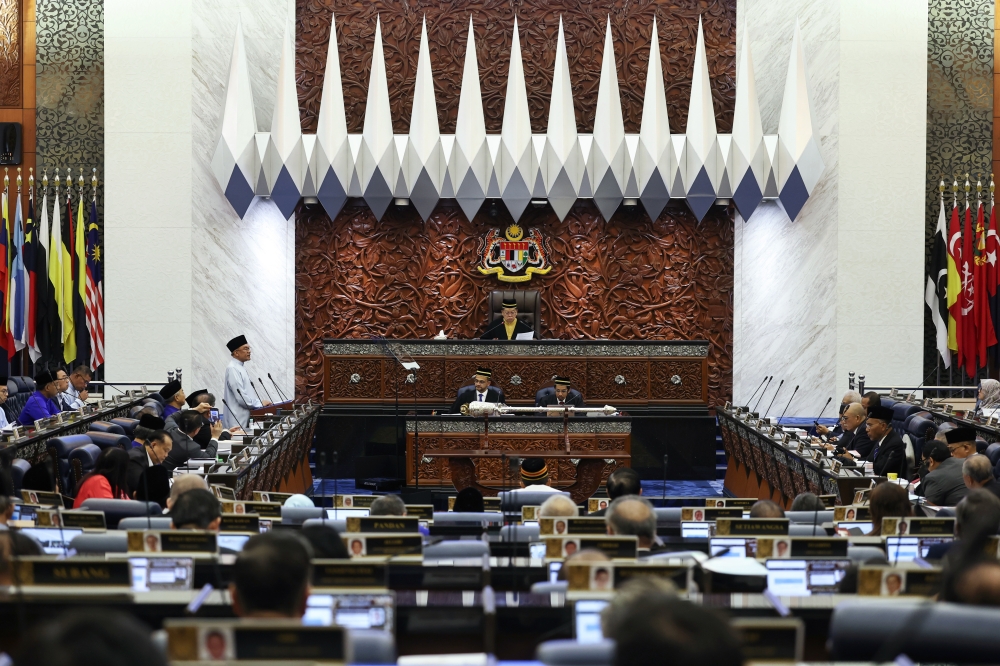
The Budget Madani 2027 of Malaysia, highlighted by former finance minister Tengku Datuk Seri Zafrul Aziz, aims to balance fiscal discipline with immediate public needs, increasing the total budget to RM510 billion while reducing the deficit to 3.3%.
Key measures include raising the minimum wage to RM2,000 for workers and RM2,500 for graduates, substantial cash aid, targeted subsidies, and tax relief for the middle class.
The budget also focuses on affordable housing, support for gig workers, and infrastructure investments aimed at creating jobs and boosting domestic confidence, reflecting a whole-of-nation approach towards sustainable economic growth.
OCTOBER 11 — Every national budget is a tightrope walk above a storm. I know this not from textbooks, but from long nights at the Ministry of Finance when I was the Minister, staring at numbers that never quite add up to everything the nation needs.
Every ringgit is debated and fought over. The relief a struggling family desperately needs now must be weighed, painfully, against the discipline that protects their children’s future.
Budget Madani 2027 walks that tightrope with remarkable steadiness. The total budget leaps to RM510 billion, up from RM470 billion, yet the fiscal deficit is targeted at 3.3 per cent, down from 5.5 per cent in 2022. That is not luck. It is the fruit of courage, of hard choices made when it would have been far easier to spend now and let future generations pay.
But numbers alone do not move hearts. The real worth of an investment is not the dazzling figure announced at a press conference. It is the salary a mother brings home at the end of the month. It is relieving the dilemma of choosing between paying the rent and buying food for the family.
Reform builds confidence, confidence attracts investment, and investment must, at long last, end in better jobs and higher wages for the rakyat.
Raising the floor beneath every worker
For far too long, Malaysian wages have not kept pace with prices. Workers’ pay makes up only 33.9 per cent of GDP, a situation now exacerbated by the West Asia crisis.
Hence, I wholeheartedly welcome the minimum wage rise from RM1,700 to RM2,000 a month from June 2027. More than four million workers will feel the difference, while smaller firms are given room to adjust. I have repeatedly advocated for a higher minimum wage, while calling out highly profitable companies to share their earnings more equitably with their workers.
Even more historic, a minimum wage of RM2,500 will be introduced for graduates and semi-skilled workers for the first time. Think of the young graduate whose parents sacrificed everything, only to be offered a wage not matching their effort. That era is ending. GLICs and GLCs have led this noble effort, raising their living-wage benchmark to RM3,400 for 230,000 workers. Now the private sector must also rise to contribute to nation-building.
A lifeline against the rising tide of prices
For many Malaysians, what keeps them awake at night is almost always the cost of living. This Budget answers that fear head-on. STR and SARA cash aid surges to RM16 billion, double the RM8 billion of 2022. Up to nine million STR recipients will receive up to RM1,800 a year in SARA, and some 13 million other adults, including the long-overlooked M40, will receive RM100 twice in 2027: before Hari Raya and on the eve of Merdeka.
Targeted subsidies have haunted policymakers for decades. Everyone knew they were necessary; few dared to act. Now billions that once leaked away to those who never needed them are flowing back to the people who do.
Justice for the squeezed middle
This Budget also hears the middle class, which has commendably carried this country on its shoulders. For the first time since 2010, the individual tax relief rises from RM9,000 to RM12,000, and income tax on chargeable income of RM70,000–RM150,000 is cut by a full percentage point.
Reliefs now stretch to postnatal care, and all care costs (not just medical bills) for parents and grandparents, and children’s tuition. Around five million taxpayers could gain up to RM1,600 a year: school shoes, a few months of groceries, a welcome breathing room, at last.
A safety net and affordable housing for those who had none
Some 600,000 Malaysians brave traffic, rain and exhaustion to deliver our meals and carry us home, often with no social safety net. This Budget finally institutionalises support for them. A Gig Consultative Council will set minimum income and social protection standards in early 2027. Until then, the government and Grab will co-fund a RM160 million package that could lift median e-hailing earnings by up to RM227 a month. Perkeso will match 35 per cent of gig workers’ contributions, rising to 50 per cent if platforms also contribute, and every citizen will be automatically enrolled in EPF at 18.
For families drowning in debt, Alliance Bank, Maybank and CIMB now offer a basic credit card with interest capped at 14 per cent per annum. The bankruptcy threshold rises to RM150,000, and PTPTN repayments are deferred for over 400,000 borrowers earning up to RM2,500 a month, with a RM50 minimum for those earning up to RM3,000. These are not mere statistics. They are lifelines thrown to people who were quietly managing their respective cost-of-living issues.
A home is where a family’s dreams take root, yet for too many young Malaysians that dream has felt cruelly out of reach. Nearly RM1 billion goes to affordable housing nationwide.
As for first-time buyers, there is no stamp duty on homes up to RM500,000. SJKP will also guarantee up to RM20 billion in home financing, to support 80,000 first-time home buyers, especially the self-employed whom banks often deem non-creditworthy.
Healing and teaching the nation
The long saga of contract doctors is finally ending, with more than 9,000 offered permanent posts in 2027. Those who healed us through our darkest days deserve nothing less. Funding for school repairs doubles to RM2 billion, and every pupil’s school-start aid rises to RM200.
A nation pulling together
What makes this Budget truly extraordinary is that the government is not carrying the load alone. GLICs will mobilise RM25 billion in domestic investment, joined by RM11 billion in public-private partnerships. Bakat Madani aims for 30,000 new jobs with the private sector at its side. Banks offer fairer credit and platforms share the cost of protecting their workers. All these clearly reflect a whole-of-nation effort.
The confidence this has built is undeniable. Approved investments reached RM218.5 billion in 1H2026, a fresh record for the fourth consecutive year, and Malaysia has soared to 15th in world competitiveness. But every project must be judged by the skilled jobs it creates, the wages it pays and the local firms it uplifts. That confidence is already reaching pay packets: the median manufacturing wage rose from RM3,200 in 2023 to RM3,422 in 2025.
A government with a heart
Taken together, these measures reveal something rare and precious: a government that does not merely count the ringgit flowing in, but cares deeply about the lives those investments must touch.
In a world growing more uncertain by the day, this is the leadership Malaysia needs. Confidence must find its way home, into the pay packets, the dinner tables and the dreams of ordinary Malaysians. That is the true measure of this Madani Budget, and it is a measure worth fighting for.
* Tengku Datuk Seri Zafrul Aziz is chairman of the Malaysian Investment Development Authority (Mida) and a former finance minister and investment, trade and industry minister.
** This is the personal opinion of the writer or publication and does not necessarily represent the views of Malay Mail .
The next China is still China: Why Asean must understand its transformation — Phar Kim Beng
Malaysia must make haze polluters pay — Shahrul Mizan Ismail
Fluent by AI, or fluent by habit? — Suarnamughy Maran
No Malaysian casualties reported in Saudi Arabia’s King Khalid airport attack in Riyadh, says Wisma Putra
Police arrest two suspected cable thieves after car crashes into drain during chase in Ampang
Haze: 15 areas in Malaysia record unhealthy air quality, Pasir Gudang records highest API reading at 180
马来西亚前财政部长东姑拿督斯里扎夫鲁·阿齐兹重点介绍了2027年马来西亚财政预算案,该预算案旨在平衡财政纪律与当前的公共需求,将总预算增加到5100亿令吉,同时将赤字减少到3.3%。
主要措施包括将工人的最低工资提高到 2000 令吉,将毕业生的最低工资提高到 2500 令吉,提供大量现金援助、有针对性的补贴以及为中产阶级减税。
该预算还重点关注经济适用房、对零工经济从业者的支持以及旨在创造就业机会和提振国内信心的基础设施投资,体现了全国上下共同努力实现可持续经济增长的方针。
10月11日——每一份国家预算都像是在暴风雨中走钢丝。我并非从教科书中得知这一点,而是在我担任财政部长时,无数个在财政部熬夜苦读、盯着那些永远无法完全满足国家所有需求的数字时才体会到的。
每一令吉都经过一番争论和争夺。一个苦苦挣扎的家庭现在急需的救济,必须痛苦地权衡利弊,既要满足救济的需要,又要保障孩子的未来。
2027年《马达尼预算》以惊人的稳健性在平衡财政赤字和财政赤字之间取得了平衡。预算总额从4700亿令吉跃升至5100亿令吉,但财政赤字目标设定为3.3%,低于2022年的5.5%。这并非偶然,而是勇气的结晶,是那些在明明可以轻松挥霍、让子孙后代买单的情况下,依然做出艰难抉择的成果。
但数字本身并不能打动人心。一项投资的真正价值并非新闻发布会上公布的耀眼数字,而是母亲们每月实际到家的收入,是减轻她们在支付房租和购买食物之间艰难抉择的困境。
改革建立信心,信心吸引投资,而投资最终必然会为人民带来更好的工作和更高的工资。
提高每位工人的劳动基础
长期以来,马来西亚的工资增长一直未能跟上物价上涨的步伐。工人的工资仅占国内生产总值的33.9%,而西亚金融危机使这种情况雪上加霜。
因此,我衷心欢迎自2027年6月起将最低工资从每月1700令吉提高到2000令吉。超过四百万工人将感受到这一变化,而小型企业也将有调整的空间。我一直倡导提高最低工资,同时呼吁高利润公司更公平地与员工分享利润。
更具历史意义的是,毕业生和半熟练工人的最低工资将首次提高到2500令吉。想想那些父母倾尽所有供养他们的年轻毕业生,他们最终得到的却是与付出不成正比的薪水。这样的时代即将结束。政府关联公司(GLIC)和政府联营公司(GLC)率先做出了这项崇高的贡献,将23万名员工的最低生活工资标准提高到3400令吉。现在,私营部门也必须挺身而出,为国家建设贡献力量。
抵御价格上涨的生命线
对许多马来西亚人来说,夜不能寐的几乎总是生活成本。这份预算案正面回应了这一担忧。社会救济金(STR)和特别救济金(SARA)的现金援助总额将飙升至160亿令吉,是2022年80亿令吉的两倍。多达900万社会救济金受益人每年将获得高达1800令吉的特别救济金,而包括长期被忽视的M40群体在内的约1300万其他成年人将在2027年获得两次100令吉的补助:一次在开斋节前,一次在国庆日前夕。
定向补贴问题几十年来一直困扰着政策制定者。人人都知道补贴的必要性,但鲜有人敢于付诸行动。如今,曾经流向那些根本不需要补贴的人的数十亿美元,正重新流向真正需要补贴的人。
为被挤压的中产阶级伸张正义
这份预算案也听取了中产阶级的意见,他们一直以来都为国家的发展做出了卓越的贡献。自2010年以来,个人所得税减免额首次从9000令吉提高到12000令吉,而应税收入在7万至15万令吉之间的个人所得税则降低了一个百分点。
减免范围现已扩展至产后护理、父母和祖父母的所有照护费用(不仅限于医疗费用)以及子女的学费。约五百万纳税人每年可获得高达1600令吉的补助:这笔钱足以支付孩子的校鞋、几个月的食品杂货,以及难得的喘息之机。
为那些没有安全保障和经济适用房的人提供社会保障和经济适用房。
约有60万马来西亚人冒着交通拥堵、风雨交加和疲惫不堪的天气,为我们提供外卖和送餐服务,他们往往缺乏社会保障。这份预算案终于将对他们的支持制度化。零工咨询委员会将于2027年初制定最低收入和社会保障标准。在此之前,政府和Grab将共同出资1.6亿令吉,有望使网约车司机的收入中位数每月增加高达227令吉。马来西亚社会保险机构(Perkeso)将匹配零工人员35%的公积金缴款,如果平台也缴款,则匹配比例将提高到50%。此外,所有公民在18岁时都将自动加入雇员公积金(EPF)。
对于那些深陷债务泥潭的家庭,Alliance Bank、Maybank 和 CIMB 现推出年利率上限为 14% 的基本信用卡。破产门槛提高至 15 万令吉,超过 40 万月收入不超过 2500 令吉的借款人可延期偿还高等教育基金(PTPTN)贷款,月收入不超过 3000 令吉的借款人最低还款额为 50 令吉。这些并非仅仅是统计数据,而是为那些默默承受生活成本压力的人们提供的救命稻草。
家是承载家庭梦想的地方,然而对太多马来西亚年轻人来说,这个梦想却遥不可及。全国范围内,近10亿令吉将用于建设可负担住房。
对于首次购房者,购买价值不超过50万令吉的房屋无需缴纳印花税。此外,华小还将提供高达200亿令吉的房屋贷款担保,以支持8万名首次购房者,特别是那些银行通常认为信用不佳的自雇人士。
治愈和教导国家
合同医生制度的漫长篇章终于即将落幕,2027年将有超过9000名医生获得永久职位。那些在我们最黑暗的日子里治愈我们的人,理应得到这样的待遇。学校维修经费翻倍至20亿令吉,每位学生的入学补助金也提高至200令吉。
举国上下团结一心
这份预算案真正非凡之处在于,政府并非孤军奋战。政府投资公司(GLIC)将调动250亿令吉的国内投资,同时还将通过公私合作项目投入110亿令吉。Bakat Madani计划与私营部门携手,创造3万个新的就业岗位。银行提供更公平的信贷,平台也分担了保护员工的成本。所有这些都清晰地体现了举国上下齐心协力的努力。
这带来的信心毋庸置疑。2026年上半年,获批投资额达到2185亿令吉,连续第四年创下新纪录,马来西亚在全球竞争力排名中跃升至第15位。但每个项目都必须以其创造的技能型就业岗位、支付的工资水平以及对本地企业的支持力度来评判。这种信心已经开始体现在工资水平上:制造业工资中位数从2023年的3200令吉上涨至2025年的3422令吉。
一个有爱心的政府
综合来看,这些措施揭示了一些罕见而珍贵的东西:一个政府不仅关注流入的令吉数额,而且非常关心这些投资将影响到人们的生活。
在这个日益充满不确定性的世界里,这正是马来西亚需要的领导力。信心必须深入人心,体现在普通马来西亚人的工资单、餐桌和梦想中。这才是衡量这份“马达尼预算”的真正标准,也是值得我们为之奋斗的目标。
* 东姑拿督斯里扎夫鲁阿齐兹是马来西亚投资发展局(Mida)主席,也是前财政部长和投资、贸易和工业部长。
**本文仅代表作者或刊物个人观点,并不一定代表《马来邮报》的立场。
下一个中国依然是中国:东盟为何必须理解其转型——法金本
马来西亚必须让烟霾污染者付出代价——Shahrul Mizan Ismail
是人工智能造就的流利,还是习惯造就的流利?——苏尔纳穆吉·马兰
马来西亚外交部表示,沙特阿拉伯利雅得哈立德国王国际机场袭击事件中,没有马来西亚公民伤亡报告。
警方在安邦追捕过程中,一辆汽车撞入排水沟,两名涉嫌盗窃电缆的嫌疑人被警方逮捕。
雾霾:马来西亚15个地区空气质量不健康,巴西古当空气污染指数(API)读数最高,达180。