Commentary: Liquidity fix for small and mid-caps on SGX requires more to be done评论:解决新加坡交易所中小市值股票流动性问题仍需采取更多措施。
SGX says it should not be faulted if stocks have poor liquidity. It has a point, but the bourse can do more, says former editor and financial journalist Ven Sreenivasan.
新闻视频
SGX says it should not be faulted if stocks have poor liquidity. It has a point, but the bourse can do more, says former editor and financial journalist Ven Sreenivasan.
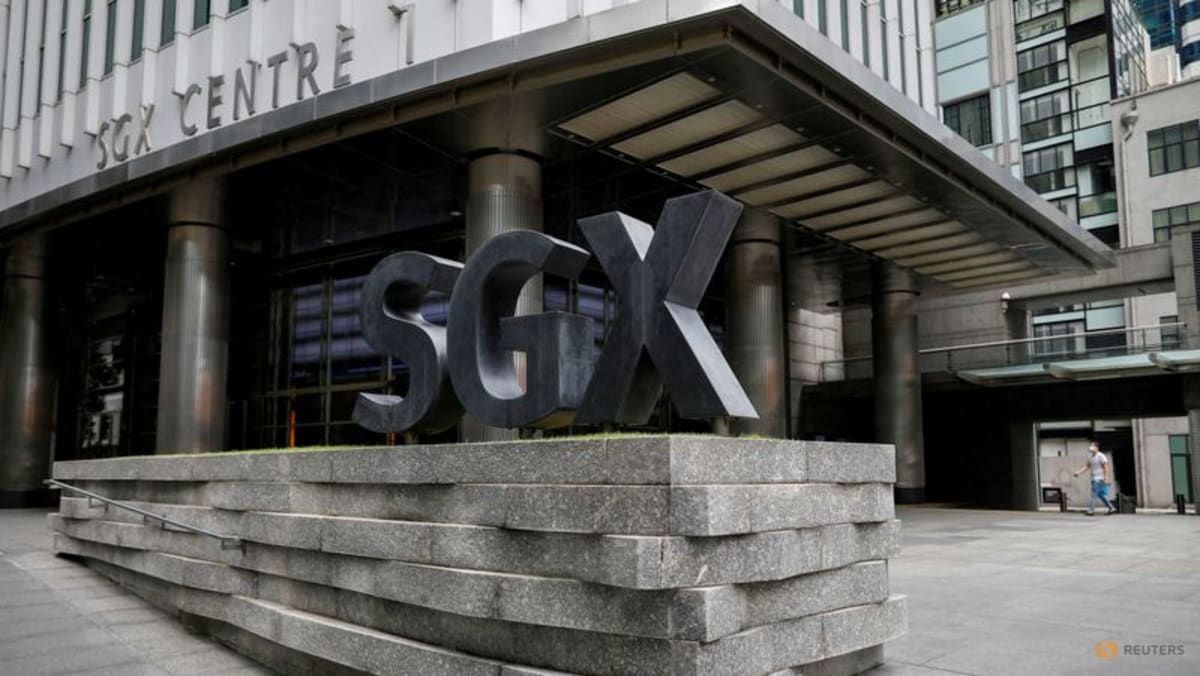
FILE PHOTO: Singapore Exchange's (SGX) logo is seen in the central business district, Singapore, April 7, 2020. REUTERS/Edgar Su/File Photo/File Photo
This audio is generated by an AI tool.
SINGAPORE: Singapore Exchange (SGX) chairman Koh Boon Hwee stirred up some chatter recently with his comments on liquidity in the local stock market.
Speaking at an event on Oct 1, he said small- and medium-sized enterprises (SMEs) should not depend on SGX to boost their valuations, as the bourse does not create liquidity nor demand and supply.
Instead, listed firms should proactively communicate their strategies so that investors can better understand their businesses and growth prospects.
“The exchange can’t do that for you, neither can it guarantee that your counter will be liquid,” Mr Koh said.
CNA Games Guess Word Crack the word, one row at a time Buzzword Create words using the given letters Mini Sudoku Tiny puzzle, mighty brain teaser Mini Crossword Small grid, big challenge Word Search Spot as many words as you can Show More Show Less
PERENNIAL PROBLEM FOR SMALL AND MID-CAPS
These comments must have been painful for the many small and mid-cap stocks on SGX that continue to see thin trading despite the broader gains in the local market.
The benchmark Straits Times Index (STI) has surged from around 3,800 at the start of 2025 to well over 5,000 points today. Yet, this has been driven largely by the three local banks , which together account for more than half of the index’s weightage.
This masks the perennial issue that many small and mid-caps, especially those with market capitalisation of below S$200 million (US$156 million), remain rangebound and thinly traded.
Poor liquidity prevents proper price discovery, which in turn makes it difficult for these companies to use their shares as currency to raise capital or engage in meaningful merger and acquisition activity.
Mr Koh is right to say that companies have to take responsibility for raising market awareness of their worth. Good investor relations and communications can yield results but for many SMEs that have put in significant effort such as by holding detailed investor engagement exercises, their shares can still be thinly traded for days at times. Companies like ISOTeam, Nordic Group and Sasseur REIT come to mind.
The bourse has done its part by profiling several of these companies through investor education activities, including seminars.
Wider market revitalisation measures are also under way, such as the S$6.5 billion Equity Market Development Programme (EQDP) which have brought on a burst of liquidity in the local market. Two weeks ago, the Monetary Authority of Singapore appointed the third batch of five asset managers under the programme, placing a total of S$1.45 billion with the likes of Amundi and Franklin Templeton.
But while the EQDP has created primary demand for initial public offerings and share placements, it does not seem to have done much for secondary trading and liquidity on SGX.
Maybank, in an Oct 2 report, noted that while S$5.4 billion of the EQDP funds has since been allocated, it has “yet to meaningfully appear as institutional buying in the market”.
Year to date, the market’s outperformance has been limited to large-cap financials, which are up 42 per cent, while the rest of the STI is flat. The iEdge Singapore Next 50 index , which is SGX’s new mid-cap index, is 12 per cent higher, but still significantly trails the financials, the report said.
PRIVATISATION SHOULD NOT BE A DEFAULT OPTION
In his recent comments, SGX’s Mr Koh also made the point that privatisation could be an option for those whose shares are thinly traded. This echoed what he wrote in his annual letter to SGX shareholders days before that “privatisation is not a tragedy but a rational and often healthy outcome”.
To be sure for such firms, the benefits of going private outweigh the gains of remaining listed, which would involve forking out large compliance costs and management efforts to meet the regulatory requirements.
While there may be no shame in delisting, it should not be a default option.
A listing still carries some prestige value, especially for companies engaged in global business. It raises visibility of the company and lends credibility in the financial and investor arena.
It also enables a company to raise capital more efficiently for acquisitions and strategic transactions. Listed shares can also be valuable for employee reward, remuneration and retention.
In short, the true challenge is to lift overall secondary trading liquidity in SMEs on the SGX, and more can be done.
One possibility is to remove SGX clearing and trading fees to reduce friction costs for proprietary traders and market makers. Encouraging and attracting proprietary trading and market making to the SMEs can help improve the bid–ask spreads – the difference between the highest price a buyer is ready to pay and the lowest price a seller is willing to accept – and improve liquidity and trading activity.
Another could be to encourage SGX member brokerage firms to hire in-house proprietary traders who trade using a firm’s own capital, rather than client funds, and can provide trading liquidity to the market, as was the case during the heydays of the market prior to the 2013 penny stock crash. To be sure, some level of regulatory policing might be needed to prevent the creation of a false market.
Lastly, reporting templates in SGX announcements could be created for half and full-year results where companies can provide more explicit and detailed forward earnings guidance and outlook. These fields in the template can be made compulsory.
Delisting may make sense. But before making this the default way out, other options should be looked at. Investors deserve that much, at the very least.
Ven Sreenivasan is a former editor and journalist who has covered financial markets, economic and corporate news and aviation for more than 30 years.
Our chief editor shares analysis and picks of the week's biggest news every Saturday.
Get our pick of top stories and thought-provoking articles in your inbox
Stay updated with notifications for breaking news and our best stories
Join our channel for the top reads for the day on your preferred chat app
新加坡交易所表示,如果股票流动性差,不应受到指责。前编辑兼财经记者文·斯里尼瓦桑认为,交易所的说法有一定道理,但还可以做得更多。
资料照片:2020年4月7日,新加坡中央商务区,新加坡交易所(SGX)的标志。路透社/Edgar Su/资料照片/资料照片
这段音频由人工智能工具生成。
新加坡:新加坡交易所(SGX)主席许文辉最近就本地股市流动性发表的评论引起了一些讨论。
他在 10 月 1 日的一次活动上表示,中小企业不应该依赖新加坡交易所来提升估值,因为该交易所既不创造流动性,也不创造供求关系。
相反,上市公司应该主动沟通其战略,以便投资者更好地了解其业务和增长前景。
“交易所无法为你做到这一点,也无法保证你的交易品种会有流动性,”许先生说。
CNA游戏 猜词游戏 逐行破解单词 流行词游戏 用给定的字母组成单词 迷你数独 小小谜题,挑战你的大脑 迷你填字游戏 小方格,大挑战 单词搜索 尽可能多地找出单词 显示更多 显示更少
中小市值公司面临的常年性问题
这些评论对于新加坡交易所(SGX)上众多交易清淡的中小市值股票来说,无疑是令人痛心的,尽管本地市场整体上涨,这些股票的交易量依然低迷。
基准海峡时报指数(STI)已从2025年初的约3800点飙升至如今的5000点以上。然而,这主要由三家本地银行推动,它们合计占该指数权重的一半以上。
这掩盖了一个长期存在的问题,即许多中小市值股票,尤其是市值低于 2 亿新元(1.56 亿美元)的股票,仍然处于区间震荡且交易清淡的状态。
流动性不足阻碍了价格的合理发现,进而使得这些公司难以利用股票作为货币筹集资金或进行有意义的并购活动。
Koh先生说得对,公司必须承担起提升市场对其价值认知度的责任。良好的投资者关系和沟通固然能带来成效,但许多中小企业即便投入了大量精力,例如开展详尽的投资者互动活动,其股票有时仍会连续数日交易清淡。ISOTeam、Nordic Group和Sasseur REIT等公司就是很好的例子。
交易所也尽其所能,通过举办投资者教育活动(包括研讨会)对其中几家公司进行了介绍。
更广泛的市场振兴措施也在进行中,例如规模达65亿新元的股票市场发展计划(EQDP),该计划已为本地市场注入了大量流动性。两周前,新加坡金融管理局根据该计划委任了第三批五家资产管理公司,共计向安盛投资(Amundi)和富兰克林邓普顿(Franklin Templeton)等公司投入了14.5亿新元。
虽然 EQDP 为首次公开募股和股票配售创造了主要需求,但似乎对新加坡交易所的二级交易和流动性并没有起到多大作用。
马来亚银行在 10 月 2 日的一份报告中指出,虽然 EQDP 基金的 54 亿新元已被分配,但“尚未在市场上以机构买盘的形式出现”。
今年以来,市场表现优异的主要是大型金融股,上涨了42%,而海峡时报指数的其他成分股则基本持平。报告指出,新加坡交易所新推出的中型股指数——iEdge Singapore Next 50指数上涨了12%,但仍远落后于金融股。
私有化不应是默认选项
新加坡交易所的许先生在最近的评论中也指出,对于那些股票交易量低的公司来说,私有化可能是一个选择。这与他几天前在致新加坡交易所股东的年度信函中的观点相呼应,他在信中写道:“私有化并非悲剧,而是一种理性且往往有益的结果”。
可以肯定的是,对于这类公司而言,私有化的好处大于继续上市的收益,因为继续上市意味着要支付巨额合规成本和管理费用以满足监管要求。
退市虽然没什么可耻的,但不应该成为默认选项。
上市仍然具有一定的声望价值,尤其对于从事全球业务的公司而言。它能提高公司的知名度,并在金融和投资领域提升公司的信誉度。
它还能帮助公司更高效地筹集资金,用于收购和战略交易。上市股票对于员工奖励、薪酬和留任也具有重要价值。
简而言之,真正的挑战在于提升新加坡交易所中小企业二级市场的整体交易流动性,而这方面还有很大的提升空间。
一种可能性是取消新加坡交易所的清算和交易费用,以降低自营交易者和做市商的摩擦成本。鼓励和吸引中小企业开展自营交易和做市活动,有助于改善买卖价差(即买方愿意支付的最高价格与卖方愿意接受的最低价格之间的差额),并提高流动性和交易活跃度。
另一种方法是鼓励新加坡交易所会员经纪公司聘用内部自营交易员,让他们使用公司自有资金而非客户资金进行交易,从而为市场提供交易流动性,就像2013年仙股崩盘前市场鼎盛时期那样。当然,一定程度的监管措施或许是必要的,以防止出现虚假市场。
最后,可以在新加坡交易所公告中创建半年业绩和全年业绩报告模板,供公司提供更明确、更详细的未来盈利指引和展望。模板中的这些字段可以设置为必填项。
退市或许是个办法。但在将其作为默认解决方案之前,应该考虑其他方案。投资者至少应该得到这样的待遇。
Ven Sreenivasan 是一位前编辑和记者,从事金融市场、经济和企业新闻以及航空领域的报道超过 30 年。
我们的主编每周六都会分享对本周重大新闻的分析和精选。
订阅我们的邮件,即可获取精选热点新闻和引人深思的文章。
订阅通知,第一时间获取突发新闻和精彩报道。
加入我们的频道,即可在您常用的聊天应用上获取当日热门文章。