Good medical innovations reach patients sooner with good regulation: Ong Ye Kung王乙康:良好的监管能让优秀的医疗创新更快地惠及患者。
Singapore to speed up approvals for innovative health products and clinical trials under new HSA regulatory initiatives. Read more at straitstimes.com.
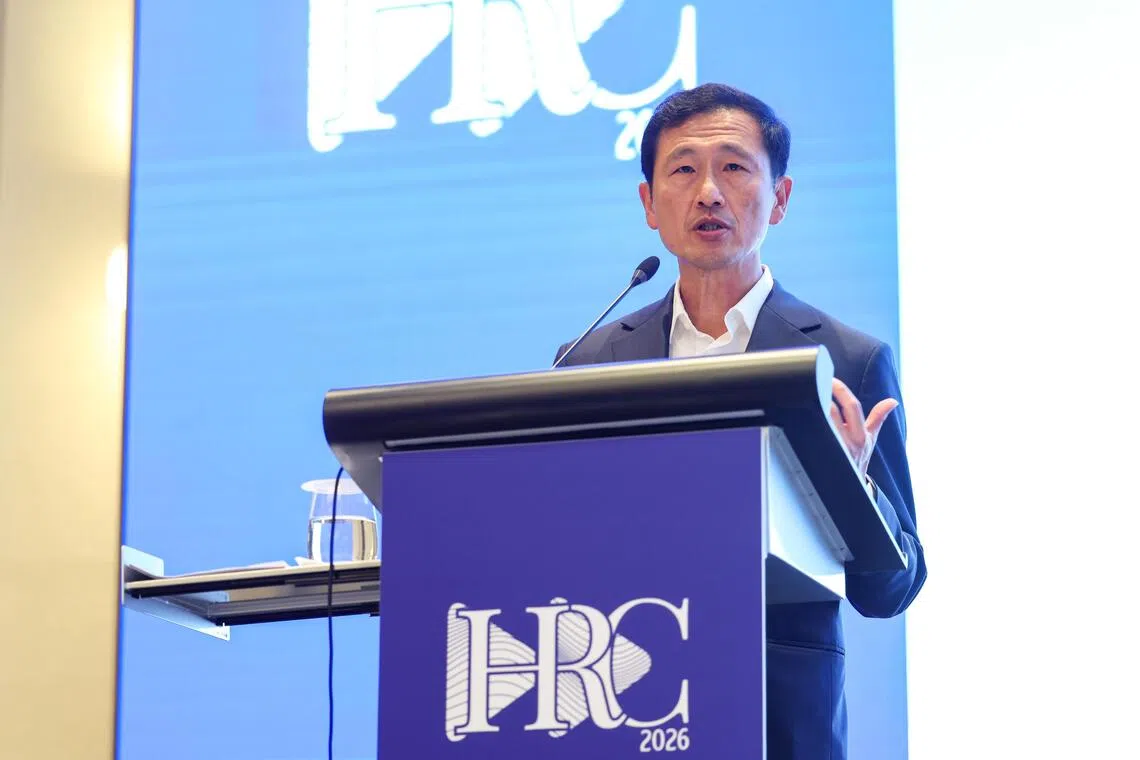
Health Minister Ong Ye Kung announced several regulatory initiatives aimed at improving access to healthcare innovations at the inaugural Health Regulatory Conference on Oct 12.
PHOTO: LIANHE ZAOBAO
Published Oct 12, 2026, 05:15 PM
Updated Oct 12, 2026, 05:15 PM
Good regulation helps patients get new health products sooner, because it builds trust and gives clear rules, said Health Minister Ong Ye Kung at the Health Regulatory Conference.
From early 2027, clinical trial sponsors will get earlier advice and support, and some lower-risk phase three trials may be approved in 15 days instead of 30.
HSA and MOH will also speed up subsidy decisions and build new powers for AI and vaccines, as Singapore aims to stay a trusted and competitive hub for healthcare innovation.
SINGAPORE – Patients in Singapore will have earlier access to innovative health products and devices , under various initiatives announced on Oct 12 by Health Minister Ong Ye Kung.
Come early 2027, one of these initiatives will provide more support to clinical trial sponsors , including earlier consultations on regulatory matters, getting clearer advice on the relevant requirements, and support in identifying investigators and coordinating trial sites.
Approval timelines for certain lower-risk clinical trials that have reached phase three could be halved from the current 30 days to only 15 days, said Ong.
Phase three clinical trials are typically the last stage of testing before a drug’s details and clinical trial results are submitted to the regulatory authorities for approval.
Good healthcare regulation brings about predictability and trust, said Ong at the opening ceremony of the inaugural Health Regulatory Conference.
Decisions on whether the Government will provide subsidies for selected innovative health products will likely be reached faster, too.
In his speech, Ong announced various initiatives that the Health Sciences Authority (HSA) was involved in, which could help bring innovative products to the Singapore market faster.
He also said that one common template will be adopted for the purpose of regulatory consultation and approvals, including for clinical trials done across several healthcare institutions, which he said was a pain point to carrying out clinical trials currently.
“So, expect many changes. We are paying very close attention... We are determined to make the change, and make Singapore much more competitive in clinical trials,” said Ong.
The Ministry of Health (MOH) is also likely to reach its funding decisions more quickly , such as whether subsidies should be provided for selected innovative health products.
This comes with the establishment of a priority track for health technology assessment (HTA) from November, by HSA and MOH’s Agency for Care Effectiveness (ACE).
For selected innovative health products, ACE can conduct its HTA concurrently when HSA is carrying out its regulatory evaluation, instead of proceeding only after HSA has concluded its evaluation.
With this process in place, Ong said the authorities intend to shorten the time needed to reach the first HTA decision.
It will likely take six to nine months post-regulatory approval, down from the current one year post-approval.
HTA refers to the established scientific research methodology that ACE uses to look into the benefits and costs involved for certain drugs, or medical devices, diagnostics or medical services.
The HTA results are used to support recommendations on whether subsidy should be provided for the drugs or medical technologies.
Singapore a trusted gateway
With HSA serving as an important reference agency for other international partners, it helps cement Singapore’s position as a “trusted gateway to markets encompassing hundreds of millions of people across other countries and regions”, said Ong who is also the Coordinating Minister for Social Policies.
He noted HSA has worked hard and achieved various accolades including becoming the first national authority assessed by the World Health Organization (WHO) at maturity Level 4 for medical device regulation , and a WHO-listed authority for medicines.
“HSA’s next ambition is to work towards WHO Listed Authority status for vaccines . That is the mission I have given to HSA. This is critical to our pandemic prevention, preparedness and response efforts,” said Ong.
Other efforts by HSA included building its capabilities and developing regulatory guidance for the use of artificial intelligence across the healthcare sector throughout the drug-development life cycle.
Currently, Ong noted, an AI-driven medical device, an AI-enabled healthcare service and a clinician using AI may each be governed by different rules and legislation.
This will change with the upcoming consolidation of regulatory powers under HSA’s wings, after the passing of the Health Sciences Authority (Amendment) and Other Matters Bill in Parliament on Sept 9.
With the consolidation of powers within Singapore’s integrated health regulator , it allows for timely access to beneficial healthcare innovations, and greater convenience and clarity to the healthcare industry and professionals.
The future planning of HSA will benefit from an Industry Advisory Council that will also be established in the first half of 2027 and brings together partners with industry experience.
According to HSA, the council will identify emerging opportunities and risks, advise the regulator on future capability needs, and bring industry perspectives into policy development.
Ong said that the initiatives announced at the conference reflect Singapore’s commitment “to building a regulatory system that is trusted, agile and forward-looking – one that holds firmly to safety and scientific rigour, yet moves with innovation, rather than behind it”.
He described regulation as an essential foundation of every healthcare system, and is critical to building public trust and confidence in healthcare.
“Good regulation must do two things at once: protect patient safety and at the same time, enable useful innovation to scale across our healthcare system... When regulation is predictable, proportionate and trusted, good innovations flourish and reach patients sooner, and the confidence in the system grows stronger,” Ong added.
The three-day conference jointly organised by MOH and HSA is expected to draw more than 900 healthcare professionals, industry representatives and academics from Singapore and overseas to discuss issues related to healthcare regulatory.
Health Sciences Authority
卫生部长王乙康于10月12日在首届卫生监管大会上宣布了几项旨在改善医疗保健创新成果获取途径的监管举措。
图片来源:联合早报
发布于 2026 年 10 月 12 日下午 5:15
更新于2026年10月12日下午5:15
卫生部长王乙康在卫生监管会议上表示,良好的监管有助于患者更快地获得新的健康产品,因为它能建立信任并制定明确的规则。
从 2027 年初开始,临床试验申办者将更早获得建议和支持,一些风险较低的三期试验可能会在 15 天内而不是 30 天内获得批准。
新加坡卫生科学局 (HSA) 和卫生部 (MOH) 也将加快补贴决策,并为人工智能和疫苗赋予新的权力,因为新加坡的目标是保持其作为医疗保健创新领域值得信赖和具有竞争力的中心的地位。
新加坡——根据卫生部长王乙康于10月12日宣布的各项举措,新加坡患者将能更早地获得创新型医疗产品和设备。
到 2027 年初,其中一项举措将为临床试验申办者提供更多支持,包括更早地就监管事宜进行磋商、获得更清晰的相关要求建议,以及在确定研究人员和协调试验地点方面提供支持。
Ong表示,某些已进入三期临床试验的低风险试验的审批时间可能会从目前的30天缩短一半,仅需15天。
第三期临床试验通常是药物测试的最后阶段,之后药物的详细信息和临床试验结果将提交给监管机构以获得批准。
Ong在首届卫生监管大会的开幕式上表示,良好的医疗保健监管能够带来可预测性和信任。
政府是否会为部分创新型保健产品提供补贴的决定,也可能很快会出台。
王乙康在讲话中宣布了卫生科学局 (HSA) 参与的各项举措,这些举措有助于更快地将创新产品推向新加坡市场。
他还表示,将采用一个通用模板进行监管咨询和审批,包括在多个医疗机构进行的临床试验,他指出这是目前开展临床试验的一个痛点。
“所以,预计会有很多变化。我们正在密切关注……我们决心做出改变,让新加坡在临床试验方面更具竞争力,”翁先生说。
卫生部也可能更快地做出拨款决定,例如是否应该为选定的创新健康产品提供补贴。
这是因为卫生科学局 (HSA) 和卫生部护理效果机构 (ACE) 从 11 月起设立了卫生技术评估 (HTA) 的优先通道。
对于选定的创新健康产品,ACE 可以在 HSA 进行监管评估的同时进行 HTA,而不是在 HSA 完成评估后才进行。
Ong表示,有了这一流程,当局打算缩短做出第一个HTA决定所需的时间。
获得监管部门批准后,可能需要六到九个月的时间,比目前获批后的一年时间有所缩短。
HTA 指的是 ACE 用来研究某些药物、医疗器械、诊断或医疗服务的效益和成本的既定科学研究方法。
卫生技术评估结果用于支持是否应为药品或医疗技术提供补贴的建议。
新加坡,值得信赖的门户
王乙康表示,新加坡卫生科学局作为其他国际合作伙伴的重要参考机构,有助于巩固新加坡作为“通往涵盖其他国家和地区数亿人口的市场的可信赖门户”的地位。王乙康同时也是社会政策统筹部长。
他指出,HSA 一直努力工作,并取得了各种荣誉,包括成为世界卫生组织 (WHO) 评估医疗器械监管成熟度达到 4 级的国家机构,以及世界卫生组织列出的药品监管机构。
“卫生科学局的下一个目标是努力获得世界卫生组织认可的疫苗权威机构地位。这是我赋予卫生科学局的任务。这对我们预防、准备和应对疫情至关重要,”王乙康说。
HSA 的其他努力包括提升自身能力,并制定监管指导方针,以在药物研发生命周期的整个医疗保健领域中使用人工智能。
Ong指出,目前人工智能驱动的医疗设备、人工智能支持的医疗保健服务和使用人工智能的临床医生可能分别受不同的规则和法律法规约束。
随着9月9日国会通过《卫生科学局(修订)及其他事项法案》,监管权力将集中到卫生科学局(HSA)手中,这种情况将会改变。
随着新加坡综合卫生监管机构权力的集中,医疗保健行业和专业人士能够及时获得有益的医疗保健创新,并享受到更大的便利和更清晰的指导。
HSA 的未来规划将受益于一个行业咨询委员会,该委员会也将在 2027 年上半年成立,汇集了具有行业经验的合作伙伴。
据 HSA 称,该委员会将识别新兴机遇和风险,就未来能力需求向监管机构提供建议,并将行业观点带入政策制定中。
王先生表示,本次大会上宣布的各项举措体现了新加坡致力于“建立一个值得信赖、灵活且具有前瞻性的监管体系——该体系既要坚定地坚持安全和科学严谨性,又要与创新同步发展,而不是落后于创新”。
他认为监管是每个医疗保健系统的重要基础,对于建立公众对医疗保健的信任和信心至关重要。
“良好的监管必须同时做到两件事:保护患者安全,同时促进有益的创新在整个医疗保健系统中推广……当监管可预测、适度且值得信赖时,好的创新就能蓬勃发展,更快地惠及患者,人们对系统的信心也会增强,”翁补充道。
由卫生部和卫生科学局联合举办的为期三天的会议预计将吸引来自新加坡和海外的 900 多名医疗保健专业人士、行业代表和学者,共同探讨与医疗保健监管相关的问题。
健康科学管理局