‘This is not who we are’: Singapore senior minister condemns racist abuse over Nepal disaster, Air India amid police probe“这并非我们的本性”:新加坡高级部长谴责针对尼泊尔空难和印度航空空难的种族歧视言论,警方正在对此展开调查
SINGAPORE, Sept 6 — Singapore police are looking into racist and xenophobic online comments about the Nepal-Tibet disaster and Singapore Airlines’ investment in Air India, as...
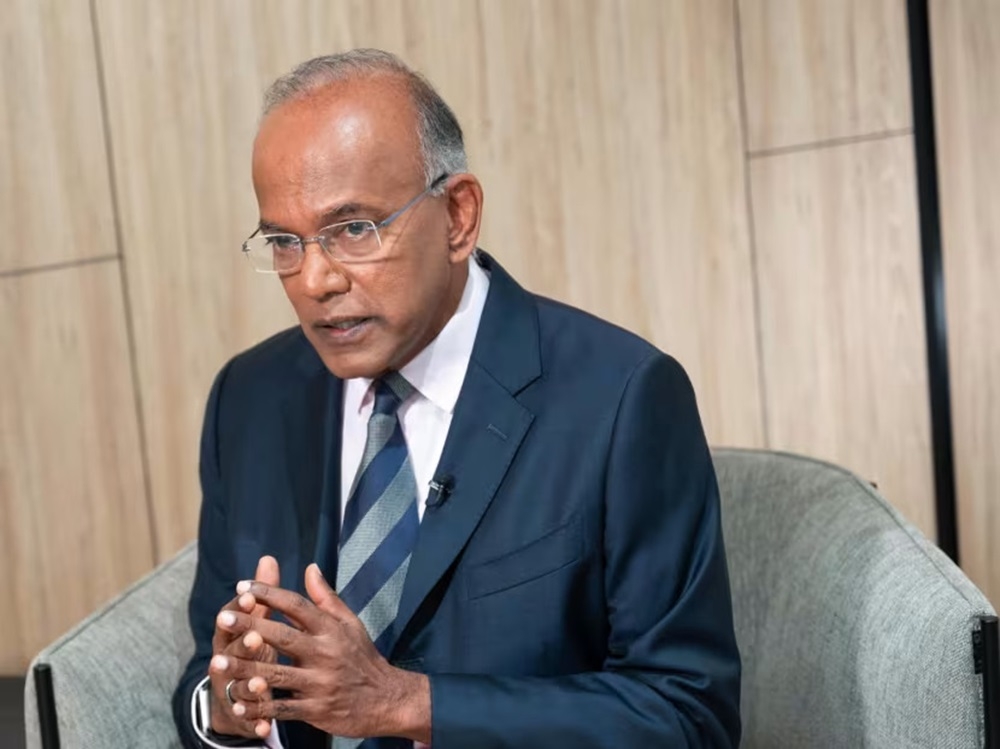
Singapore police are investigating racist and xenophobic online comments concerning the Nepal-Tibet disaster and Singapore Airlines' potential investment in Air India, as highlighted by Senior Minister K Shanmugam, who emphasized the need to prevent such rhetoric from becoming normalized.
Shanmugam condemned the remarks as shameful and stressed that they do not reflect the views of the majority of Singaporeans, who have generously supported disaster relief efforts.
The Ministry of Digital Development and Information is working with social media platforms to remove offensive content, while Shanmugam called for those responsible for online hate speech to be identified and held accountable.
Shanmugam also addressed the importance of maintaining commercial discipline in investment decisions, particularly regarding Singapore Airlines' potential further investment in Air India, stressing that such choices should remain free from political influence.
SINGAPORE, Sept 6 — Singapore police are looking into racist and xenophobic online comments about the Nepal-Tibet disaster and Singapore Airlines’ investment in Air India, as Senior Minister K Shanmugam warned against allowing such rhetoric to become normalised.
Singapore’s Ministry of Digital Development and Information will also ask social media platforms to remove comments that breach their guidelines, Singapore-based media organisation CNA reported yesterday.
“The media tells me that they had to remove several comments because they were so nasty. I don't know if all the comments are all made by Singaporeans. But I will say this — the comments are shameful, nasty, totally unacceptable,” said Shanmugam, who is also home affairs minister and coordinating minister for national security.
“I have asked police to look into these comments.”
His remarks followed a series of racist posts about Singaporeans missing after devastating floods in Nepal, as well as another wave of abuse prompted by reports that Air India may seek fresh capital from shareholders including SIA.
Nine Singaporeans remain missing following the floods.
Shanmugam cited comments including “No they are not our own”, “I only see Indian faces here. Skip. Rescue cut.” and “All ABNNs look the same, how to AI?” He noted that “ABNN” was a derogatory term for Indians.
More than 1,000 people had died and Singaporeans remained unaccounted for, he said, yet such remarks continued to circulate.
He stressed that such views did not represent most Singaporeans, pointing to more than S$3 million (RM9.5 million) raised by the Singapore Red Cross for relief efforts.
“Singaporeans are generous, across all races. And it is important that we don't allow a minority to poison the entire well.”
CNA said users who post hate speech or racist and offensive remarks are blocked under its social media moderation policy. It also disabled comments on several posts about the Nepal-Tibet disaster after such remarks became widespread.
Shanmugam said reports that Air India was seeking more funding had prompted further “anti-Indian, racist ranting”, including references to “snakes, curry, prata, black magic”.
He said an “online mob” had also targeted Temasek chief executive Dilhan Pillay Sandrasegara and other senior figures because of their ethnicity.
“It has been said that because the CEO is of Indian ethnicity, he would favour Air India. In the eyes of these people, the CEO's sin is that he is of Indian ethnicity, even though he is as Singaporean as any of us ... That is nasty and libellous,” Shanmugam said.
“But for this online mob, however, all of that, the facts don't matter. What matters is their racism and their own prejudices.”
He added: “These people should be unmasked and dealt with rather than be allowed to hide behind online anonymity.”
Shanmugam said Singapore was not immune from “latent racism” and warned that hateful rhetoric could become accepted if left unchecked.
“I've decided to call out these people because you see what is happening in other countries. First, a minority says these nasty things; slowly it becomes normalised; then it becomes mainstream, and political and community leaders will say it,” he said.
“Public discourse is then debased. Social harmony is affected. Violence against people of a different skin colour and different religion becomes acceptable.”
He said racist comments, particularly against Indians, had become more frequent, with some originating overseas or being “fanned from overseas”.
“We are a very small multiracial, multi-ethnic country. If we are divided along racial or religious lines, we will lose the unity that has made Singapore strong,” he said.
“We should not tolerate this. This is not who we are as Singaporeans.”
The controversy has also fed into debate over SIA’s investment in Air India.
Reuters reported last month that Air India was seeking a further US$1.5 billion from owners Tata Sons and SIA, months after posting a record annual loss.
SIA has said its board would “carefully consider any requests for additional capital from Air India, taking into consideration the group's other capital requirements and Air India's business strategy”.
Shanmugam said it was SIA’s responsibility to decide whether further investment made commercial sense.
“Any decision to invest in Air India lies with SIA, and Temasek as a shareholder in SIA, along with other shareholders, will expect SIA to make its investment decisions responsibly.”
He said Temasek was accountable to the government for its overall portfolio and long-term performance, but not for individual investment decisions made by its portfolio companies.
Temasek and several of its portfolio companies have made substantial investments in India over the years, Shanmugam said, adding that India had been Temasek’s best-performing market over the past decade.
He cited the sale of Temasek’s stake in an Indian joint venture to Schneider Electric for more than S$8 billion, nearly 10 times its initial investment, as well as its investment in Manipal Health Enterprises, which he said was now valued at more than S$11 billion.
“Once governments or politicians start directing individual investment decisions, commercial discipline will be compromised,” he said.
“Decisions will become politicised — shaped by political considerations, rather than commercial judgment. In the end, Singaporeans will bear the cost.”
US eggs are back in Singapore after 20 years — at up to S$14.80 a dozen
Five minutes to Johor Bahru: Singapore completes Woodlands North RTS station four months before launch
Singapore haze eases after unhealthy readings, but smoke threat lingers
PM term limit, AG-PP split: DAP wants both Bills tabled in Oct-Dec sitting
AirAsia cancels, reschedules Jakarta flights as Anak Krakatau erupts
Construction worker dies in Penang after seven-metre fall at Bayan Lepas site
新加坡警方正在调查有关尼泊尔-西藏空难和新加坡航空公司可能投资印度航空的种族主义和仇外网络言论,正如高级部长尚穆根所强调的那样,他强调有必要防止此类言论正常化。
尚穆根谴责这些言论可耻,并强调这些言论并不代表大多数新加坡人的观点,新加坡人慷慨地支持了救灾工作。
数字发展及新闻部正与社交媒体平台合作,删除冒犯性内容。与此同时,尚穆根呼吁查明并追究那些对网络仇恨言论负责的人的责任。
尚穆根还谈到了在投资决策中保持商业纪律的重要性,特别是关于新加坡航空公司可能进一步投资印度航空的问题,他强调此类选择应不受政治影响。
新加坡,9月6日——新加坡警方正在调查网上有关尼泊尔-西藏空难和新加坡航空公司投资印度航空的种族主义和仇外言论,与此同时,高级部长尚穆根警告说,不要让这种言论正常化。
据新加坡媒体机构亚洲新闻台(CNA)昨日报道,新加坡数码发展及新闻部也将要求社交媒体平台删除违反其准则的评论。
“媒体告诉我,他们不得不删除一些评论,因为这些评论非常恶劣。我不知道这些评论是否全部都是新加坡人发表的。但我必须说——这些评论令人羞耻、恶劣,完全不可接受,”内政部长兼国家安全统筹部长尚穆根说道。
“我已经要求警方调查这些言论。”
此前,有报道称新加坡人在尼泊尔遭受毁灭性洪水袭击后失踪,随后出现了一系列种族主义帖子,引发了另一波谩骂浪潮。此外,还有报道称印度航空可能向包括新加坡航空在内的股东寻求新的资金。
洪水过后,仍有九名新加坡人失踪。
尚穆根引用了一些评论,例如“不,他们不是我们自己人”、“我在这里看到的都是印度人的面孔。跳过。抢先看。”以及“所有印度裔美国人都长得一样,这怎么可能?”他指出,“印度裔美国人”是对印度人的贬义称呼。
他说,已有超过 1000 人死亡,还有许多新加坡人下落不明,但此类言论仍在流传。
他强调这种观点并不代表大多数新加坡人的想法,并指出新加坡红十字会已筹集超过 300 万新元(950 万令吉)用于救灾工作。
“新加坡人慷慨大方,不分种族。重要的是,我们不能让少数人破坏整个社会的和谐氛围。”
中央社表示,根据其社交媒体审核政策,发布仇恨言论、种族主义言论和冒犯性言论的用户将被屏蔽。此前,在有关尼泊尔-西藏灾难的多个帖子出现此类言论后,中央社还关闭了这些帖子的评论功能。
尚穆加姆表示,有关印度航空寻求更多资金的报道引发了进一步的“反印度、种族主义的咆哮”,其中包括提及“蛇、咖喱、印度煎饼、黑魔法”。
他表示,一群“网络暴徒”也因为种族原因攻击淡马锡首席执行官迪尔汉·皮莱·桑德拉塞加拉和其他高层人士。
“有人说,因为首席执行官是印度裔,所以他会偏袒印度航空。在这些人眼里,首席执行官的罪过就在于他是印度裔,尽管他和我们一样都是新加坡人……这种说法既恶毒又诽谤,”尚穆根说道。
“但是对于这群网络暴民来说,所有这些事实都不重要。重要的是他们的种族主义和偏见。”
他补充道:“应该揭露这些人的身份并予以惩处,而不是允许他们躲在网络匿名背后。”
尚穆根表示,新加坡并非不受“潜在种族主义”的影响,并警告说,如果不加以制止,仇恨言论可能会被接受。
“我决定公开谴责这些人,因为你们看到了其他国家正在发生的事情。起初,只有少数人说这些恶毒的话;慢慢地,这些话就变得正常化;然后,这些话就成了主流,政治领袖和社区领袖也会这么说,”他说。
“公共话语因此堕落,社会和谐受到影响,针对不同肤色和不同宗教信仰者的暴力行为变得可以接受。”
他表示,种族主义言论,特别是针对印度人的言论,变得越来越频繁,其中一些言论源自海外或“受到海外煽动”。
他说:“我们是一个非常小的多种族、多民族国家。如果我们因为种族或宗教而分裂,我们将失去使新加坡强大的团结。”
“我们绝不能容忍这种行为。这不符合新加坡人的价值观。”
这场争议也引发了关于新加坡航空对印度航空投资的辩论。
路透社上月报道称,印度航空在公布创纪录的年度亏损数月后,正寻求从其所有者塔塔集团和新加坡航空获得额外 15 亿美元的资金。
新加坡航空表示,其董事会将“认真考虑印度航空提出的任何追加资本请求,同时考虑到集团的其他资本需求和印度航空的业务战略”。
尚穆根表示,是否进行进一步投资具有商业意义,是新加坡航空公司的责任。
“任何投资印度航空的决定都由新加坡航空自行做出,淡马锡作为新加坡航空的股东,与其他股东一样,都希望新加坡航空能够负责任地做出投资决策。”
他表示,淡马锡要对其整体投资组合和长期业绩向政府负责,但不必对其投资组合公司做出的个别投资决策负责。
尚穆根表示,淡马锡及其多家投资组合公司多年来在印度进行了大量投资,并补充说,印度是淡马锡过去十年表现最好的市场。
他举例说,淡马锡以超过 80 亿新元的价格将其在印度合资企业中的股份出售给了施耐德电气,这几乎是其初始投资的 10 倍;他还提到淡马锡对马尼帕尔健康企业的投资,他说,该投资目前的估值已超过 110 亿新元。
“一旦政府或政治家开始干预个人投资决策,商业纪律就会受到损害,”他说。
“决策将变得政治化——受政治考量而非商业判断左右。最终,新加坡人将承担后果。”
美国鸡蛋时隔20年重返新加坡,售价高达每打14.80新元。
五分钟即可抵达新山:新加坡兀兰北RTS站提前四个月竣工
新加坡的雾霾在空气质量指标达到不健康水平后有所缓解,但烟雾威胁依然存在。
总理任期限制、总检察长与人民党分裂:民主行动党希望两项法案均在10月至12月的会议上提交审议
由于喀拉喀托火山喷发,亚航取消并重新安排雅加达航班
槟城峇六拜工地一名建筑工人从七米高处坠落身亡