China fires verbal warning shot at US over Taiwan中国就台湾问题向美国发出口头警告
Any misstep over Taiwan could push the U.S. and China toward direct confrontation, Chinese leader Xi Jinping told President Donald Trump.
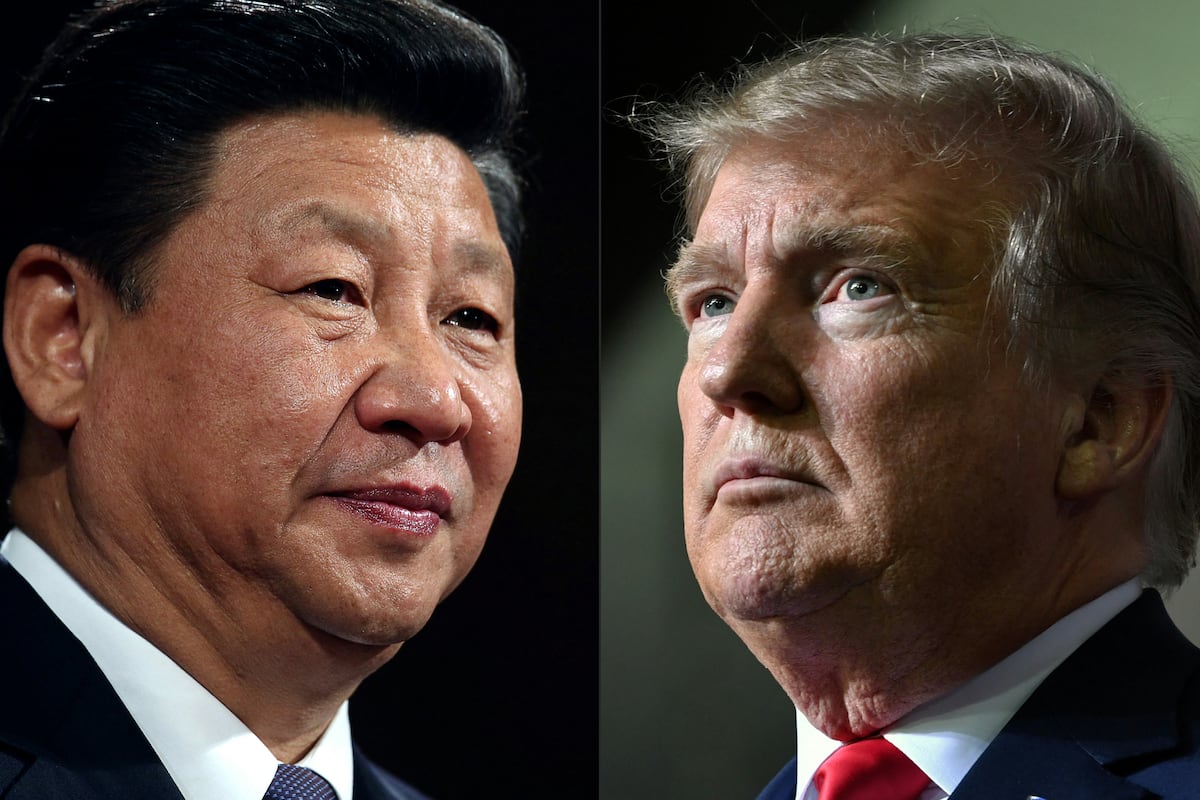
Chinese leader Xi Jinping delivered a blunt threat to U.S. President Donald Trump on Thursday, saying that any misstep over Taiwan could push the two economic superpowers toward direct confrontation.
“The Taiwan question is the most important issue in China-U.S. relations,” Xi told Trump during a summit in Beijing, according to a Chinese government readout. “If it is handled properly, the bilateral relationship will enjoy overall stability. Otherwise, the two countries will have clashes and even conflicts, putting the entire relationship in great jeopardy.”
For decades, Washington’s ties with Taipei have been among one of the most combustible flashpoints in U.S.-China relations. The Chinese Communist Party regards the island as a wayward province destined for reunification. Xi has instructed the People’s Liberation Army to be prepared to invade by 2027.
Since the 1970s, successive American administrations have adhered to a policy known as “strategic ambiguity,” deliberately maintaining uncertainty over whether the U.S. would come to Taiwan’s defense in the event of a Chinese attack.
George Chen, partner for the Greater China practice at the Asia Group, said in an interview with Military Times that Xi’s message to Trump should not be seen as an escalation, but rather an effort to establish boundaries from the outset.
“President Xi’s opening remarks, right in front of President Trump, puts a huge emphasis on Taiwan because Xi wants to make it crystal clear that he has zero tolerance for any moves toward Taiwan independence,” Chen said.
“It’s clear that Xi is not interested in taking the military path for Taiwan issues — at least not yet,” he added. “And he hopes Washington will align with him to avoid bringing military forces into the Taiwan issues, which could only destabilize Northeast Asia.”
The State Department recently stalled a proposed $14 billion arms package for Taiwan, a move that Trump said he would underscore with Xi.
“President Xi would like us not to. And I’ll have that discussion,” Trump told reporters at the White House on Monday ahead of the planned trip.
U.S. officials, however, have highlighted last year’s largest-ever arms sale to Taiwan, valued at approximately $11 billion, as a sign of Washington’s commitment to Taiwan.
The war in Iran previously forced a postponement of the high-stakes summit in Beijing, which had originally been scheduled for six weeks ago.
Trump and Xi met in the Chinese capital on Friday for a welcome ceremony steeped in pageantry, featuring a 21-gun salute and crowds of children waving U.S. and Chinese flags, followed by bilateral talks, a tour of the Temple of Heaven and a state banquet.
But the trip unfolds against a continued air of crisis and uncertainty around Iran. The fragile ceasefire between Washington and Tehran teeters on collapse, while the Strait of Hormuz remains effectively closed.
According to a White House readout, Trump and Xi concurred Iran cannot obtain a nuclear weapon and the Strait of Hormuz needs to reopen.
“The two sides agreed that the Strait of Hormuz must remain open to support the free flow of energy,” the White House said. “President Xi also made clear China’s opposition to the militarization of the Strait and any effort to charge a toll for its use.”
In a subsequent interview with Fox News, Trump said that Xi had signaled interest in facilitating the reopening of the strait.
“President Xi would like to see a deal made,” Trump asserted. “Anybody that buys that much oil has obviously got some sort of relationship with them.”
The president also claimed Xi had assured him China would not supply military equipment to Iran, calling it “a big statement.”
Tanya Noury is a reporter for Military Times and Defense News, with coverage focusing on the White House and Pentagon.
中国领导人习近平周四向美国总统唐纳德·特朗普发出直言不讳的威胁,称任何在台湾问题上的失误都可能将这两个经济超级大国推向直接对抗。
据中国政府发布的新闻稿称,习近平在北京与特朗普会晤期间表示:“台湾问题是中美关系中最重要的问题。如果处理得当,双边关系将保持整体稳定;否则,两国将出现冲突甚至矛盾,使整个关系陷入严重危机。”
几十年来,华盛顿与台北的关系一直是美中关系中最易引发冲突的焦点之一。中国共产党视台北为注定要统一的叛离省份。习近平已指示中国人民解放军做好在2027年前入侵台北的准备。
自 20 世纪 70 年代以来,历届美国政府都奉行一种被称为“战略模糊”的政策,故意保持美国是否会在中国攻击台湾时出手相助的不确定性。
亚洲集团大中华区合伙人陈乔治在接受《军事时报》采访时表示,习近平向特朗普传递的信息不应被视为局势升级,而应被视为从一开始就划定界限的努力。
陈说:“习近平主席在特朗普总统面前发表的开幕致辞,非常强调台湾问题,因为习近平想明确表示,他对任何台湾独立的举动都零容忍。”
他补充说:“很明显,习近平对用武力解决台湾问题不感兴趣——至少目前不感兴趣。他希望华盛顿能与他保持一致,避免将武力介入台湾问题,因为这只会破坏东北亚的稳定。”
美国国务院最近搁置了一项价值 140 亿美元的对台军售计划,特朗普表示他将就此向习近平强调这一点。
“习近平主席希望我们不要这样做。我会就此进行讨论,”特朗普周一在白宫对记者说,当时他正准备前往中国。
然而,美国官员强调,去年对台军售金额高达约 110 亿美元,是华盛顿对台湾承诺的标志。
伊朗战争此前迫使原定于六周前在北京举行的备受瞩目的峰会推迟。
周五,特朗普和习近平在中国首都会晤,举行了一场盛大的欢迎仪式,仪式上鸣放了21响礼炮,成群的儿童挥舞着美国和中国的国旗。随后,双方举行了双边会谈,参观了天坛,并出席了国宴。
但此次访问是在伊朗局势持续动荡不安的背景下进行的。华盛顿和德黑兰之间脆弱的停火协议岌岌可危,霍尔木兹海峡也仍然实际上处于关闭状态。
根据白宫发布的消息,特朗普和习近平一致认为伊朗不能获得核武器,霍尔木兹海峡需要重新开放。
白宫表示:“双方一致认为,霍尔木兹海峡必须保持开放,以保障能源自由流动。习近平主席还明确表示,中国反对霍尔木兹海峡军事化,反对任何对其使用收取通行费的企图。”
在随后接受福克斯新闻采访时,特朗普表示,习近平已表示有兴趣促成海峡重新开放。
特朗普断言:“习近平主席希望达成协议。任何购买如此大量石油的国家显然都与他们有某种关系。”
该总统还声称习近平向他保证中国不会向伊朗提供军事装备,称这是“一个重大声明”。
Tanya Noury 是《军事时报》和《防务新闻》的记者,她的报道主要集中在白宫和五角大楼。