MetMalaysia: Super El Nino forecast for March-May 2027, temperatures could break Malaysia’s 40.1°C record马来西亚气象局:预测2027年3月至5月将出现超级厄尔尼诺现象,气温或将打破马来西亚40.1摄氏度的纪录。
JOHOR BAHRU, Oct 13 — Malaysia needs to brace itself for the Super El Niño phenomenon, which is expected to bring scorching weather between March and May next year, potentially...
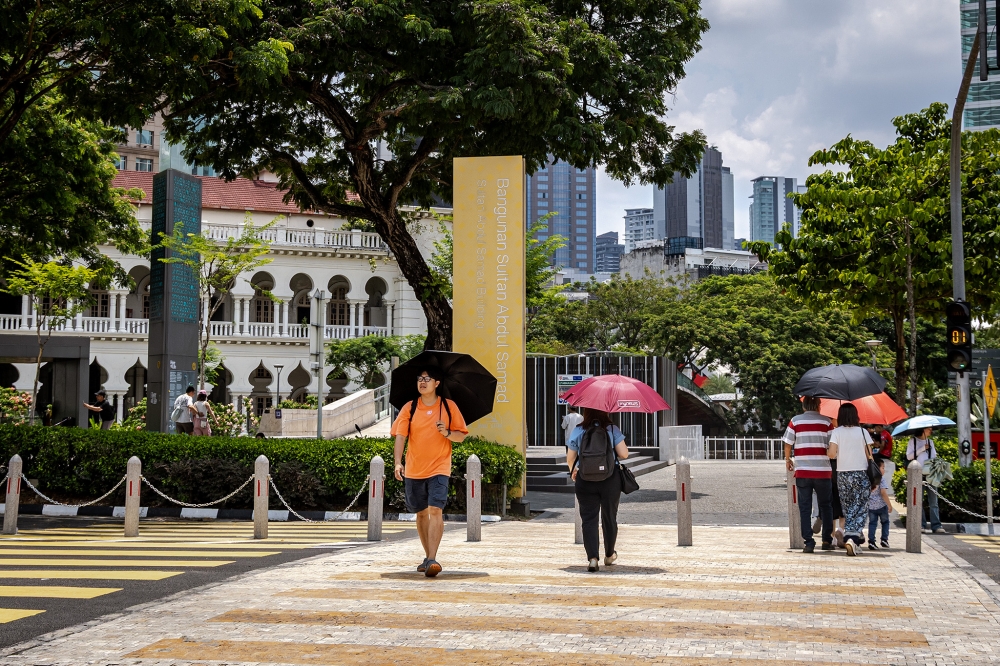
Malaysia should prepare for the Super El Niño phenomenon expected between March and May 2024, which could result in temperatures exceeding the previous record of 40.1 degrees Celsius.
MetMalaysia's forecast suggests possible temperatures over 41 degrees Celsius due to climate change, predicting potential extended periods of extreme heat and dry conditions.
Authorities, including MetMalaysia and the Ministry of Health, are making early preparations for water storage and electricity demand, while developing a Heat Index to warn about health risks.
JOHOR BAHRU, Oct 13 — Malaysia needs to brace itself for the Super El Niño phenomenon, which is expected to bring scorching weather between March and May next year, potentially breaking the country’s record high temperature of 40.1 degrees Celsius.
Malaysian Meteorological Department (MetMalaysia) director-general Dr Mohd Hisham Mohd Anip said the country’s maximum temperature could exceed 41 degrees Celsius, based on analysis of the current intense El Niño phenomenon, alongside the impacts of climate change and global warming.
“If we look at current climate change trends, the rate of temperature increase in the country is approximately 0.13 degrees Celsius per decade.
“It has been nearly 30 years since 1998, when combined with the temperature spikes associated with El Niño, the increase could exceed one degree Celsius above the 40.1-degree record set back then. We anticipate that temperatures reaching 41 degrees Celsius or higher are likely to occur. That is our projection,” he said.
He made these remarks at a press conference following the National Climate Forum 2026 at Universiti Teknologi Malaysia (UTM) here today. The forum, themed “Preparedness Today, Resilience Tomorrow,” was attended by over 500 participants from various government departments and ministries.
Malaysia previously recorded its highest-ever temperature of 40.1 degrees Celsius in Chuping, Perlis, on April 9, 1998, during the 1997/1998 El Niño episode, while the peak temperature during the 2015/2016 episode was 39.3 degrees Celsius, recorded in Batu Embun, Pahang, on April 10, 2016.
Mohd Hisham said the current El Niño is projected to record an index exceeding 2.5, surpassing the peak level of 2.3 recorded during the 1997/1998 and 2015/2016 episodes.
He noted that during strong El Niño events, daily maximum temperatures can rise by up to 0.7 degrees Celsius above normal, while temperatures exceeding 35 degrees Celsius are expected to occur more widely and for longer periods.
Mohd Hisham added that the previously recorded scenario of up to 77 consecutive days without rain could recur particularly in the northern states of the Peninsula due to this El Niño phenomenon.
“Previous records show that this condition can begin at the end of the year, with a lack of rainfall starting in December and continuing through January and February, before rain returns around March,” he said.
In this regard, he emphasised that the 2026/2027 Northeast Monsoon currently forecast to begin in late October is crucial for ensuring dams receive sufficient rainfall and water storage levels are boosted before the country faces drier weather next year.
“We must ensure all our dams are full before next year begins. In terms of water sources, the Northeast Monsoon brings significant rainfall, and we hope this rain will fill all the dams,” he said.
He said this measure aligns with the directive from Deputy Prime Minister Datuk Seri Dr. Ahmad Zahid Hamidi to make early preparations regarding water supply and storage in anticipation of the hot and dry spell next year.
Mohd Hisham also expressed concern regarding the anticipated rise in electricity consumption during next year’s hot weather, particularly due to the expected increase in air conditioner usage.
“Energy consumption will be high during the hot months next year. Therefore, regarding the energy grid, we must ensure there is sufficient capacity. A lack of preparedness could lead to disruptions and compromise the grid,” he said.
He said MetMalaysia has informed relevant agencies of this forecast, and the matter will be raised at the Disaster Management Council meeting chaired by Prime Minister Datuk Seri Anwar Ibrahim next week.
At the same time, he noted that MetMalaysia is collaborating with the Ministry of Health (MOH) to develop a Heat Index. This will establish threshold values used to warn the public about health risks associated with hot weather.
He explained that the current hot weather monitoring system classifies temperatures of 35 degrees Celsius and above as Level 1, 37 degrees Celsius and above as Level 2, and 40 degrees Celsius and above as Level 3. — Bernama
Asyraf says BN’s Melaka seat talks 90pc complete, urges trust in Muslim political pact
Lorry driver in Shah Alam 12-vehicle pile-up pleads not guilty to drug-impaired driving
Malaysia cautious over proposal to co-chair The Hague Group, says Tok Mat
马来西亚应该为预计在 2024 年 3 月至 5 月期间发生的超级厄尔尼诺现象做好准备,这可能导致气温超过此前 40.1 摄氏度的纪录。
马来西亚气象局预测,受气候变化影响,气温可能超过 41 摄氏度,并可能出现持续时间较长的极端高温和干旱天气。
包括马来西亚气象局和卫生部在内的有关部门正在提前做好储水和电力需求方面的准备,同时还在制定高温指数以预警健康风险。
新山,10 月 13 日讯——马来西亚需要做好准备迎接超级厄尔尼诺现象,预计该现象将在明年 3 月至 5 月期间带来酷热天气,有可能打破该国 40.1 摄氏度的最高气温纪录。
马来西亚气象局(MetMalaysia)总监莫哈末·希沙姆·莫哈末·阿尼普博士表示,根据对当前强烈的厄尔尼诺现象以及气候变化和全球变暖的影响的分析,该国最高气温可能超过 41 摄氏度。
“如果我们观察当前的气候变化趋势,该国气温上升的速度约为每十年 0.13 摄氏度。”
“距离1998年已经过去了近30年,如果再加上厄尔尼诺现象带来的气温飙升,气温可能会比当年创下的40.1摄氏度的纪录高出1摄氏度以上。我们预计气温很可能达到41摄氏度甚至更高。这是我们的预测,”他说道。
他今天在马来西亚工艺大学(UTM)举行的2026年国家气候论坛结束后的新闻发布会上发表了上述讲话。此次论坛以“今日备灾,明日韧性”为主题,吸引了来自各个政府部门和机构的500多名代表参加。
马来西亚此前曾于 1998 年 4 月 9 日在玻璃市州朱平记录到 40.1 摄氏度的最高气温,当时正值 1997/1998 年厄尔尼诺现象;而 2015/2016 年厄尔尼诺现象期间的最高气温为 39.3 摄氏度,于 2016 年 4 月 10 日在彭亨州峇都恩汶记录到。
莫哈末·希沙姆表示,目前的厄尔尼诺现象预计指数将超过 2.5,超过 1997/1998 年和 2015/2016 年期间记录的 2.3 的峰值水平。
他指出,在强厄尔尼诺现象期间,每日最高气温可能比正常水平高出0.7摄氏度,而超过35摄氏度的气温预计会出现得更广泛、持续时间更长。
莫哈末·希沙姆补充说,由于厄尔尼诺现象的影响,此前记录的连续77天无雨的情况可能会在马来半岛北部各州再次发生。
他说:“之前的记录显示,这种情况可能从年底开始,12 月开始缺雨,一直持续到 1 月和 2 月,然后大约 3 月左右才会再次下雨。”
在这方面,他强调,目前预测将于 10 月下旬开始的 2026/2027 年东北季风对于确保水坝获得足够的降雨量,并在明年该国面临更干燥的天气之前提高蓄水量至关重要。
他说:“我们必须确保所有水坝在明年到来之前蓄满水。就水源而言,东北季风会带来大量降雨,我们希望这场雨能使所有水坝都蓄满水。”
他表示,这项措施符合副首相拿督斯里阿末扎希哈米迪博士的指示,即提前做好供水和储水准备,以应对明年的炎热干燥天气。
莫哈末希沙姆也对明年炎热天气期间预计用电量上升表示担忧,特别是由于预计空调使用量将会增加。
“明年炎热月份能源消耗量将很高。因此,就电网而言,我们必须确保有足够的容量。准备不足可能会导致中断,并危及电网运行,”他说道。
他表示,马来西亚气象局已将此预测告知相关机构,此事将在下周由首相拿督斯里安华·易卜拉欣主持的灾害管理委员会会议上提出。
与此同时,他指出,马来西亚气象局正与卫生部合作开发热指数。该指数将设定阈值,用于提醒公众注意高温天气带来的健康风险。
他解释说,目前的高温天气监测系统将35摄氏度及以上的气温划分为1级,37摄氏度及以上的为2级,40摄氏度及以上的为3级。——马新社
阿斯拉夫称国阵马六甲议席谈判已完成90%,并敦促各方信任穆斯林政治协议
莎阿南12车连环相撞事故中,货车司机拒不不认罪,否认吸毒后驾驶。
Tok Mat表示,马来西亚对共同担任海牙集团主席国的提议持谨慎态度。