US, partner nations sink two decommissioned ships during Exercise Balikatan美国及其伙伴国在“肩并肩”联合军演中击沉了两艘退役舰艇。
A two-day strike saw the sinking of two vessels, utilizing land, sea and air platforms from the U.S., Philippine, Japanese and Canadian forces.
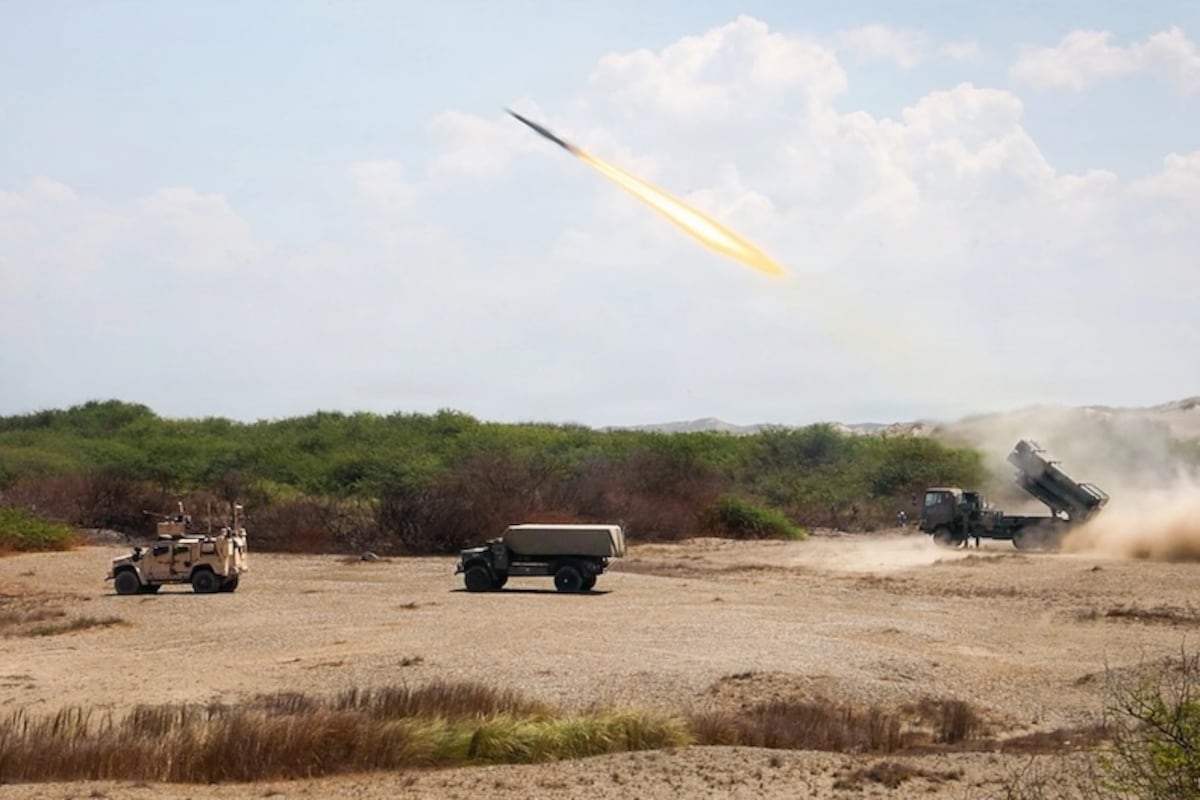
United States, Philippine, Japanese and Canadian forces combined land, sea and air platforms to sink two decommissioned ships off the western Northern Luzon coast during Balikatan 2026 last week, according to a Defense Department release.
Exercise Balikatan , which wrapped up Friday, is the largest annual military exercise between the United States and the Philippines and is designed to improve combined readiness and maritime defense capabilities, while showcasing the countries’ commitment to a “free and open” Indo-Pacific.
The Joint Task Force Maritime Strike, or MARSTRIKE, is a two-day critical live-fire event of the Philippines exercise that took place on Wednesday and Thursday.
The drill brought together sensors, missile systems, aircraft and naval assets from the four countries to coordinate long-range fires against maritime targets.
“The MARSTRIKE demonstrated the strength of our combined and joint force by integrating sensors and shooters across multiple domains to achieve a shared tactical objective,” U.S. Marine Corps Maj. Gen. Thomas Savage, commanding general of the U.S. joint task force-forward, said in the release.
On the first day of the exercise, forces sank the decommissioned Philippine Navy vessel BRP Quezon with a Japan Ground Self-Defense Force Type-88 surface-to-ship missile, while the U.S. Army used High Mobility Artillery Rocket Systems to conduct strikes, the statement read.
“Deploying the Type-88 Surface-to-Ship Missile in this complex MARSTRIKE allowed us to validate our tactical integration with U.S. and Philippine forces,” JGSDF Lt. Col. Ishikawa Daisuke said in the announcement.
Philippine Air Force FA-50PH Fighting Eagles and A-29 Super Tucanos also sank the BRP Rajah Sulayman, another decommissioned Philippine Navy ship used as a target on the second day.
Supporting elements throughout the exercise included assets such as the U.S. Marine Corps’ Navy-Marine Expeditionary Ship Interdiction System and Marine Air Defense Integrated System, along with fixed-wing aircraft from participating forces, unmanned aerial systems and the Royal Canadian Navy frigate HMCS Charlottetown.
“The successful execution of the Maritime Strike activity demonstrates the growing level of interoperability between the Armed Forces of the Philippines and our allies,” Philippine Marine Corps Col. Dennis Hernandez, spokesperson for Balikatan 2026, said in the release.
据美国国防部发布的消息,上周在“肩并肩2026”联合军演期间,美国、菲律宾、日本和加拿大军队联合陆海空平台,在吕宋岛北部西海岸击沉了两艘退役舰艇。
周五结束的“肩并肩”联合军事演习是美国和菲律宾之间规模最大的年度军事演习,旨在提高联合战备和海上防御能力,同时展现两国对“自由开放”的印太地区的承诺。
联合特遣部队海上打击演习(MARSTRIKE)是菲律宾演习中为期两天的关键实弹射击演练,于周三和周四举行。
此次演习汇集了来自四个国家的传感器、导弹系统、飞机和海军资产,以协调对海上目标进行远程火力打击。
“MARSTRIKE 演习通过整合多个领域的传感器和射击人员,展现了我们联合部队的实力,实现了共同的战术目标,”美国海军陆战队少将、美国联合特遣部队前沿司令托马斯·萨维奇在新闻稿中表示。
声明称,演习第一天,美军使用日本陆上自卫队88式舰对舰导弹击沉了菲律宾海军退役舰艇“奎松”号,而美国陆军则使用高机动性火箭炮系统进行了打击。
“在这次复杂的海上打击演习中部署88式舰对舰导弹,使我们能够验证与美国和菲律宾军队的战术整合,”日本陆上自卫队中校石川大辅在声明中表示。
菲律宾空军的 FA-50PH 战斗鹰和 A-29 超级巨嘴鸟战斗机也在第二天击沉了 BRP Rajah Sulayman 号,这是另一艘退役的菲律宾海军舰艇,被用作靶舰。
整个演习过程中提供的支援力量包括美国海军陆战队的海军陆战队远征舰拦截系统和海军陆战队防空综合系统等资产,以及参演部队的固定翼飞机、无人机系统和加拿大皇家海军护卫舰“夏洛特敦”号。
“海上打击行动的成功执行表明菲律宾武装部队与盟友之间的互操作性水平不断提高,”菲律宾海军陆战队上校、Balikatan 2026发言人丹尼斯·埃尔南德斯在新闻稿中表示。