Multi-lane fast flow: What motorists need to know as Malaysia moves towards barrier-free tolling多车道快速通行:马来西亚迈向无障碍收费,驾车者需要了解哪些信息
KUALA LUMPUR, Oct 14 — Malaysia is moving towards multi-lane fast flow (MLFF), a tolling system that would eventually allow motorists to pay tolls without stopping at...
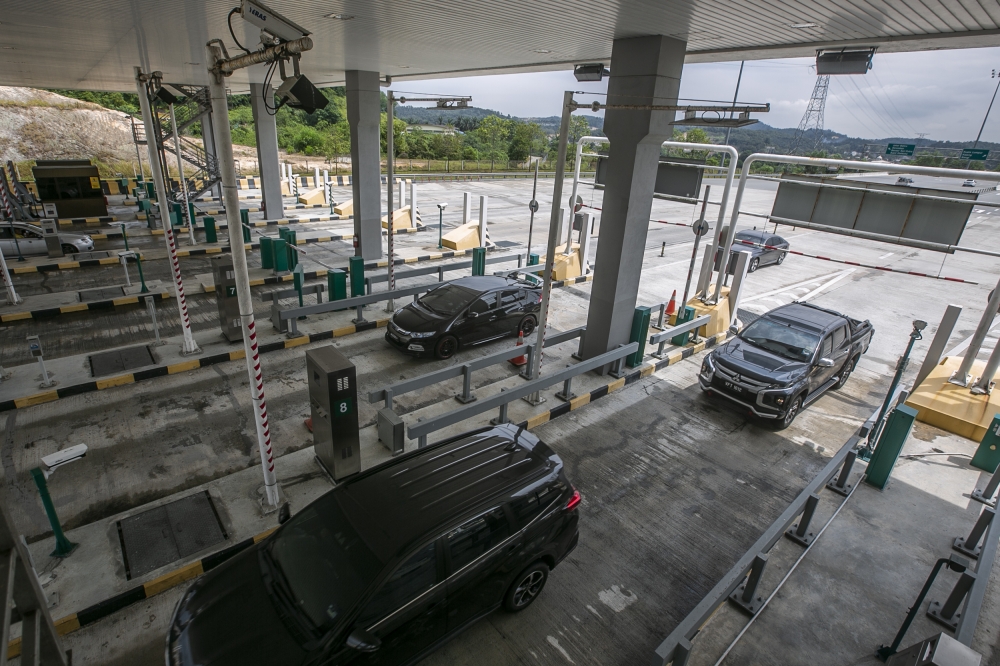
Malaysia is transitioning to a multi-lane fast flow tolling system, enabling toll payment without stopping, with systems like PLUS' JustGo and Touch 'n Go's Titan Flow being introduced.
JustGo uses automatic number plate recognition, linking toll charges to a motorist's debit or credit card, while Titan Flow integrates various technologies including RFID for broader applications.
Motorists can currently use JustGo at specific PLUS toll plazas and encounter Titan Flow through Enhanced RFID lanes, as part of the larger shift towards barrier-free tolling.
KUALA LUMPUR, Oct 14 — Malaysia is moving towards multi-lane fast flow (MLFF), a tolling system that would eventually allow motorists to pay tolls without stopping at conventional toll plazas.
As part of that transition, two systems are now being introduced to motorists: PLUS’ JustGo and Touch ’n Go’s Titan Flow.
They are not quite the same thing.
JustGo is a digital toll payment system that uses automatic number plate recognition (ANPR) to identify a vehicle and charge the debit or credit card linked to the motorist’s account.
Titan Flow, meanwhile, is Touch ’n Go’s broader MLFF technology platform, combining Radio Frequency Identification (RFID), ANPR, Light Detection and Ranging (LiDAR) and artificial intelligence.
For now, motorists will encounter the technology mainly through Enhanced RFID lanes, rather than as a standalone service or a huge gantry on a highway called Titan Flow.
So how do these systems work, how can motorists use them, and what happens if something goes wrong?
JustGo is essentially a camera-based toll payment system.
Once a vehicle is registered with JustGo, cameras at participating toll plazas read its number plate and match it to the motorist’s account.
The toll is then charged to the linked debit or credit card.
Motorists do not need an RFID tag specifically to use JustGo.
To sign up, users first download the JustGo app and register their phone number and email address.
They then have to complete the electronic Know Your Customer (e-KYC) verification using their MyKad, MyTentera or passport, including a real-time selfie and liveness check.
The next step is the electronic Know Your Vehicle (e-KYV), which requires the vehicle’s photographs and ownership documents.
A debit or credit card can then be linked to the account for toll payments.
Once everything is completed, the app should display the registered number plate and linked payment method, with the ANPR status shown as “ACTIVE”.
Users can register up to 10 vehicles.
Vehicles that are not registered in the user’s name can also be added, although supporting documents and manual approval may be required.
JustGo currently supports Class 1 vehicles, broadly covering passenger cars such as sedans, SUVs, MPVs and small pick-ups.
PLUS activated JustGo across participating toll plazas on its highways in August.
In its FAQ, it stated that JustGo is exclusively available at all lanes at all toll plazas on PLUS highways.
There are some location-specific exceptions, including the U-turn at the Tanjung Kupang Toll Plaza, while at the Bandar Cassia Toll Plaza, only RFID lanes are currently activated for ANPR.
The coverage is subject to change, so motorists should check the latest information from JustGo or PLUS before travelling.
In normal operation, the process is simple: drive into a participating lane, the camera reads the number plate, the system matches the vehicle to the registered account and the toll is charged to the linked bank card.
According to JustGo’s FAQ, motorists cannot simply pay cash at the exit if the linked card has insufficient funds.
It stated that drivers must ensure they have sufficient funds in their bank card before the start of their journey.
“If you are mid-way in your journey, kindly pull aside in a safe area i.e. a rest and relax area (R&R) to top-up your bank card safely,” the FAQ stated.
If the vehicle becomes stuck at a toll lane, motorists should use the intercom to seek assistance.
There is also a specific situation in which a JustGo user may see a Touch ’n Go eWallet deduction instead of a bank-card charge.
This can happen if the ANPR system fails to detect the vehicle at the previous entry point, meaning the toll cannot be charged to the linked bank card and is instead deducted from the linked Touch ’n Go eWallet.
Touch ’n Go describes Titan Flow as a next-generation MLFF platform that combines several technologies, including RFID, ANPR, LiDAR and artificial intelligence, together with open-payment capabilities.
In practical terms, however, motorists cannot currently download a “Titan Flow” app and start using it as a separate toll payment service.
Instead, elements of the technology are already being introduced through Enhanced RFID lanes.
Enhanced RFID still uses the physical Touch ’n Go RFID tag attached to the vehicle. Existing RFID tags can be used, meaning motorists do not need to obtain a special “Titan Flow” or “enhanced RFID” tag.
The basic process remains familiar to existing RFID users: obtain a Touch ’n Go RFID tag, register and activate it with the vehicle and link it to a Touch ’n Go eWallet account.
When the vehicle enters an Enhanced RFID lane, the system detects the RFID tag and the toll is deducted from the linked eWallet.
The important difference is that Enhanced RFID is part of the technology being developed towards MLFF, with additional detection and identification capabilities being tested alongside the existing RFID system.
It is just the same system as normal RFID, but the toll lane setup has been improved for faster, more reliable vehicle detection at higher speeds.
So these technological improvements could reduce the “ Reverse, Forward, InsyaAllah Detect ” problem at the toll booth.
For motorists, the easiest way to tell whether they are entering an Enhanced RFID lane is to look for the designated Enhanced RFID signage, including the gold star marking.
The first Enhanced RFID deployment was at the Dato Keramat Toll Plaza on the Ampang-Kuala Lumpur Elevated Highway (AKLEH), while another was subsequently introduced at the Putrajaya-bound toll plaza on the Maju Expressway (MEX).
Touch ’n Go has also announced plans for 10 more Enhanced RFID lanes by the end of 2026, covering highways including MEX, the Kajang Dispersal Link Expressway (SILK), Grand Sepadu, Guthrie Corridor Expressway (GCE) and the East Klang Valley Expressway (EKVE).
Unlike the long-term MLFF concept with no barriers, these are still designated toll lanes.
Motorists must therefore continue to follow the lane markings and signage rather than assuming that every part of the highway has already become barrier-free.
So, in simple terms, JustGo identifies your vehicle through its number plate and charges a linked debit or credit card.
Enhanced RFID identifies your vehicle through an RFID tag and deducts the toll from a linked Touch ’n Go eWallet.
Titan Flow is the wider technology platform that Touch ’n Go is developing for the eventual MLFF system, rather than a separate consumer app that motorists currently need to sign up for.
The two systems are part of Malaysia’s wider transition towards barrier-free tolling, but motorists do not currently have to choose between “JustGo” and “Titan Flow” as two competing nationwide payment systems.
For now, JustGo can be used at participating PLUS toll plazas where ANPR has been activated, while Touch ’n Go users can encounter the newer Titan Flow technology through designated Enhanced RFID lanes.
The eventual aim of MLFF is to remove the need for conventional toll lanes altogether, allowing vehicles to be identified and charged while continuing their journey.
Police: Two investigation papers opened over RM350,000 bribery claim against senior MACC officer
Myanmar refugees convicted of offences must serve sentence in Malaysia before repatriation, says Saifuddin Nasution
Anwar calls for stronger federal-state cooperation under National Covenant framework
马来西亚正在向多车道快速通行收费系统过渡,实现无需停车即可支付通行费,PLUS 的 JustGo 和 Touch 'n Go 的 Titan Flow 等系统正在引入。
JustGo 使用自动车牌识别技术,将通行费与驾驶员的借记卡或信用卡关联起来,而 Titan Flow 则集成了包括 RFID 在内的各种技术,以实现更广泛的应用。
目前,驾车者可以在特定的 PLUS 收费站使用 JustGo,并通过增强型 RFID 车道体验 Titan Flow,这是向无障碍收费转变的一部分。
吉隆坡,10 月 14 日讯——马来西亚正朝着多车道快速通行(MLFF)的方向发展,这是一种收费系统,最终将允许驾车者无需在传统收费站停车即可支付通行费。
作为这一转变的一部分,现在向驾车人士引入了两个系统:PLUS 的 JustGo 和 Touch 'n Go 的 Titan Flow。
它们并不完全相同。
JustGo 是一种数字收费系统,它使用自动车牌识别 (ANPR) 来识别车辆,并向与驾驶员账户关联的借记卡或信用卡收费。
与此同时,Titan Flow 是 Touch 'n Go 更广泛的 MLFF 技术平台,它结合了射频识别 (RFID)、车牌自动识别 (ANPR)、激光雷达 (LiDAR) 和人工智能。
目前,驾车者主要通过增强型 RFID 车道接触到这项技术,而不是作为一项独立服务或在名为 Titan Flow 的高速公路上安装巨大的龙门架。
那么这些系统是如何运作的?驾驶员如何使用它们?如果出现问题该怎么办?
JustGo本质上是一个基于摄像头的收费系统。
车辆一旦在 JustGo 注册,参与活动的收费站的摄像头就会读取车牌号码并将其与车主的账户进行匹配。
通行费将从关联的借记卡或信用卡中扣除。
驾车者无需专门的RFID标签即可使用JustGo。
用户注册时,首先需要下载 JustGo 应用,然后注册他们的手机号码和电子邮件地址。
然后,他们必须使用他们的 MyKad、MyTentera 或护照完成电子客户身份验证 (e-KYC),包括实时自拍和活体检测。
下一步是电子车辆识别(e-KYV),这需要车辆的照片和所有权文件。
然后可以将借记卡或信用卡关联到该账户,用于支付通行费。
一切完成后,应用程序应显示已注册的车牌号和关联的支付方式,ANPR 状态显示为“ACTIVE”。
用户最多可注册 10 辆车。
也可以添加未登记在用户名下的车辆,但可能需要提供证明文件和人工审批。
JustGo 目前支持 1 类车辆,主要涵盖轿车、SUV、MPV 和小型皮卡等乘用车。
PLUS 于 8 月份在其高速公路的参与收费站启用了 JustGo 服务。
在其常见问题解答中,JustGo 仅在 PLUS 高速公路所有收费站的所有车道上提供。
也有一些特定地点的例外情况,例如丹绒古邦收费站的掉头处,而班达尔卡西亚收费站目前只启用了 RFID 车道进行车牌自动识别。
服务范围可能会有所变更,因此驾车人士出行前应查看 JustGo 或 PLUS 的最新信息。
正常情况下,流程很简单:驶入参与车道,摄像头读取车牌号,系统将车辆与注册账户进行匹配,然后从关联的银行卡中扣除通行费。
根据 JustGo 的常见问题解答,如果绑定的银行卡余额不足,驾车者不能在出口处直接用现金支付。
规定指出,司机必须确保在出发前银行卡内有足够的资金。
常见问题解答中写道:“如果您正在旅途中,请将车停在安全区域,例如休息区,以便安全地为您的银行卡充值。”
如果车辆被困在收费车道上,驾驶员应使用对讲机寻求帮助。
还有一种特殊情况,JustGo 用户可能会看到 Touch 'n Go 电子钱包扣款,而不是银行卡扣款。
如果车牌自动识别系统未能检测到上一个入口处的车辆,则可能会发生这种情况,这意味着通行费无法从关联的银行卡中扣除,而是从关联的 Touch 'n Go 电子钱包中扣除。
Touch 'n Go 将 Titan Flow 描述为下一代 MLFF 平台,它结合了多种技术,包括 RFID、ANPR、LiDAR 和人工智能,以及开放式支付功能。
但实际上,驾车者目前还无法下载“Titan Flow”应用程序并将其用作独立的通行费支付服务。
实际上,这项技术的部分元素已经通过增强型 RFID 通道引入。
增强型RFID技术仍然使用附着在车辆上的实体Touch 'n Go RFID标签。现有的RFID标签可以继续使用,这意味着车主无需获取特殊的“Titan Flow”或“增强型RFID”标签。
对于现有的 RFID 用户来说,基本流程仍然很熟悉:获取 Touch 'n Go RFID 标签,将其注册并激活到车辆上,然后将其链接到 Touch 'n Go 电子钱包帐户。
当车辆进入增强型 RFID 车道时,系统会检测到 RFID 标签,并从关联的电子钱包中扣除通行费。
重要的区别在于,增强型 RFID 是正在为 MLFF 开发的技术的一部分,它具有额外的检测和识别功能,正在与现有的 RFID 系统一起进行测试。
它与普通的 RFID 系统相同,但收费车道设置已得到改进,以便在更高的速度下更快、更可靠地检测车辆。
因此,这些技术改进可以减少收费站的“倒车、前进、如果真主允许检测”问题。
对于驾驶员来说,判断自己是否进入增强型 RFID 车道的最简单方法是寻找指定的增强型 RFID 标志,包括金色星形标记。
第一个增强型 RFID 部署是在安邦-吉隆坡高架高速公路 (AKLEH) 上的 Dato Keramat 收费站,随后在 Maju Expressway (MEX) 上开往布城方向的收费站又引入了另一个。
Touch 'n Go 还宣布计划在 2026 年底前再增设 10 条增强型 RFID 车道,覆盖包括 MEX、加影疏散连接高速公路 (SILK)、Grand Sepadu、Guthrie 走廊高速公路 (GCE) 和东巴生谷高速公路 (EKVE) 在内的多条高速公路。
与没有障碍物的长期 MLFF 概念不同,这些仍然是指定的收费车道。
因此,驾驶者必须继续遵守车道标线和标志,而不是想当然地认为高速公路的每个部分都已经无障碍通行。
简单来说,JustGo 通过车牌识别您的车辆,并向您关联的借记卡或信用卡收费。
增强型 RFID 通过 RFID 标签识别您的车辆,并从关联的 Touch 'n Go 电子钱包中扣除通行费。
Titan Flow 是 Touch 'n Go 为最终的 MLFF 系统开发的更广泛的技术平台,而不是驾驶员目前需要注册的单独消费者应用程序。
这两个系统是马来西亚向无障碍收费过渡的一部分,但目前驾车者不必在“JustGo”和“Titan Flow”这两个相互竞争的全国性支付系统之间做出选择。
目前,JustGo 可在已启用 ANPR 的参与 PLUS 收费站使用,而 Touch 'n Go 用户可通过指定的增强型 RFID 车道体验更新的 Titan Flow 技术。
MLFF 的最终目标是完全消除对传统收费车道的需求,允许车辆在继续行驶的过程中被识别和收费。
警方:针对反贪污委员会高级官员涉嫌受贿35万令吉,已立案调查两起案件
赛夫丁·纳苏蒂安表示,被判有罪的缅甸难民必须在马来西亚服刑后才能遣返。
安华呼吁在《国家盟约》框架下加强联邦与各州之间的合作。